Regulations and Rights in California for Final Paychecks
Final paychecks in California might sound simple at first. Many people just expect to collect their last wages and move on. But state law does not leave any room for guesswork. California requires employers to pay all final wages immediately if someone is fired and can penalize them every single day they delay. That flips the usual power dynamic and gives employees powerful leverage during those final moments on the job.
What is a Final Paycheck in California?
A final paycheck in California represents the last monetary compensation an employee receives when their employment relationship ends, whether through termination, resignation, or mutual separation. This critical payment encompasses all wages earned up to the employee’s last working day, including regular wages, overtime, accrued vacation time, and any other outstanding compensation.
Legal Definition and Purpose
Under California labor law, a final paycheck is not just a routine transaction but a legally mandated process with specific requirements. According to the California Department of Industrial Relations, employers must follow strict guidelines regarding the timing and complete payment of final wages. These regulations protect workers by ensuring they receive all compensation owed to them promptly and comprehensively.
Key Components of a Final Paycheck
A comprehensive final paycheck in California typically includes multiple elements:
- Regular Wages: All hours worked up to the final day of employment
- Overtime Compensation: Any additional hours worked beyond standard work hours
- Unused Vacation Time: Accrued and unused paid time off
- Prorated Wages: Earnings for partial pay periods
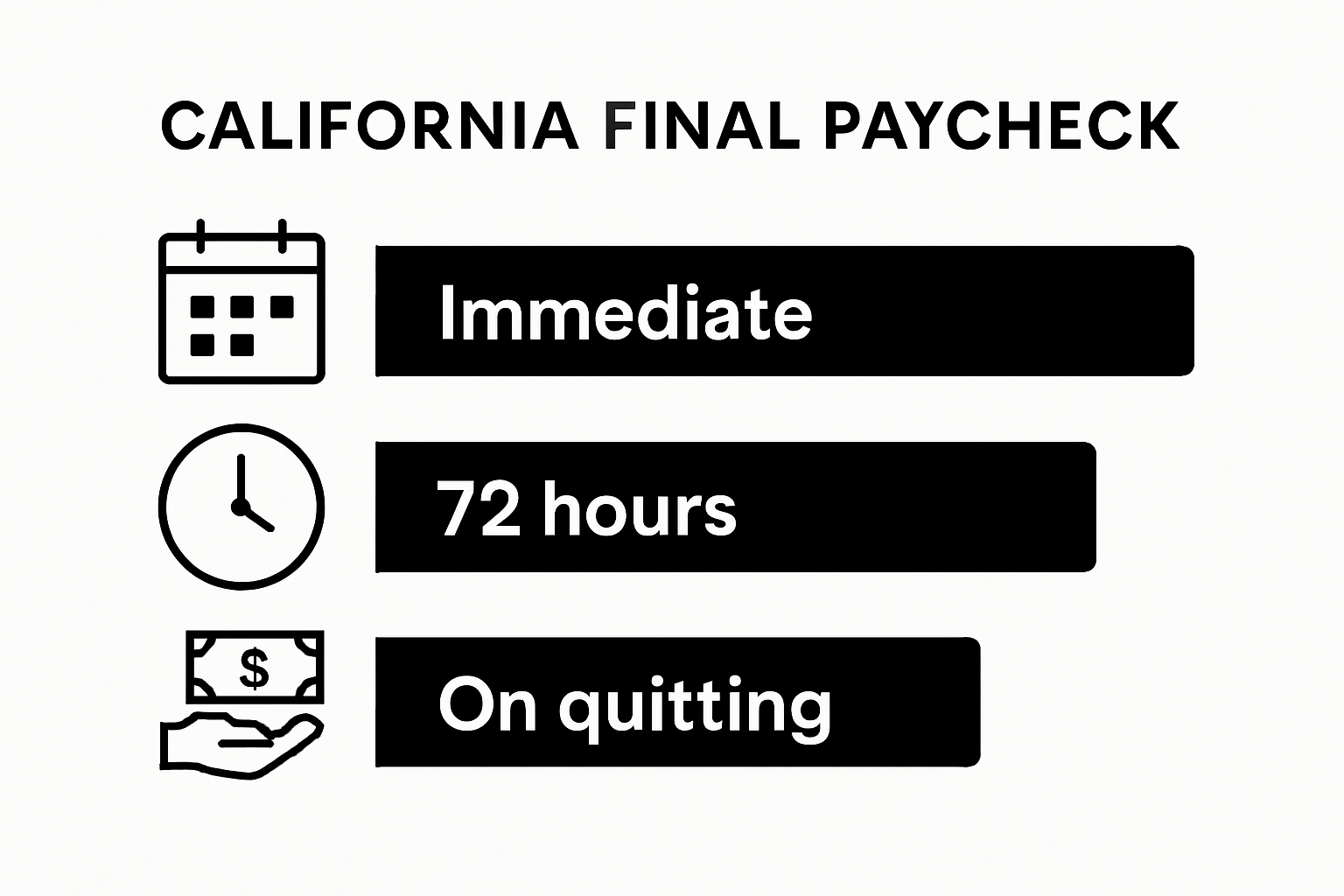
The timing of final paycheck delivery varies depending on the circumstances of employment termination. For involuntary terminations, employers must provide immediate payment. In cases of voluntary resignation with 72 hours’ notice, payment is due on the last working day. Without sufficient notice, employers have 72 hours to issue the final paycheck.
If you want to learn more about waiting time penalties related to delayed final paychecks, our comprehensive guide can help you understand your rights and potential recourse.
Understanding these regulations is crucial for employees to ensure they receive fair compensation and for employers to maintain legal compliance in their payroll practices.
This table outlines the primary components of a California final paycheck, distinguishing each element to clarify what employees can expect as part of their final compensation.
| Component | Description |
|---|---|
| Regular Wages | Pay for all regular hours worked through the final day |
| Overtime Compensation | Additional pay for hours worked beyond standard weekly limits |
| Unused Vacation Time | Payment for accrued, unused paid time off (as required by law) |
| Prorated Wages | Earnings for partial pay periods if employment ends mid-cycle |
Why Final Paycheck Matters for Employees and Workers
Final paychecks are far more than routine financial transactions; they represent critical legal protections and financial safeguards for California workers. These payments ensure that employees receive complete compensation for their labor, protecting them from potential wage theft and financial uncertainty during job transitions.
Financial Protection and Legal Rights
A final paycheck serves as a crucial mechanism for workers to secure their rightful earnings. By mandating immediate or timely payment upon employment termination, California labor laws prevent employers from withholding wages arbitrarily. Workers facing potential wage disputes can use these regulations as a powerful tool to defend their economic interests and ensure fair treatment.
Comprehensive Compensation Breakdown
The significance of a final paycheck extends beyond basic wages. It encompasses multiple critical financial components that protect workers during employment transitions:
- Full Wage Recovery: Ensuring every hour worked is compensated
- Unused Benefit Redemption: Converting accrued vacation or paid time off into monetary value
- Immediate Financial Stability: Providing immediate access to earned income
According to the National Conference of State Legislatures, these regulations are designed to prevent financial hardship and protect workers from potential economic exploitation. By requiring prompt and complete payment, California labor laws create a robust framework that prioritizes employee financial security.
Understanding the importance of final paychecks empowers workers to recognize their rights, demand fair treatment, and navigate employment transitions with confidence and financial protection.
Understanding California Labor Laws on Final Paychecks
California labor laws surrounding final paychecks represent a robust legal framework designed to protect workers and ensure fair compensation during employment transitions. These regulations establish clear guidelines for employers regarding the timing, completeness, and delivery of final wages, creating a structured approach to protecting employee earnings.
Legal Timelines and Payment Requirements
The California Department of Industrial Relations mandates specific timeframes for final paycheck delivery based on the circumstances of employment termination. Immediate payment is required for involuntary terminations, while voluntary resignations follow different protocols. For employees who provide at least 72 hours’ notice before leaving, the final paycheck is due on their last working day.
The following table summarizes the required timelines for final paycheck delivery in California, helping you easily compare employer obligations based on how employment ends.
| Termination Type | Notice Requirement | Final Paycheck Due Date |
|---|---|---|
| Involuntary (Fired/Laid Off) | Not applicable | Immediately at termination |
| Voluntary (Resignation with 72+ Hours Notice) | At least 72 hours before last day | On the employee’s last working day |
| Voluntary (Resignation with Less Than 72 Hours Notice) | Less than 72 hours notice | Within 72 hours of notice |
| Without sufficient notice, employers have 72 hours to issue the complete payment. |

Comprehensive Wage Protection Mechanisms
California’s labor laws include multiple protective provisions to safeguard employee earnings:
- Waiting Time Penalties: Employers who fail to provide timely final paychecks may incur daily penalties
- Full Wage Calculation: Includes regular wages, overtime, unused vacation time, and prorated earnings
- Legal Recourse: Employees have multiple avenues to challenge incomplete or delayed payments
If you want to calculate potential waiting time penalties, our specialized tool can help you understand your potential compensation.
According to the California Department of Industrial Relations, these regulations are designed to prevent wage theft and ensure workers receive their complete compensation promptly. By establishing clear legal standards, California creates a protective environment that prioritizes employee financial rights and holds employers accountable for fair payment practices.
Key Concepts Related to Final Paychecks and Wage Theft
Wage theft represents a significant legal and financial challenge for California workers, with final paychecks serving as a critical focal point for understanding and preventing unlawful employment practices. These complex interactions between employer obligations and employee rights demand careful navigation and comprehensive understanding.
Defining Wage Theft in Context of Final Paychecks
Wage theft occurs when employers intentionally or negligently withhold earned compensation, including wages, overtime, or final paycheck amounts. Specific forms of wage theft related to final paychecks include deliberately delaying payment, underpaying total wages owed, or refusing to include all compensable earnings such as unused vacation time or prorated wages.
Protective Mechanisms and Employee Rights
California labor laws provide robust protections against wage theft, establishing clear mechanisms for workers to defend their financial interests:
- Waiting Time Penalties: Financial penalties assessed against employers who fail to provide timely final payments
- Wage Claim Procedures: Official channels for employees to challenge incomplete or missing compensation
- Legal Recourse: Multiple avenues for recovering unpaid wages, including administrative complaints and civil litigation
Victims of wage theft can explore comprehensive resources to understand their options and potential recovery strategies.
According to the California Department of Industrial Relations, these legal frameworks are designed to create accountability, ensuring that workers receive complete and timely compensation. By establishing clear standards and meaningful consequences, California’s labor laws serve as a powerful deterrent against unethical employment practices and protect workers’ fundamental right to fair payment.
How Final Paycheck Issues Affect Employment Disputes
Final paycheck disputes represent a critical intersection of legal and financial tensions between employees and employers in California. These conflicts can escalate quickly, transforming routine employment separations into complex legal challenges that impact both parties’ professional and financial futures.
Escalation of Workplace Conflicts
Final paycheck issues frequently serve as catalysts for broader employment disputes, triggering potential legal actions that extend far beyond the immediate compensation concern. When employers fail to comply with California’s strict final paycheck regulations, employees gain substantial leverage in challenging not just the specific wage discrepancy, but potentially other workplace misconduct or labor law violations.
Legal and Financial Consequences
Employment disputes stemming from final paycheck problems can manifest through multiple legal mechanisms:
- Administrative Complaints: Formal wage claims filed with state labor authorities
- Civil Litigation: Lawsuits seeking comprehensive financial recovery
- Potential Punitive Damages: Additional financial penalties against employers who demonstrate willful wage violations
Explore comprehensive guidance on understanding wait time penalties to grasp the full potential financial implications of these disputes.
According to the California Division of Labor Standards Enforcement, these disputes are not merely financial transactions but critical opportunities to enforce worker protections. The potential for significant financial penalties against employers creates a powerful deterrent against systemic wage theft and encourages comprehensive compliance with labor regulations.

Secure Your Final Paycheck Rights Today
Are you worried about missing wages or delayed payment after leaving your job? Many workers in California face the uncertainty and stress of final paycheck problems, not knowing if their employer is truly following the law. Understanding concepts like waiting time penalties and wage theft can make all the difference when your financial stability is on the line.
Take control and discover the exact steps to protect your pay. Access free tools that show if you are owed additional money by visiting California Labor Law. Our site offers clear guides about waiting time penalties and shows you how to calculate potential penalties when your paycheck is late. If you want real answers right now, connect with an advocate by calling us at 1-866-355-9991 to schedule a free final paycheck rights consultation and make sure you receive every dollar you have earned.
Frequently Asked Questions
What is a final paycheck in California?
A final paycheck in California is the last payment an employee receives upon termination, resignation, or mutual separation, including all wages earned, overtime, unused vacation time, and any outstanding compensation.
What are the requirements for delivering a final paycheck in California?
Employers must provide an immediate final paycheck for involuntary terminations. For voluntary resignations, if an employee gives 72 hours’ notice, payment is due on the last working day; otherwise, the employer has 72 hours to issue the final paycheck.
What components should be included in a final paycheck?
A final paycheck in California should include regular wages, overtime compensation, unused vacation time, and any prorated wages for partial pay periods.
What can employees do if they don’t receive their final paycheck on time?
If an employer fails to deliver a final paycheck on time, employees may be entitled to waiting time penalties, can file claims with state labor authorities, or pursue civil litigation for financial recovery.