Category: Meals & Rest Breaks

  • Meal Penalty California: What Retail Workers Must Know

    Meal Penalty California: What Retail Workers Must Know

    California Meal Penalty Pay Explained for Retail & Non-Exempt Workers

    Missing a duty-free meal break during a busy California retail shift is more than just inconvenient.

    For many employees, these interruptions represent a direct loss of rest and legal pay. California law requires a duty-free 30-minute meal period for workers who exceed five hours on the job, and employers must pay one extra hour as a penalty for each missed break.

    Understanding these regulations helps workers identify violations, assert their rights, and pursue the compensation they deserve.

    Defining California Meal Penalty Law

    California’s meal penalty law represents a critical worker protection designed to ensure employees receive adequate rest and compensation during long work shifts. Under state regulations, employers must provide nonexempt employees with a duty-free meal period lasting at least 30 minutes when their work day exceeds five consecutive hours.

    Meal break regulations from California DIR outline specific requirements that safeguard workers’ rights to uninterrupted breaks.

    The fundamental purpose of this law is preventing worker exploitation by mandating employers provide meaningful rest periods. When an employer fails to offer a compliant meal period, they become legally obligated to compensate the employee with one additional hour of pay at their standard hourly rate. This penalty serves as a financial deterrent, encouraging businesses to respect workers’ basic labor rights and provide appropriate meal breaks.

    Specifically, the meal period must be truly off-duty, meaning employees must be completely relieved of all work responsibilities during this time. Retail workers in California are particularly protected by these regulations, as the law recognizes the physically and mentally demanding nature of service industry jobs.

    The break must be uninterrupted and provide a genuine opportunity for employees to rest, eat, and momentarily disconnect from workplace responsibilities.
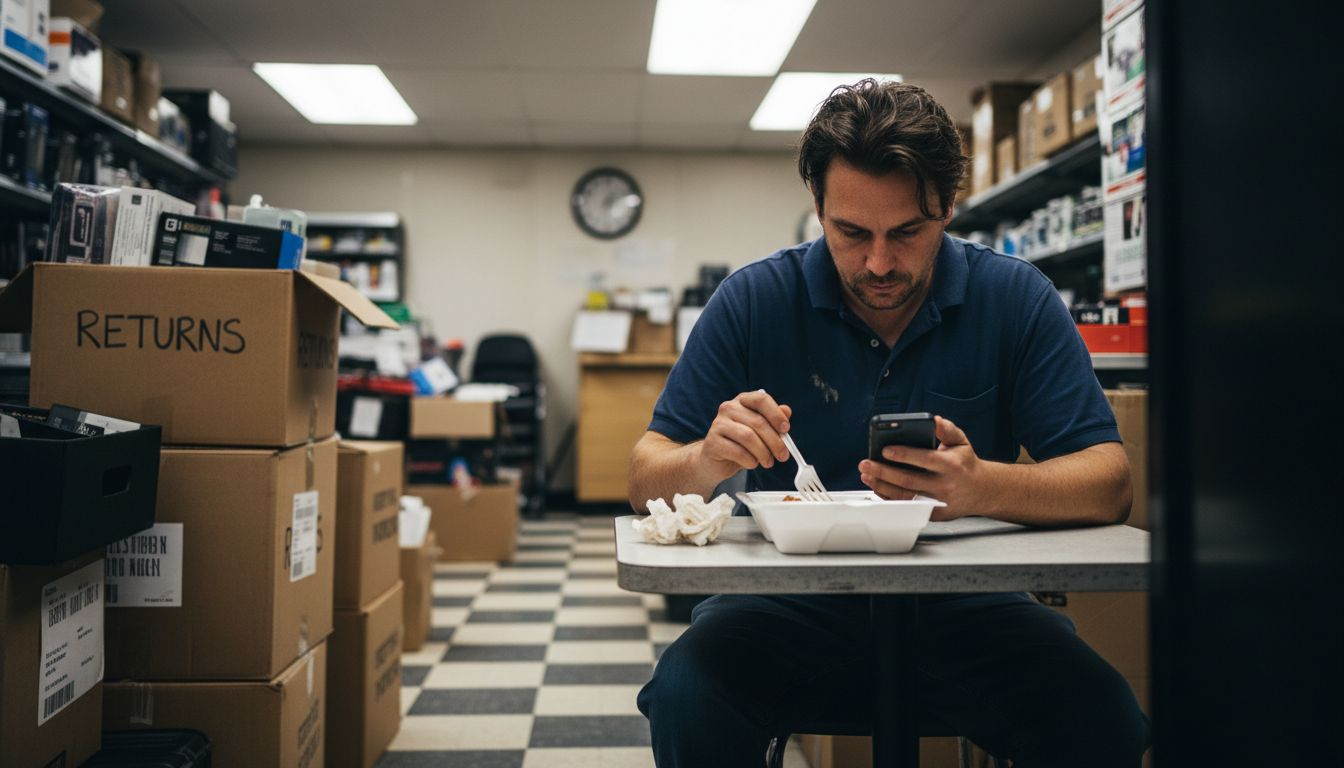
    Employee taking uninterrupted meal break

    Pro tip: Keep detailed personal records of your work shifts and meal breaks, including dates, times, and any instances where a proper meal period was not provided, as these documents can be crucial evidence if you need to file a wage claim.

    When Meal Penalties Apply to Workers

    California labor laws are designed to protect workers from unfair workplace practices, particularly when it comes to meal breaks. Meal penalty regulations clearly outline specific scenarios where employers must pay additional compensation to employees who are denied proper meal periods.

    Meal penalties are triggered in several key situations. First, if an employer fails to provide a 30-minute uninterrupted meal break for employees working more than five consecutive hours, they become liable for a one-hour penalty payment.

    The penalty also applies when workers are required to remain on-duty during their meal period, effectively preventing them from taking a genuine rest break. This means that simply offering a break is not enough – the break must be truly duty-free and provide a meaningful opportunity for employees to rest and eat.

    Retail and service industry workers are particularly vulnerable to meal break violations. Common scenarios that trigger penalties include managers demanding employees work through their scheduled breaks, failing to relieve workers of all job responsibilities during meal periods, or implementing scheduling practices that make taking a full 30-minute break impossible.

    Employers cannot create indirect pressures or workplace cultures that discourage workers from taking their legally mandated breaks, as such practices can also result in meal penalty assessments.
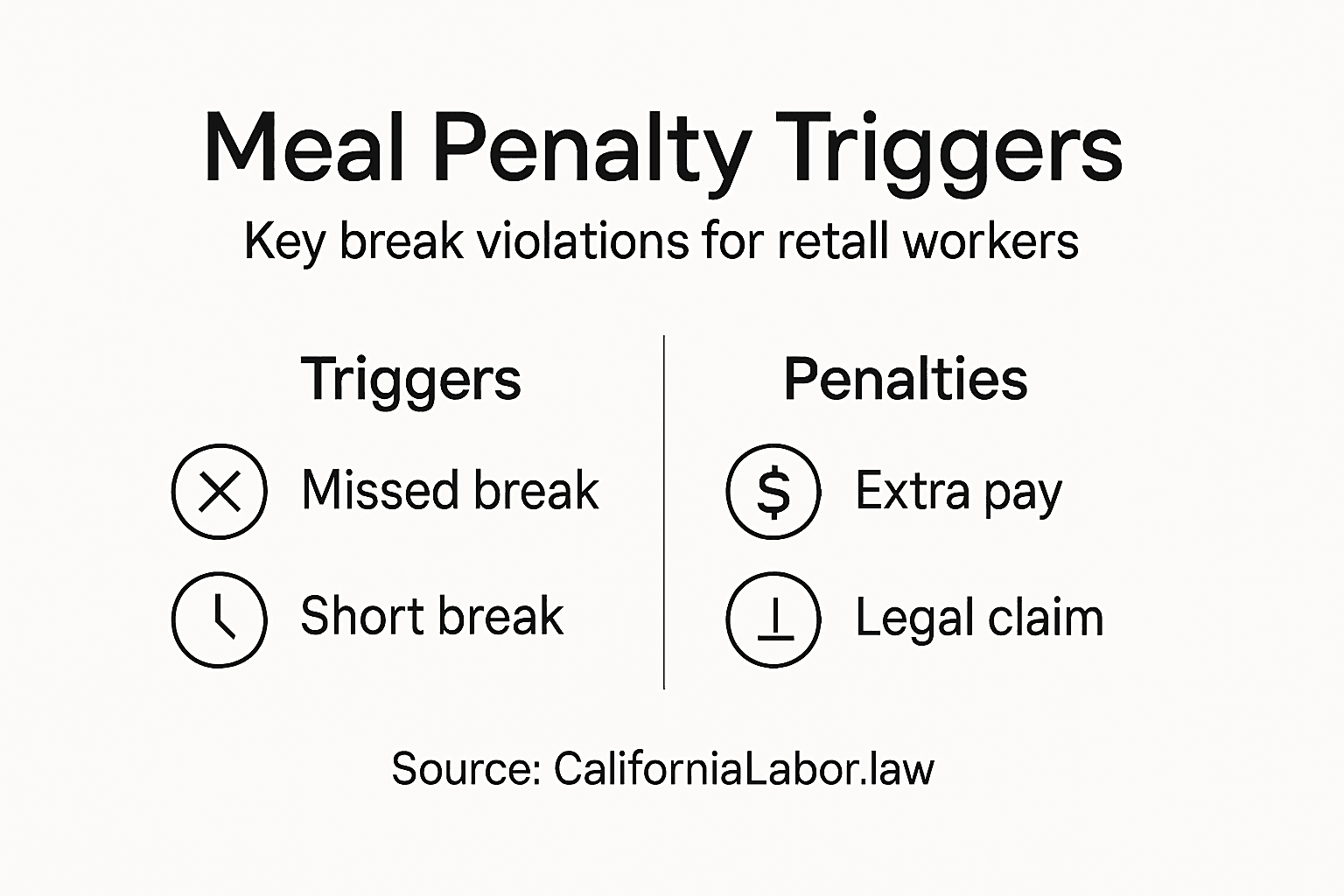
    Infographic on retail meal penalty triggers

    Pro tip: Document every instance of a missed or interrupted meal break, including the date, time, duration, and specific circumstances, as these detailed records can be crucial evidence if you need to file a wage claim against your employer.

    California labor laws provide comprehensive protections for workers through detailed meal and rest break regulations. These regulations establish clear guidelines for employers regarding mandatory break periods, ensuring nonexempt employees receive adequate rest during their work shifts.

    The law specifically mandates that employees working more than five consecutive hours must receive an uninterrupted 30-minute meal period.

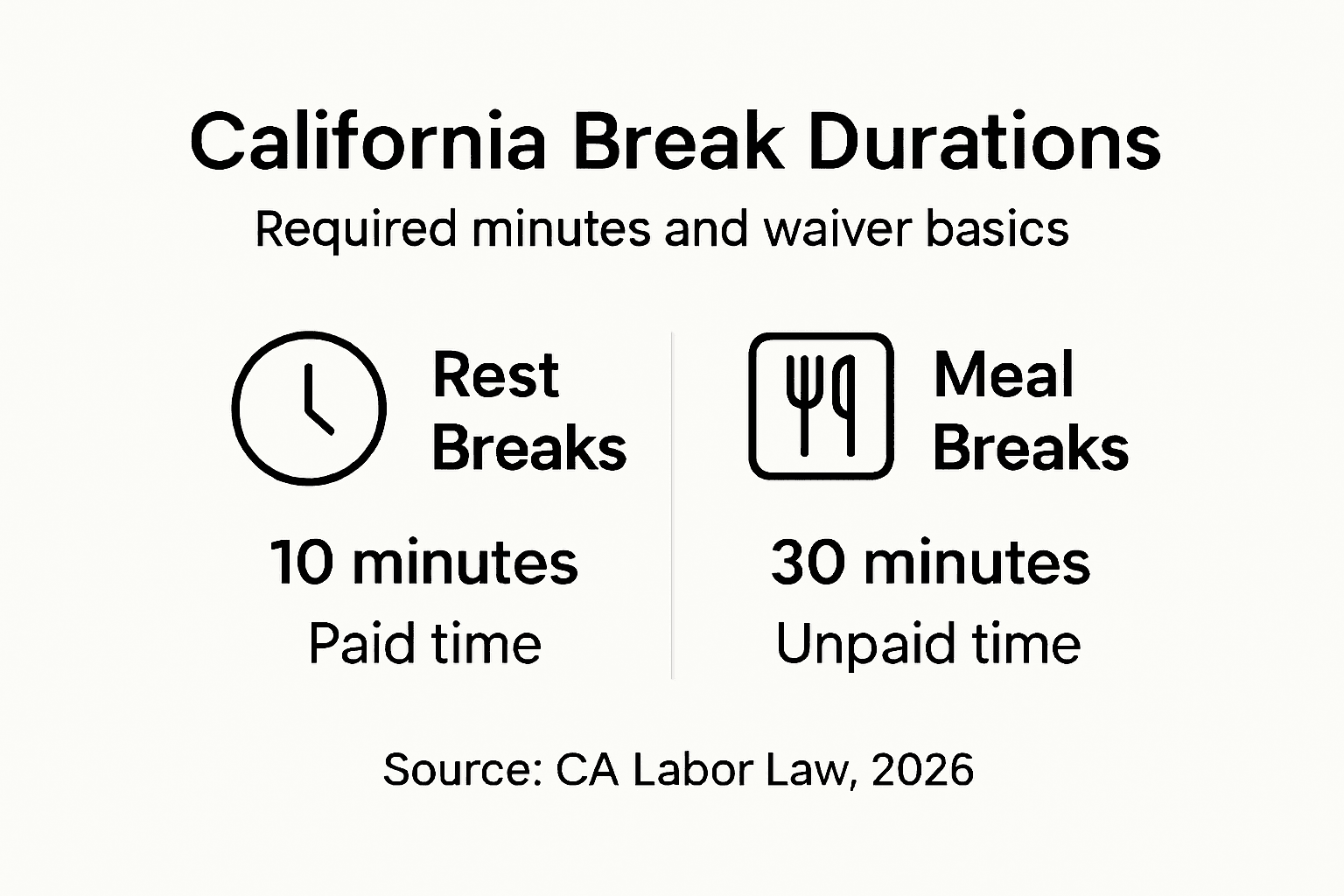
    The break requirements are structured with precise timing and duration specifications. For every four hours worked, or substantial fraction thereof, employees are entitled to a 10-minute paid rest break. When an employee works more than five hours, they must receive a first 30-minute meal break, and a second meal break is required if the total work time exceeds ten hours.

    Importantly, these breaks must be completely duty-free, meaning the employee must be fully relieved of all work responsibilities during that time.

    Employers have specific obligations in implementing these break requirements. They cannot create workplace cultures or scheduling practices that discourage or prevent employees from taking their legally mandated breaks. Breaks cannot be combined or waived without mutual consent, and the timing of breaks must allow meaningful rest.

    Some industries with unique operational requirements may have slightly modified break rules, but the fundamental protections remain consistent across most workplace settings.

    The table below summarizes key legal requirements for worker breaks in California:

    Requirement Type Minimum Duration Applicability Paid or Unpaid
    Meal break 30 minutes Over 5 hours worked Unpaid (unless penalty applies)
    Rest break 10 minutes per 4 hours All nonexempt employees Paid
    Second meal break 30 minutes Over 10 hours worked Unpaid
    Nature of break Fully duty-free All workplaces Required by law

    Pro tip: Photograph or screenshot your work schedule and keep a personal log of your breaks, noting any instances where you were unable to take a full, uninterrupted break, as this documentation can be critical evidence if you need to file a workplace complaint.

    How Penalties Are Calculated and Paid

    California’s meal penalty system is designed to provide clear financial accountability for employers who fail to comply with break regulations.

    Meal break penalty calculations are straightforward: for each day an employee is denied a lawful meal break, they are entitled to one hour of pay at their regular rate as compensation.

    The penalty is calculated based on the employee’s standard hourly wage, not their overtime rate. This means if an employee typically earns $20 per hour, they would receive $20 as a penalty for each day a proper meal break is not provided. These penalty payments are considered premium wages and must be included in the employee’s next regular paycheck.

    Critically, these penalties are separate from any overtime calculations and cannot be offset or negotiated away by employers.

    Employers face significant financial risks for consistent meal break violations. The penalties accumulate quickly – for instance, an employee working five days a week without proper breaks could potentially accrue $100 in daily penalties. These regulations create a strong financial incentive for employers to maintain proper break schedules and respect workers’ rights to rest periods.

    The law applies consistently across different industries, though some specific workplace environments might have nuanced interpretations of break requirements.

    Pro tip: Keep precise records of your work schedules, break times, and any instances of missed or interrupted breaks, as detailed documentation can be crucial when seeking meal penalty compensation.

    Worker Rights and Filing a Meal Penalty Claim

    Retail workers in California have robust legal protections when it comes to meal break violations, with clear pathways to seek compensation for denied break rights.

    Wage theft protections empower employees to take action when employers systematically violate meal and rest break regulations. Workers have the right to file claims through multiple channels, including direct communication with their employer, filing a complaint with the California Labor Commissioner’s Office, or pursuing legal action through civil courts.

    The claims process involves several critical steps. Initially, employees should document all instances of missed or interrupted meal breaks, including dates, times, and specific circumstances of the violation. Workers must typically file a wage claim within three years of the violation, though some situations may have different statute of limitations.

    The claim can seek recovery of the one-hour premium pay for each day a proper meal break was not provided, potentially resulting in significant compensation for repeated violations.

    Navigating a meal penalty claim requires careful documentation and strategic approach. Employees should maintain detailed records of work schedules, break times, and any communications about missed breaks.

    Many workers choose to first address the issue internally with their human resources department or direct supervisor, creating a paper trail of their attempts to resolve the matter. If internal resolution fails, filing a formal complaint with state labor authorities or consulting with an employment law attorney can provide additional avenues for seeking justice and compensation.

    Pro tip: Take timestamped screenshots of your work schedules, save text messages or emails discussing break issues, and keep a personal log of every missed or interrupted break, as comprehensive documentation dramatically strengthens your potential claim.

    Common Employer Mistakes and Worker Protections

    Employers frequently make critical errors in interpreting and implementing California’s meal break regulations, often exposing themselves to significant legal and financial risks.

    Meal and rest break requirements reveal numerous common mistakes that can result in substantial penalties for businesses across various industries. These errors typically stem from misunderstandings about break timing, duration, and the mandatory nature of meal periods.

    Some of the most prevalent employer mistakes include improperly handling meal break waivers, requiring employees to remain on-duty during breaks, and failing to provide a complete 30-minute duty-free break period. Employers often incorrectly assume they can pressure employees to skip breaks or work during designated rest times.

    The law is clear: nonexempt employees must be completely relieved of all work responsibilities during meal breaks, and any attempt to circumvent this requirement can trigger significant financial penalties.

    Worker protections are robust and designed to prevent exploitation. Employees have the right to receive full, uninterrupted meal breaks, and employers cannot create workplace cultures that discourage taking these mandated rest periods.

    This includes prohibiting indirect forms of pressure, such as scheduling practices that make taking breaks practically impossible or creating environments where workers feel guilty about stepping away from their duties.

    The legal framework ensures that workers can assert their rights without fear of retaliation, with multiple mechanisms in place to hold employers accountable for violations.

    Pro tip: Create a personal break log documenting the exact times and circumstances of each meal break, including any instances where you were unable to take a full, uninterrupted break, as this documentation can be crucial evidence in potential labor disputes.

    Take Control of Your Meal Break Rights Today

    Are you a retail worker struggling with missed or interrupted meal breaks in California. Your rights under the meal penalty law are clear You deserve a full 30-minute duty-free meal period without any pressure or interruptions.

    The fear of retaliation or the frustration of lost wages can feel overwhelming, but you do not have to face this challenge alone. Find detailed legal guides and tools designed to help you calculate owed wages and assert your rights effectively.

    Stop waiting and start reclaiming what is rightfully yours by taking immediate action. Call 1-866-355-9991 now for a free meal penalty consultation and empower yourself with free legal help tailored for California workers like you.

    Frequently Asked Questions

    What is California’s meal penalty law?

    California’s meal penalty law requires employers to provide nonexempt employees with a 30-minute, uninterrupted meal period when working over five consecutive hours. If the law is violated, employers must compensate employees with one additional hour of pay at their regular rate.

    When do meal penalties apply to workers?

    Meal penalties apply when an employee misses a 30-minute meal break after working over five consecutive hours, is required to stay on-duty during a meal period, or faces indirect pressure to forgo breaks. In these cases, workers are entitled to one extra hour of pay.

    What documentation should I keep to file a meal penalty claim?

    To file a meal penalty claim, keep detailed records of your work shifts, including dates and times of missed or interrupted meal breaks, as well as any relevant communications. This documentation can serve as critical evidence in your claim.

    How are meal penalties calculated and paid?

    Meal penalties are calculated at the employee’s standard hourly wage for each day a proper meal break is not provided. This penalty constitutes premium wages and must be included in the employee’s next regular paycheck.

  • California Rest and Meal Break Laws 2026: Key Rights for Workers

    California Rest and Meal Break Laws 2026: Key Rights for Workers

    California Required Rest and Meal Breaks 2026: Full Guide for Employees

    Long shifts in California hotels and restaurants often leave workers struggling to fit in a real break, especially when management treats breaks as a favor instead of a right.

    Clear protections exist under California law that go beyond federal standards, making it crucial for hospitality employees to understand how rest and meal break rights are legally enforced and compensated.

    This guide gives you the clarity needed to spot illegal practices and document missed breaks so you can recover the wages you deserve.

    Defining Rest and Meal Break Rights

    Your right to breaks during your shift is one of the most misunderstood parts of California labor law, especially in hospitality where time moves fast and managers often treat breaks as optional favors rather than legal requirements. The reality is different. California provides stronger protections than federal law does, and understanding what you’re entitled to matters when you’re working long shifts in hotels, restaurants, or other service roles.

    Let’s start with rest breaks. For every four hours worked (or even a major fraction of four hours), you get a paid 10-minute rest break. This break must be taken as close to the middle of each work period as possible, and your employer has to compensate you for this time.

    Short rest breaks lasting 5 to 20 minutes are compensable work hours, meaning you get paid even though you’re technically not working.

    The key word here is “paid”—you cannot use this time for personal tasks at home. Your employer must provide an actual break where you can step away from your duties.

    Café worker taking a break near kitchen exit

    Meal breaks work differently. You’re entitled to at least a 30-minute unpaid meal break for every five hours of work.

    Unlike rest breaks, you don’t get paid for meal time, but your employer still has a legal obligation to provide the opportunity for you to take it. The break must be duty-free, meaning you cannot be required to work or monitor operations while eating.

    In hospitality, this is crucial—you cannot be told to eat at your desk while answering phones or managing reservations. If the nature of your job makes it impossible to be relieved of duties (rare but possible in certain situations), a written agreement must explicitly address this.

    Here’s what matters most: your employer must make these breaks available to you.

    The law places the responsibility on management to schedule and allow breaks. If breaks are denied or delayed beyond what’s reasonable, your employer owes you one additional hour of wages for each day this violation occurs. This isn’t a small penalty.

    If you work five days a week and never received your meal breaks, that’s five hours of extra pay per week—significant money that often goes unclaimed.

    Pro tip: Keep a simple shift log noting dates when breaks were missed or cut short. This documentation becomes essential if you need to file a wage claim later, as it shows a pattern rather than isolated incidents.

    To clarify the differences between rest and meal breaks under California law, see the table below:

    Aspect Rest Breaks Meal Breaks
    Duration 10 minutes (paid) 30 minutes (unpaid)
    Frequency Every 4 hours worked Every 5 hours worked
    Compensation Included in wages Not included; duty-free
    Location Away from workstation Must be relieved of duties
    Waivers Allowed Not permitted Only by written agreement

    Required Break Durations and Waivers Explained

    The specific minutes you get for breaks matter, and so does understanding when your employer can legally ask you to skip them. In hospitality, managers sometimes blur these lines, suggesting breaks are negotiable or optional when they legally are not. They’re required, period.

    But there are specific situations where waivers exist, and knowing the difference keeps you from accidentally giving up rights you didn’t realize you had.

    Infographic of California rest and meal break timings

    Rest breaks are straightforward: 10-minute paid breaks for every four hours worked or any major fraction of four hours. This means if you work four hours and one minute, you still get that full 10-minute break. The break should occur near the middle of your work period.

    So if you’re working a four-hour shift, your break should ideally come around the two-hour mark, not at the end when it barely helps. With meal breaks, you need at least 30 minutes unpaid for every five hours of work.

    Again, a major fraction counts—work five hours and one minute, and you’re entitled to the full 30-minute meal break. If you work over 10 hours in a single day, you get a second meal break, unless that second break is waived by mutual written consent.

    Now here’s where waivers come in, and this is critical for hospitality workers who often encounter pressure around this. Meal periods may be waived by mutual consent when total work hours are six or less. This means if you’re scheduled for a short six-hour shift, your employer can propose skipping the meal break if you agree in writing.

    But “mutual consent” is the key phrase—your employer cannot simply announce that breaks are waived. You must actively agree, and that agreement should be documented.

    Unfortunately, many hospitality managers treat this as a one-sided decision, telling staff “we’re skipping lunch today” without actual consent. That’s illegal.

    One more scenario affects hospitality workers specifically: on-duty meal periods. If your job requires you to stay at your work location during your meal break—perhaps covering the front desk while eating or monitoring the restaurant floor—that time must be paid.

    You cannot be asked to work through lunch unpaid just because you’re technically eating on site. If an on-duty meal period is arranged, it must be a written mutual agreement, and you must receive compensation for that time. This protects you from situations where managers claim you “chose” to eat at your station while remaining responsible for customers or operations.

    Pro tip: Request written confirmation of any agreed-upon break waivers from your manager or HR department, and keep copies in your personal files separate from your workplace records for safety.

    Employer Obligations and Common Violations

    Your employer doesn’t get to decide whether breaks are optional. California law places specific obligations on management, and when they fail to meet these obligations, it becomes a wage violation. Understanding what your employer must do—and what they cannot do—is the foundation for recognizing when something illegal is happening on your shift.

    Employers have one core obligation: authorize and permit rest periods of at least ten minutes for every four hours worked. This means management must actually schedule breaks, not just vaguely allow them. If you work a four-hour shift and never get time away from your station, that’s a violation. If you work eight hours and get only one 10-minute break instead of two, that’s a violation. The break must happen, and it must be paid.

    Similarly, your employer must provide a 30-minute unpaid meal break for every five hours worked. The requirement isn’t that breaks “be available”—it’s that they must be “authorized and permitted,” meaning actively scheduled and facilitated.

    Common violations in hospitality happen in predictable patterns. Denying breaks, requiring employees to work through breaks, and failing to compensate missed breaks are the most frequent violations.

    A manager might claim you “didn’t have time” for a break, or that you “chose” to skip it. Neither excuse matters legally. Your employer has an affirmative duty to make breaks happen. Some managers create situations where breaks appear impossible—understaffing your section so nobody can cover you, or scheduling breaks during peak customer times.

    These tactics violate the law. You cannot be disciplined, pressured, or made to feel unwelcome for taking legally required breaks. Retaliation of any kind is illegal.

    Another violation occurs when employers require you to remain “on call” during meal breaks. If you’re eating at your desk but still responsible for answering phones or helping customers, that’s an on-duty meal period that must be compensated. You cannot be expected to monitor operations while eating unpaid.

    Understanding what qualifies as wage theft matters here—many hospitality workers don’t realize that uncompensated time spent managing duties while eating counts as stolen wages.

    The financial consequences for employers are significant. For each day breaks are missed, employers owe you one additional hour of wages at your regular rate. If you work six days a week without meal breaks, that’s six hours of extra pay per week. Violations often accumulate quickly, and penalties compound.

    Pro tip: Create a simple calendar or phone note documenting break violations as they occur, including the date, time, and specific circumstance (such as “told to skip lunch to cover front desk”), which strengthens any future wage claim.

    Penalties for Missed or Denied Breaks

    When your employer denies you breaks, they don’t just inconvenience you. They owe you money. This is where California law gets specific and powerful for workers.

    The penalty structure is straightforward, and it adds up fast, especially in hospitality where understaffing and missed breaks happen frequently. Understanding the financial consequences helps you recognize whether unpaid wages are accumulating in your current position.

    Here is the core penalty: employers must pay one additional hour of pay at regular rate for each workday breaks were not provided. This is premium pay, separate from your regular wages.

    If you work a ten-hour shift and your employer fails to give you two required rest breaks and one meal break, that is three hours of premium pay owed to you. If this happens across a five-day work week, that is 15 hours of additional compensation.

    For a hospitality worker earning $16 per hour, that is $240 per week. Over a year, assuming consistent violations, that reaches approximately $12,480 in unpaid wages.

    The critical detail many workers miss: this premium pay is not counted toward overtime calculations. You cannot be forced to work overtime and then have the employer claim that the break premium satisfied overtime requirements. These are separate wage obligations.

    Additionally, failure to timely pay wages including break premium pay can result in additional penalties under California Labor Code. This means if your employer withholds break compensation, you may be owed not just the premium hours but further penalties for late payment.

    The statute of limitations for claiming unpaid break premium is three years. This means if you were denied breaks throughout 2023, 2024, and 2025, you can file a claim seeking compensation for all three years of violations. Your employer cannot avoid liability by claiming violations happened too long ago, unless more than three years have passed.

    However, certain circumstances may extend or shorten this timeline, so documentation of when violations occurred matters significantly.

    What makes this penalty structure powerful is its cumulative nature. Employers cannot simply pay a flat fine and move forward. Each day of violation creates a new wage obligation.

    If your employer systematically denies breaks to an entire shift, they may owe compensation to multiple workers simultaneously, creating substantial financial exposure. This is why some employers attempt to pressure workers into signing waiver documents or avoid scheduling breaks altogether.

    Pro tip: Track the exact date and time of each missed or shortened break for at least three months, noting how long the break should have been, then calculate your owed premium pay by multiplying the number of violation days by one hour times your hourly rate.

    Industry-Specific Exceptions and Special Cases

    Not every California worker gets the same break rules. Certain industries operate under different legal frameworks, and hospitality professionals need to understand whether your specific job falls into an exception category.

    The bad news: some legitimate exceptions exist.

    The good news: even when exceptions apply, you still have protections, and employers often misuse these exceptions to deny breaks they are legally required to provide.

    The motion picture industry operates under its own wage order with distinct meal break requirements. If you work on film or television sets, your break entitlements differ from standard hospitality rules.

    Construction, drilling, logging, and mining industries also have exceptions because the nature of their work makes traditional break scheduling impractical. In these sectors, rest breaks may be staggered or skipped temporarily to maintain continuous operations, but employers must compensate employees for missed breaks.

    This is the critical point: an exception to scheduling breaks does not eliminate your right to compensation.

    If your job requires continuous operation and breaks cannot be taken on schedule, your employer owes you premium pay for each missed break.

    Certain hospitality workers may fall into specialized categories. Employees in 24-hour residential care facilities, for instance, have different break rules because someone must always be present. Performers engaged in strenuous physical activity—think dancers, swimmers, or skaters performing continuously—may have modified break requirements.

    However, these exceptions apply only to specific worker groups defined by California Industrial Welfare Commission Wage Orders, and employers frequently overreach by claiming exceptions that do not actually apply to their workers. A hotel front desk clerk cannot claim the 24-hour residential care exception. A restaurant kitchen worker cannot claim the performer exception.

    On-duty meal periods represent another special case relevant to hospitality. If your job genuinely prevents you from being relieved of duties during lunch—for example, you must monitor a security system or manage an emergency—your employer may require an on-duty meal period. This is legal only if a written agreement exists and the time is paid.

    Many hospitality managers claim this exception when it does not apply. Being busy during lunch is not the same as being unable to be relieved. Understaffing is not a legal reason to deny breaks. Your employer must ensure coverage exists to relieve you from duties.

    Pro tip: If your employer claims your job falls under an industry exception, request written documentation showing the specific exception and how it applies to your position, then verify the claim against California Department of Industrial Relations wage orders.

    Here is a quick reference summarizing major exceptions and special cases in break rules for California workers:

    Industry/Role Break Scheduling Exception Compensation Requirement
    Motion picture/film sets Distinct break rules apply Missed breaks must be paid
    Construction & mining Breaks may be staggered Premium pay for missed breaks
    24-hour residential care staff Shift-specific break rules Compensation still required
    Performers (athletes/dancers) Modified break provisions Defined by wage orders
    Hospitality with on-duty meals Must be in writing, paid No waiver without documentation

    Know Your Break Rights and Protect Your Wages Today

    Understanding California rest and meal break laws is critical for every hospitality worker facing the challenge of denied or shortened breaks.

    If you have ever been pressured to skip breaks, worked through unpaid meal periods, or felt uncertain about your legal rights to rest and meal times, you are not alone.

    Get support tailored to your situation by exploring our comprehensive guides and legal tools at California Labor Law. You can use our calculators to estimate unpaid break premiums and learn how to take action against wage theft.

    Don’t wait for violations to continue — knowing your rights and seeking help now can make all the difference. Call 1-866-355-9991 for a free rest and meal break violation consultation to empower yourself with knowledge and connect with advocates ready to assist you through every step.

    Frequently Asked Questions

    What are my rights regarding rest breaks in California?

    In California, employees are entitled to a paid 10-minute rest break for every four hours worked or a major fraction thereof. Employers must schedule these breaks, and employees must be compensated for this time even if they are not performing work.

    How long is the required meal break for employees in California?

    Employees in California are entitled to at least a 30-minute unpaid meal break for every five hours worked. This break must be duty-free, meaning employees cannot be required to work or monitor operations during this time.

    What happens if my employer denies or delays my breaks?

    If your employer denies or delays your required breaks, they owe you an additional hour of pay for each day that breaks are not provided. This applies whether the breaks are rest or meal breaks.

    Can my employer require me to waive my meal break?

    Meal breaks can only be waived by mutual written consent when total work hours are six or less. Employers cannot simply announce that breaks are waived; an active agreement from the employee is necessary.

  • Understanding California Meal and Rest Break Laws 2025

    Understanding California Meal and Rest Break Laws 2025

    In the fast-evolving landscape of labor laws, understanding California meal and rest break regulations is crucial for anyone working in or managing a business in California.

    With the state being famous for its stringent labor protections, these laws are designed to ensure that employees receive essential breaks during their workday. They not only promote worker well-being but also help to minimize legal disputes and enhance workplace efficiency.

    For 2025, California rest and meal break laws remain a vital topic for employers and employees alike, with specific guidelines dictating when breaks should occur, how long they should last, and the conditions under which they can be waived. Knowing these requirements can help prevent costly penalties and misunderstandings.

    Distinctions between exempt and non-exempt employees influence the application of these regulations, emphasizing the need for clear differentiation and understanding of their roles within a company.

    This article delves into the intricacies of California’s rest and meal break laws for 2025, offering an overview of the requirements, potential penalties for non-compliance, and strategies for maintaining proper adherence.

    By exploring legal considerations, the role of the California Labor Board, and employers’ and employees’ responsibilities, readers will gain a comprehensive understanding of how these laws function and their significance in ensuring fair treatment of workers across the state.

    Overview of California Meal and Rest Break Laws

    California has specific laws governing meal and rest breaks to protect employee rights. Workers must receive a minimum 30-minute meal period if they work over five hours in a day. During this time, employees can step away and handle personal tasks if they wish.

    The rules state that these meal breaks cannot overlap with rest periods. Employers should make sure that meal periods are free from work interruptions. Failure to provide adequate breaks may lead to penalties. Employees can report any violations to the California Labor Commissioner’s Office to resolve issues.

    Definition of Meal Breaks

    Under California law, if employees work more than five hours, they are entitled to a 30-minute meal break. These breaks should be free from all work duties, allowing employees to rest or do personal activities.

    California Meal Break Definition

    Employers must offer meal periods, but are not required to enforce their usage.

    These breaks should not merge with rest periods and should be taken separately. It’s essential for workers to understand that they can use this time as they like, keeping in mind it aligns with company rules.

    Definition of Rest Breaks

    California’s rest break laws require employers to give employees a paid 10-minute rest for every four-hour work period.

    These breaks are granted if the employee works at least 3.5 hours a day. Usually, the break is best taken in the middle of the four-hour period, but timing can be flexible when necessary.

    These breaks are considered work time, meaning employees get paid during the break without any deductions.

    If employees work less than 3.5 hours, they typically do not receive rest breaks unless they work in some specialized sectors. Such provisions ensure that employees are relieved from work duties to recharge effectively.

    Meal Break Requirements

    Understanding meal break laws requirements is important for both employers and employees in California. Under state labor laws, employees working more than five hours must receive a 30-minute unpaid, duty-free meal break.

    When the shift extends beyond ten hours, employees are entitled to a second meal break of the same duration. It’s important to note that these meal breaks must free the employee from all work duties.

    Non-compliance from employers can lead to penalties, requiring them to pay a meal break premium. This ensures that employees have the time needed to rest and refuel, thereby enhancing their productivity and well-being.

    Timing of Meal Breaks

    The timing of meal breaks is a critical aspect of California’s labor laws. For shifts longer than five hours, the 30-minute meal break must start before the end of the fifth hour. If an employee’s shift exceeds ten hours, a second meal break is required before the tenth hour is complete.

    This requirement emphasizes diligence in providing timely breaks to avoid any penalties. Importantly, employers must not discourage or motivate employees to skip these breaks.

    Violations can result in the employer paying an additional hour of wages to the employee. Thus, adhering to these timeframes protects both employers and employees.

    Duration of Meal Breaks

    Meal breaks under California law are designed to be uninterrupted periods for rest. Employees who work more than five hours must receive at least a 30-minute break.

    This period must allow employees to be completely free from work-related duties. Those working shifts beyond ten hours should receive an additional 30-minute break.

    Mutual consent between the employer and the employee can allow for meal break waivers under certain conditions. This ensures that while meal breaks can be flexible, employees’ right to rest is still a top priority.

    Conditions for Waiving Meal Breaks

    While meal breaks are generally mandatory, there are circumstances under which they can be waived. If a shift does not exceed six hours, employees and employers can mutually agree to skip the first meal break.

    For shifts longer than ten hours, a second break can be waived if the total work period remains under twelve hours, and the first break was not waived.

    The key here is voluntary agreement; employers cannot coerce employees into giving up their rights. Both parties need to agree, and waivers must be obtained in writing whenever possible.

    This protects the employee’s right to choose rest while allowing flexibility in scheduling.

    Rest Break Requirements

    California law is clear about rest break requirements for non-exempt employees. Workers are entitled to a 10-minute paid rest break for every four hours worked or a significant portion thereof. During these breaks, employees must be free from all work duties.

    Employers must provide a suitable rest area away from workspaces and restrooms. These breaks are paid and count as working time, ensuring employees aren’t shortchanged. If an employer fails to provide a rest break, they must pay an extra hour at the employee’s regular rate.

    However, employees working less than three and a half hours are not entitled to rest breaks under California law.

    Woman taking a rest break

    Timing of Rest Breaks

    The timing of rest breaks is important and should ideally occur near the middle of each four-hour work period. Some flexibility is allowed to accommodate practical work considerations. The law encourages aligning breaks with the midpoint of work periods to meet legal requirements.

    This means that if a shift is longer than four hours, breaks should be scheduled to fit logically within the workday.

    Although adjustments can be made, ensuring breaks are neither too early nor too late helps maintain productivity and satisfaction. Employers must schedule these breaks reasonably, keeping the employee’s needs in mind.

    Duration of Rest Breaks

    In California, the duration of rest breaks is clearly defined. Employees must receive a 10-minute paid rest break for every four hours worked. This 10-minute break must be taken near the middle of the work period whenever possible. The break time is paid and considered part of the work hours for wage calculations.

    For workdays exceeding the four-hour mark, employees are entitled to additional rest periods. Employers must supply appropriate resting facilities that are clearly separate from the work environment.

    These provisions ensure employees can rest comfortably. By adhering to these rules, employers support both the well-being and efficiency of their workforce.

    Penalties for Non-Compliance

    In California, employers must provide meal and rest breaks to non-exempt employees as mandated by labor laws. Failing to do so can lead to penalties, impacting both the company’s finances and its reputation.

    Employers who violate these rules could pay one additional hour of pay at the employee’s regular rate for each workday the violation occurs. This penalty is retroactive, going back up to four years.

    Non-compliance not only results in immediate financial costs but also risks harming a company’s reputation, which can make it harder to attract and keep quality workers. Businesses violating these laws might face increased employee turnover and damage to their professional relationships in the long run.

    Penalties for Missed Meal Breaks

    California law requires employers to pay a meal break premium if a break is missed or inadequate. This premium is an extra hour of pay at the regular rate for each day a meal break is not provided.

    Employees must receive a 30-minute meal break for every five hours worked. If shifts are longer than 10 hours, a second 30-minute break is mandatory. If this is not given, the employer owes another meal break premium.

    On-duty meal breaks are allowed only with a written agreement and are not eligible for the extra hour of pay.

    Employees can report violations to the California Labor Commissioner’s Office or take legal action.

    Penalties for Missed Rest Breaks

    Under California law, each missed rest break requires the employer to pay one additional hour at the employee’s regular rate. This applies per workday that rest breaks are denied. Missed rest breaks can lead to small fines initially but can grow into large sums, especially if violations repeat over time.

    Employees can join together in class-action lawsuits, which can result in high legal costs for the company.

    Denying rest breaks is considered illegal wage theft. This practice costs California workers around $2 billion each year. Thus, it’s crucial for employers to adhere to rest break laws to avoid legal and financial repercussions.

    Exempt vs. Non-Exempt Employees

    Understanding the difference between exempt and non-exempt employees is crucial under California labor laws. Non-exempt employees are covered by meal and rest break requirements, which ensure they get regular breaks during shifts.

    Exempt employees are typically not eligible for these breaks due to the nature of their work. They usually perform tasks that involve decision-making responsibilities and earn a salary that is at least twice the state minimum wage for full-time employment.

    Various industries, like commercial trucking and healthcare, may have specific rules that impact these classifications. It’s also important to note that independent contractors and unionized workers under collective bargaining agreements generally fall outside these regulations.

    Definitions and Differences

    In California, the distinction between non-exempt and exempt employees significantly impacts their work conditions. Non-exempt employees are entitled to meal and rest breaks, which must be adhered to by employers. But, for shifts under six hours, these employees can choose to waive their meal break.

    This waiver cannot be imposed if the shift exceeds six hours. Also, there are penalties for employers who fail to provide mandated breaks, including one hour of extra pay at the employee’s regular salaried or hourly rate.

    California’s labor laws ensure these breaks are taken separately, maintaining clear boundaries between meal and rest periods. For exempt employees, this structure differs as they perform roles needing higher decision-making and earn salaries above a set threshold.

    Meal and Rest Break Regulations for Exempt Employees

    Exempt employees in California typically occupy roles requiring administrative, executive, or professional skills. These roles demand discretion and independent judgment, differentiating them from non-exempt roles.

    To qualify as exempt, employees must earn at least twice the minimum wage for full-time work. Although exempt employees generally do not have guaranteed rest breaks, they are often entitled to meal breaks.

    However, industries like healthcare and the motion picture industry include specific exemptions affecting these rules. Employers can only classify employees as exempt if they meet the necessary criteria. This helps avoid misuse and ensures the fair treatment of workers not covered by standard break requirements.

    Regulations for Non-Exempt Employees

    Non-exempt employees in California have specific rights regarding meal and rest breaks. If they work more than five hours in a day, employers must provide a 30-minute unpaid lunch break. Those working over 12 hours must receive a second 30-minute meal break.

    The law also mandates a ten-minute rest break for every four hours worked. Importantly, these meal breaks should be uninterrupted, with employees fully relieved of their duties. Failure to comply with these break requirements results in a penalty, where employees deserve an additional hour of pay.

    Employers must abide by these regulations, ensuring that non-exempt employees receive their entitled breaks without interference.

    Duty Meal Periods

    “Duty meal periods,” also known as on-duty meal periods, is a concept that arises when the nature of an employee’s work prevents them from being completely relieved of duties for a meal break. In this scenario, the employee eats while still performing their job duties. Under California law, these on-duty meal breaks are allowed only under very specific conditions and must be agreed upon in writing by both the employer and employee.

    For a duty meal period to be legitimate:

    1. Nature of Work Necessitates It: The duties must inherently require the employee to be on duty while eating. This might apply to certain security personnel or some solo retail workers.
    2. Written Agreement: The employee must consent, and this agreement must be documented in writing as a clear, mutual decision. The agreement also must recognize that the employee can revoke consent to this arrangement at any time.
    3. Paid Break: Since the employee is technically still working, the duty meal period must be paid. This is unlike the standard meal break, which is unpaid if truly off-duty.

    Employers must approach the arrangement of duty meal periods with caution. This is not intended for the employer’s convenience but rather a necessity based on the employee’s role and specific job requirements. Employers should ensure that the conditions for duty meal periods are transparently communicated and comprehensively documented.

    Moreover, it’s crucial for businesses to regularly review these agreements to ensure ongoing compliance with California labor laws and adapt to any changes that may occur in either the employee’s duties or legislation. By actively managing these agreements, employers protect themselves from potential legal disputes while safeguarding employee rights.

    Managing Compliance

    Employers in California face strict regulations regarding meal and rest breaks. The law requires non-exempt employees to have a 30-minute, duty-free meal break for every five hours worked.

    Additionally, workers earn two 10-minute rest breaks for an eight-hour shift. These breaks must be uninterrupted and free from any work-related duties. Employers cannot make employees stay on-site or be on-call during these times.

    Compliance ensures employee well-being and can prevent legal penalties. Ensuring clear, scheduled breaks reduces health risks and boosts productivity.

    Hand drawing on chalkboard compliance

    Common Compliance Challenges

    Navigating the intricacies of California’s labor laws can pose significant challenges. Employers commonly struggle with ensuring meal breaks happen before the end of the fifth hour.

    Honest mistakes in scheduling can lead to lawsuits under laws like the Private Attorneys General Act (PAGA). PAGA allows employees to sue for wage theft, which has a hefty cost—California workers lose around $2 billion annually.

    Missteps in meal and rest break compliance can have serious financial repercussions for employers due to legal actions and penalties.

    Strategies for Employers

    Employers can adopt several strategies to adhere to meal and rest break laws in California. First, they should schedule 30-minute breaks by the fifth hour of work and ensure two 10-minute rest breaks within eight-hour shifts. Failure to comply may result in compensating employees with an extra hour of pay.

    Employers should consult legal advice to stay ahead of labor law changes. It helps to understand cases like Naranjo, impacting break premiums’ classification as wages. Staying informed minimizes risks of costly legal disputes.

    Evaluating and Documenting Break Times

    Precise tracking of break times is vital for legal compliance. Employers should use timekeeping apps to log the start and end of each break accurately. Employees need to complete Daily Sign-Off forms, confirming they took their breaks.

    This documentation helps clarify any disputes that arise. Employers should maintain records of any missed breaks, noting if employees were encouraged to skip them.

    Proper documentation can protect businesses from penalties incurred for unrecorded or mishandled meal and rest breaks.

    Importance of Accurate Record-Keeping

    Accurate record-keeping is essential for employers to comply with California’s break laws. Tracking break usage and maintaining records helps employers demonstrate compliance. Proper documentation also aids in defending against employee claims of violations.

    Misunderstanding these laws can lead to costly legal challenges. If employers do not provide records of compliant breaks, they risk enforcement actions, including penalties from the Division of Labor Standards Enforcement. Thorough records are crucial to showing due diligence in offering required breaks.

    Legal Considerations

    Understanding meal and rest break laws in California is crucial for employers and employees. These laws ensure employees are not overwhelmed by work demands, promoting safety and productivity.

    Under California law, employers must compensate employees for rest periods, as these are considered work hours. The regulations aim to protect non-exempt employees, ensuring they receive proper breaks and compensation. Employers must comply with these requirements to avoid legal repercussions, such as fines or wage claims.

    If an employer fails to provide a required rest period, they must pay the employee one additional hour of pay at the employee’s regular rate of compensation for each workday the rest period is not provided. This is known as premium pay. (Labor Code Section 226.7(c))Legal Considerations

    Consulting legal counsel can aid in understanding industry-specific rules and preventing potential compliance issues.

    Possibility of Waivers

    In some situations, California law allows employees and employers to agree on waiving meal breaks. If an employee’s shift is six hours or less, they can agree not to take a meal break.

    When a shift is 12 hours or less, a second meal break can be waived, provided the first meal break was taken. It is vital that both parties agree voluntarily without any pressure from the employer.

    Although written waivers are not always necessary, having them can prevent misunderstandings. Employees also have the option to withdraw their agreement at any time, ensuring their rights are protected.

    Impact of New Legislation

    At this time, there are no new specific laws affecting California meal and rest breaks for 2025. However, it’s always wise to stay informed about potential legislative changes that could impact these regulations.

    Changes can come swiftly, affecting how meal and rest breaks are scheduled and documented. For the most accurate information, check for updates from official sources like the California Labor Board or seek legal advice to ensure compliance with any new laws that might arise.

    Role of the California Labor Board

    The California Labor Board, officially known as the Division of Labor Standards Enforcement (DLSE), plays a key role in enforcing meal and rest break laws. If an employer does not provide the necessary breaks, they must pay a premium wage of one extra hour of pay. Employees who miss their breaks can file claims with the Labor Board.

    They can seek unpaid premium wages for missed breaks dating back up to three years. Keeping personal records of missed breaks is advised to support claims. The Labor Board stands as a protector of workers’ rights, ensuring that meal and rest break laws are respected by all employers.

    Ensuring Fair Treatment of Workers

    In California, the law safeguards workers by ensuring they receive fair treatment regarding meal and rest periods. This means, among other things, that employees who work for more than five hours are entitled to a meal break. These meal breaks are vital as they allow workers time to rest, recharge, and return to their duties more productively.

    Employers must adhere strictly to these regulations to maintain a harmonious workplace while avoiding potential legal consequences. Compliance with meal and rest break laws is not merely a suggestion but a mandate that carries weighty implications if neglected.

    Employer Responsibilities

    Under California labor laws, employers have distinct responsibilities to their non-exempt employees concerning meal and rest breaks. One important aspect is providing an unpaid 30-minute meal break for every five hours of work, to begin before the end of the fifth hour.

    Should an employer fail to provide these breaks, they are obligated to compensate the employee with an extra hour of pay at their regular rate for each violation.

    Employers must also ensure that employees are relieved of all duties during these breaks. It is illegal for employers to discourage the use of breaks, offer incentives to skip them, or create a culture that pressures employees into foregoing their breaks.

    Although employers must offer these opportunities, they are not required to ensure that employees actually take them, placing some responsibility on the worker’s discretion.

    If the employee is salaried or is at an hourly rate, this makes no difference.

    Employee Rights

    California labor laws protect employees by entitling them to uninterrupted meal breaks if their work exceeds five hours. These breaks should occur before the end of the fifth hour, and any attempts to deny or discourage taking these breaks can lead to legal repercussions for the employer.

    If an employee is not granted their entitled meal or rest break, the law mandates that the employer must provide an additional hour of pay at the regular pay rate for each occurrence.

    Workers Rights

    Keep in mind, there is room for flexibility; meal breaks can be waived if both employer and employee mutually consent, particularly when the total work period is six hours or less. It is illegal to pressurize workers into skipping their breaks, reinforcing their right to make that decision independently.

    Have you not been receiving your meal or rest breaks as a California employee? We can help. You can find our California meal and rest break calculator here, and if you have any questions about any other unpaid wages or employment issues, give us a call at 1-866-355-9991 or a free meal and rest break law consultation.

    References:

    https://leginfo.legislature.ca.gov/faces/codes_displaySection.xhtml?lawCode=LAB&sectionNum=512.

    California Labor Code Sections 226.7, 226.2, 210, 512