Category: Minimum Wage

  • Minimum Shift Length: Why It Matters for California Workers

    Minimum Shift Length: Why It Matters for California Workers

    Understanding California’s 4-Hour Minimum Pay Rule: Protection for Employees

    Most service workers in California experience unpredictable shift schedules that can make planning and budgeting stressful. When your hours are cut short or you are sent home early, you might wonder if your employer is following state labor laws.

    California mandates minimum protections for shift lengths and split shift pay, offering vital support if you deal with last-minute changes or unpaid gaps in your workday.

    Understanding your rights can help you identify potential wage violations and secure the compensation you deserve.

    Defining Minimum Shift Length Laws

    Minimum shift length laws in California represent critical workplace protections designed to ensure fair compensation and predictable work schedules for employees.

    These regulations establish clear guidelines about how employers must structure and compensate workers during their scheduled shifts.

    Workday definitions from California’s Department of Industrial Relations provide the foundational framework for understanding these complex labor standards.

    California law recognizes that a workday is any consecutive 24-hour period beginning at the same time each calendar day. Within this definition, employers have some flexibility in scheduling, including options for alternative work schedules like 10-hour or 12-hour shifts.

    However, these schedules must adhere to specific legal requirements that protect worker rights and ensure appropriate compensation. The primary goal is maintaining a balance between employer operational needs and employee wage protections.

    Defining Minimum Shift Length Laws in California

    Special considerations exist for unique work arrangements, particularly split shifts. Split shift regulations provide additional protections for workers whose workday is interrupted by non-paid, non-working time.

    In such scenarios, employees are entitled to a premium payment equal to one hour at minimum wage, ensuring they are compensated for the inconvenience of fragmented work schedules.

    These nuanced regulations demonstrate California’s commitment to comprehensive labor protections that go beyond basic hourly wage requirements.

    Pro tip: Always request a detailed written explanation of your work schedule and potential shift premiums to understand your exact compensation structure and legal protections.

    How Reporting Time Pay Works

    Reporting time pay represents a critical worker protection mechanism designed to compensate employees for unexpected scheduling disruptions.

    California’s Department of Industrial Relations defines this compensation as a safeguard ensuring workers receive payment even when employers fail to provide sufficient work hours.

    Essentially, this regulation protects employees from financial uncertainty caused by last-minute scheduling changes or unexpected shift cancellations.

    Under California law, employees are entitled to receive compensation ranging from two to four hours of pay when called to work but not provided with substantial work time.

    The specific payment structure depends on the length of the scheduled shift and the actual hours worked. If an employee is scheduled for a shift but sent home early or not utilized for the full time, they are still guaranteed a minimum payment.

    This legal provision ensures workers are not financially penalized for an employer’s scheduling inconsistencies.

    Interestingly, federal guidelines clarify that these reporting time pay provisions are considered compensation for lost wages rather than standard work hours.

    This distinction is important because it means these payments are typically not included in overtime calculations. The primary purpose remains protecting workers from unpredictable scheduling practices that could otherwise result in significant income loss.

    Exceptions exist for circumstances beyond an employer’s control, such as natural disasters, utility failures, or actions by civil authorities.

    Pro tip: Always document and retain proof of your scheduled shift and any unexpected changes to support potential reporting time pay claims.

    Here’s a summary of how California’s reporting time pay and split shift pay differ:

    Compensation Type When It Applies Minimum Payment Amount
    Reporting Time Pay Sent home early after reporting to work 2-4 hours of regular pay
    Split Shift Premium Scheduled split with unpaid time gaps 1 hour at minimum wage per split shift

    Variations and Exceptions by Industry

    California’s labor regulations recognize that different industries have unique operational requirements, leading to specialized shift length and compensation rules.

    Split shift regulations demonstrate this nuanced approach, where workplace accommodations vary based on specific industry standards and employee living arrangements.

    These targeted provisions ensure that labor laws remain flexible while maintaining essential worker protections across diverse employment sectors.

    Industry-specific exceptions are particularly pronounced in sectors with complex scheduling demands. The Industrial Welfare Commission’s Wage Orders outline detailed variations for different professional environments.

    Healthcare workers, for instance, can work 12-hour shifts without traditional overtime calculations, while construction, logging, and mining industries have unique rules tailored to their operational challenges.

    These specialized regulations acknowledge that standard eight-hour shift models do not universally apply across all professional contexts.

    The complexity of these industry variations means that workers must understand the specific rules governing their particular sector. Some industries provide additional compensation mechanisms, while others might have alternative scheduling arrangements that differ from standard employment practices.

    Factors like minimum wage levels, workplace residency, and specific job functions can significantly influence how shift length and compensation are calculated.

    This intricate framework ensures that labor laws remain responsive to the diverse needs of California’s dynamic workforce.

    Pro tip: Always consult your industry-specific wage order and review your employment contract to understand the unique shift length and compensation rules that apply to your specific profession.

    Employee Rights and Employer Obligations

    California labor laws establish a comprehensive framework of protections designed to safeguard workers across all industries.

    California’s worker protection statutes mandate that employers must provide safe working environments, ensure fair compensation, and respect fundamental employee rights regardless of immigration status.

    These regulations create a balanced system that holds employers accountable while empowering workers to understand and defend their legal entitlements.

    The state’s labor regulations outline specific obligations for employers, including requirements for minimum wage, overtime compensation, mandatory rest and meal breaks, and protection from workplace retaliation.

    Detailed labor enforcement guidelines specify that employers must provide rest breaks every four hours and meal breaks after five consecutive hours of work.

    Workers have the explicit right to inquire about their pay and working conditions without fear of punishment, with legal mechanisms in place to protect them from potential employer misconduct.

    Key worker rights extend beyond basic wage protections and include fundamental workplace safeguards. Employees are entitled to safe working conditions, fair treatment, and the ability to report violations without risking their employment.

    The legal framework ensures that workers can challenge unfair practices, seek compensation for unpaid wages, and hold employers accountable for labor law violations.

    This system of protections applies universally, creating a standardized approach to worker rights that transcends individual industry variations and provides a consistent standard of treatment.

    Pro tip: Document all work-related interactions, schedules, and communications to protect yourself in case you need to file a labor rights complaint.

    Common Violations and Steps for Recovery

    Workplace labor violations represent serious challenges for California employees, with multiple types of misconduct threatening worker rights and fair compensation.

    Comprehensive documentation from the Labor Commissioner’s Office identifies common violations including unpaid minimum wage, overtime compensation disputes, missed meal and rest breaks, and systematic wage theft. These infractions can significantly impact workers’ financial stability and legal protections.

    The recovery process for workplace violations involves strategic documentation and formal reporting mechanisms. Workers must collect and preserve critical evidence such as paystubs, timesheets, work schedules, and communication records documenting the specific labor law violations.

    State labor enforcement guidelines provide clear pathways for filing complaints, emphasizing that workers can seek remedies regardless of immigration status.

    The Labor Commissioner’s Office investigates claims and can help workers recover unpaid wages, enforce compliance, and protect against potential employer retaliation.

    Important recovery steps include understanding statutory filing deadlines, gathering comprehensive documentation, and being prepared to articulate specific workplace violations. Workers should document dates, times, specific monetary amounts owed, and any patterns of systematic misconduct.

    The legal system provides multiple avenues for addressing labor violations, including filing wage claims, pursuing administrative hearings, and potentially seeking additional legal remedies through civil litigation if administrative processes prove insufficient.

    Pro tip: Maintain a contemporaneous, detailed log of work hours, communications, and potential violations to strengthen your potential wage recovery claim.

    This table highlights common workplace violations and best evidence to collect when filing a claim:

    Violation Type Key Evidence to Collect
    Missed meal/rest breaks Timesheets or punch records
    Unpaid wages Paystubs and scheduled hours
    Unreported schedule changes Written communication, work logs
    Retaliation for complaints Emails, written warnings or notices

    Stand Up for Your Rights on Minimum Shift Lengths in California

    Understanding minimum shift length laws and reporting time pay is crucial for California workers who face unpredictable schedules and unfair pay.

    If you have experienced shifts being cut short or unpaid waiting periods during your workday you deserve to know your legal protections and how to claim what is owed. These laws protect you from missing wages due to last-minute changes or split shifts that disrupt your work-life balance.

    Do not wait to act on your rights. Visit California Labor Law to access clear legal guides, practical tools, and helpful calculators designed specifically to help you identify if your employer is violating minimum shift length requirements.

    Take control of your work schedule’s fairness and ensure you receive every dollar you have earned by calling 1-866-355-9991 now for a free California employee shift length evaluation.

    Frequently Asked Questions

    What are minimum shift length laws in California?

    Minimum shift length laws in California are regulations that establish requirements for the duration and compensation of scheduled work shifts, ensuring fair pay and predictable schedules for employees.

    How does reporting time pay work under California law?

    Reporting time pay guarantees that employees receive compensation ranging from two to four hours of pay if they report to work but are not given sufficient hours due to last-minute scheduling changes or cancellations.

    What is a split shift, and how is it compensated in California?

    A split shift occurs when an employee’s work schedule is interrupted by a non-paid break. Employees working split shifts are entitled to a premium payment equal to one hour at minimum wage for the inconvenience of the disrupted schedule.

    What rights do California workers have regarding overtime and meal breaks?

    California workers have the right to receive overtime pay, adhere to mandatory rest and meal breaks, and be protected from retaliation for exercising their rights concerning pay and working conditions.

  • California Minimum Wage Laws: Your Rights and Protections

    California Minimum Wage Laws: Your Rights and Protections

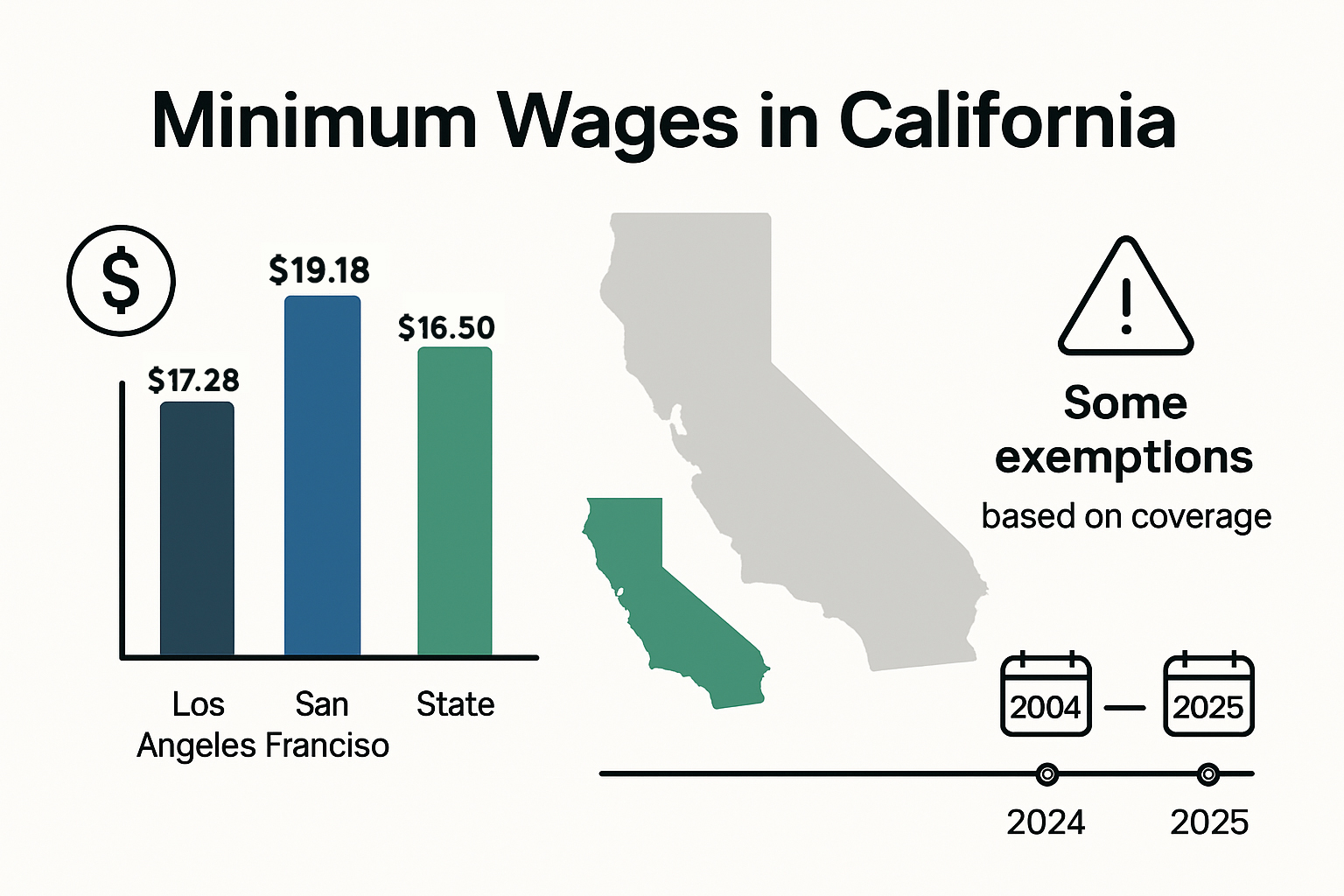
    California just raised its minimum wage to $16.50 per hour starting January 2025, impacting millions of paychecks across the state. Most people think these laws are just about a dollar amount and not much else. The real surprise is that California gives workers some of the broadest protections in the country, covering almost every job type and making it illegal for employers to retaliate against you for standing up for your rights. Curious about what that really means for you?

    Understanding California Minimum Wage Laws

    California’s minimum wage laws represent a crucial framework of worker protection, ensuring employees receive fair compensation for their labor. These laws establish a baseline standard of earnings that employers must meet, safeguarding workers from exploitation and providing economic stability.

    The cornerstone of California’s minimum wage legislation is found in California Labor Code, which mandates clear standards for worker compensation. As of January 2024, the state has set a comprehensive minimum wage rate of $16.00 per hour for all employers, regardless of company size. This represents a significant commitment to worker welfare, ensuring that full time employees can earn a more sustainable living wage.

    According to the California Department of Industrial Relations, the minimum wage law applies broadly, covering most workers across various industries. However, there are nuanced exceptions and specific provisions that workers and employers should understand. Some key considerations include different rates for small businesses versus larger employers, and special provisions for certain industries or job classifications.

    Comprehensive Worker Protections

    California’s minimum wage laws go beyond simply establishing a base hourly rate. They provide robust protections that prevent wage theft and ensure workers receive fair compensation. Employers are legally required to pay the established minimum wage for all hours worked, including overtime, and cannot circumvent these requirements through creative accounting or employment practices.

    Workers have multiple avenues for protection, including the right to file claims with state labor authorities if they believe their wages are being improperly calculated. The law also prohibits retaliation against employees who assert their rights to proper compensation. This means workers can confidently seek resolution without fear of losing their job or facing professional repercussions.

    For workers looking to verify their wage calculations or understand their specific rights, we recommend checking out our California Minimum Wage Calculator to help determine precise earnings and potential discrepancies.

    Understanding these laws is crucial for both employees and employers. They represent more than just a number on a paycheck they are a fundamental protection of worker dignity and economic fairness. By establishing clear, enforceable standards, California continues to lead the way in progressive labor protections that recognize the value of work and the fundamental right of workers to earn a living wage.

    How Minimum Wage Applies to You

    Navigating California’s minimum wage laws requires understanding how these regulations impact different types of workers and employment scenarios. Not all employment situations are identical, and the application of minimum wage laws can vary depending on specific circumstances.

    Who is Covered Under Minimum Wage Laws

    According to the California Department of Industrial Relations, minimum wage laws in California apply to almost all employees, with few exceptions. This comprehensive coverage ensures that workers across various industries and employment types receive fair compensation. Employees covered include full-time, part-time, temporary, and seasonal workers, regardless of whether they are paid hourly or receive a salary.

    Below is a summary table outlining key exceptions and categories of workers who may not be covered by California’s general minimum wage laws, as detailed in the article:

    Worker Category Exception Description
    Outside Salespersons Exempt from minimum wage
    Apprentices in Approved Programs Covered by alternate standards
    Disabled Workers (with certificates) May be subject to special minimum wage certificates
    Learners in Occupational Training Eligible under specific rules

    This table helps clarify which worker groups may have different wage standards under state law.

    However, some specific exemptions exist. California Labor Code outlines categories of workers who might have different wage standards, such as:

    • Outside salespersons
    • Apprentices formally enrolled in approved apprenticeship programs
    • Certain disabled workers employed under special certificates
    • Learners employed in specific occupational training roles

    Unique Wage Scenarios and Protections

    California’s minimum wage laws extend beyond basic hourly rates, providing robust protections for workers in diverse employment situations. For instance, tipped employees must still receive the full minimum wage, with tips being additional income. Employers cannot use tips to offset their minimum wage obligations, ensuring workers receive consistent base compensation.

    For workers concerned about potential wage discrepancies, we recommend checking your wage calculations to ensure you’re receiving fair compensation. If you suspect your employer is not adhering to minimum wage requirements, you have legal recourse to address these violations.

    Remote workers, gig economy employees, and those in emerging employment models are also protected. The state’s wage laws adapt to modern work environments, ensuring that technological changes do not create loopholes for wage exploitation. Whether you work in a traditional office, from home, or through digital platforms, California’s minimum wage protections remain consistently applied.

    Local municipalities can establish higher minimum wage rates than the state standard, which means workers in cities like San Francisco or Los Angeles might be entitled to even higher wages. Always check local ordinances in addition to state requirements to understand your specific wage rights.


    Infographic comparing California city minimum wage rates

    Understanding how minimum wage applies to your unique work situation empowers you to protect your economic interests. By being informed about your rights, you can ensure fair compensation and take action if those rights are compromised. California’s progressive labor laws are designed to provide comprehensive protection for workers across all employment landscapes.

    Dealing With Wage Theft and Unpaid Wages

    Wage theft represents a serious violation of worker rights that can significantly impact an employee’s financial stability. Understanding how to recognize, document, and address wage theft is crucial for protecting your economic interests and holding employers accountable.

    Identifying Wage Theft Violations

    Wage theft can manifest in multiple forms beyond simple minimum wage violations. According to the California Department of Industrial Relations, common wage theft practices include:

    The following table outlines common forms of wage theft described in the article and a brief explanation of each, helping workers identify potential violations:

    Type of Wage Theft Description
    Unpaid Overtime Not compensating overtime hours appropriately
    Unpaid Hours Worked Failing to pay for all time worked
    Misclassification as Independent Contractor Incorrectly classifying workers to avoid protections
    Withholding Final Paycheck Not providing last paycheck at termination
    Denied Meal and Rest Breaks Not allowing breaks mandated by law

    Use this table to quickly check for common wage theft issues you may encounter.

    • Failing to pay overtime
    • Refusing to compensate for all hours worked
    • Misclassifying employees as independent contractors
    • Withholding final paycheck after employment termination
    • Not providing mandated meal and rest breaks

    Recognizing these violations requires careful documentation. Keep detailed records of your work hours, pay stubs, communication with employers, and any instances where you believe your wages have been improperly calculated or withheld.

    California Labor Code provides robust protections for workers experiencing wage theft. If you suspect your employer is engaging in wage theft, you have multiple avenues for seeking resolution. Workers can file formal wage claims with the California Labor Commissioner’s Office, which investigates and can enforce wage recovery.

    For workers navigating the complexities of wage theft claims, we recommend exploring our comprehensive guide to filing wage theft claims to understand the specific steps and potential outcomes of your case.

    Protecting Yourself From Retaliation

    California law explicitly prohibits employer retaliation against workers who assert their wage rights. This means you cannot be fired, demoted, or punished for reporting wage theft or filing a formal complaint. If an employer retaliates, they can face additional legal penalties beyond the original wage theft claims.

    The process of addressing wage theft can feel intimidating, but remember that state laws are designed to protect workers. Employers who consistently violate minimum wage laws face significant financial penalties and potential legal consequences. By understanding your rights and taking systematic steps to document and report violations, you can effectively combat wage theft and protect your economic interests.

    Do not let fear or uncertainty prevent you from seeking the wages you have rightfully earned. California’s labor protections are comprehensive, and numerous resources exist to support workers in recovering unpaid wages and holding employers accountable for their legal obligations.

    Navigating legal challenges related to wage disputes and potential wrongful termination requires understanding the complex landscape of California labor protections. Workers have multiple avenues for seeking justice and defending their employment rights when confronting challenging workplace situations.

    California Labor Code provides comprehensive statutory protections for employees facing wage disputes or potential wrongful termination. These legal provisions outline specific scenarios where workers can seek remedies, including situations involving minimum wage violations, unpaid overtime, workplace discrimination, and retaliatory employment actions.

    Key legal protections include the right to file wage claims, pursue civil litigation, and seek administrative remedies through state labor agencies. Workers are entitled to recover unpaid wages, potential damages, and in some cases, legal fees associated with pursuing their claims.

    California offers multiple formal channels for addressing employment disputes. Employees can file claims with the Labor Commissioner’s Office, pursue mediation, or initiate civil lawsuits depending on the specific circumstances of their case. Each mechanism offers unique advantages and potential outcomes.

    Administrative claims through state agencies often provide faster resolution and lower legal costs compared to traditional court proceedings. However, more complex cases might require formal legal representation to navigate intricate legal standards and procedural requirements.

    For workers facing complex wage disputes or potential wrongful termination, professional legal guidance becomes crucial. Our comprehensive guide to wrongful termination provides detailed insights into the legal processes and potential strategies for protecting your employment rights.

    Qualified employment attorneys can help workers evaluate the strength of their claims, gather necessary documentation, and determine the most effective strategy for pursuing resolution. Many attorneys specializing in labor law offer free initial consultations, allowing workers to understand their potential legal options without immediate financial commitment.

    It is important to act promptly when confronting wage disputes or potential wrongful termination. California law imposes strict timelines for filing claims, and delay can potentially compromise your ability to seek legal remedies. Documenting all relevant communications, maintaining detailed employment records, and seeking timely legal advice can significantly enhance your chances of successful resolution.

    Remember that California’s labor laws are designed to protect workers and provide robust mechanisms for addressing workplace injustices. By understanding your rights, documenting potential violations, and utilizing available legal resources, you can effectively defend your economic interests and professional dignity.

    california wage protections

    Take Control of Your California Wage Rights Today

    Do you feel confused or anxious about whether your paycheck reflects California’s latest minimum wage laws? If you have experienced wage theft, unpaid overtime, or fear retaliation for speaking up at work, you are not alone. Many employees face these same challenges and worry about how to keep their hard-earned money safe. Your worries can turn into action with the right tools and support. Our website offers the help you need to understand your rights and fight back against unfair treatment.

    Do not wait if you suspect violations of your rights or you need answers about California’s protective wage laws. Empower yourself with our easy-to-use minimum wage calculator or get detailed advice from our wage theft resource section. Take action now to secure your pay and protect your future. Call us at 1-866-355-9991 for a free wage rights consultation.

    Frequently Asked Questions

    What is the minimum wage in California as of January 2024?

    As of January 2025, the minimum wage in California is $16.50 per hour for all employees, regardless of the size of the employer.

    Who is covered under California’s minimum wage laws?

    California’s minimum wage laws cover almost all employees, including full-time, part-time, temporary, and seasonal workers, with few exceptions such as outside salespersons and apprentices.

    What should I do if I suspect wage theft by my employer?

    If you suspect wage theft, document all relevant details, such as hours worked and pay stubs, and file a formal claim with the California Labor Commissioner’s Office to seek resolution.

    Are there protections against retaliation if I report wage theft?

    Yes, California law prohibits employer retaliation against employees who assert wage rights or report wage theft, ensuring that workers can seek justice without fear of losing their job.

  • California Voters Reject Statewide $18 Minimum Wage Initiative

    California Voters Reject Statewide $18 Minimum Wage Initiative

    In a significant turn of events, California voters have rejected a ballot measure that aimed to raise the state’s minimum wage to $18 per hour, marking the first time since 1996 that such an initiative has failed in any state.

    This decision, encapsulated by Proposition 32, reflects a complex interplay of economic concerns, voter sentiment, and the ongoing debate over wage policy in one of America’s most expensive states to live in. (more…)