Category: News

  • How to Set Work Boundaries in California Tech Startups

    How to Set Work Boundaries in California Tech Startups

    Over half of the tech startup employees in California report feeling burned out by long hours and unclear boundaries. Chaotic schedules, after-hours emails, and the pressure to always be “on” take a toll on your mind and personal life. This guide gives practical, legally compliant strategies to help you reclaim control, protect your well-being, and thrive in California’s fast-paced startup scene.

    Step 1: Identify your work-life needs

    In California’s dynamic tech startup ecosystem, understanding your personal work-life boundaries starts with honest self reflection. Insights from technology professionals reveal chronic stress and burnout are increasingly common challenges that require proactive management.

    To effectively identify your work-life needs, begin by conducting a personal audit of your current professional situation. Track your weekly work hours, emotional energy expenditure, and moments of peak stress. Notice patterns like consistently working beyond standard hours, checking work emails during personal time, or feeling mentally exhausted after workdays. Pay special attention to how these patterns impact your physical health, relationships, and overall sense of wellbeing.

    Engineer planning work week at desk

    Start mapping out your ideal work week by creating clear demarcations between professional responsibilities and personal time. Consider your unique needs as a tech professional, recognizing that work-life balance directly influences mental health and productivity. This means defining specific boundaries like predetermined work hours, communication response windows, and dedicated personal recovery time.

    Pro tip: Use a digital journal or spreadsheet to objectively track your work patterns and emotional states, providing concrete data to help you understand and adjust your work-life integration strategy.

    Step 2: Review applicable California labor laws

    Understanding California labor laws is crucial for tech professionals establishing workplace boundaries. The California Department of Industrial Relations provides comprehensive guidance on worker protections that can significantly impact your work environment and personal rights.

    Start by examining key legal protections specific to California tech workers. This includes regulations around overtime compensation, mandatory rest and meal breaks, retaliation protections, and specific guidelines for remote and in office employees. Pay special attention to nuanced state regulations that go beyond federal standards such as California’s strict overtime rules, which require employers to pay overtime for work beyond 8 hours in a single day or 40 hours in a work week.

    Review the specific labor code sections that apply to technology startups, focusing on your unique employment situation. Look into protections around reasonable work hours, compensation for extended work periods, and the legal requirements for maintaining clear professional boundaries. Understanding these laws empowers you to recognize potential workplace violations and take appropriate action to protect your professional rights.

    Pro tip: Create a digital folder with screenshots and copies of your employment contract, job description, and relevant labor law sections to maintain a quick reference guide for your workplace rights.
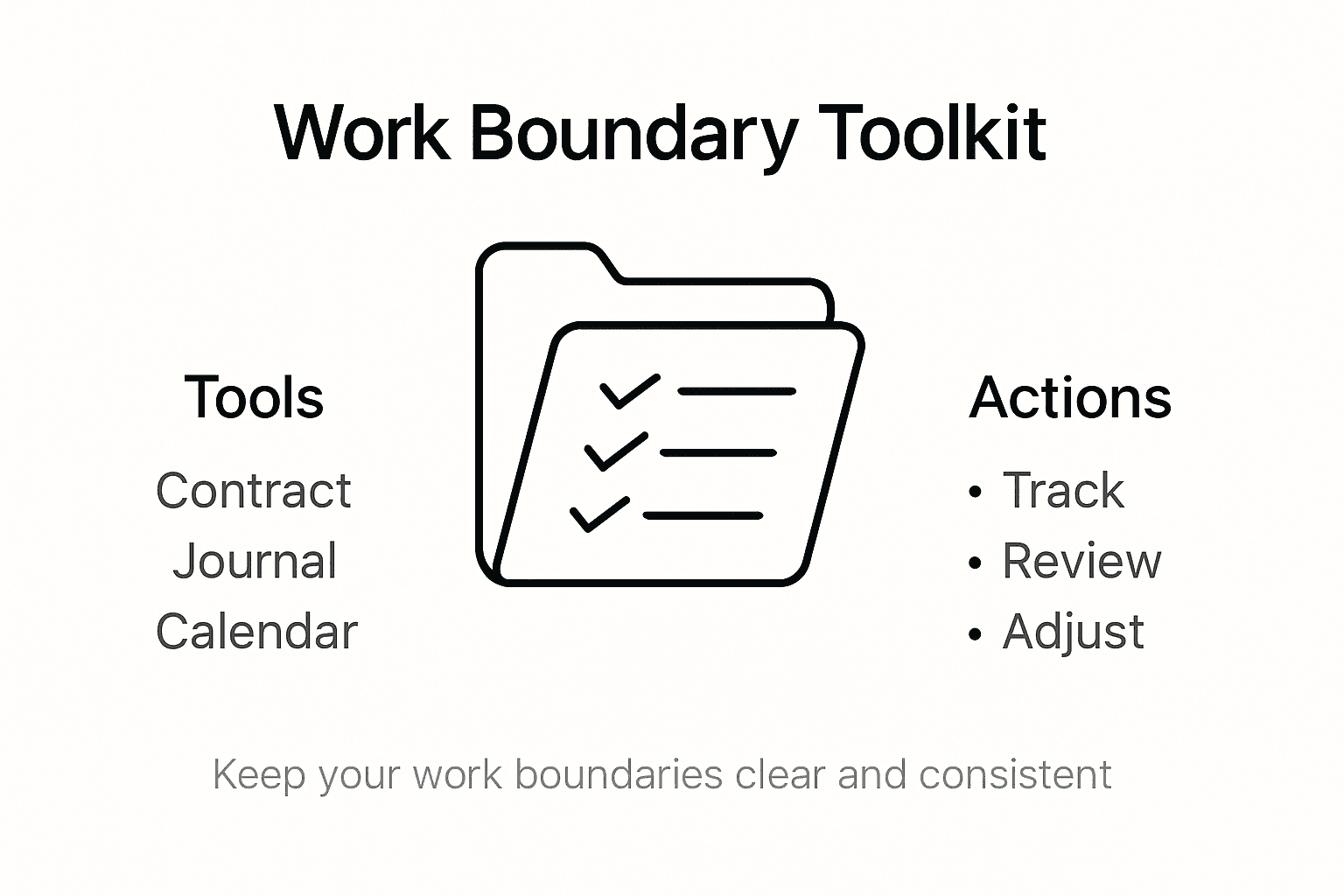
    Infographic with work boundary toolkit steps

    Here’s a quick reference guide to key California labor laws affecting tech professionals:

    Legal Area California Standard Practical Impact
    Overtime Pay After 8 hrs/day or 40 hrs/week Ensures fair compensation for long hours
    Rest Breaks 10 min per 4 hrs worked Protects regular, paid downtime
    Meal Periods 30 min after 5 hrs Supports scheduled meal breaks
    Retaliation Protection Strict enforcement Secures rights when reporting issues
    Remote Work Guidelines State laws apply Ensures equal rights for remote staff

    Step 3: Communicate boundaries with your team

    Effectively communicating workplace boundaries requires strategic planning and clear communication. Understanding the psychological dynamics of team interactions helps create a framework for setting professional limits that respect both individual needs and team goals.

    Begin by scheduling a dedicated conversation with your team or direct manager to articulate your specific work boundaries. Clearly outline your availability windows, preferred communication channels, and expectations around after hours work. Be specific about response times for different communication platforms like email, slack, or project management tools. In startup environments where overcommitment is common, articulating your limits prevents potential misunderstandings and burnout while maintaining professional relationships.

    Frame your boundaries as collaborative solutions rather than restrictive rules. Explain how maintaining clear work limits actually improves your overall productivity and team performance. Demonstrate that your boundaries are designed to help you contribute more effectively, not to create distance. Use concrete examples of how these boundaries will help you maintain high quality work and consistent team engagement.

    Pro tip: Practice your boundary communication script with a trusted colleague or friend beforehand to build confidence and refine your approach.

    Step 4: Establish enforcement strategies for boundaries

    Navigating workplace boundary enforcement requires a strategic approach that balances professionalism with personal well-being. The key is creating consistent, measurable strategies that protect your professional limits without damaging team dynamics.

    Develop a clear documentation system to track boundary violations and your responses. This might include logging unexpected after hours communication attempts, tracking unsolicited work requests, and noting instances where your established communication windows are disregarded. In California startup environments, using workforce analytics can help objectively monitor and enforce work-life boundaries, providing concrete evidence of potential systemic issues beyond individual interactions.

    When boundary violations occur, respond with a consistent and professional communication strategy. Address each incident directly but constructively, referencing the previously discussed boundaries and explaining the specific impact of the violation. Use specific examples and focus on collaborative solutions rather than confrontational language. Be prepared to escalate to management if repeated violations occur, framing the conversation around team productivity and individual performance sustainability.

    Pro tip: Create a personal tracking spreadsheet with date, incident type, and resolution to help you identify patterns and maintain objective documentation of boundary challenges.

    Compare methods for enforcing boundaries effectively:

    Enforcement Method Strength Best Use Case
    Documentation Tracks violations clearly Ongoing pattern detection
    Direct Feedback Addresses incidents promptly One-off communication breaches
    Tech Analytics Objective data collection Large remote teams
    Management Escalation Formalizes repeat issues Continued boundary disregard

    Step 5: Monitor compliance and adjust as needed

    Effective boundary management requires consistent tracking and strategic adaptation. Task management solutions can help California tech professionals implement systematic approaches to monitoring workplace boundaries and ensure ongoing alignment with your professional goals.

    Schedule quarterly personal reviews of your boundary strategies to assess their effectiveness. Analyze your documentation tracking boundary violations, team interactions, and personal stress levels. Look for patterns that indicate successful boundary maintenance or areas requiring adjustment. Consider factors like communication frequency, response times, and overall team dynamics. Regular compliance audits are crucial for tech professionals to adapt policies and maintain clear workplace expectations as organizational needs and personal circumstances evolve.

    Remain flexible and open to refining your approach. Some boundaries might need tightening while others could be relaxed based on team dynamics and project requirements. Communicate any adjustments transparently with your team, explaining the reasoning behind your modifications and how they contribute to collective productivity and individual well-being.

    Pro tip: Set a recurring calendar reminder every three months to conduct a comprehensive review of your workplace boundaries and their implementation.

    Setting clear work boundaries in California tech startups is crucial for maintaining your mental health and ensuring fair treatment under state labor laws. As the article highlights, challenges such as overtime disputes, retaliation protections, and the need for proper rest breaks are common pain points that can affect your well-being and career growth. Don’t let these issues go unchecked or drain your energy.

    Empower yourself by accessing detailed labor law information and tools on California Labor Law. This platform offers comprehensive legal guides and up-to-date resources that help you understand your rights related to overtime pay, meal and rest periods, and wrongful termination. If you suspect your employer is disregarding your established work boundaries or violating labor laws, you can find immediate assistance through their advocacy channels. If you have been the victim of unfair of unfair employment practices call our California employment attorneys at 1-866-355-9991 or fill out the form for a free California employment claim case review.

    Frequently Asked Questions

    How can I identify my work-life needs as a tech professional?

    To identify your work-life needs, conduct a personal audit of your current work situation. Track your weekly work hours and emotional energy levels to recognize patterns affecting your well-being. This proactive approach can help you establish clearer boundaries and improve your work-life balance.

    What are the key California labor laws that affect boundary setting in tech startups?

    Key California labor laws include regulations on overtime pay, mandatory breaks, and protection against retaliation. Familiarize yourself with these laws to understand your rights as a tech professional, ensuring you set boundaries that align with legal protections.

    How should I communicate my work boundaries to my team?

    To communicate your work boundaries effectively, schedule a dedicated conversation with your team or manager. Clearly outline your availability, preferred communication methods, and response expectations to prevent potential misunderstandings and maintain collaboration.

    What strategies can I use to enforce my work boundaries?

    Develop a documentation system to track instances of boundary violations and your responses. This structured approach helps you address issues promptly and maintain accountability, allowing you to protect your professional limits while preserving team dynamics.

    How often should I review and adjust my work boundaries?

    Schedule quarterly reviews of your work boundaries to assess their effectiveness. Analyze patterns from your documentation and adjust as necessary, ensuring that your boundaries continue to support both your personal well-being and your team’s productivity.

    What should I do if my work boundaries are repeatedly violated?

    If your boundaries are violated multiple times, respond with a direct but constructive approach, referencing your established limits. Be prepared to escalate the issue to management if necessary, framing your concerns around team productivity and the sustainability of performance.


  • Negotiating Salary Offers: A Step-By-Step Guide for California Workers

    Negotiating Salary Offers: A Step-By-Step Guide for California Workers

    A Step-By-Step Guide in Negotiating Salary Offers for California Workers

    Most professionals underestimate how much California laws can impact salary negotiations. With new transparency requirements and legal protections in place, job candidates now have more resources than ever.

    Whether you are preparing for your first offer or aiming for a major career move, understanding this landscape gives you a powerful advantage in salary discussions.

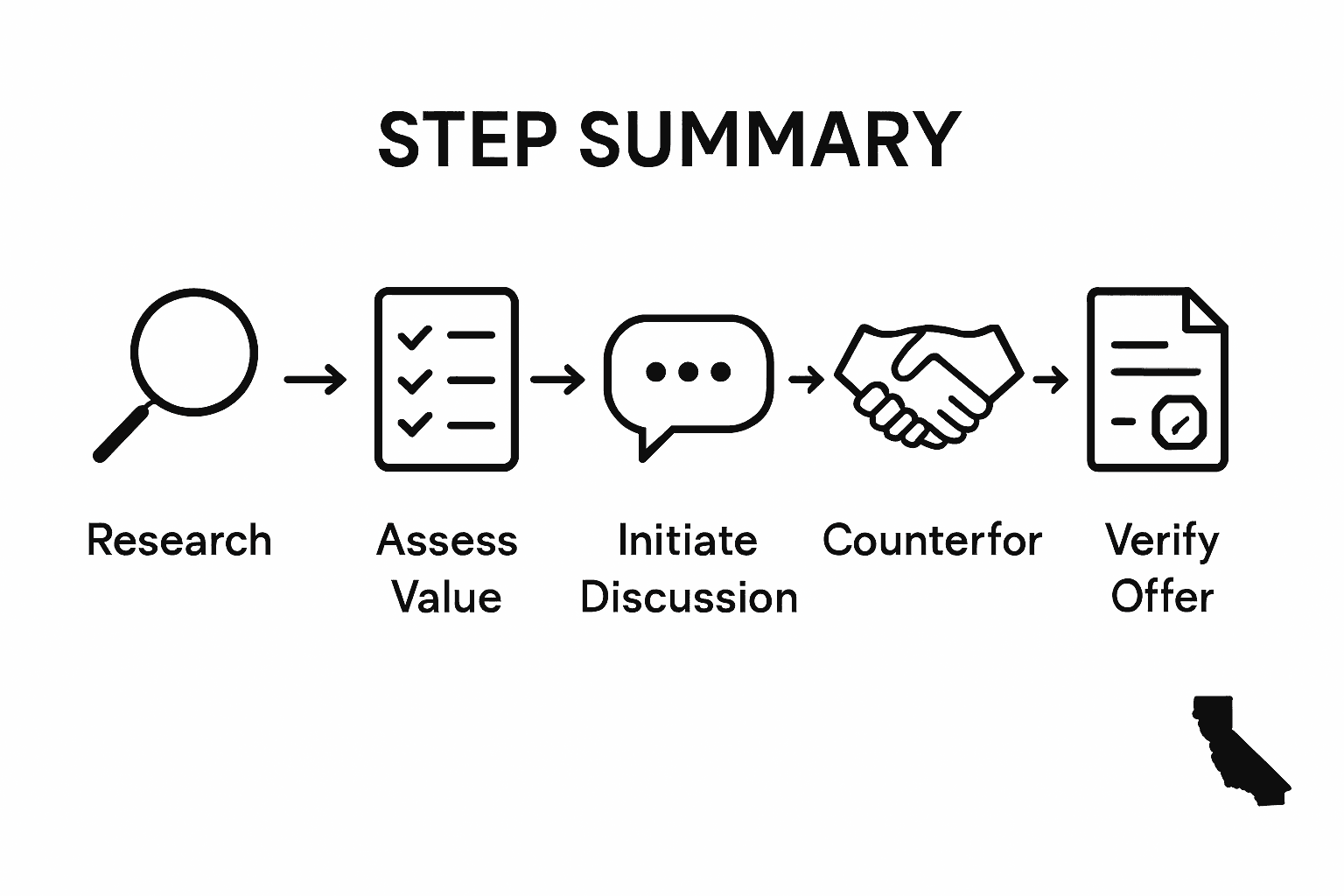
    Step 1: Research Market Rates and California Laws

    Successful salary negotiation starts with solid research. Your mission here is to understand both your market value and the legal landscape governing compensation in California.

    Begin by leveraging online salary resources like Glassdoor and PayScale to benchmark typical compensation ranges for your specific role and industry. Pay close attention to salary data specific to California, as compensation can vary significantly by region.

    California law now requires employers to provide pay scale information in job postings, which means you have unprecedented transparency to support your negotiation strategy.

    Man compares salaries on laptop at home

    Next, dig deeper into state specific regulations. California has unique labor laws that can impact compensation discussions. For instance, the recently enacted Senate Bill 1162 prohibits employers from asking about your salary history and mandates pay scale disclosures.

    This means you can request pay range information directly from potential employers during the interview process. By understanding these legal protections, you gain significant leverage in negotiations.

    Research should go beyond just numbers. Study the typical benefits package, understand standard bonuses in your industry, and investigate how experience and advanced certifications might impact your potential earnings.

    The more comprehensive your market intelligence, the more confidently you can approach salary discussions.

    Here’s a quick comparison of compensation research methods and their specific benefits during negotiation:

    Research Method What It Provides Business Impact
    Online Salary Databases California-specific pay benchmarks Strong market positioning
    State Law Review Legal protections and pay rights Negotiation leverage
    Company Job Postings Current pay ranges for roles Transparency in expectations
    Industry Benefit Reports Typical perks and bonus norms Full compensation strategy
    Certification Analysis Value of advanced credentials Justifies higher base salary

    Pro tip: Create a detailed spreadsheet tracking salary ranges from multiple sources, noting variations by company size, location, and your specific skill set. This documentation becomes your negotiation playbook.

    Step 2: Assess Your Value and Gather Evidence

    This step transforms you from a job candidate into a strategic professional who knows exactly what you bring to the table. Your goal is to build a compelling case for your market value by documenting your professional achievements and understanding how they translate into financial worth.

    Infographic of five salary negotiation steps

    Strategic connections between your achievements and an organization’s needs are critical in salary negotiations. Start by creating a comprehensive portfolio of your professional accomplishments.

    Quantify your contributions wherever possible think about specific metrics like:

    • revenue generated,
    • projects completed,
    • efficiency improvements,
    • or cost savings you have delivered.

    Concrete numbers speak louder than generic claims.

    Develop a structured approach to evaluating your professional worth. Create a negotiation framework that categorizes your priorities into ‘must have,’ ‘would be nice,’ and ‘not important’ items. This method helps you remain clear headed and strategic during salary discussions.

    Consider not just base salary but the entire compensation package including benefits, professional development opportunities, flexible work arrangements, and potential bonuses.

    Gather tangible evidence of your professional value. Collect performance reviews, commendations, project success reports, and testimonials from colleagues or supervisors.

    These documents substantiate your claims and provide third party validation of your professional capabilities. The more specific and measurable your evidence, the stronger your negotiation position becomes.

    Pro tip: Prepare a one page professional summary that highlights your top three professional achievements, quantified impact, and unique skills that set you apart from other candidates. This document becomes a powerful tool during salary negotiations.

    Step 3: Initiate Salary Discussions with Confidence

    Confidence is your secret weapon when starting salary negotiations. This step transforms the potentially intimidating conversation into a strategic professional dialogue where you showcase your value and advocate for fair compensation.

    Timing and approach are critical when discussing salary during interviews. Wait until the employer has demonstrated genuine interest in you as a candidate. This typically occurs after initial screenings and when they view you as a potential fit for the role.

    Avoid bringing up compensation too early, but be prepared to discuss it when the moment is right. Your goal is to demonstrate that you are more interested in the opportunity and mutual value than just the paycheck.

    Strategically delay sharing your current salary and instead focus on your target compensation range. When asked about current earnings, redirect the conversation to the value you will bring to the organization. Prepare a clear, confident statement that highlights your professional worth.

    For instance, instead of disclosing your current salary, you might say, “Based on my research and the skills I will bring to this role, I am targeting a compensation range of X to Y.” This approach positions you as a strategic professional who understands their market value.

    Remember that salary negotiation is a two way conversation. Listen carefully to the employer’s perspective, ask thoughtful questions, and be prepared to explain how your skills and experience justify your desired compensation. Maintain a collaborative tone that suggests you are seeking a mutually beneficial arrangement.

    Pro tip: Practice your salary negotiation script with a trusted friend or mentor. Record yourself to analyze your tone, confidence, and communication style, ensuring you come across as professional, confident, and reasonable.

    Step 4: Present Counter-offers and Justify Your Requests

    This step transforms your salary negotiation from a passive conversation into an active, strategic dialogue where you confidently articulate your professional value and negotiate effectively.

    Thoroughly evaluate the initial job offer before crafting your counter-offer strategy. Begin by expressing genuine appreciation for the opportunity while signaling your intention to discuss compensation. Your approach should balance professionalism with strategic assertiveness.

    Break down the entire compensation package beyond just base salary, consider:

    • benefits,
    • bonuses,
    • professional development opportunities,
    • and potential for future growth.

    Develop a negotiation pitch that demonstrates confidence and preparedness. Your counter-offer should be grounded in concrete evidence from your research market rates, your documented achievements, and the specific value you will bring to the organization. Use specific examples that highlight your unique skills and potential impact.

    For instance, if you can demonstrate how your expertise will solve specific business challenges or generate measurable results, you strengthen your negotiation position.

    Remember that negotiation is a collaborative process. Listen carefully to the employer’s perspective, be willing to compromise, and maintain a positive, solution oriented tone. If the base salary cannot be adjusted, explore alternative forms of compensation such as performance bonuses, additional vacation time, flexible working arrangements, or professional development opportunities.

    Pro tip: Create a written comparison of your initial research, market rates, and the offered compensation package. Having this documented analysis will help you communicate your request more objectively and professionally during negotiations.

    The final step in your salary negotiation journey involves carefully reviewing your written offer to ensure it meets both your professional expectations and California’s legal standards for fair compensation practices.

    California Senate Bill 1162 introduces critical legal protections for job applicants, making it essential to understand your rights during the offer process. Carefully examine the written offer to confirm it includes a clear pay scale, matches the discussions during your negotiation, and complies with state regulations. Verify that the offer does not request your salary history and provides transparent compensation information.

    California law explicitly prohibits employers from basing compensation on previous salary history. Scrutinize the written offer for any language that might suggest reliance on past earnings. The document should reflect your negotiated value based on your skills, experience, and potential contribution to the organization. Pay attention to every detail including base salary, bonuses, benefits, and any additional compensation components.

    Review the entire compensation package holistically. Check that all verbal agreements are accurately represented in writing. If you notice any discrepancies or missing details discussed during negotiations, do not hesitate to request clarification or amendments. Your written offer should be a comprehensive and accurate reflection of the agreed terms.

    Below is a summary of critical elements to verify in a written California job offer:

    Offer Component Why It Matters California Compliance Check
    Base Salary Ensures agreed compensation Must match negotiated value
    Pay Scale Clarity Prevents misunderstandings Required in writing by SB 1162
    Salary History Inquiry Protects applicant privacy Illegal to request past salary
    Bonuses and Benefits Confirms total reward package Details must be clearly outlined
    Additional Commitments Verifies all verbal agreements Should be included in final offer

    Pro tip: Create a detailed checklist of all negotiated terms before signing the offer letter. Compare the written document against your negotiation notes to ensure nothing has been overlooked or modified without your agreement.

    Negotiating a salary offer in California can feel overwhelming with complex state labor laws like Senate Bill 1162 shaping pay transparency and employee protections.

    If you want to confidently assess your worth, verify employer compliance, and ensure your negotiated compensation truly reflects your value it is crucial to understand your rights and the legal landscape. Avoid costly mistakes or unfair offers by grounding your negotiation in California-specific legal insight and evidence.

    Explore trusted resources and up-to-date legal guides at California Labor Law designed specifically for workers navigating employment issues.

    If you find yourself facing legal issues in your California workplace, get in touch with us. Call us at 1-866-355-9991 to get a free California employment law consultation today.

    Frequently Asked Questions

    How can I research market rates for my salary negotiation?

    Start by using online salary resources like Glassdoor and PayScale to benchmark compensation ranges specific to your role and industry in California. Document your findings in a spreadsheet to compare data from various sources, noting any regional variations within 30 days.

    What legal protections do I have when negotiating my salary in California?

    California laws, including Senate Bill 1162, prohibit employers from asking about your salary history and require them to disclose pay scales in job postings. Familiarize yourself with these laws to ensure your negotiation is compliant and you advocate for fair compensation effectively.

    How should I present my case during a salary negotiation?

    Present your case confidently by highlighting your achievements and quantifiable contributions to past employers. Prepare a one-page summary of your top accomplishments to use as evidence during negotiations, making sure it’s clear, concise, and impactful.

    What should I include in my counter-offer?

    Include a breakdown of the entire compensation package in your counter-offer, not just the base salary. Use your research on market rates and documented achievements to justify your requests, aiming for additional benefits like bonuses or flexible working arrangements.

    How can I verify that my written offer complies with California laws?

    Review your written job offer to ensure it includes clear pay scale information and does not inquire about your salary history. Create a checklist of all negotiated terms and compare the offer against your notes to confirm accuracy and compliance with state regulations.

  • 2024 California Employment Law Recap

    2024 California Employment Law Recap

    As we move into 2025, it’s crucial to look back at the significant changes in California employment law throughout 2024. The past year brought several legislative shifts that employers and employees alike had to navigate, impacting everything from wages to workplace safety. (more…)