Category: Sick Leave

  • California Paid Sick Leave 2026: Expanded Rights and Compliance

    California Paid Sick Leave 2026: Expanded Rights and Compliance

    California Paid Sick Leave 2026: Expanded Rights, New Limits & Compliance Guide

    Missing a shift due to illness can leave many California hospitality and retail workers worried about losing wages or even their jobs. Recent legislative updates have strengthened protections, requiring most employers to provide at least five days or 40 hours of paid sick leave every year.

    Understanding these expanded rights helps workers in California safeguard both their health and paychecks, empowering them to stand up against wage theft and unfair treatment.

    Defining California Paid Sick Leave Laws

    California’s paid sick leave laws represent a comprehensive framework designed to protect workers’ health and financial stability. These regulations mandate that most employers provide employees with critical protections for personal and family medical needs.

    California’s paid sick leave requirements establish a minimum standard of care that applies across diverse industries and workplace environments.

    Under the current legislative framework, California employees are entitled to significant sick leave benefits:

    • Minimum of 5 days or 40 hours of paid sick leave annually
    • Eligibility begins after 90 days of employment
    • Accrual rate of one hour for every 30 hours worked
    • Usable for personal medical treatment, preventative care, and family member health needs

    The law’s scope extends beyond traditional illness scenarios. Employees can utilize paid sick leave for multiple critical situations, including:

    1. Personal medical treatment
    2. Medical appointments for preventative care
    3. Caring for ill family members
    4. Addressing medical emergencies
    5. Dealing with domestic violence, sexual assault, or stalking situations

    Employers have two primary methods of implementing these requirements. They can either:

    • Use an accrual method where employees earn sick time progressively
    • Provide a front-loaded approach with all sick days granted at the year’s start

    Compliance is mandatory for most California employers, with specific requirements varying based on company size and industry. The law ensures workers can address health needs without risking financial stability.

    Pro tip: Keep detailed records of your sick leave accrual and usage to protect your employment rights and ensure you receive all entitled benefits.

    Eligibility and Accrual Methods Explained

    California’s paid sick leave laws establish clear guidelines for employee eligibility and sick time accumulation. Sick leave requirements are designed to protect workers across various employment contexts, ensuring comprehensive coverage for most employees in the state.

    To be eligible for paid sick leave, employees must meet specific criteria:

    • Work at least 30 days within a year for the same employer
    • Complete a 90-day initial employment period
    • Be employed in California, regardless of full-time or part-time status
    • Cover both private and public sector workers

    Employers have two primary accrual methods for implementing sick leave:

    1. Standard Accrual Method
      • Earn one hour of sick leave for every 30 hours worked
      • Sick time accumulates progressively throughout the year
      • No immediate full allocation of sick days
    2. Front-Loading Method
      • Employers provide all 40 hours or five days upfront
      • Sick days granted at the beginning of each calendar year
      • Simplifies tracking for both employers and employees

    Employers cannot require employees to find replacement workers during sick leave, ensuring worker protection and reducing potential workplace complications.

    The law also includes important provisions regarding sick leave accrual and usage:

    • Maximum annual accrual of 80 hours or 10 days
    • Unused sick leave can be carried over to the next year
    • Employers can cap total sick leave at 40 hours or five days per year
    • Sick leave can be used for personal health, family care, and specific protective situations

    Pro tip: Maintain detailed personal records of your sick leave accrual and usage to ensure you receive all entitled benefits and can track your available time.

    Expanded Uses Under AB 2499 and AB 406

    The recent legislative updates to California’s paid sick leave laws represent a significant expansion of employee protections. Workplace sick leave regulations now encompass a broader range of personal and professional circumstances that extend far beyond traditional medical care.

    Key expanded uses under AB 2499 and AB 406 include:

    • Support for victims of crime and their family members
    • Attendance at judicial proceedings related to personal safety
    • Obtaining protective services
    • Addressing workplace environmental hazards
    • Supporting family members experiencing domestic violence

    For agricultural workers, the new laws provide critical protections:

    1. Use of sick leave during extreme heat conditions
    2. Sick leave for protection from wildfire smoke exposure
    3. Time off for workplace safety assessments
    4. Compensation during environmental risk periods

    These legislative changes recognize that workplace challenges extend beyond traditional medical needs, providing employees with comprehensive protection and support.

    Office manager reviews compliance sick leave checklist

    This quick reference summarizes expanded uses under recent legislation:

    Expanded Use Case Who Benefits Example Situation
    Crime victim support Employee, family Attending court or seeking help
    Extreme heat (agriculture) Agricultural worker Leave during wildfire or heatwave
    Environmental hazard response All employees Exposure to workplace risks
    Domestic violence protection Worker, family Time off for safety or relocation

    Pro tip: Document and communicate with your employer about the specific circumstances of your sick leave to ensure proper understanding and compliance with the new expanded regulations.

    Poster Requirements and Notice Compliance

    California employers face strict obligations regarding workplace rights notifications and paid sick leave poster requirements. Workplace rights notices represent a critical component of legal compliance for businesses across the state.

    The poster requirements for paid sick leave include several key elements:

    • Must be displayed in a conspicuous and accessible location
    • Visible to all employees during working hours
    • Posted in English and other languages spoken by workforce
    • Located in common areas like break rooms, hallways, or employee entrances

    Employers must ensure their workplace notices contain specific information:

    1. Total number of paid sick leave days available
    2. Accrual rate of sick leave hours
    3. Conditions for using sick leave
    4. Protection against retaliation for sick leave usage
    5. Employee rights under California law

    Failure to display required notices can result in significant penalties and potential legal complications for employers.

    Multilingual poster requirements are particularly important for California’s diverse workforce:

    • Notices must be available in languages spoken by 10% or more of the workforce
    • Translations provided by the California Labor Commissioner
    • Accurate representation of original English text
    • Easily understandable language for non-native speakers

    Additional compliance considerations include:

    • Annual distribution of updated workplace rights information
    • Maintaining current versions of required notices
    • Training management about poster requirements
    • Documenting poster display and distribution

    Pro tip: Take photographs of posted notices and maintain a log of display dates to protect your business in case of potential compliance audits.

    California’s paid sick leave laws impose substantial compliance requirements on employers across the state. Employer sick leave requirements create a complex legal landscape that demands proactive management and precise policy implementation.

    Key legal obligations for employers include:

    • Providing minimum 40 hours or five days of paid sick leave annually
    • Tracking and documenting sick leave accruals accurately
    • Updating workplace policies to reflect recent legislative changes
    • Maintaining transparent communication about sick leave rights
    • Avoiding retaliation against employees using sick leave

    The potential legal risks for non-compliance are significant:

    1. Financial penalties for each violation
    2. Potential wage claims by employees
    3. Litigation expenses
    4. Potential loss of business reputation
    5. State-level administrative sanctions

    Employers who fail to implement proper sick leave policies risk substantial financial and legal consequences that can far exceed the cost of compliance.

    Specific compliance requirements demand meticulous attention:

    • Accurate record-keeping of sick leave accruals
    • Providing clear written notices about sick leave policies
    • Training management on new legislative requirements
    • Implementing flexible sick leave usage protocols
    • Documenting all sick leave requests and approvals

    Employers must also address potential challenges by:

    • Developing comprehensive written sick leave policies
    • Creating standardized tracking mechanisms
    • Establishing clear communication channels
    • Regularly reviewing and updating workplace guidelines

    Best Practices for Employees and Employers

    Successful implementation of California’s paid sick leave laws requires collaborative efforts from both employers and employees. Workplace rights understanding creates a foundation for mutual respect and legal compliance.

    Best Practices for Employees:

    • Document all sick leave usage carefully
    • Communicate with employers in advance when possible
    • Understand your specific sick leave accrual rate
    • Keep personal records of sick leave hours
    • Know your rights against retaliation

    Best Practices for Employers:

    1. Develop clear, written sick leave policies
    2. Train management on new legislative requirements
    3. Create transparent tracking systems
    4. Maintain confidential employee records
    5. Establish consistent application of sick leave rules

    Effective communication and proactive policy management are the cornerstones of successful sick leave implementation.

    Key areas of focus for both parties include:

    • Understanding precise legal requirements
    • Maintaining accurate documentation
    • Protecting employee privacy
    • Ensuring fair and consistent policy application
    • Preventing potential workplace conflicts

    Strategic approaches can help minimize potential disputes:

    • Regular policy review and updates
    • Open communication channels
    • Comprehensive employee training
    • Flexible yet consistent sick leave protocols
    • Periodic compliance audits

    Pro tip: Consider scheduling quarterly reviews of sick leave policies to ensure ongoing compliance and address any emerging workplace challenges.

    Stay Informed and Protect Your Rights Under California Paid Sick Leave Laws

    The expanded California paid sick leave rights described in this article can feel overwhelming whether you are an employee striving to understand your accruals and protections or an employer working to avoid costly compliance mistakes.

    Critical terms like accrual methods, retaliation protections, and the new uses under AB 2499 and AB 406 highlight the complexity of navigating these laws on your own.

    Knowing your rights and obligations is essential to safeguarding your health, your family, and your livelihood.

    At California Labor Law we offer free easy-to-understand guides specifically built for California workers and employers dealing with labor law challenges.

    Whether you want to confirm your sick leave entitlements, track your accrued hours, or learn how to respond if your rights are violated, our resources provide clear answers. Don’t risk losing your benefits or facing retaliation when help is just a click away.

    Take action today by calling us at 1-866-355-9991 for a free paid sick leave consultation and empower yourself with the knowledge to claim every hour of paid sick leave you deserve.

    Frequently Asked Questions

    What are the minimum requirements for sick leave under California law?

    California law requires most employers to provide a minimum of 5 days or 40 hours of paid sick leave annually.

    How do employees accumulate sick leave in California?

    Employees earn sick leave at a rate of one hour for every 30 hours worked.

    Can paid sick leave be used for purposes other than personal illness?

    Yes, paid sick leave can be used for personal medical treatment, caring for ill family members, preventative care, and issues related to domestic violence, among other situations.

    What are the employer’s obligations regarding sick leave notifications?

    Employers must display clear workplace notices that outline sick leave rights, including the total number of sick leave days available and the conditions under which sick leave can be used.

  • California Paid Sick Leave: Worker Entitlements, Accrual, and 2026 Updates

    California Paid Sick Leave: Worker Entitlements, Accrual, and 2026 Updates

    What California Employees Get for Paid Sick Leave in 2026: Full Guide

    Missing just one day of work can leave a typical retail or service employee wondering how they will cover the bills.

    California protects its workforce with some of the strongest sick pay laws in the United States, giving even part-time employees the right to paid days off for illness or family care.

    Understanding these rights is a must for any worker who wants to avoid wage loss or unfair treatment.

    Defining California Sick Pay Laws

    California’s Paid Sick Leave (PSL) law represents a comprehensive worker protection framework that guarantees critical health and wellness rights for employees across the state.

    Established in 2015 and significantly expanded in 2024, these regulations ensure workers can prioritize their health and family care without financial penalty.

    Under current California law, most workers who have completed 30 days of employment within a year are eligible for paid sick leave. The law covers a broad range of health-related scenarios, including personal medical treatment, diagnosis, preventative care, and caring for ill family members.

    Employers have two primary approaches to implementing sick leave: they can either allow employees to accrue sick time progressively or provide a set number of days upfront at the beginning of each work year.

    The most recent legislative updates, effective January 1, 2024, now guarantee workers five paid sick days annually, significantly expanding previous protections.

    These changes reflect California’s commitment to worker well-being, ensuring employees do not face impossible choices between earning income and maintaining personal or family health.

    Full-time, part-time, and temporary workers are all potentially covered, depending on specific eligibility criteria.

    Pro tip: Always review your specific employment contract and keep detailed records of your worked hours to ensure you understand and can fully utilize your sick leave benefits.

    Minimum Sick Leave and Accrual Methods

    California’s recent legislative updates have significantly transformed paid sick leave regulations, introducing more robust protections for workers across the state.

    The Healthy Workplaces, Healthy Families Act now mandates a substantial increase in minimum paid sick leave, expanding from 24 hours/3 days to 40 hours/5 days annually for most employees.

    Employers in California have multiple options for implementing sick leave accrual. The primary methods include progressive accrual and upfront allocation.

    Under the progressive accrual method, employees earn one hour of sick leave for every 30 hours worked, allowing gradual accumulation of time.

    Alternatively, employers can choose to front-load the entire 40 hours at the start of the employment year, providing immediate access to paid time off.

    Importantly, the law allows employers flexibility in choosing an accrual method, provided it meets or exceeds the minimum state requirements.

    The new regulations also establish clear guidelines for sick leave usage and carryover. Employers can limit annual sick leave usage to 40 hours, but must permit total accrual up to 80 hours. This means workers can accumulate sick time across multiple years, creating a safety net for extended health challenges.

    The law applies broadly, covering full-time, part-time, and temporary workers who meet specific eligibility criteria, demonstrating California’s comprehensive approach to worker protections.

    Pro tip: Carefully document your worked hours and review your employer’s specific sick leave policy to maximize your entitlements and understand exactly how your sick time accrues.

    Infographic with sick leave eligibility and rules

    Here’s a summary of how California’s paid sick leave accrual methods compare:

    Accrual Method How Time Accrues Employee Access Maximum Annual Usage
    Progressive Accrual 1 hour per 30 hours worked Earned gradually Up to 40 hours
    Upfront Allocation Full 40 hours provided at year start Available immediately Up to 40 hours

    Who Qualifies for Paid Sick Leave

    California’s paid sick leave law provides expansive coverage, ensuring that a wide range of workers can access critical health protections. Most employees who work 30 days or more within a year for the same employer qualify for paid sick leave, creating a comprehensive safety net that spans multiple employment categories.

    The law’s eligibility criteria are designed to be inclusive, covering full-time, part-time, temporary, and seasonal workers. Employees must complete a 90-day employment period before becoming eligible to use their accrued sick leave.

    This approach ensures that workers across diverse industries and employment arrangements can benefit from paid time off for personal or family health needs.

    Notably, the legislation extends protections to workers covered by collective bargaining agreements, further broadening its scope.

    While the law provides broad coverage, some specific employment situations may have unique considerations. Government employees, certain construction workers, and airline crew members might have different sick leave provisions. Independent contractors and some temporary staffing agency workers may also face different rules.

    Employers are required to provide clear information about sick leave eligibility during the hiring process and maintain transparent policies that outline exactly how and when employees can access their paid sick time.

    Pro tip: Carefully review your employment contract and ask your human resources department about your specific sick leave eligibility to understand your exact entitlements.

    Permitted Uses and Expanded Protections

    California’s paid sick leave law provides comprehensive protection for workers, extending far beyond traditional medical scenarios.

    The legislation covers a broad range of health-related and personal safety needs, ensuring employees can take time off for various critical situations without fear of workplace retaliation.

    The law defines permitted uses expansively, allowing employees to use sick leave for multiple purposes. Workers can take time off for personal medical treatment, diagnosis, or preventive care, as well as caring for family members with health conditions.

    The definition of family is notably inclusive, covering children, parents, spouses, grandparents, siblings, and even designated persons chosen by the employee.

    Additionally, the law provides critical protections for victims of domestic violence, sexual assault, and stalking, recognizing that personal safety often requires time away from work.

    Expanded protections mean employees have significant flexibility in using their sick leave. The law explicitly safeguards workers from retaliation when utilizing their paid time off, preventing employers from penalizing staff for exercising their legal rights.

    This includes protection for union members and workers covered by collective bargaining agreements, further strengthening the safety net for California employees.

    The 2024 amendments have particularly emphasized these protections, ensuring that workers can prioritize their health and personal safety without professional consequences.

    Pro tip: Document every instance when you use sick leave and keep detailed records of your conversations with employers to protect yourself against potential workplace retaliation.

    Employer Responsibilities and Anti-Retaliation

    California’s paid sick leave laws impose significant legal obligations on employers, requiring them to carefully manage employee leave rights and prevent workplace discrimination.

    Employers must proactively update their policies to comply with the 2024 paid sick leave expansions, implementing comprehensive tracking and reporting mechanisms that protect worker entitlements.

    The law mandates strict anti-retaliation provisions, prohibiting employers from taking adverse actions against employees who exercise their sick leave rights. This includes preventing any form of discrimination, disciplinary action, or workplace punishment related to legitimate sick leave usage.

    Employers must accurately track and report paid sick leave hours on wage statements, maintain transparent policies about leave accrual and usage, and ensure that employees understand their rights under the new regulations.

    These requirements apply across all employment categories, including workers covered by collective bargaining agreements.

    Specific employer responsibilities include updating attendance and disciplinary policies, establishing clear communication channels about sick leave entitlements, and training management personnel on the nuanced requirements of the new legislation.

    Violations can result in significant legal penalties, including potential lawsuits and financial sanctions.

    Employers must also recognize the expanded definition of family members and personal safety scenarios that qualify for protected leave, ensuring their policies reflect the law’s comprehensive approach to worker protection.

    Pro tip: Maintain meticulous documentation of all sick leave requests, approvals, and communications to protect both employee rights and employer compliance.

    Common Pitfalls and Local Differences

    Navigating California’s paid sick leave landscape requires careful attention to the complex interplay between state and local regulations. Local ordinances can create significant variations in sick leave requirements, making it crucial for both employers and employees to understand the nuanced legal environment.

    The state’s SB 616 legislation partially preempts local paid sick leave laws, but some municipal regulations remain more generous and continue to apply.

    Cities like San Francisco, Los Angeles, and San Diego have historically maintained their own sick leave ordinances that may provide additional protections beyond state minimums.

    These local variations can impact accrual rates, usage limits, and documentation requirements, creating potential compliance challenges for multi-location businesses and workers who move between jurisdictions.

    Employers face several common pitfalls when implementing paid sick leave policies.

    These include:

    • misunderstanding accrual caps,
    • failing to properly track and document leave usage,
    • and overlooking differences between state and local requirements.

    Incorrect implementation can result in significant legal and financial penalties.

    Workers, meanwhile, must be proactive in understanding their specific rights, which can vary based on their employment type, location, and the specific terms of their employment contract. The complexity of these regulations underscores the importance of careful review and ongoing education about sick leave rights.

    Pro tip: Always verify the most current local sick leave regulations for your specific city and maintain open communication with your human resources department about your precise entitlements.

    This table summarizes key local sick leave differences in major California cities:

    City Accrual Rate Annual Max Hours Unique Requirements
    San Francisco 1 hour per 30 hours Up to 72 hours Applies to all employers
    Los Angeles 1 hour per 30 hours Up to 48 hours Special small employer rules
    San Diego 1 hour per 30 hours Up to 40 hours Carryover allowed

    Understand Your California Paid Sick Leave Rights and Get the Help You Deserve

    California’s sick pay laws provide crucial protections ensuring workers have access to paid time off for their health and family needs.

    However navigating the detailed accrual rules, eligibility requirements, and expanding legal protections can be overwhelming. Many employees worry about whether they are receiving their full sick leave benefits or fear retaliation when using their earned time off.

    Don’t let confusion about sick leave usage or employer compliance hold you back. At California Labor Law, we specialize in empowering California employees with clear, accessible information on paid sick leave, wage rights, and workplace protections.

    Our legal guides and resources help you confidently determine if your sick leave implementation meets state requirements while protecting you from unfair treatment.

    Learn more about your rights by calling 1-866-355-9991 for a free California paid sick leave rights consultation. If you have questions about sick leave accruals or employer violations, connect with legal advocates ready to support you today.

    Frequently Asked Questions

    What are the key requirements for paid sick leave in California?

    Most employees who work 30 days or more within a year for the same employer qualify for paid sick leave, which guarantees a minimum of five paid sick days annually.

    How do California sick pay accrual methods differ?

    California employers can choose between two main methods for implementing sick leave: progressive accrual (1 hour for every 30 hours worked) or upfront allocation (providing 40 hours at the beginning of the year).

    Can I use my sick leave for family care?

    Yes, California’s paid sick leave law allows employees to use their paid sick leave for personal medical treatment as well as for caring for ill family members, including children, parents, and spouses.

    What protections are in place for workers using sick leave?

    Workers are protected from retaliation when using their paid sick leave, meaning employers cannot penalize employees for taking the sick time they are entitled to under the law.

  • How to Request Leave Legally as a California Employee

    How to Request Leave Legally as a California Employee

    Nearly half of California workers have taken some form of leave in the past year, yet many still miss out on important protections and benefits because they do not fully understand their rights. Knowing where you stand with eligibility and documentation helps you manage time away from work without stress or confusion. This guide covers what every California employee needs to know to request leave with confidence and avoid costly mistakes.

    Step 1: Identify Your Leave Eligibility and Legal Rights

    Understanding your leave eligibility is a critical first step in protecting your workplace rights as a California employee. By knowing precisely what types of leave you can legally request, you set the foundation for successfully managing your professional and personal responsibilities.

    According to the California Department of Industrial Relations, the California Family Rights Act (CFRA) provides eligible employees the opportunity to take unpaid leave for significant family and medical reasons. This includes circumstances like caring for a seriously ill family member or addressing your own serious health condition. To determine your eligibility, you need to assess several key factors.

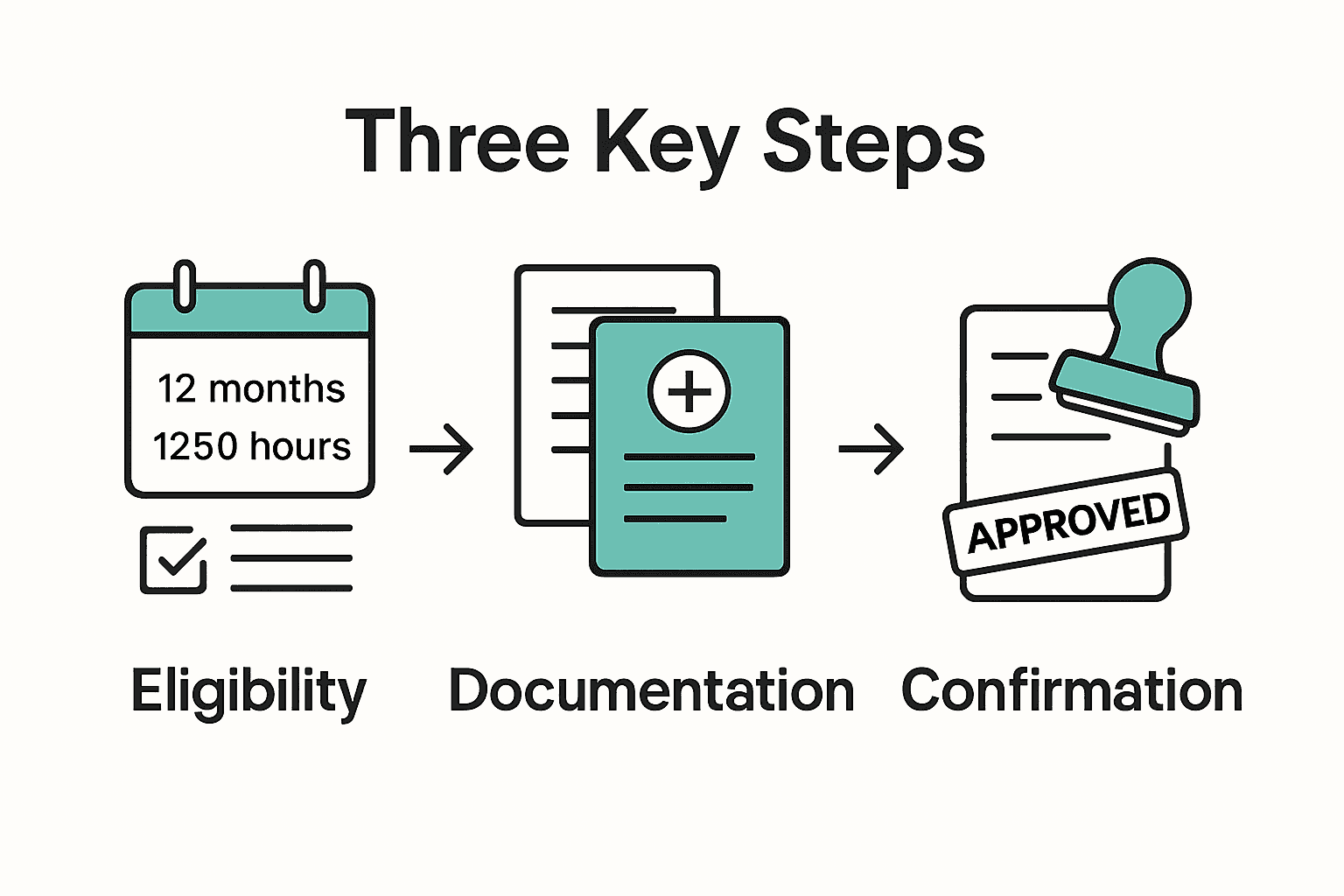
    First, check your employment status and company size. Generally, CFRA applies to companies with 5 or more employees, and you must have worked for your employer for at least 12 months and completed 1250 work hours in the past year. California Paid Sick Leave laws also mandate that most employees earn paid sick time, which provides additional protection for your health and family needs.

    Pro Tip: Always document your leave request and keep copies of all communication with your employer to protect your legal rights.

    Different types of leave have specific requirements. Pregnancy disability leave, medical leave, and family care leave each have unique eligibility criteria. Consulting your HR department or reviewing your employee handbook can provide specific details about your company’s leave policies. The next step is to formally request your leave with proper documentation and understanding of your rights.

    Step 2: Gather Required Documentation and Details

    Successfully requesting leave means being prepared with the right documentation and details. Your goal in this step is to collect and organize all necessary paperwork that will support your leave request and demonstrate your eligibility.

    According to the California Department of Human Resources, you will need to complete specific forms to initiate your leave process. CalHR recommends starting with the ‘Notice of Eligibility and Rights and Responsibilities’ form which serves as your official documentation for leave request. This form requires you to provide comprehensive information about the nature of your leave including:

    • Specific dates of requested leave
    • Reason for leave (medical, family care, personal health)
    • Expected duration of absence
    • Contact information during leave
    • Medical certification or supporting documentation

    Pro Tip: Make copies of all submitted documents and maintain a personal file tracking your leave request communication.

    Medical certification is often a crucial component of your documentation. If your leave is health related, secure a detailed statement from your healthcare provider that explains the medical necessity of your absence. This documentation should clearly outline the expected duration and any work restrictions. Keep all communication professional and timely to ensure a smooth approval process.

    Your next step will involve submitting these carefully prepared documents to your human resources department.

    Step 3: Compose and Submit a Written Leave Request

    Crafting a professional and comprehensive written leave request is crucial to ensuring your time off is approved smoothly and efficiently. Your written request serves as an official communication that documents your need for leave and provides your employer with clear understanding of your circumstances.

    According to San Luis Obispo County Human Resources, employees should submit a detailed written request that outlines the specific reason for leave, anticipated duration, and includes all relevant supporting documentation. When composing your request, be sure to include these essential elements:

    • Your full name and job title
    • Specific start and end dates of requested leave
    • Precise reason for leave (medical, family care, personal)
    • Contact information during your absence
    • Attached medical certification or supporting documents

    Pro Tip: Use a professional tone and be concise yet comprehensive in your written request.

    When submitting your request, follow your company’s specific protocols. Some employers prefer email submissions while others require formal paper documents. California Department of Human Resources recommends using their standardized leave request forms to ensure you provide all necessary information. Keep a copy of your submission for your personal records and follow up with your HR department within a few days to confirm receipt of your request. Your next step will involve tracking the status of your leave request and preparing for potential follow-up questions.

    Compose and Submit a Written Leave Request

    Step 4: Communicate With Your Employer About Next Steps

    After submitting your leave request, proactive communication with your employer becomes critical in ensuring a smooth approval process. This step involves following up professionally and understanding the specific requirements and expectations for your leave.

    Employees should engage in a detailed discussion with their employer about the next steps following a leave request. This conversation should cover important details such as the timeline for approval, any additional documentation needed, and potential follow up requirements. Your goal is to demonstrate transparency and cooperation throughout the process.

    Schedule a meeting or phone call with your HR representative to review your request. During this conversation, be prepared to discuss:

    • Specific dates of your proposed leave
    • Reasons for your leave request
    • Any potential impact on current projects
    • Your availability during leave
    • Contact methods for urgent workplace matters

    Pro Tip: Always maintain a professional and solution oriented approach during these discussions.

    Remember that understanding potential workplace transitions can help you navigate complex employment situations more effectively. Keep detailed records of all communications and be ready to provide any supplemental information your employer might require. Your final step will involve confirming the official approval of your leave request and preparing for your time away from work.

    Step 5: Confirm Leave Approval and Retain Documentation

    Securing formal approval of your leave request is the critical final step in protecting your employment rights and ensuring a smooth absence from work. This stage involves obtaining official confirmation and meticulously preserving all related documentation for your personal records.

    California Department of Human Resources emphasizes that employees should receive a formal notice from their employer confirming the specific details of their approved leave. This document serves as your official authorization and legal protection. When you receive this confirmation, carefully review it to ensure all details are accurate including:

    • Exact start and end dates of your leave
    • Specific conditions or requirements
    • Any expected communication protocols
    • Return to work expectations
    • Contact information for HR representative

    Pro Tip: Create both digital and physical copies of all leave related documentation.

    Digital organization matters as much as physical preservation. Create a dedicated folder on your computer and in your email system to store electronic copies of all leave request materials. Understanding potential workplace transitions can help you navigate potential complications. By maintaining comprehensive records, you protect yourself legally and ensure smooth communication with your employer during and after your leave period.

    Infographic visualizing California employee leave request steps

    Secure Your Right to Leave with Confidence

    Navigating the legal steps for requesting leave as a California employee can feel overwhelming. You want to make sure your leave request is done correctly to protect your job and receive the benefits you deserve. Knowing your eligibility, preparing proper documentation, and communicating clearly are essential but complex tasks. That is why understanding your rights and having reliable guidance is so important.

    Empower yourself by visiting California Labor Law, a trusted resource dedicated to helping employees like you understand workplace rights and legal protections. Here you will find clear guides on leave laws, helpful tools for tracking your claims, and access to legal advocates ready to assist if you face obstacles with your leave.

    Don’t wait until it is too late, take action now by filling out our free leave request consultation form or calling 1-866-355-9991 to ensure your leave request is handled legally and professionally. Start with expert information and support at California Labor Law and get the peace of mind you deserve today.

    Frequently Asked Questions

    What types of leave am I eligible to request as a California employee?

    Understanding your eligibility is essential; you can request leaves such as medical leave, family care leave, or pregnancy disability leave under the California Family Rights Act (CFRA). Verify your employment status, ensuring you have worked for at least 12 months and completed 1,250 work hours within the past year before submitting a request.

    How do I gather the necessary documentation for my leave request?

    To support your leave request, collect relevant documentation such as the ‘Notice of Eligibility and Rights and Responsibilities’ form and any medical certifications if applicable. Assemble all required paperwork in one folder, and make copies for your records to streamline the submission process.

    What should I include in my written leave request to ensure approval?

    Your written leave request should clearly state your full name, job title, specific leave dates, reason for leave, and attach any supporting documents such as medical certifications. Make your request concise yet comprehensive to facilitate a quick response from your employer.

    How do I communicate with my employer after submitting my leave request?

    After submitting your request, schedule a follow-up meeting or phone call with your HR representative to discuss any questions or additional documentation needed. This proactive communication ensures that you remain engaged and aware of the approval timeline and expectations.

    What steps should I take to confirm the approval of my leave?

    Once you receive confirmation of your leave, review the details to ensure accuracy regarding dates and terms. Save all approval documents both digitally and physically to maintain a reliable record of your leave status and protect your rights.

    How can I prepare for my return to work after my leave?

    To prepare for your return, review your employer’s expectations outlined in the approval notice and confirm any necessary communication during your leave. Contact your HR department a few days before your return to clarify any uncertainties regarding your reintegration into the workplace.

  • Understanding California Paid Sick Leave: Your Rights

    Understanding California Paid Sick Leave: Your Rights

    Everything You Need to Know About California Sick Leave

    California paid sick leave affects millions every year. The law requires that employees earn at least one hour of paid sick leave for every 30 hours worked. You might think this is just one more rule employers have to follow, but it actually protects workers and changes how workplaces handle illness and family emergencies.

    What is California Paid Sick Leave?

    California paid sick leave represents a critical worker protection law ensuring employees can take time off when they are ill or need to care for a family member without losing wages. The Healthy Workplace Healthy Family Act established comprehensive guidelines mandating that employers provide paid sick time to workers across the state.

    Under California law, employees who work at least 30 days within a year are eligible for paid sick leave. The legislation guarantees workers can accrue paid time off based on hours worked, with a minimum standard of one hour of sick leave for every 30 hours worked. This means most full time employees will accumulate approximately 5 days or 40 hours of paid sick leave annually.

    Key Provisions and Coverage

    California paid sick leave covers multiple scenarios where an employee might need time away from work, including:

    • Personal medical treatment or illness
    • Preventative medical care
    • Caring for a sick family member
    • Addressing medical needs of a child, parent, spouse, domestic partner, or designated person

    Employers have two primary methods for providing sick leave: accrual method or front loading. In the accrual method, employees earn sick time incrementally throughout the year. Front loading involves employers providing the entire sick leave amount at the beginning of the year.

    The law reinforces workers’ rights by preventing employers from retaliating against employees who utilize their legally protected sick leave. This means workers cannot be punished, demoted, or terminated for taking time off under these provisions.

    To clarify how California paid sick leave can be provided and its main differences, the following table compares the accrual and front loading methods discussed in the article.

    Method How Sick Leave is Provided Accrual Rate Carry Over Required Annual Usage Limit
    Accrual Earned over time as employee works 1 hour per 30 hours worked Yes 40 hours or 5 days
    Front Loading Entire amount provided at start of the year N/A (given in full up front) No (but recommended) 40 hours or 5 days

    Important Considerations

    While the law provides robust protections, employees should understand their specific workplace policies. Some employers might have more generous sick leave provisions beyond the state minimum requirements. Workers are encouraged to review their employment contracts and discuss sick leave policies with their human resources departments to fully understand their individual benefits.

    Why is California Paid Sick Leave Important?

    California paid sick leave represents more than a legal requirement it is a critical public health and worker protection mechanism that safeguards both individual employees and broader community wellness. By enabling workers to take time off without financial penalty, the law addresses fundamental issues of health, economic stability, and workplace dignity.

    Public Health Protection

    Paid sick leave plays a pivotal role in preventing disease transmission and supporting community health. When employees can stay home while ill, they reduce the risk of spreading infectious diseases in workplaces, schools, and public spaces. Research from California Public Health Department highlights that working while sick costs the national economy $273 billion annually in lost productivity, underscoring the economic importance of allowing workers to recover properly.

    Worker Economic Security

    The legislation provides critical economic protections for workers by ensuring they do not face financial hardship when addressing personal or family health needs. Key economic benefits include:

    • Preventing wage loss during medical treatment
    • Supporting family care responsibilities
    • Reducing financial stress associated with health challenges
    • Maintaining consistent income during short term health interventions

    Moreover, paid sick leave demonstrates a commitment to worker dignity, recognizing that employees should not be forced to choose between their health and their livelihood. The law reinforces workplace rights by creating a safety net that protects workers from potential economic vulnerability.

    Workplace Culture and Productivity

    Beyond immediate health considerations, paid sick leave contributes to a more positive and sustainable workplace culture. Employers who support employee health through comprehensive sick leave policies typically experience:

    • Increased employee morale
    • Reduced overall workplace illness transmission
    • Higher employee retention rates
    • Enhanced organizational reputation

    By prioritizing worker wellness, California demonstrates a progressive approach to labor rights that balances individual health needs with broader economic considerations.

    The paid sick leave law represents a sophisticated policy intervention that protects workers while simultaneously promoting public health and economic resilience.family sick leave California

    How Does California Paid Sick Leave Work?

    The California Paid Sick Leave law operates through precise mechanisms designed to protect workers and ensure fair implementation across diverse workplace environments. Understanding its operational framework helps employees effectively utilize their legally guaranteed benefits.

    Accrual and Eligibility Requirements

    To qualify for paid sick leave, employees must meet specific criteria established by California labor regulations. Workers become eligible after working for the same employer for at least 30 days within a year, with the critical milestone being the 90th day of employment. California overtime rules similarly emphasize consistent employment protections.

    Employers have two primary methods of implementing paid sick leave:

    • Accrual Method: Employees earn one hour of sick leave for every 30 hours worked
    • Front Loading Method: Employers provide the entire sick leave allocation upfront at the start of the year

    Sick Leave Usage and Protections

    Employees can utilize paid sick leave for multiple scenarios, including:

    • Personal medical treatment or illness
    • Preventative healthcare appointments
    • Caring for ill family members
    • Addressing medical needs of a spouse, child, parent, or registered domestic partner

    The law mandates that employers cannot retaliate against workers who exercise their paid sick leave rights. This means employees cannot be demoted, terminated, or disciplined for appropriately using their legally protected time off.

    Tracking and Documentation

    California law requires employers to maintain detailed records of sick leave accrual and usage. Employers must track and document sick leave hours on employee pay stubs or in separate written documentation. Workers have the right to request and review their accumulated sick leave balance, ensuring transparency and accountability in the implementation of this critical worker protection mechanism.

    By establishing clear guidelines and robust worker protections, California’s paid sick leave law provides a comprehensive framework that prioritizes employee health and workplace fairness.

    The following table summarizes the key eligibility and usage rules outlined in the California Paid Sick Leave law to help employees understand their rights at a glance.

    Requirement Explanation
    Eligibility Threshold 30 days with same employer within a year
    Waiting Period 90 days of employment before use
    Employee Types Covered Full-time, part-time, temporary
    Accrual Rate 1 hour per 30 hours worked
    Maximum Annual Usage 40 hours or 5 days
    Carry Over Yes, unused hours must carry over
    Employer Retaliation Prohibited Cannot be demoted, terminated, or disciplined for using sick leave

    Key Concepts of California Paid Sick Leave

    Understanding the foundational principles of California’s Paid Sick Leave law requires a comprehensive examination of its core components. These key concepts establish a robust framework that protects workers and ensures fair implementation across diverse workplace environments.

    Fundamental Eligibility Parameters

    The paid sick leave law establishes clear criteria for worker participation. Employees become eligible after working for the same employer for at least 30 days within a year, with a critical 90-day employment period before accessing benefits. Understanding California wait time penalties provides additional context about worker protection mechanisms.

    Key eligibility requirements include:

    • Employment with the same employer for minimum 30 days
    • Completion of a 90-day employment period
    • Applicable to full-time, part-time, and temporary workers
    • Covers employees working in California, regardless of company headquarters location

    Accrual and Usage Guidelines

    California’s paid sick leave law provides two primary mechanisms for implementing sick leave benefits:

    Infographic comparing accrual and front loading for California paid sick leave

    • Accrual Method: Employees earn one hour of sick leave for every 30 hours worked
    • Front Loading Method: Employers provide entire sick leave allocation upfront

    Employers can limit annual usage to 40 hours or five days, but must allow employees to carry over unused hours. The law ensures workers can use sick leave for personal medical needs, family care, preventive healthcare, and addressing domestic violence or sexual assault situations.

    Workplace Protection and Transparency

    The legislation includes robust protections against workplace retaliation. Employers cannot demote, terminate, or discipline employees for utilizing their legally protected sick leave. Employers must:

    • Maintain detailed sick leave accrual records
    • Document sick leave hours on pay stubs
    • Allow employees to review accumulated sick leave balances
    • Display workplace posters explaining sick leave rights

    By establishing these comprehensive guidelines, California’s paid sick leave law creates a framework that prioritizes worker health, financial stability, and workplace dignity.

    Understanding Your Rights Under California Labor Law

    California labor law provides comprehensive worker protections designed to safeguard employees from unfair workplace practices and ensure dignified working conditions. These legal frameworks establish fundamental rights that protect workers across various employment scenarios and industries.

    Core Worker Protection Principles

    California’s labor regulations are structured to provide robust employee protections that go beyond federal standards. Workers are guaranteed fundamental rights including fair compensation, safe working environments, and protection against discrimination. California Employment Law resources offer detailed guidance on navigating workplace legal complexities.

    Key worker protection principles include:

    • Right to minimum wage and overtime compensation
    • Protection against workplace discrimination
    • Access to meal and rest breaks
    • Guaranteed paid sick leave
    • Safe and harassment-free work environment
    • Protection against wrongful termination

    Employees have multiple legal mechanisms to address workplace violations. Workers can file complaints with state labor authorities, pursue administrative claims, or initiate civil lawsuits when their rights are compromised. Critical legal protections cover various workplace scenarios:

    • Wage theft recovery
    • Discrimination claim processing
    • Workplace safety violations
    • Retaliation protection
    • Unpaid overtime compensation

    Enforcement and Accountability

    The California labor law system includes robust enforcement mechanisms to hold employers accountable. State agencies like the Labor Commissioner’s Office investigate workplace violations and can:

    • Issue citations for labor law infractions
    • Recover unpaid wages
    • Impose financial penalties on non-compliant employers
    • Provide mediation and resolution services

    By establishing clear legal standards and strong enforcement protocols, California labor law creates a comprehensive framework that prioritizes worker dignity, fair compensation, and workplace justice.

    Take Control of Your California Paid Sick Leave Rights Today

    Do you feel uncertain about your employer’s sick leave policy or worry that your rights might be overlooked? Many workers in California face confusion when trying to understand their eligibility, accrual methods, and protection against retaliation. Not knowing where to turn can add even more stress if you are already coping with health or family issues. You deserve clarity and security when it comes to benefits like paid sick leave and other California labor law rights.

    If you suspect your paid sick leave is being mishandled or you need help with wage calculations, do not wait to take action. Visit California Labor Law for easy-to-use legal guides, up-to-date information, and calculators. Empower yourself now by calling 1-866-355-9991 to ensure you get the protection and pay you deserve. Speak with an advocate, discover your options, and defend your rights before it is too late.

    Frequently Asked Questions

    What is California Paid Sick Leave?

    California Paid Sick Leave is a law that requires employers to provide paid sick time to employees, ensuring they can take time off when they are ill or need to care for a family member without losing wages.

    How is paid sick leave accrued in California?

    Employees in California accrue paid sick leave at a rate of one hour for every 30 hours worked. This means a full-time employee typically accumulates about five days or 40 hours of paid sick leave annually.

    Can employers limit the usage of paid sick leave?

    Yes, employers can limit the annual usage of paid sick leave to a maximum of 40 hours or five days. However, they must allow employees to carry over any unused sick leave to the following year.

    What protections do employees have when using paid sick leave?

    Employees are protected by law from retaliation when using their sick leave. Employers cannot demote, terminate, or discipline employees for taking time off under the California Paid Sick Leave provisions.