Category: Wage Theft

  • California Wage Theft: How Employers Get Away With It

    California Wage Theft: How Employers Get Away With It

    California Wage Theft: How Employers Steal Wages and Often Get Away With It

    Missing a paycheck or seeing your hard-earned hours go unpaid can leave California retail and hospitality workers feeling frustrated and powerless. Wage theft in these industries is not just a rare mistake, but a problem deeply rooted in how some employers operate, especially across Los Angeles and other major California cities.

    This article explains what wage theft means under California law and shows clear steps you can take to protect your pay, understand your labor rights, and fight back against illegal employer practices.

    What Wage Theft Means In California Law

    Wage theft represents a serious violation of worker rights in California, encompassing multiple illegal practices where employers intentionally deny workers their legally earned compensation.

    Comprehensive wage theft research from the UCLA Labor Center reveals these violations systematically impact thousands of workers across the state, particularly in industries like hospitality, retail, and agriculture.

    In California law, wage theft specifically includes several distinct violations:

    • Paying less than minimum wage
    • Failing to pay overtime compensation
    • Forcing employees to work off-the-clock
    • Withholding final paychecks after employment termination
    • Denying required meal and rest breaks
    • Misclassifying workers as independent contractors to avoid labor protections

    The financial impact is significant. California workers collectively lose hundreds of millions of dollars annually through these illegal employer practices. While state labor laws provide robust protections, enforcement remains challenging. Many workers never recover their stolen wages due to complex legal processes and employer tactics designed to evade accountability.

    Employer strategies for avoiding wage theft accountability often include:

    • Rapidly changing business names
    • Creating shell companies
    • Declaring bankruptcy
    • Challenging wage claims through prolonged legal battles

    Pro tip: Document every hour worked, keep detailed pay stubs, and report suspected wage violations to California’s Labor Commissioner’s Office within strict statutory timelines.

    Common Wage Theft Tactics By Employers

    Employers in California deploy sophisticated strategies to illegally withhold worker compensation, targeting vulnerable populations through systematic wage theft techniques.

    Local law enforcement investigations reveal multiple calculated methods used to exploit employee labor and circumvent legal wage protections.

    Wage theft tactics commonly employed by unscrupulous employers include:

    • Misclassifying employees as independent contractors to avoid minimum wage and overtime requirements
    • Deliberately underreporting hours worked on official timesheets
    • Forcing employees to work through mandatory unpaid meal and rest breaks
    • Implementing off-the-clock work requirements without compensation
    • Withholding final paychecks after employment termination
    • Paying less than California’s mandated minimum wage

    Certain industries are more prone to these unethical practices. Hospitality, agriculture, construction, and service sectors frequently exploit immigrant and low-wage workers who may fear reporting violations due to potential retaliation. These workers often lack comprehensive understanding of their legal rights or face significant language and economic barriers to challenging wage theft.

    Diner server photographing handwritten timesheet

    The psychological and financial impact of these tactics extends far beyond immediate monetary loss. Workers experiencing consistent wage theft face increased economic instability, reduced earning potential, and significant emotional stress. Employers who consistently engage in these practices create systemic vulnerabilities that undermine worker protections and economic fairness.

    Pro tip: Maintain detailed personal work records, including dates, hours worked, and communication with employers, to build a strong case when reporting potential wage theft violations.

    Industries Most Vulnerable To Wage Theft

    Comprehensive wage theft research reveals that certain industries systematically expose workers to higher risks of compensation violations. Low-wage sectors consistently demonstrate the most significant vulnerabilities, creating a landscape of economic exploitation that disproportionately impacts workers with limited legal resources and job mobility.

    Industries with highest wage theft risks include:

    • Retail services with inconsistent hour tracking
    • Restaurant and food service with complex tip credit regulations
    • Construction involving complex subcontractor payment structures
    • Agriculture with challenging migrant worker protections
    • Janitorial and personal care services featuring fragmented employment arrangements
    • Manufacturing with complicated overtime calculation methods

    The underlying factors contributing to wage theft in these industries are complex and interconnected. Immigrant workers, part-time employees, and those with limited English proficiency face substantially higher risks. These workers often lack comprehensive understanding of their legal rights, creating environments where employers can systematically underpay or manipulate compensation structures.

    Economic research highlights that wage theft is not merely an isolated incident but a systemic problem deeply embedded in certain industry practices. Workers in these vulnerable sectors frequently experience multiple simultaneous wage violation strategies, including unauthorized deductions, misclassification, and deliberate underreporting of worked hours.

    Here’s a quick comparison of common industries and the unique factors that make them more vulnerable to wage theft:

    Industry Key Risk Factors Most Affected Worker Groups
    Agriculture Language barriers, seasonal jobs Migrant laborers, non-English speakers
    Retail Irregular shifts, understaffing Young employees, part-timers
    Construction Multiple subcontractors, paperwork gaps Day laborers, immigrants
    Food Service Tip credits, shift changes Servers, kitchen staff
    Janitorial/Personal Care Fragmented contracts, night shifts Immigrant and low-wage workers
    Manufacturing Overtime confusion, shift work Production line employees

    Pro tip: Always document your work hours independently, photograph timesheets, and maintain a personal record separate from employer documentation to protect yourself against potential wage theft.

    Workers can file wage claims through multiple legal channels designed to protect their rights and recover stolen wages, regardless of immigration status. California’s robust labor protection framework provides comprehensive safeguards for employees facing compensation violations.

    Key legal protections for California workers include:

    • The right to file wage claims with the Division of Labor Standards Enforcement (DLSE)
    • Protection against retaliation for reporting wage violations
    • Guaranteed minimum wage requirements
    • Mandatory overtime compensation
    • Prohibition of illegal paycheck deductions
    • Timely payment of all earned wages
    • Protection for workers regardless of immigration status

    Federal and state laws establish multiple layers of worker defense. The Fair Labor Standards Act (FLSA) and California Labor Code create strong foundational protections that prevent employers from systematically exploiting workers. These laws mandate specific employer responsibilities, including accurate record-keeping, proper wage classification, and transparent compensation practices.

    The legal system provides several enforcement mechanisms for workers experiencing wage theft. Employees can file claims online, by mail, or in person, with investigation timelines ranging from one to four years depending on the specific violation. Potential remedies include full wage recovery, penalties against employers, and potential additional compensation for damages.

    Pro tip: Maintain detailed personal documentation of hours worked, communications with employers, and any evidence of wage discrepancies to strengthen potential legal claims.

    How To Fight Back And Recover Wages

    Workers can recover unpaid wages through strategic legal actions designed to protect their economic rights and hold employers accountable for wage theft violations. Understanding the precise steps and resources available is crucial for successful wage recovery in California.

    Effective strategies for recovering stolen wages include:

    • Documenting all evidence of wage violations
    • Gathering pay stubs, time records, and employment communications
    • Filing formal wage claims with the Division of Labor Standards Enforcement
    • Consulting with employment rights organizations
    • Exploring potential civil lawsuit options
    • Reporting violations to state labor authorities
    • Utilizing federal and state wage recovery resources

    The legal process for wage recovery involves multiple potential pathways. Workers can file claims online, by mail, or in person with the California Labor Commissioner’s Office. These claims trigger investigations that may result in settlement conferences, administrative hearings, and potential wage reimbursement.

    Importantly, workers are protected from retaliation when pursuing legitimate wage theft claims.

    Timely action is critical in wage theft cases. California law provides strict filing deadlines that vary depending on the specific type of wage violation.

    Most wage claims must be filed within three years of the violation, though some cases might have shorter or longer statutes of limitations. Professional legal consultation can help workers understand their specific timelines and maximize their chances of successful wage recovery.

    This summary highlights key wage recovery steps alongside their primary benefits for California workers:

    Wage Recovery Action Main Benefit Who Should Use It
    Document violations Creates strong evidence All affected workers
    File claim with DLSE Triggers legal process Workers with wage loss
    Consult legal advocates Access expert support Complex or retaliatory cases
    Report to authorities Increases enforcement odds Repeated violations

    Pro tip: Preserve all employment documentation, including digital communications, and create a detailed chronological record of work hours and potential wage violations to strengthen your legal claim.

    Take Control Against Wage Theft in California

    Wage theft harms thousands of California workers every year by robbing them of their hard-earned pay through illegal practices like unpaid overtime and off-the-clock work. If you are struggling with withheld wages or employer retaliation, you are not alone.

    The challenges of navigating complex labor laws and employer tactics that hide wage violations can feel overwhelming. But you do have strong legal protections designed to help you reclaim what you deserve.

    At California Labor Law, we provide free, easy-to-understand resources and legal guidance to empower you against wage theft. Explore our detailed legal guides, use our wage calculators, and learn exactly how to document violations so you can build a compelling claim.

    Don’t wait until your lost wages disappear—take action today. Call 1-866-355-9991 now for a free confidential wage theft consultation to learn your rights and connect directly with legal advocates ready to fight for you. Your wages matter. Get the help you need now.

    Frequently Asked Questions

    What constitutes wage theft in California?

    Wage theft in California includes paying less than minimum wage, failing to pay overtime, withholding paychecks after termination, and not providing required meal and rest breaks.

    How can workers protect themselves from wage theft?

    Workers can protect themselves by documenting every hour worked, keeping detailed pay stubs, and reporting suspected violations to the Labor Commissioner’s Office within the time limits.

    What should I do if I suspect wage theft at my job?

    If you suspect wage theft, document your evidence, gather pay stubs and timesheets, and consider filing a claim with the Division of Labor Standards Enforcement (DLSE).

    How long do I have to file a wage theft claim in California?

    Most wage theft claims in California must be filed within three years of the violation, although some types of violations may have different time limits.

  • Wage Garnishment in California: What Workers Need to Know

    Wage Garnishment in California: What Workers Need to Know

    California Wage Garnishment Laws: Limits, Exemptions & How to Stop It

    Almost four million wage garnishments are processed nationwide every year. For anyone juggling student loans, child support, or other debts, the risk of suddenly seeing less money in their paycheck can feel confusing or even frightening.

    Unpacking the rules behind wage garnishment, debunking common myths, and understanding unique California protections will help readers stay informed and avoid costly surprises.

    Wage Garnishment Defined and Common Myths

    Wage garnishment represents a legal mechanism where a portion of an employee’s earnings are withheld and redirected to a creditor by court order.

    Under the Consumer Credit Protection Act, specific protections exist for workers facing wage attachments, ensuring they retain a substantial portion of their income.

    In California, wage garnishments typically emerge from various debt scenarios, including:

    • unpaid taxes,
    • child support obligations,
    • student loans,
    • and court-ordered judgments.

    Wage Garnishment Defined and Common Myths

    The legal process requires creditors to obtain a court judgment before initiating wage garnishment, providing workers with critical due process protections.

    Disposable earnings become the key calculation metric, which represents the income remaining after mandatory deductions like taxes and social security.

    Common myths about wage garnishment often mislead workers. Many believe employers can immediately garnish wages without legal proceedings – this is false.

    Another widespread misconception is that all of an individual’s earnings can be seized, when in reality, federal law limits garnishments to 25% of disposable earnings or the amount exceeding 30 times the federal minimum wage, whichever is less.

    Understanding these nuanced legal protections helps workers recognize their rights and challenge improper garnishment attempts.

    Workers facing potential wage garnishment should understand their legal rights and seek immediate professional guidance. Consulting with an employment law professional can help navigate complex garnishment scenarios, potentially negotiating alternative payment arrangements or challenging inappropriate garnishment orders.

    Knowledge and proactive communication remain the most powerful tools in managing potential wage garnishment situations.

    Types of Wage Garnishment in California

    Wage garnishments in California come in several distinct legal forms, each targeting specific types of outstanding financial obligations.

    The Franchise Tax Board recognizes multiple withholding orders designed to collect past due funds from employees, including:

    • Earnings Withholding Order for Taxes (EWOT),
    • Earnings Withholding Order (EWO),
    • Order to Withhold (OTW),
    • and Continuous Order to Withhold (COTW).

    The most common types of wage garnishments in California include:

    • court-ordered judgments,
    • tax debts,
    • child support,
    • and student loan defaults.

    Types of Wage Garnishment in California

    Government-initiated garnishments often have different rules compared to private creditor claims.

    For instance, tax-related garnishments can be more aggressive, with state agencies like the Franchise Tax Board authorized to issue direct withholding orders for unpaid tax obligations.

    Unique to California, certain garnishment types offer more robust worker protections compared to federal standards. Child support garnishments typically allow higher percentage withholdings, while consumer debt garnishments are more strictly regulated.

    Workers should understand that each garnishment type carries specific legal requirements, including notification periods, maximum withholding percentages, and potential exemption qualifications.

    Navigating wage garnishment complexities requires careful understanding of individual circumstances. Workers facing potential garnishment should document all communications, verify the legitimacy of the claim, and consider consulting with an employment law professional who can help protect their financial interests and ensure legal compliance with California’s specific wage garnishment regulations.

    How Wage Garnishment Works Step by Step

    Wage garnishment involves a structured legal process that begins when a creditor obtains a court judgment against an employee. After obtaining a Writ of Execution, creditors can request money be taken directly from an individual’s paycheck, with specific limitations on the amount that can be withheld.

    The step-by-step wage garnishment process typically unfolds through several critical stages. Legal notification is the first crucial step, where the employee must receive official documentation about the impending wage garnishment.

    Employers then become legally obligated to withhold a predetermined percentage of the employee’s earnings, which cannot exceed 20% of gross income. Priority is given to certain types of garnishments, such as child support or tax-related obligations, which may take precedence over other financial judgments.

    California law provides workers with specific protections during the wage garnishment process. Employees have the right to challenge the garnishment, request a hearing, or negotiate alternative payment arrangements.

    Some income sources, including social security benefits and certain retirement funds, may be exempt from garnishment. Workers must carefully review the garnishment notice, verify its legal standing, and understand their rights to contest or negotiate the terms.

    Navigating wage garnishment requires careful documentation and proactive communication. Workers facing garnishment should maintain detailed records of all communications, seek legal advice if the garnishment seems incorrect, and explore potential exemptions or negotiation strategies.

    Understanding the intricate legal process can help employees protect their financial interests and potentially minimize the impact of wage garnishment.

    How Wage Garnishment Works Step by Step

    California provides robust legal safeguards to protect workers from excessive wage garnishment, ensuring that employees retain sufficient income for basic living expenses.

    When calculating garnishment amounts, specific deductions are subtracted from gross income, including federal income tax, social security, state income tax, and state disability insurance.

    Wage garnishment limitations in California are designed to prevent financial hardship for workers. The state typically allows debt collectors to garnish up to 20% of an employee’s disposable earnings, but this percentage can be reduced through legal exemption claims.

    Priority is given to specific types of debt, such as child support, taxes, and court-ordered judgments, which may have different garnishment rules compared to standard consumer debts.

    Workers facing wage garnishment have several crucial protections under California law. If the garnishment would prevent an individual from meeting basic family needs, they can file a Claim of Exemption to reduce the garnished amount. Certain income sources remain completely protected, including: social security benefits, disability payments, and some retirement funds.

    Additionally, employees have the right to challenge garnishment orders, negotiate payment plans, and seek legal counsel to protect their financial interests.

    Navigating wage garnishment requires a thorough understanding of legal rights and proactive financial management. Workers should carefully review all garnishment notices, maintain detailed documentation, and explore all available options for reducing or challenging the garnishment.

    Understanding these legal protections can help employees minimize financial strain and maintain their economic stability during challenging financial circumstances.

    Employee Rights and Employer Duties

    Wage garnishment involves complex legal obligations for both employees and employers, with specific protections designed to maintain worker financial stability.

    The Consumer Credit Protection Act establishes clear guidelines for wage garnishment limitations, setting maximum withholding percentages to prevent excessive financial burden on workers.

    Employer responsibilities during wage garnishment are critically important and tightly regulated. Employers must carefully follow legal protocols, including accurate calculation of income that can be garnished, proper notification procedures, and strict adherence to maximum garnishment percentages.

    They are legally prohibited from terminating an employee due to a single wage garnishment, ensuring workers are protected from potential workplace retaliation.

    Multiple garnishment orders require employers to prioritize different types of debt, such as child support or tax obligations, according to specific legal hierarchies.

    Employees possess significant legal rights when confronting wage garnishment. Workers have the legal protection of filing a Claim of Exemption if garnishment prevents them from meeting basic family needs, providing a critical mechanism for challenging overly aggressive garnishment orders.

    Employees can contest garnishment calculations, negotiate payment plans, and seek legal counsel to protect their financial interests. They also have the right to receive complete documentation explaining the garnishment’s origin, amount, and calculation method.

    Proactive communication and thorough documentation are essential for both employees and employers navigating wage garnishment scenarios. Workers should carefully review all garnishment notices, understand their legal rights, and take immediate action if they believe the garnishment is incorrect or excessively burdensome.

    Employers must maintain meticulous records, follow precise legal guidelines, and ensure transparent communication throughout the garnishment process. Understanding these mutual responsibilities helps create a fair and legally compliant approach to resolving financial obligations.

    Protect Yourself From Wage Garnishment Challenges Today

    Wage garnishment in California can feel overwhelming and unfair knowing that up to 20% of your disposable earnings might be withheld by court order. You need clear guidance on your legal rights, how to challenge incorrect garnishments, and what exemptions you may be entitled to.

    Don’t navigate this complex process alone when understanding terms like disposable earnings, Claim of Exemption, and employer duties can make a powerful difference in protecting your income.

    At California Labor Law, we provide free, easy-to-understand legal guides designed specifically for workers facing wage garnishment and other employment issues. Our legal resources cover your rights under state laws, give you step-by-step help, and connect you with trusted advocates ready to assist.

    Protect Yourself From Wage Garnishment Challenges Today

    Take control of your financial well-being now by calling 1-866-355-9991 for a free wage garnishment consultation and learning how to respond quickly to wage garnishment notices. Don’t wait until your paycheck is affected. Get the support you deserve today.

    Frequently Asked Questions

    What is wage garnishment?

    Wage garnishment is a legal process where a portion of an employee’s earnings is withheld by an employer and redirected to a creditor to satisfy a debt, following a court order.

    How much of my wages can be garnished?

    In general, California law allows creditors to garnish up to 20% of your disposable earnings, but this can vary for specific types of debt, like child support or taxes.

    Can my employer terminate me for having my wages garnished?

    No, employers cannot terminate an employee due to a single wage garnishment, as this is prohibited by federal law to protect workers from workplace retaliation.

    What should I do if I believe my wage garnishment is incorrect?

    If you believe your wage garnishment is in error, you can contest it, file a Claim of Exemption, or seek legal counsel for assistance in challenging the garnishment order.

  • How to File Wage Claim: Your Step-by-Step Process

    How to File Wage Claim: Your Step-by-Step Process

    How to File a California Wage Claim

    Filing a wage claim sounds daunting and complex for most workers, but the payoff can be huge. Workers who file wage claims recover millions in unpaid wages each year, sometimes from employers who never expected to get caught. Many assume gathering paperwork and jumping through agency hoops is impossible without a law degree. But the real secret is that most successful wage claims come down to getting organized and being persistent—even if you have never done anything like this before.

    Step 1: Gather Necessary Documentation and Evidence

    Filing a wage claim requires careful preparation and strategic documentation collection. This initial step is crucial in building a compelling case that demonstrates the precise details of your wage dispute. Comprehensive evidence will significantly strengthen your claim and provide clear documentation of potential labor law violations.

    Begin by systematically collecting all financial records related to your employment. Paychecks, pay stubs, time records, employment contracts, and any written communication with your employer become critical pieces of evidence. Focus on gathering documents that show your work hours, agreed compensation rates, actual payments received, and any discrepancies between promised and actual wages.

    Track down every relevant document, even if it seems minor. Bank statements showing deposit amounts, work schedules, text messages discussing compensation, and email exchanges can provide essential context. Electronic records are particularly valuable, as they create a verifiable trail of communication and financial transactions. If you have kept a personal log of hours worked or overtime, include these detailed records as supplementary evidence.

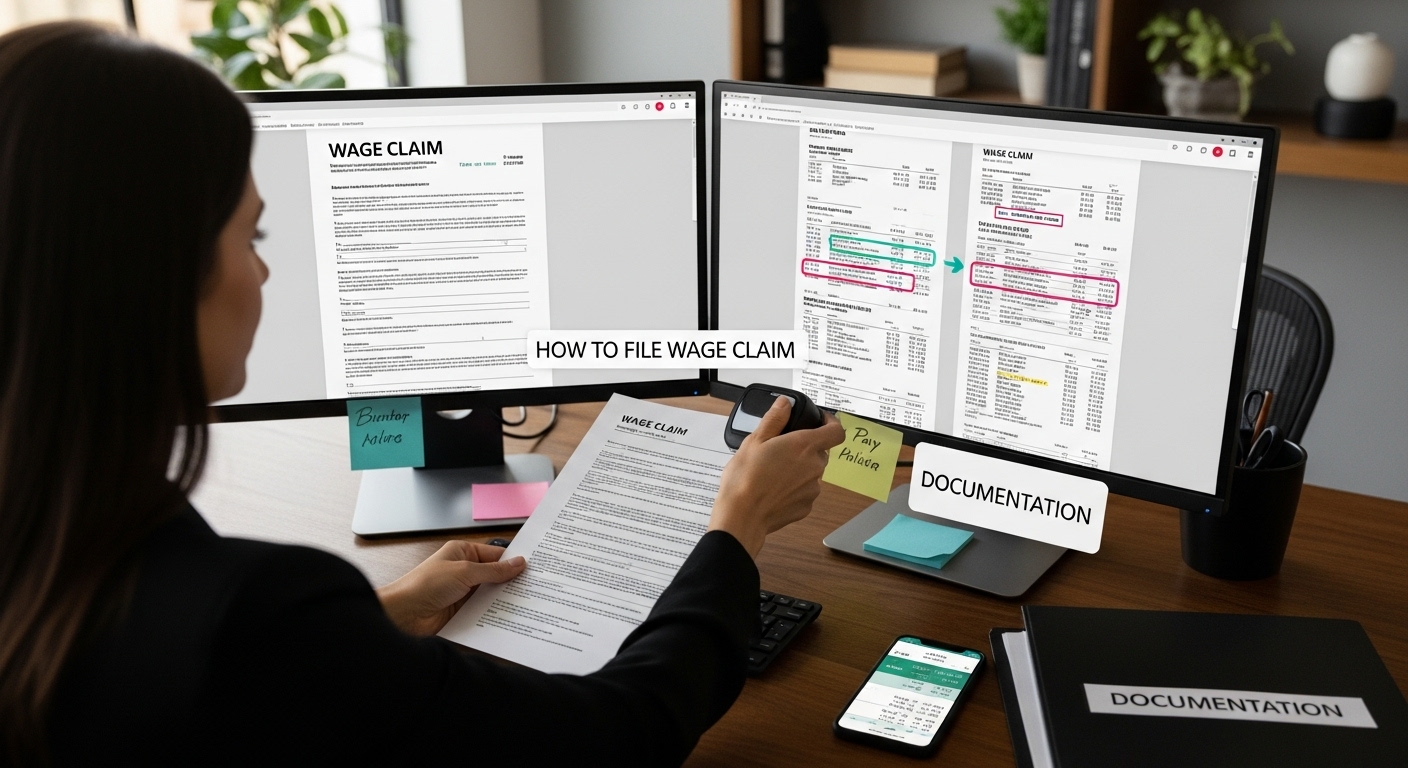
    Be meticulous in your documentation process. Organize your materials chronologically and create digital and physical copies. Scan paper documents and store them securely in multiple locations. Highlight or annotate sections that specifically demonstrate wage discrepancies or potential violations. This approach not only preserves your evidence but also makes it easier to reference during the wage claim process.

    Key documents to collect include:

    • Original job offer or employment contract
    • Complete set of pay stubs from the period of dispute
    • Bank statements showing wage deposits
    • Written communication about wages or work hours
    • Time sheets or work schedules
    • Performance reviews or salary negotiation documents

    By thoroughly gathering and organizing your documentation, you create a solid foundation for your wage claim. Each piece of evidence serves as a puzzle piece that helps reconstruct the full picture of your wage dispute. Taking time to be thorough and systematic in this initial step can significantly improve your chances of a successful resolution.

    Here is a checklist table you can use to organize and verify key documents before filing your wage claim.

    Document Type Purpose Verified (Yes/No)
    Employment contract/job offer Confirms terms of employment and pay rate
    Complete set of pay stubs Documents payments made and any discrepancies
    Bank statements (wage deposits) Verifies actual receipt or non-receipt of wages
    Written communications (emails/texts) Supports claims about wage agreements/disputes
    Time sheets/work schedules Demonstrates hours worked and overtime
    Performance reviews/salary records May show negotiated pay or job responsibilities
    Personal log of hours worked Supplements other time records

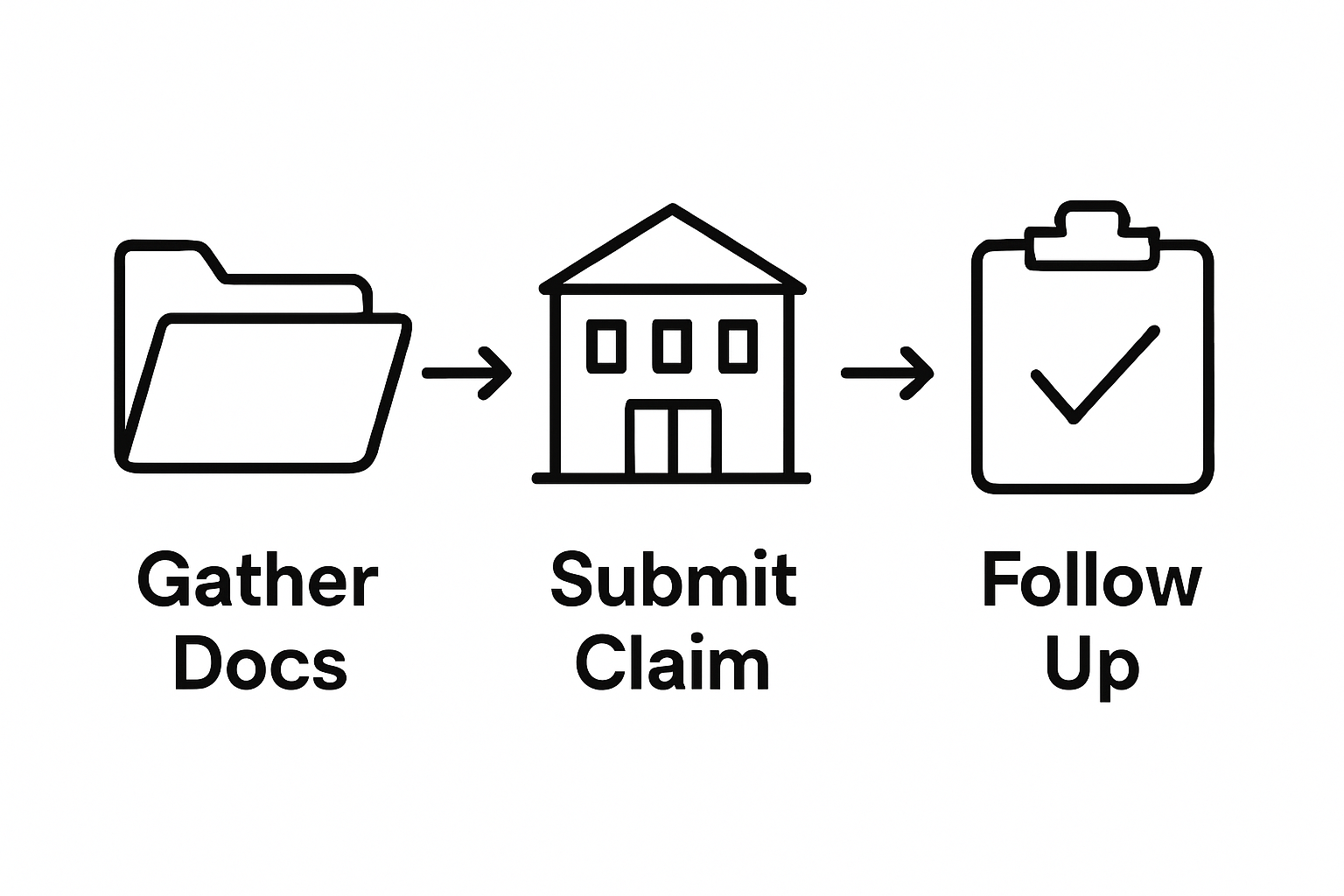
    Infographic summarizing steps to file a wage claim

    California Department of Industrial Relations recommends maintaining comprehensive records as the first critical step in pursuing a wage claim.

    Step 2: Determine the Appropriate Filing Agency

    Navigating the complex landscape of wage claim filing requires understanding which agency has jurisdiction over your specific employment situation. The right filing agency can make the difference between a successful resolution and a dismissed claim. Each type of wage dispute falls under different regulatory frameworks, making careful agency selection critical to your legal strategy.

    In California, workers have multiple options for filing wage claims depending on the nature of their specific wage violation. The primary agencies handling wage disputes include the California Labor Commissioner’s Office (Division of Labor Standards Enforcement), federal Wage and Hour Division, and potentially local county labor enforcement offices. Your choice depends on several key factors: the type of wage violation, total amount of unpaid wages, and whether the issue involves state or federal labor regulations.

    For most California workers experiencing state labor law violations, the California Labor Commissioner’s Office represents the primary avenue for wage claims. This agency handles disputes involving minimum wage violations, unpaid overtime, meal and rest break penalties, and other state-specific employment regulations. They provide a straightforward process for workers seeking to recover unpaid wages through administrative hearings.

    Federal wage claims through the U.S. Department of Labor become more appropriate when your situation involves violations of national labor standards like the Fair Labor Standards Act. These claims typically address issues such as minimum wage violations across state lines, specific overtime calculations, or employment practices affecting interstate commerce.

    Key considerations for selecting your filing agency include:

    • Total amount of unpaid wages
    • Type of wage violation (state vs. federal)
    • Whether your employer operates across multiple states
    • Specific labor law potentially violated
    • Statute of limitations for your claim

    Take time to research and understand the specific jurisdiction of each agency. Consulting with a local employment law attorney can provide personalized guidance on selecting the most appropriate filing mechanism for your unique situation. Some workers might even find they can file simultaneously with multiple agencies, maximizing their chances of wage recovery.

    Below is a summary table comparing agencies you might file your wage claim with, highlighting jurisdiction, applicable violations, and special considerations.

    Agency Jurisdiction Scope Types of Violations Addressed Special Considerations
    California Labor Commissioner State (California employees) Minimum wage, unpaid overtime, state labor Handles state-specific law violations
    U.S. Department of Labor (WHD) Federal (nationwide) FLSA violations, minimum wage, overtime Use for federal law or interstate issues
    Local County Labor Office County/local May address local wage and hour rules Only in certain regions or cities

    U.S. Department of Labor recommends carefully evaluating your specific wage dispute to determine the most effective filing route for your circumstances.

    Step 3: Complete the Wage Claim Form Accurately

    Filling out a wage claim form represents a critical moment in your pursuit of unpaid wages. Precision and thoroughness can make the difference between a successful claim and an immediate dismissal. This step demands careful attention to detail and a methodical approach to documenting your wage dispute.

    Begin by obtaining the official wage claim form from the appropriate agency you identified in the previous step. Most state labor departments provide these forms online, allowing you to download and complete them electronically or print for manual completion. Carefully read every section of the form before you start filling it out, ensuring you understand exactly what information is required.

    The wage claim form will typically request comprehensive details about your employment and wage dispute. You will need to provide personal information, employer details, specific wage violation information, and supporting documentation. Be prepared to outline the exact nature of your wage claim, including precise dates, amounts of unpaid wages, and a clear explanation of how your employer violated wage regulations. Learn more about identifying wage theft in your workplace.

    Documentation is key in this process. Attach copies of all supporting evidence you collected in the first step. This includes pay stubs, time records, communication with your employer, and any other relevant financial documents. Ensure that every document is clear, legible, and directly supports the claims you are making. Avoid sending original documents unless specifically requested, as these may not be returned.

    Important information to include on your wage claim form:

    • Complete personal contact information
    • Employer’s full legal business name and contact details
    • Exact dates of employment
    • Specific wage violations with precise monetary amounts
    • Dates and amounts of unpaid wages
    • Supporting documentation references

    Double-check every section of the form before submission.

    wage claim documents Errors or incomplete information can significantly delay or potentially invalidate your claim. If you are uncertain about any part of the form, consider consulting with an employment law attorney who can provide guidance on completing the document accurately.

    North Dakota Department of Labor and Human Rights emphasizes that thoroughly and accurately completed wage claim forms are essential for successful resolution of wage disputes.

    Step 4: Submit Your Wage Claim and Keep Proof of Submission

    Submitting your wage claim represents a pivotal moment in your pursuit of justice. This step transforms your carefully gathered documentation into an official legal process. The manner in which you submit your claim can significantly impact its processing and potential success.

    Choose your submission method strategically. Most agencies offer multiple options including online submission, email, postal mail, or in-person filing. Certified mail with return receipt provides the most robust documentation of your claim submission. This method creates an official record that proves exactly when and how you submitted your wage claim, which can be crucial if disputes arise about the timeliness or receipt of your documentation.

    Prepare a comprehensive submission package that includes your completed wage claim form, all supporting documentation, and any additional required materials. Understand more about protecting yourself from wage theft during this critical process. Make multiple copies of everything you submit. One copy should remain in your personal files, another should be sent to the agency, and a third can serve as a backup.

    When submitting electronically, use a reliable email account and request a read receipt or confirmation of submission. If filing in person, request a time-stamped receipt that demonstrates the exact moment of submission. Digital submissions should be made in universally accepted formats like PDF to ensure readability and prevent potential technical issues.

    Critical submission documentation to retain:

    • Original completed wage claim form
    • Copies of all supporting financial documents
    • Submission confirmation or receipt
    • Tracking information for mailed documents
    • Agency contact information and reference numbers

    Verify your submission thoroughly before sending. Check that all required fields are completed, documents are legible, and you have included every necessary piece of evidence. Follow up within a week of submission to confirm the agency has received your claim and initiated processing.

    North Dakota Department of Labor and Human Rights recommends maintaining meticulous records throughout the wage claim submission process to protect your legal interests.

    Step 5: Prepare for the Investigation Process

    The investigation process transforms your wage claim from a personal complaint into an official legal proceeding. This critical stage determines whether your wage claim will result in financial recovery or potential resolution with your employer. Understanding and preparing for this process can significantly impact your claim’s success.

    Expect the investigating agency to conduct a comprehensive review of your submitted documentation and potentially reach out for additional information. They will likely contact your employer to request their perspective and financial records related to your wage claim. This means you must remain accessible and responsive throughout the investigation. Provide prompt and clear responses to any communication from the investigating agency, and be prepared to offer additional context or documentation if requested.

    Documenting every interaction becomes crucial during this phase. Keep detailed records of all communications, including dates, times, names of officials you speak with, and summaries of conversations. Learn more about protecting your rights during wage disputes to ensure you’re fully prepared. Create a dedicated file or digital folder where you can organize all correspondence and additional materials that might be requested during the investigation.

    Prepare yourself mentally for potential negotiations or mediation. The investigation process might involve direct communication between the agency, you, and your employer to resolve the wage dispute. This could mean potential settlement discussions or opportunities to clarify misunderstandings about your wage claim. Maintain a professional and factual approach, focusing on the documented evidence rather than emotional arguments.

    Key preparation steps for the investigation process:

    • Remain readily available for agency communications
    • Organize all supporting documentation
    • Create a detailed timeline of wage violations
    • Prepare concise, factual statements about your claim
    • Understand your rights under labor laws
    • Consider potential legal consultation

    Maintain realistic expectations about the investigation timeline. These processes can take weeks or even months depending on the complexity of your claim and the agency’s current workload. Stay patient, continue to document everything, and be prepared to provide additional information if requested.

    U.S. Department of Labor recommends maintaining clear, professional communication and being prepared to substantiate your wage claim throughout the investigation process.

    Step 6: Follow Up and Verify the Status of Your Claim

    Following up on your wage claim is not just a recommended step it is a critical component of ensuring your claim receives proper attention and resolution. Proactive communication can significantly impact the speed and outcome of your wage dispute. The investigation process can be complex and time-consuming, making your active involvement essential.

    Establish a systematic approach to tracking your claim’s progress. Create a dedicated communication log where you record every interaction, including dates, names of officials contacted, and summaries of conversations. Most agencies provide multiple channels for status updates, including phone numbers, email addresses, and sometimes online tracking systems. Learn more about protecting your wage claim rights to understand the nuances of follow-up procedures.

    Develop a strategic follow-up schedule that balances persistence with professionalism. Contact the assigned investigator or agency every two to three weeks to request a status update. When you reach out, be courteous, concise, and prepared with your claim reference number and specific questions. Email communications provide a written record, but phone calls can sometimes yield more immediate insights.

    Be prepared for potential challenges during the follow-up process. Investigations can be delayed by various factors, including workload, complexity of the claim, or the need for additional documentation. Maintain patience while remaining vigilant. If you encounter significant delays or feel your claim is not progressing, consider seeking legal consultation to understand your options.

    Key follow-up strategies to implement:

    • Maintain a detailed communication log
    • Set regular reminder dates for status inquiries
    • Keep all original and copied documentation accessible
    • Prepare a concise summary of your claim for quick reference
    • Stay professional and persistent in your communications
    • Be ready to provide additional information promptly

    Document every interaction and communication attempt. Save email confirmations, note down phone call details, and keep copies of all correspondence. These records can be crucial if you need to escalate your claim or demonstrate your diligence in pursuing resolution.

    U.S. Department of Labor recommends maintaining consistent and professional communication throughout the wage claim investigation process.

    Struggling With a Wage Claim? Let Us Guide You

    Facing unpaid wages, confusing paperwork, or employer retaliation can be overwhelming when all you want is a fair outcome. This article has walked you through each step of the claim process, but real-world wage disputes often create anxiety and leave you questioning if you have enough evidence or if your rights will actually be protected. That is where you can rely on us.

    Do not let uncertainty, missed deadlines, or mistakes threaten your claim. Get accurate answers, wage calculators, and direct access to legal advocates by visiting our platform at California Labor Law. Take back control by exploring our free legal resources and know your rights about wage theft now. If you need help today, our team is ready to listen and offer immediate support. Call California Labor Law at 1-866-355-9991 for a free wage claim consultation.

    Frequently Asked Questions

    What documents do I need to gather for filing a wage claim?

    To file a wage claim, you should collect all financial records related to your employment, including paychecks, pay stubs, time records, employment contracts, and written communication with your employer. Other evidence such as bank statements, work schedules, and any personal logs detailing hours worked are also helpful.

    How do I determine which agency to file my wage claim with?

    The agency to file your wage claim with depends on the type of wage violation and whether it falls under state or federal law. In California, the California Labor Commissioner’s Office generally handles state wage claims, while the federal Wage and Hour Division is appropriate for claims involving national labor standards like the Fair Labor Standards Act.

    How do I fill out the wage claim form correctly?

    When filling out the wage claim form, ensure that you provide all required information accurately, including detailed employment information, specific wage violation data, and supporting documentation. It is crucial to review the form thoroughly before submission to avoid errors that could lead to dismissal of your claim.

    What should I do after submitting my wage claim?

    After submitting your wage claim, keep a record of your submission, including any receipts or confirmations. Establish a follow-up schedule to check on the status of your claim, contacting the assigned investigator every few weeks to ensure timely progress and addressing any additional information requests promptly.

  • What is Wage Theft? Understanding Your Rights and Protections

    What is Wage Theft? Understanding Your Rights and Protections

    Wage theft is reshaping the reality of millions of workers who never see their full paychecks. Imagine this. Billions of dollars are stolen from workers every year through wage theft in the United States alone. Most people assume that paycheck mistakes are just small errors. The real shock is that these are not accidents but deliberate strategies designed to take money right out of workers’ pockets.

    Defining Wage Theft: An Overview of the Concept

    Wage theft represents a serious violation of workers’ rights where employers deliberately withhold rightfully earned compensation from employees. This deceptive practice occurs through multiple methods, ranging from subtle manipulation to outright financial fraud. Understanding what constitutes wage theft is crucial for workers to recognize and protect themselves against these unethical employment practices.

    What Exactly Is Wage Theft?

    Wage theft encompasses various strategies employers use to deny workers their full legal compensation. According to the Department of Industrial Relations, these practices can include:

    • Paying less than minimum wage
    • Failing to pay overtime rates
    • Requiring work during unpaid meal or rest breaks
    • Compelling employees to work off the clock
    • Misclassifying workers as independent contractors
    • Withholding final paychecks

    These actions transform what should be standard employment relationships into exploitative situations where workers are systematically underpaid. Wage theft is not a minor administrative error but a calculated strategy that directly steals income from workers.

    Below is a table summarizing the most common forms of wage theft along with a brief description of each form. This provides a clear reference for identifying how wage theft might occur in different workplaces.

    Form of Wage Theft Description
    Paying less than minimum wage Employer fails to pay legally required minimum hourly rate
    Failing to pay overtime rates Workers do not receive higher pay for overtime hours worked
    Unpaid work during breaks Required work during meal or rest breaks without compensation
    Off-the-clock work Employees are asked to perform tasks outside paid hours
    Employee misclassification Treating employees as independent contractors to avoid legal obligations
    Illegal wage deductions Unauthorized deductions from pay beyond legal or contractual limits
    Withholding final paychecks Delaying or refusing to pay wages owed upon termination

    The Economic Impact of Wage Theft

    Wage theft represents more than an individual worker’s problem it is a widespread economic issue affecting millions of employees annually. Employers who engage in these practices create significant financial harm, reducing workers’ earnings and undermining fair labor standards. Explore our comprehensive guide on combatting employer wage theft to understand your legal protections.

    While some wage theft occurs through intentional manipulation, other instances stem from complex labor regulations or employer ignorance. Regardless of motivation, the result remains the same: workers do not receive their full, legally mandated compensation. Understanding these nuances helps employees recognize potential violations and take appropriate action to secure their rightful earnings.

    The Importance of Understanding Wage Theft for California Workers

    Knowledge is power when it comes to protecting workers’ rights and combating wage theft. California workers face numerous workplace challenges that can undermine their financial security, making comprehensive understanding of wage theft crucial for personal and professional protection.

    Why Worker Education Matters

    Understanding wage theft goes beyond recognizing financial discrepancies it represents a critical defense mechanism for employees. According to research from the University of California Press, workers who are informed about their legal rights are significantly more likely to identify and challenge unfair labor practices.

    The key areas of worker education include:

    • Recognizing different forms of wage theft
    • Understanding legal minimum wage requirements
    • Knowing overtime compensation rules
    • Identifying illegal workplace deductions
    • Documenting work hours and potential violations

    Proactive knowledge empowers workers to prevent financial exploitation and maintain their legal workplace rights. By understanding the nuanced ways employers might manipulate compensation, workers can create a defensive strategy against potential wage theft.

    Economic and Personal Consequences

    Wage theft is not merely a financial inconvenience it represents a systematic erosion of worker dignity and economic stability. When workers are consistently underpaid, they experience compounded financial stress that extends beyond immediate income loss. Learn how to file a wage theft claim if you suspect your employer is violating your rights.

    Moreover, wage theft disproportionately impacts vulnerable worker populations, including immigrants, young workers, and those in low-wage industries. By spreading awareness and understanding, workers can collectively challenge these unethical practices and create systemic change in workplace compensation standards.

    Common Forms of Wage Theft and Their Impact on Employees

    Wage theft manifests through various sophisticated and often subtle methods that can significantly impact workers’ financial well-being. Understanding these different forms helps employees recognize potential violations and protect their hard-earned compensation.

    Payroll Manipulation Tactics

    Employers deploy multiple strategies to underpay workers, each designed to exploit legal gray areas or worker vulnerabilities. According to the Economic Policy Institute, these manipulative practices create substantial economic harm for employees across different industries.

    Common payroll manipulation tactics include:

    • Requiring work during unpaid breaks
    • Misclassifying employees as independent contractors
    • Failing to pay overtime rates
    • Implementing illegal wage deductions
    • Manipulating time tracking systems
    • Withholding final paychecksInfographic of common wage theft types and reporting process

    These tactics are not accidental errors but calculated methods to reduce labor costs at workers’ expense. The financial impact extends beyond immediate wage loss, affecting long-term economic stability and professional opportunities.

    Industry-Specific Wage Theft Patterns

    Wage theft is not uniformly distributed across sectors. Certain industries demonstrate higher rates of compensation violations, particularly those with vulnerable workforce populations. Learn how to protect yourself against employer wage theft and understand your legal recourse.

    High-risk industries for wage theft include agriculture, construction, hospitality, and service sectors. Immigrant workers, young employees, and those in part-time or temporary positions are especially susceptible to these unethical practices. By recognizing these patterns, workers can develop proactive strategies to document hours, understand their rights, and challenge potential compensation violations effectively.

    The following table highlights industries and worker groups that are especially vulnerable to wage theft, helping readers understand where wage theft is most likely to occur based on the article’s analysis.

    High-Risk Industry/Group Common Wage Theft Issues
    Agriculture Below minimum wage, unpaid overtime
    Construction Misclassification, withheld final paychecks
    Hospitality/Restaurants Denied overtime, required off-the-clock work
    Warehousing Unpaid breaks, overtime violations
    Retail Time clock manipulation, unpaid breaks
    Domestic Work Denied pay for full hours, lack of proper documentation
    Immigrant/Young/Temp Workers More susceptible to multiple wage theft tactics

    wage theft industries

    The legal system provides robust mechanisms to protect workers from wage theft, establishing clear guidelines and enforcement strategies that empower employees to defend their financial rights. Understanding these legal protections is crucial for workers seeking to challenge unfair compensation practices.

    According to the U.S. Department of Labor, multiple legal frameworks exist to safeguard employee compensation. The Fair Labor Standards Act (FLSA) serves as the primary federal legislation establishing fundamental worker protections.

    Key legal protections include:

    • Establishing minimum wage requirements
    • Mandating overtime compensation
    • Requiring accurate time and wage recordkeeping
    • Prohibiting retaliatory actions against workers filing complaints
    • Providing mechanisms for wage recovery
    • Imposing penalties on non-compliant employers

    These legal provisions create a comprehensive shield against systematic wage theft, giving workers powerful tools to defend their economic interests. The intricate network of federal and state laws ensures multiple avenues for addressing compensation violations.

    Enforcement and Recovery Mechanisms

    Legal protections extend beyond mere documentation workers have concrete pathways to challenge and recover stolen wages. Discover how to file a wage theft claim and understand your specific rights under California labor law.

    Employees can pursue wage theft claims through administrative complaints, civil lawsuits, and government enforcement actions. These mechanisms not only provide individual compensation but also create systemic accountability, discouraging employers from engaging in exploitative practices. By understanding and utilizing these legal frameworks, workers transform potential vulnerability into a strong defensive position against wage theft.

    Real-World Examples of Wage Theft and Advocacy for Change

    Wage theft is not an abstract concept but a pervasive reality affecting thousands of workers across multiple industries. Real-world examples demonstrate the profound impact of these unethical practices and highlight the critical need for systemic change and worker advocacy.

    Landmark Cases and Industry Patterns

    Numerous high-profile cases have exposed widespread wage theft across different sectors. According to labor rights research, these examples reveal systematic exploitation that extends far beyond isolated incidents.

    Notable wage theft patterns include:

    • Restaurant workers consistently denied overtime pay
    • Construction workers misclassified as independent contractors
    • Warehouse employees required to work through unpaid breaks
    • Retail workers experiencing automatic time clock manipulation
    • Agricultural workers receiving below minimum wage compensation
    • Domestic workers denied full hours and proper documentation

    These examples illustrate how wage theft represents a calculated strategy of economic exploitation, not merely administrative errors. Each case demonstrates the calculated methods employers use to reduce labor costs at workers’ expense.

    Collective Action and Worker Advocacy

    Successful challenges to wage theft require collective organizing and strategic legal action. Learn about filing wage theft claims and your legal options to understand how workers can fight back against unfair compensation practices.

    Worker advocacy groups and labor unions have been instrumental in exposing systemic wage theft, pushing for legislative reforms, and supporting individual workers in recovering stolen wages. By sharing stories, building solidarity, and leveraging legal frameworks, these organizations transform individual struggles into broader movements for workplace justice and economic equity.

    Take Control When Wage Theft Jeopardizes Your Pay

    Reading about wage theft can feel overwhelming, especially when you realize just how easily it can happen, unpaid overtime, misclassification, or missing final paychecks all add up to real losses for California workers. If you have ever wondered if you are getting your full wages, this is a sign to check your situation and take action. Feeling uncertain about your rights or struggling to collect what you are owed is not something you have to face alone.

    You have unique protections under California law, and California Labor Law is here to help you understand and enforce them. Explore our legal help guides and wage calculators to see if you are owed more. Take the first step to protect your income by contacting us now at 1-866-355-9991 to schedule a free wage theft consultation. We are available 24hrs a day for any California Employment law issue.

    Frequently Asked Questions

    What constitutes wage theft?

    Wage theft includes practices like paying less than minimum wage, failing to pay overtime, requiring unpaid work during breaks, and misclassifying employees as independent contractors.

    How can I identify if I am a victim of wage theft?

    You can identify wage theft by reviewing your pay stubs for discrepancies, documenting your work hours accurately, and understanding your rights regarding minimum wage and overtime compensation.

    What are my rights if I suspect wage theft?

    If you suspect wage theft, you have the right to file a claim with the Department of Labor or your state’s labor office, seek compensation for unpaid wages, and be protected against retaliation for reporting violations.

    What steps can I take to protect myself from wage theft?

    To protect yourself from wage theft, document all your hours worked, familiarize yourself with labor laws in your state, and communicate openly with your employer regarding compensation practices.