Category: Whistleblower

  • What is Whistleblowing? Why It Matters in California

    What is Whistleblowing? Why It Matters in California

    What is Whistleblowing and Why It Matters in California

    Feeling powerless when your wages are stolen at work is more common for California service employees than many realize. Workers often hesitate to speak up, fearing job loss or retaliation. Authorized reporting empowers you to expose workplace misconduct securely, backed by strong confidentiality protections and legal rights. Learn how whistleblowing works, address common myths, and discover the safeguards that make confidential reporting possible in California.

    Defining Whistleblowing and Common Misconceptions

    Whistleblowing represents a powerful legal mechanism through which individuals expose serious workplace misconduct, public safety risks, or organizational wrongdoing. At its core, whistleblowing involves reporting misconduct through authorized channels that demonstrate violations of law, gross mismanagement, abuse of authority, or potential public health dangers.

    Contrary to popular belief, whistleblowing is not simply complaining about workplace issues or airing personal grievances. Authorized reporting requires specific legal standards and must be directed to appropriate oversight entities. The disclosure must be lawful, substantive, and focused on systemic problems rather than individual interpersonal conflicts. Whistleblowers perform a critical public service by creating accountability and transparency within organizations, helping prevent potential harm or illegal activities.

    Many misconceptions surround whistleblowing that discourage potential reporters. Contrary to common myths, individuals do not need firsthand information to report misconduct, nor must they sacrifice their careers. Legal frameworks provide robust confidentiality protections designed to shield reporters from professional retaliation. These protections ensure that good-faith reports cannot be used as grounds for termination, demotion, or workplace harassment.

    Pro tip: Before making a whistleblower report, document all relevant information meticulously and consult with a legal professional who is knowledgeable regarding employment protection laws to understand your specific rights and protections.

    Types of Whistleblowing in California Workplaces

    Whistleblowing in California workplaces encompasses various reporting mechanisms designed to expose workplace misconduct and protect public safety. Whistleblowing types range from informal to formal reporting channels, each offering unique protections and strategies for employees seeking to address organizational wrongdoing.

    Informal Whistleblowing involves reporting concerns through non-official channels. This might include anonymously contacting internal human resources departments, sharing information with journalists, or discussing potential violations with trusted colleagues. While these methods can initiate awareness, they typically offer less legal protection compared to formal reporting mechanisms.

    Formal Whistleblowing represents a structured approach to reporting misconduct. California workers have robust rights to report unsafe workplace conditions through official channels such as state labor boards, Occupational Safety and Health Administration (OSHA) complaints, or direct communications with regulatory agencies. These reports can address various issues including safety hazards, wage violations, discriminatory practices, and potential legal infractions. Critically, California law protects workers from retaliation regardless of their immigration status, ensuring a comprehensive shield for employees who report workplace violations.

    Pro tip: Before making a whistleblower report, document all evidence meticulously and consider consulting with an employment law specialist to understand the most appropriate and legally protected reporting method for your specific situation.


    Here’s a comparison of informal and formal whistleblowing methods in California workplaces:

    Reporting Method Key Channels Used Legal Protection Level Typical Example
    Informal Whistleblowing HR conversations, media tips Limited protections apply Discussing with coworkers
    Formal Whistleblowing Labor boards, OSHA, agencies Strong statutory safeguards Reporting to state oversight

    California provides comprehensive legal safeguards for employees who report workplace misconduct through the Whistleblower Protection Act. This legislation ensures that workers can expose potential violations, unsafe conditions, and illegal activities without fear of professional retaliation, covering both public and private sector employees.

    Attorney reviews whistleblower protection documents

    Key Legal Protections include shielding employees who report violations in good faith, even if the reported issue is ultimately not proven. The law protects workers who refuse to participate in illegal activities and those who make disclosures to authorized government or law enforcement agencies. These protections extend to various reporting methods, including internal complaints to human resources, external reports to regulatory bodies, and communications with legal authorities.

    Retaliation against whistleblowers is strictly prohibited under California law. Employers cannot take adverse actions such as termination, demotion, reduction in hours, or creating a hostile work environment in response to protected disclosures.

    California State University’s whistleblower procedures exemplify the state’s commitment to protecting employees who report improper governmental activities or safety threats. Workers who experience retaliation can file complaints within 12 months and seek legal remedies under California Labor Code Section 1102.5(b).

    Pro tip: Keep detailed documentation of any workplace misconduct and your reporting process, including dates, specific incidents, and any communication related to your whistleblower report to strengthen potential legal protections.

    This table summarizes employee actions and employer limitations under California whistleblower protection law:

    Employee Right Employer Restriction Time Limits for Claims
    Report violations in good faith No firing for protected disclosure File retaliation claims in 12 months
    Refuse illegal instructions No reduction in work hours
    Make reports to any agency No creation of hostile environment

    How to Safely Report Workplace Misconduct

    Reporting workplace misconduct requires a strategic and careful approach to protect your professional interests and ensure your safety. Employees can report workplace issues through multiple channels, starting with internal mechanisms and progressing to external regulatory bodies when necessary.

    Internal Reporting Steps involve documenting specific incidents in detail and communicating concerns through appropriate workplace channels. This typically means filing a formal complaint with human resources, providing written documentation of misconduct, and maintaining a chronological record of events. When reporting internally, choose a communication method that creates a paper trail, such as email or certified workplace communication systems, to ensure your report is officially recorded.

    External Reporting Options become critical when internal channels prove ineffective or the workplace misconduct involves serious legal violations. Employees can escalate reports to government agencies like the Equal Employment Opportunity Commission (EEOC), state labor departments, or specific reporting portals for workplace safety concerns. These external channels provide additional layers of protection and can investigate systemic workplace issues that internal reporting might not address.

    Pro tip: Always maintain copies of all documentation related to your workplace misconduct report, including dates, specific incidents, witness information, and any communication exchanges, to strengthen your legal protection and credibility.

    Risks of Retaliation and How to Respond

    Retaliation remains a serious concern for employees who report workplace misconduct, creating significant professional and emotional challenges. Adverse employment actions are strictly prohibited under California law, protecting workers who engage in legally protected activities such as whistleblowing or filing workplace complaints.

    Types of Retaliation can manifest in numerous subtle and direct forms. These include professional consequences like unexpected negative performance evaluations, demotion, reduced work hours, exclusion from critical meetings, loss of professional opportunities, or outright termination. The key legal standard requires demonstrating a direct connection between the protected activity (reporting misconduct) and the subsequent adverse employment action.

    Responding to Retaliation demands a strategic and documented approach. Institutions have specific procedures to address prohibited workplace actions, which means employees should immediately document every retaliatory incident, collect supporting evidence, and file formal complaints with human resources or relevant regulatory agencies. Comprehensive documentation, including dates, specific incidents, witness statements, and communication records can significantly strengthen a potential legal case against retaliatory employers.

    Pro tip: Preserve all communication records, create a detailed timeline of events, and consider consulting an employment law specialist who can provide targeted guidance on your specific retaliation situation.

    Protect Your Rights When Reporting Workplace Misconduct in California

    Whistleblowing is a courageous step to expose wrongdoing, but it often comes with worries about retaliation and career risks. This article highlights the vital legal protections available under California law to defend employees who report violations in good faith. If you have concerns about workplace safety, wage violations, or unfair treatment after making a whistleblower report, understanding your rights is crucial to safeguard your position and well-being.

    At eloquent-wright.149-28-114-24.plesk.page/, we empower California workers with essential knowledge about their whistleblower protections and retaliation safeguards. Our resource hub offers detailed legal guides and practical advice that help you document incidents effectively and navigate reporting channels safely. Whether you are facing retaliation or need clarity on labor protections, get help now to defend your rights. Call 1-866-355-9991 to learn more and connect directly with California employment lawyers ready to provide you with a free whistleblower consultation immediately.

    Frequently Asked Questions

    What is the definition of whistleblowing?

    Whistleblowing is the act of reporting serious workplace misconduct, public safety risks, or organizational wrongdoing through authorized channels that comply with legal standards.

    What protections do whistleblowers have in California?

    California law provides comprehensive protections for whistleblowers, ensuring they cannot be retaliated against for reporting violations in good faith, regardless of whether the issues are ultimately proven.

    How can I report workplace misconduct safely?

    You can safely report workplace misconduct by documenting incidents thoroughly and using appropriate internal channels such as human resources. If necessary, escalate to external regulatory bodies when internal methods are ineffective.

    What should I do if I experience retaliation after blowing the whistle?

    If you experience retaliation, document every incident in detail, collect supporting evidence, and file formal complaints with human resources or relevant agencies to initiate an investigation.


  • Legal Protections for Whistleblowers in California

    Legal Protections for Whistleblowers in California

    Legal Protection for California Whistleblowers

    Most workers in California healthcare and construction know someone worried about speaking up at work. When over 20 percent of whistleblowers face retaliation, even those who witness unsafe, illegal, or unfair practices hesitate to report them. Understanding your legal rights matters, especially if you could lose your job or suffer harassment for exposing workplace misconduct. This guide shares what whistleblower protections can do for you and how new rules will affect your safety moving forward.

    What it Means to Be a Whistleblower

    A whistleblower is an employee who courageously exposes illegal, unethical, or dangerous practices within an organization that violate public safety standards or harm a considerable number of people. Unlike ordinary complainants, whistleblowers take significant personal and professional risks to reveal misconduct that might otherwise remain hidden from public scrutiny.

    Whistleblowers can report wrongdoing through multiple channels, typically choosing between internal reporting mechanisms within their organization or external reporting to government agencies, regulatory bodies, or media outlets that investigate public misconduct. The key distinction is that their disclosures must involve substantive violations of law, regulations, or established ethical standards, not merely personal workplace grievances.

    Legal protections for whistleblowers are designed to shield individuals from potential retaliation after they report misconduct. These protections cover various scenarios, including exposing financial fraud, safety violations, environmental hazards, discriminatory practices, or governmental misconduct. By providing legal safeguards, these laws aim to encourage employees to speak up without fear of losing their jobs, facing demotion, or experiencing professional marginalization.

    Whistleblowing requires substantial personal courage, as individuals often confront significant organizational pushback and potential career consequences. Successful whistleblowers typically document evidence meticulously, understand their legal rights, and strategically approach their disclosure to maximize potential impact while minimizing personal risk.

    Pro tip: Before initiating a whistleblower complaint, consult with an employment lawyer familiar with whistleblower protections to understand your specific legal rights and the most strategic approach for reporting misconduct.

    California’s Key Whistleblower Protection Laws

    The California Whistleblower Protection Act provides robust legal safeguards for employees who expose improper governmental activities. California’s comprehensive whistleblower protections are specifically designed to shield state employees and other workers from potential retaliation when reporting serious workplace misconduct.

    Under this legislation, reportable activities encompass a broad range of serious violations, including:

    • Illegal actions that breach state or federal law
    • Instances of significant financial waste
    • Gross misconduct within governmental or organizational settings
    • Safety violations that potentially endanger public welfare
    • Fraudulent practices that compromise institutional integrity

    The legal framework provides multiple layers of protection for whistleblowers, ensuring they cannot be legally punished for making good-faith disclosures about organizational wrongdoing. Employees who report such violations are protected from adverse employment actions such as termination, demotion, salary reduction, or professional harassment. This legal shield extends beyond immediate workplace retaliation and includes protections against long-term professional discrimination.

    Woman studying California whistleblower legal papers

    California’s whistleblower laws recognize that employees play a critical role in maintaining institutional accountability. By creating meaningful legal protections, the state encourages transparency and empowers workers to speak up against unethical or illegal practices without fear of professional repercussions.

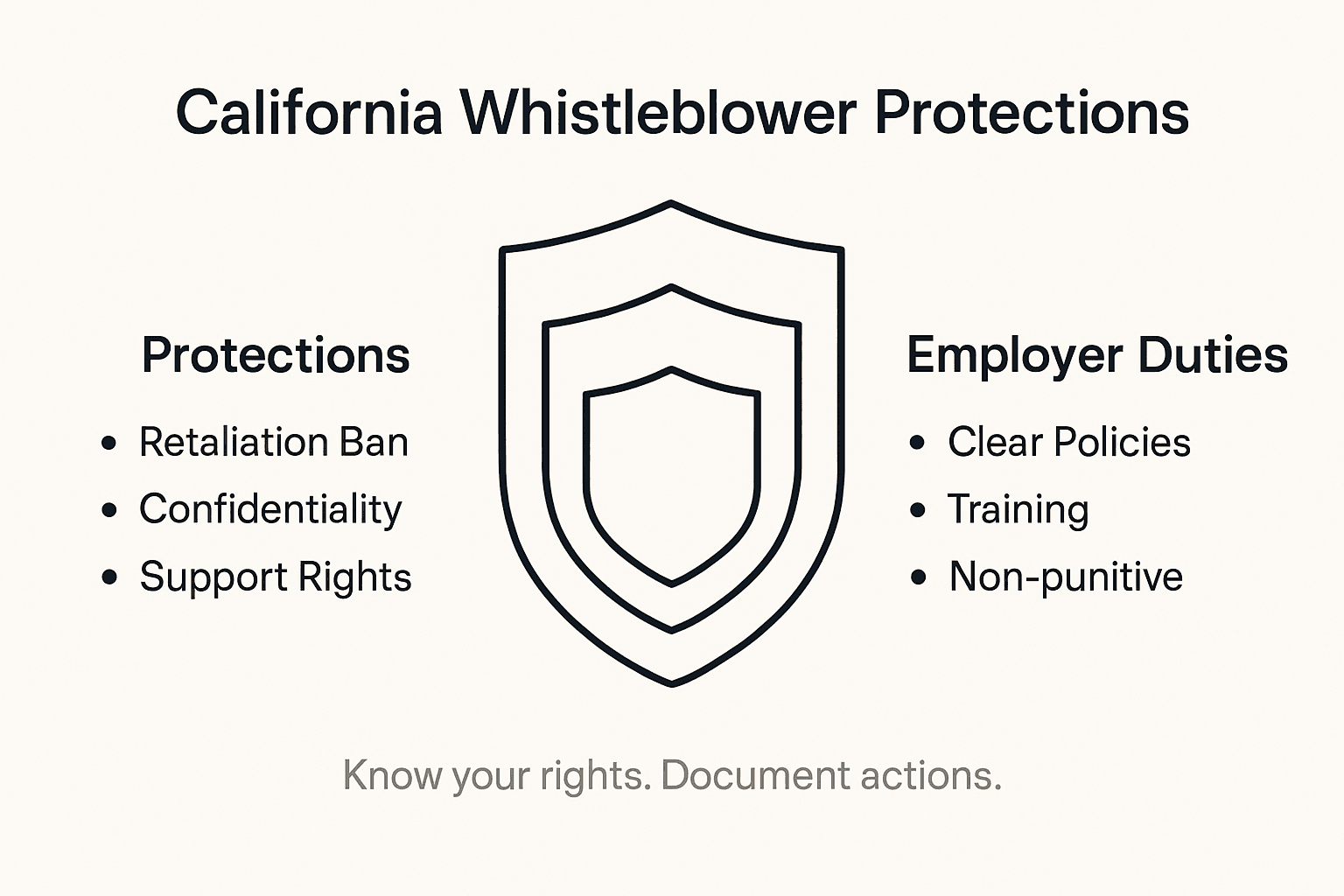
    Infographic shows whistleblower law protections and duties

    Pro tip: Document every detail of potential misconduct meticulously, including dates, specific incidents, and any witnesses, to strengthen your whistleblower complaint and enhance your legal protection.

    How Reporting and Retaliation Protections Work

    California whistleblower protections provide a comprehensive framework for employees to report misconduct safely and confidentially. Reporting mechanisms are designed to offer multiple channels for disclosure, allowing workers to expose improper activities through designated officials, anonymous hotlines, or direct communication with regulatory bodies.

    The reporting process typically involves several critical steps:

    • Initial documentation of the suspected misconduct
    • Selecting an appropriate reporting channel
    • Providing substantive evidence or specific details about the violation
    • Maintaining confidentiality and personal safety
    • Tracking the progress of the investigation

    Retaliation protections are robust and multifaceted, prohibiting employers from taking adverse actions against whistleblowers. These protections cover a wide range of potential retaliatory behaviors, including termination, demotion, salary reduction, professional isolation, or any form of workplace harassment directly linked to the whistleblower’s disclosure.

    The legal framework ensures that employees who report in good faith are shielded from professional consequences, regardless of the ultimate outcome of the investigation.

    Under California law, whistleblower protections extend beyond the immediate reporting employee. Witnesses, associates, and those who cooperate with investigations are also safeguarded, creating a comprehensive legal shield that encourages transparency and institutional accountability. This approach recognizes that meaningful organizational oversight requires strong, comprehensive protections for those willing to expose misconduct.

    Pro tip: Maintain a detailed, chronological record of all communications and potential retaliatory actions, as this documentation can be crucial evidence if you need to file a legal complaint.

    Employee Rights, Employer Duties, and Penalties

    California whistleblower laws establish a comprehensive framework of rights and responsibilities designed to protect employees who expose organizational misconduct. Employee rights against workplace retaliation are fundamental to maintaining workplace integrity and ensuring workers can report violations without fear of professional consequences.

    Employees are guaranteed several critical protections under California law:

    • The right to report improper governmental or organizational activities
    • Protection from retaliatory actions such as termination or demotion
    • Confidentiality of their whistleblower status
    • Legal recourse if retaliatory actions are taken against them
    • Potential compensation for damages resulting from workplace retaliation

    Employers bear significant legal responsibilities under these protections. They are strictly prohibited from taking any adverse actions against employees who report misconduct in good faith. This includes preventing direct or indirect forms of retaliation, such as professional marginalization, negative performance evaluations, reduced work hours, or creating a hostile work environment.

    Violations of these provisions can result in substantial legal penalties, including mandatory reinstatement, payment of back wages, compensation for emotional distress, and potential punitive damages.

    The penalties for non-compliance are deliberately structured to be financially and professionally consequential for employers. Organizations found in violation can face civil lawsuits, substantial monetary fines, mandatory corrective actions, and potential damage to their professional reputation. These stringent consequences are designed to create a strong deterrent against workplace retaliation and encourage a culture of transparency and ethical conduct.

    Here’s a summary of the main protections and penalties under California whistleblower law:

    Protects Employees Against Employer Duties Penalties for Non-Compliance
    Termination after reporting Prevent retaliatory firing Mandatory reinstatement, back pay
    Salary reduction due to a complaint Maintain neutral compensation Financial fines, damages for distress
    Professional isolation or harassment Ensure a non-hostile environment Civil lawsuits, punitive damages
    Demotion linked to whistleblowing Guard against unfair evaluations Damage to reputation, corrective actions

    Pro tip: Preserve all documentation related to your whistleblower report, including emails, witness statements, and communication records, as these can be crucial evidence in potential legal proceedings.

    New 2026 Whistleblower Notice and Posting Rules

    Starting in 2026, California is implementing comprehensive new requirements for workplace whistleblower notifications that will significantly impact how employers communicate employee rights. New workplace notification regulations mandate that employers take proactive steps to inform workers about their legal protections against workplace misconduct and potential retaliation.

    The new posting rules include several critical requirements:

    • Mandatory display of official whistleblower rights notices
    • Posting within 72 hours of specific workplace events
    • Comprehensive information about reporting mechanisms
    • Explicit details about protections against retaliation
    • Notices must be displayed in prominent, accessible workplace locations
    • Information must be provided in multiple languages, reflecting workforce demographics

    Employers across California will be required to update their workplace communication strategies to ensure full compliance. This includes not just physical postings, but potentially digital notifications for remote or hybrid workforces. The regulations extend beyond traditional workplace settings, covering industries from healthcare and technology to construction and service sectors.

    Organizations must develop systematic approaches to meet these new notification requirements, which are designed to enhance transparency and empower employees to report potential misconduct without fear.

    The 2026 rules represent a significant advancement in worker protection, reflecting California’s commitment to creating safe, ethical work environments. By mandating clear, accessible information about whistleblower rights, the state aims to create a culture of accountability that protects workers and promotes organizational integrity.

    Here’s an overview of the upcoming 2026 notice and posting requirements for California employers:

    Requirement Type Purpose Impact on Employers
    Prompt notice posting Inform workers of rights Update signage protocols
    Multilingual materials Reach a diverse workforce Translate official notices
    Event-based posting Respond after specific incidents Act within 72 hours
    Digital notifications Accommodate remote staff Upgrade communication systems

    Pro tip: Request a comprehensive compliance checklist from your human resources department to ensure your organization meets all new 2026 whistleblower notification requirements.

    Protect Your Rights as a Whistleblower in California

    If you have witnessed illegal or unethical practices at work and worry about retaliation, you are not alone. The challenges of whistleblowing include fear of job loss, demotion, or professional isolation. Understanding your legal protections under California’s whistleblower laws is essential to defending yourself and making a confident report. Whether you face threats to your employment or need help documenting misconduct, knowing your rights can empower you to take action safely.

    At California Labor Law, we provide clear, accessible resources on whistleblower protections and how the law shields employees from retaliation. Call our legal team at 1-866-355-9991 or fill out the form for a free whistleblower consultation to review your legal options.

    Frequently Asked Questions

    What legal protections do whistleblowers have in California?

    Whistleblowers in California are protected from retaliation by law when they report misconduct, such as illegal activities or safety violations. Protections include safeguarding against termination, demotion, pay reduction, and professional harassment.

    How can I report misconduct as a whistleblower?

    You can report misconduct through internal channels at your organization, such as designated officials or hotlines, or by contacting external regulatory bodies. It’s important to document the suspected misconduct and provide detailed evidence.

    What should I do if I face retaliation after reporting as a whistleblower?

    If you experience retaliation, you should document all incidents and communications related to the retaliatory actions. Consult with an employment lawyer who assists litigating whistleblower protections to explore your legal options and potential recourse.

    What types of misconduct can be reported as a whistleblower?

    Whistleblowers can report a range of serious violations, including illegal actions, financial fraud, safety hazards, and discrimination. The misconduct must involve significant violations of law or ethical standards, not personal grievances.