Category: California Labor Law

  • Can You Be Fired for Protesting in California?

    Can You Be Fired for Protesting in California?

    Can You Get Fired for Protesting in California? 2026 Legal Guide

    Standing up to unfair working conditions often feels risky for California service workers who rely on every paycheck. Many worry that joining a protest or speaking out could cost them their jobs, especially with confusing advice about at-will employment and employer retaliation.

    Understanding the real boundaries of employee protesting rights in California can mean the difference between protecting your job and unintentionally crossing a line, so you know how the law shields your voice—and when it does not.

    Employee Protesting Defined and Misconceptions

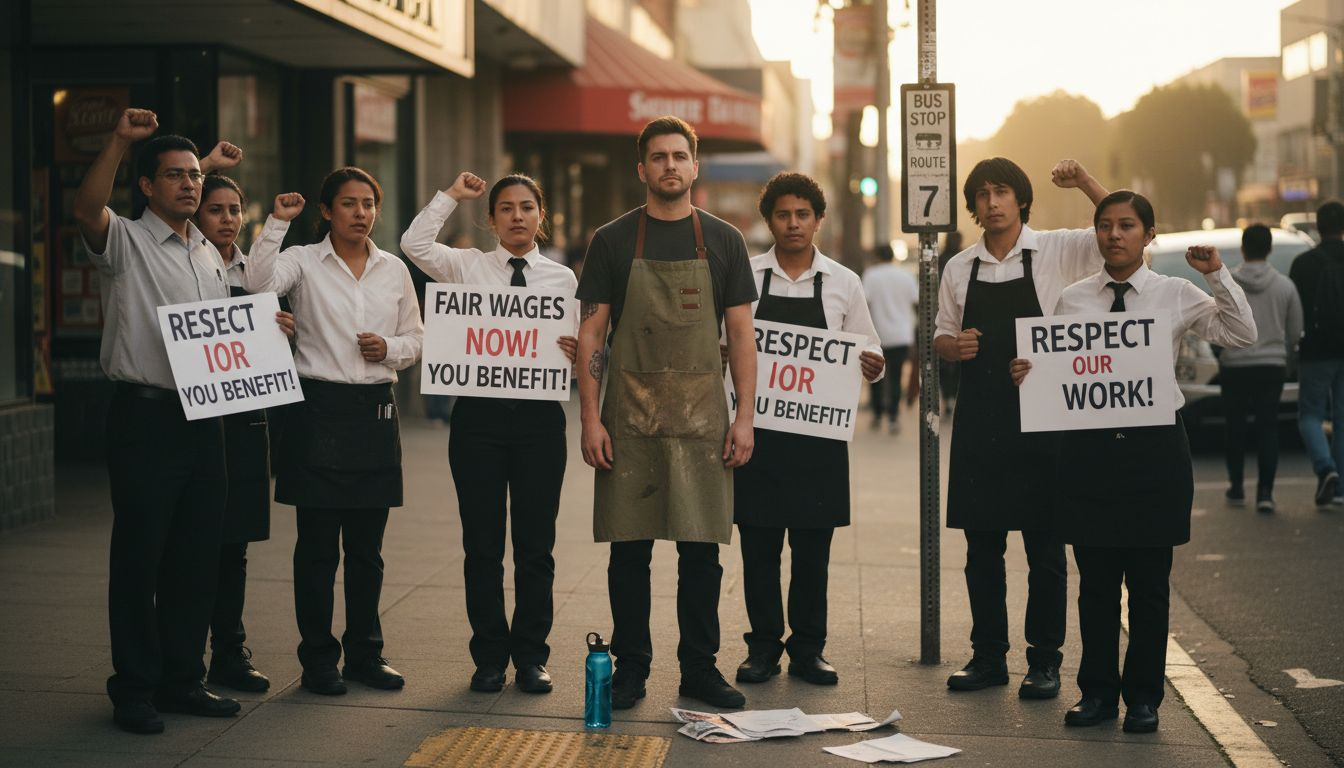
    When you think about protesting at work, your mind might jump to dramatic scenes of picketing or organizing walkouts on company property. But the reality is much more nuanced, especially in California where labor protections are among the strongest in the nation.

    Employee protesting refers to any form of collective or individual action taken by workers to express grievances about working conditions, wages, scheduling, or other workplace issues. This can range from formal union activities and coordinated strikes to quieter forms of resistance like refusing to work overtime or wearing protest pins. The key distinction is that the activity must stem from workplace concerns and involve some element of collective action or solidarity with coworkers, even if you’re acting alone.

    Here’s where many people get confused. California law provides robust protections for employees engaging in protected political activity, but these protections have specific boundaries that often surprise workers. You are protected when you protest during your nonworking hours and away from your employer’s premises.

    If you organize a march about labor conditions on your own time after your shift ends, you cannot be fired for that. You’re protected if you attend city council meetings to speak about wage theft in your industry. You’re protected if you post about workplace issues on your personal social media account outside of work hours. However, this protection has limits.

    Your employer can discipline you if you protest on company time without permission, disrupt work operations, or engage in conduct that interferes with your job performance or the business itself. The distinction comes down to timing and location: your rights are strongest when you’re off the clock and off the premises.

    Common misconceptions abound because people often confuse what should be protected with what actually is protected. One major myth is that any protest at work automatically gets you fired, period. Not true.

    Another misconception is that your employer must allow you to protest on company time or property as long as it’s about work issues. Also not true. Some workers believe that posting criticism of your employer on Facebook automatically violates company policy and can get you terminated. Depending on what you post and how, this might actually be protected speech.

    Others assume that joining a union or participating in union activities puts them at risk, but federal and California law protect these specific activities extensively. The reality is more textured. Your protections depend on whether you’re engaged in concerted activity (working with others) versus individual complaints, whether you’re protected by union membership, whether your speech addresses matters of public concern versus purely private employment disputes, and the specific timing and location of your actions.

    Understanding these nuances is critical because miscalculating your protection level could cost you your job.

    Service industry workers face unique challenges here. You might work irregular shifts, have little job security, and feel tremendous pressure to stay silent about conditions. Many hospitality and food service workers assume they have no protection because they’re at-will employees. This is partially true, but it’s incomplete.

    Your at-will status means your employer can fire you for almost any reason, but not for illegal reasons. Protesting working conditions in protected ways is not an illegal reason. The challenge is that your employer might frame termination differently or make your life uncomfortable before firing you, which is why understanding exactly where the legal line sits matters so much.

    Service worker appearing stressed in restaurant break room

    Here’s a summary of common misconceptions versus realities of workplace protest rights in California:

    Misconception Actual Legal Protection Risk Level
    Any protest at work leads to firing Some protests are protected by law Medium
    Employer must allow on-site protests On-site protests may be restricted High
    Social media criticism always risks termination Protected if posted off duty about public concern Low to Medium
    Union participation puts job at risk Union activities have strong protections Low

    Pro tip: Document the dates, times, and nature of any workplace protest or protected activity you engage in, along with any negative employment action that follows, so you have clear evidence if retaliation occurs.

    California Labor Laws Protecting Protest Rights

    California’s legal framework for protecting employee protest rights is among the most comprehensive in the United States. The state recognizes that workers have fundamental rights to organize, speak out about workplace conditions, and take collective action without fear of retaliation.

    These protections stem from multiple sources of law working together:

    • the California Labor Code,
    • the California Constitution,
    • federal labor statutes,
    • and decades of court decisions that have consistently sided with workers when employers attempt to silence legitimate protest activities.

    Unlike many states where labor protections are minimal, California has actively strengthened worker rights through legislation and judicial interpretation, which means you likely have stronger protections than you might realize.
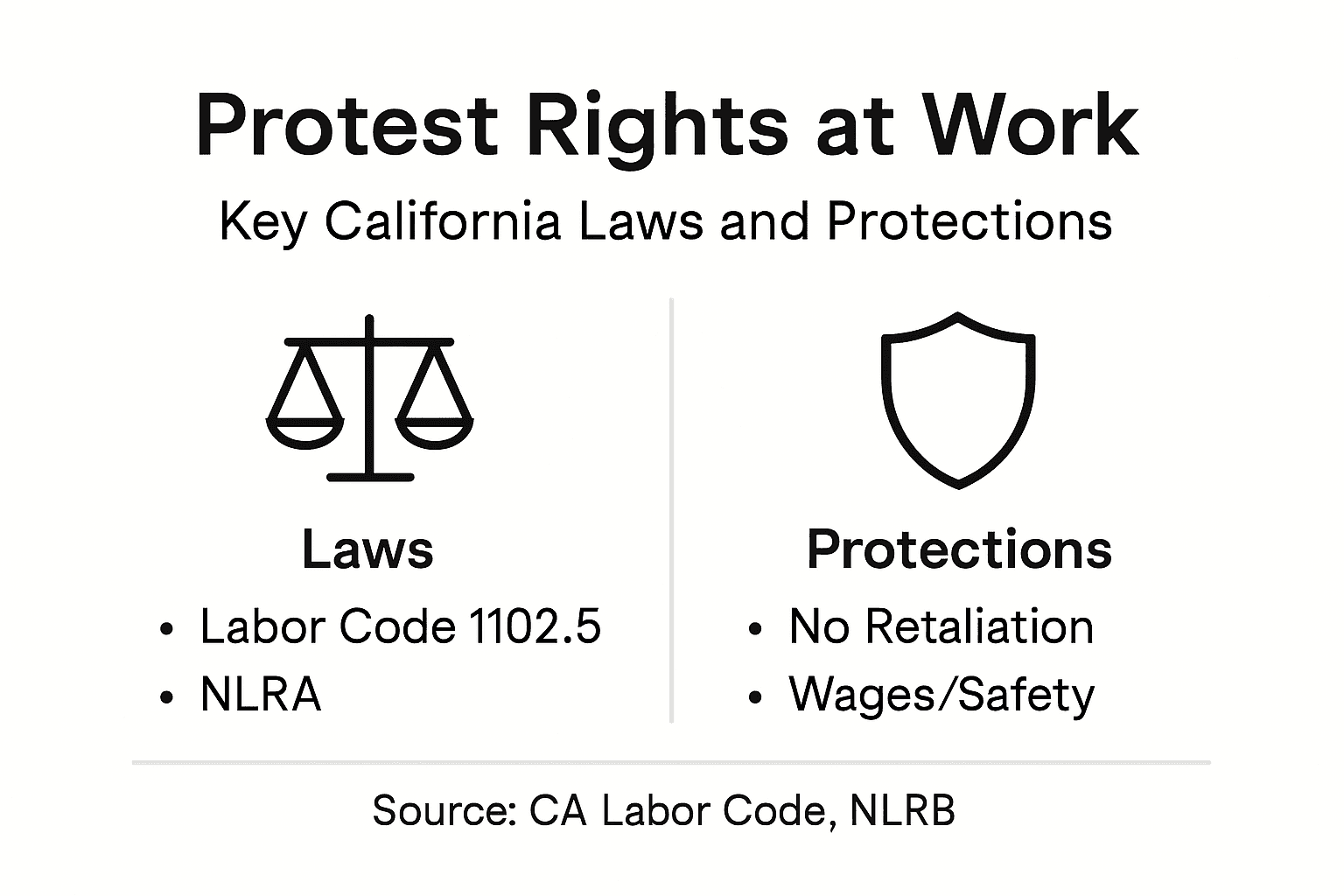
    Infographic on California protest rights at work

    One of the most critical protections comes from California Labor Code Section 1102.5, which shields employees who report unsafe working conditions, wage violations, or other labor law breaches. This statute prevents your employer from retaliating against you for complaining about violations of state or federal law.

    Another key protection is found in Labor Code Section 1103, which specifically protects employees who are members of labor organizations or engage in lawful union activities.

    California courts have also recognized that employees have broad First Amendment rights when speaking about matters of public concern, even if those comments involve their employer. This means if you post on social media about wage theft in your industry or conditions that affect public health and safety, you have stronger protection than if you were simply complaining about your individual paycheck.

    The state also recognizes concerted activity, which refers to when two or more employees act together to improve workplace conditions. You can refuse unsafe work, discuss wages with coworkers, organize meetings about scheduling issues, or participate in strike activities. Your employer cannot fire you, threaten you, or punish you for these collective actions.

    When it comes to specific protected activities, California law covers far more ground than many workers understand. You cannot be fired for participating in union organizing, attending union meetings, or voting in union elections. You’re protected when you refuse to cross a picket line in solidarity with striking workers.

    You have the right to discuss your wages and working conditions with coworkers without fear of retaliation, a protection that applies even if your employer has policies forbidding such discussions. You’re protected when you report health and safety violations to government agencies like Cal/OSHA.

    You cannot face retaliation for taking time off to vote, serve on jury duty, or attend court proceedings related to your employment. If you engage in workplace harassment investigations, your employer cannot punish you for participating in that process. You’re also protected for participating in paid family leave, requesting reasonable accommodations under the Americans with Disabilities Act, or complaining about discrimination based on protected characteristics. The list goes on. What ties all these together is that California has decided the public interest in protecting worker rights outweighs the employer’s interest in complete control over their workforce.

    The specific protections vary slightly depending on what type of protest activity you’re engaged in. Union activities receive explicit statutory protection under both California and federal law. Wage and hour complaints are shielded under multiple statutes. Health and safety complaints have strong protections through whistleblower laws.

    Political speech and advocacy receive constitutional protection, though this is more nuanced depending on whether you’re speaking on matters of public concern. Discrimination complaints are protected under state and federal civil rights laws.

    What’s crucial to understand is that your protection is strongest when your protest or complaint involves violations of law, when you’re part of a group of workers taking action together, and when your activity doesn’t occur during paid work time without permission.

    Your protection is weakest if you’re making purely private complaints that don’t involve legal violations, acting entirely alone without any concerted activity, or disrupting work operations in ways that genuinely interfere with business functions. The law balances worker rights with employer interests, but California’s balance tips heavily toward protecting workers.

    Pro tip: If you plan to engage in protest or report violations, put your complaint in writing through email or documented communication so you have evidence of exactly what you reported and when, making any subsequent retaliation easier to prove.

    At-Will Employment and Wrongful Termination Risks

    You’ve probably heard the term “at-will employment” thrown around, and if you work in California, you might think it means your employer can fire you for absolutely any reason whenever they want. That’s partially true, but only partially.

    At-will employment means your employer can terminate you without cause and without advance notice. You can be fired on a Monday morning with no warning, no performance issues documented, and no stated reason. California is an at-will employment state, which gives employers significant power over their workforce.

    But here’s the critical part that changes everything: at-will employment has exceptions.

    Your employer cannot fire you for illegal reasons, and protesting working conditions in protected ways is not an illegal reason to terminate someone. Understanding where the line sits between permissible termination and wrongful termination can be the difference between losing your job unfairly and having legal recourse.

    Wrongful termination occurs when your employer fires you in violation of a statute, public policy, or an implied contract. In the context of protesting, wrongful termination claims may succeed if you can demonstrate that your termination was retaliation for protected activity.

    The research is clear on this point: at-will employment allows employers to fire employees for any reason or no reason unless protected by law, and employers may take adverse actions if protest activity interferes with job duties or workplace harmony. This distinction matters enormously. If you protest on your own time about conditions that affect public safety, and your employer fires you the next day, that’s likely wrongful termination.

    If you refuse to work during a shift without permission to organize a walkout and disrupt customer service, and you get fired, that’s probably permissible termination. The employer’s ability to maintain operations and prevent disruption still carries legal weight, even when you’re engaging in protected activity.

    What makes a wrongful termination claim stick in the context of protest activity comes down to proving specific elements. You need to show that you engaged in protected activity, meaning your protest or complaint involved matters protected by law like:

    • health violations,
    • wage theft,
    • union organizing,
    • or speaking about public safety concerns.

    You need to demonstrate that your employer knew about your protected activity.

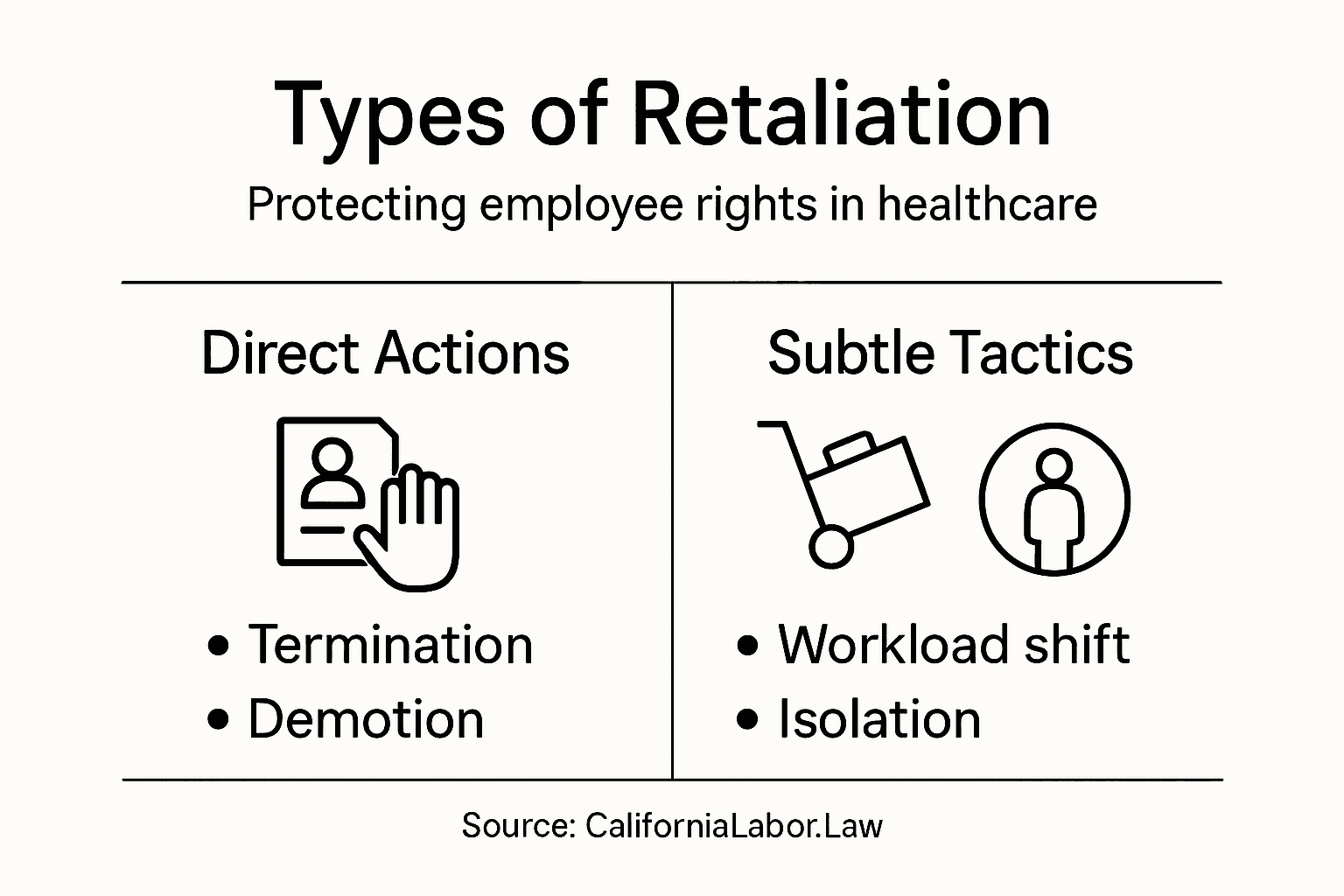
    You need to establish that you suffered an adverse employment action, which could be termination, demotion, reduced hours, or other negative consequences. Most importantly, you need to prove causation: that your protected activity was the reason, or a substantial motivating factor, for the negative action. Your employer doesn’t have to admit this.

    They might claim they fired you for poor performance or attendance issues. But if the timing is suspicious (fired shortly after reporting a violation), if similarly situated employees weren’t punished for the same conduct, or if the stated reason doesn’t match reality, you can build a case. The burden is on you to prove retaliation, but California courts and the Labor Commissioner take these cases seriously, particularly when service industry workers are involved.

    The specific risks you face depend on how obvious the retaliation looks. If your employer fires you the day after you file an OSHA complaint, that’s an obvious risk that courts view skeptically. If they fire you three months later with a documented pattern of performance issues, that’s a trickier case. If they reduce your hours after you organize coworkers to discuss wages, that’s retaliation. If they schedule you for unpopular shifts after you complained about safety conditions, that’s potentially retaliation.

    The challenge is that employers have learned to cover their tracks. They’ll document performance issues after you protest, claiming the termination was for those reasons. They’ll claim the protest disrupted operations so severely that business necessity required termination. They’ll restructure your position or claim your job was eliminated. Your job as a worker is to recognize that these post-hoc justifications can be challenged if the real reason was your protected activity.

    Proving wrongful termination is possible, but it requires evidence, documentation, and often legal representation to navigate the complexities.

    Pro tip: If you believe you’ve been fired or punished for protesting, do not sign any severance agreements without consulting an employment attorney, as signing away your rights can eliminate your ability to pursue a wrongful termination claim.

    Your right to protest as an employee doesn’t exist in a vacuum. It’s backed by a layered system of federal and state laws that work together to shield you from employer retaliation. At the federal level, the National Labor Relations Act (NLRA) is your foundation. Passed in 1935, the NLRA protects workers’ rights to organize, bargain collectively, and engage in protected concerted activities. This means you can talk with coworkers about wages, refuse to work unsafe conditions, participate in strikes, and organize without your employer punishing you.

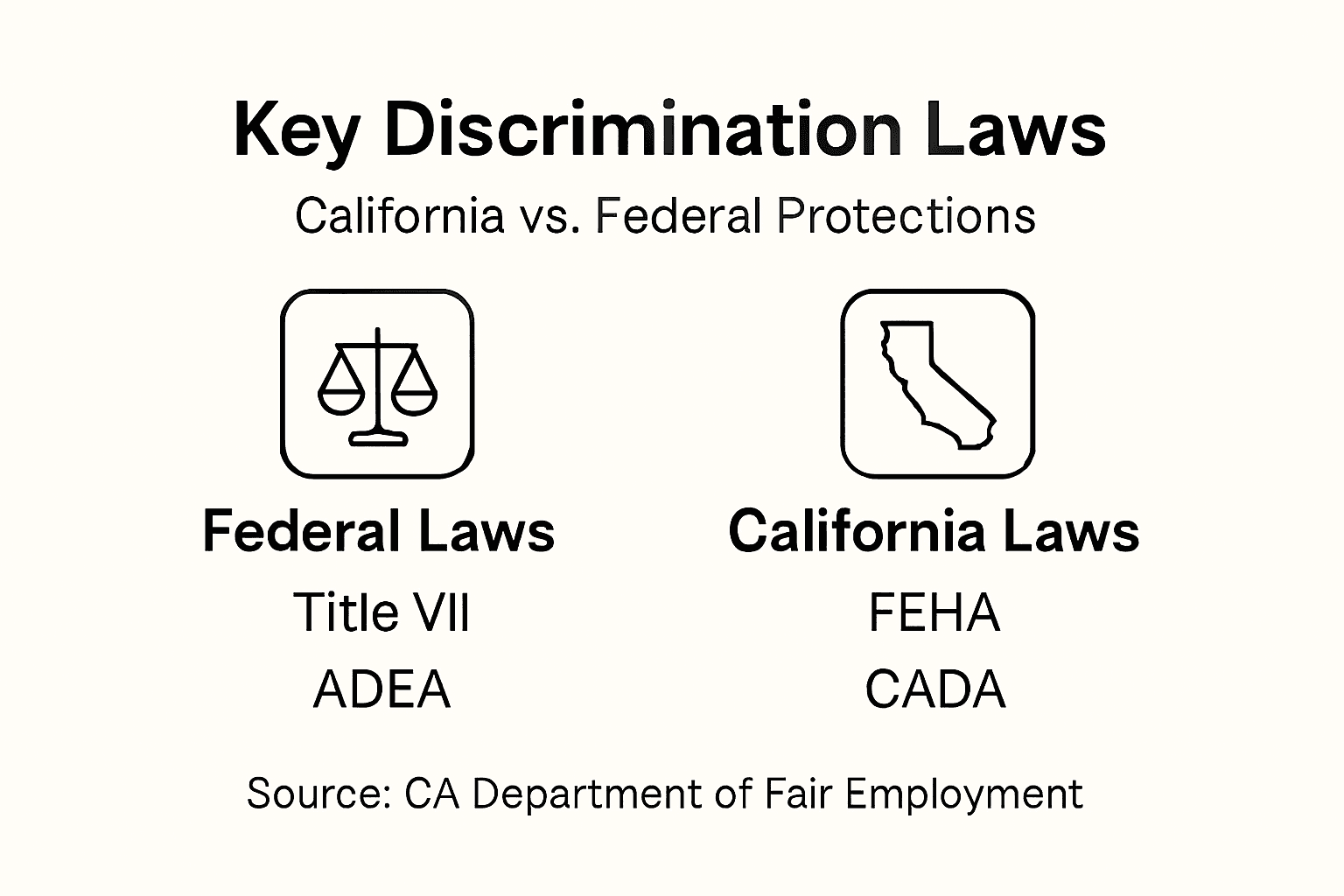
    The NLRA applies to most private sector employees, though it excludes some categories like agricultural workers, domestic workers, and independent contractors. California layers additional protections on top of federal law, creating a stronger shield for workers in the state. Where federal law sets a floor, California often raises that floor higher, giving you more comprehensive protections than workers in most other states.

    California’s specific labor codes create additional safeguards beyond what the NLRA provides. Labor Code Section 1102.5 protects employees who report violations of law to government agencies or internally, preventing retaliation for whistleblowing. Labor Code Section 1103 explicitly protects membership in labor organizations and lawful union activities. The state also recognizes broader First Amendment protections than some states, meaning your speech about matters of public concern receives constitutional protection even when it involves your employer.

    California courts have consistently held that unfair labor practices and discrimination for engaging in protected concerted activities are prohibited. These frameworks ensure employees’ rights to organize and advocate without fear of employer reprisals.

    Additionally, California prohibits retaliation for taking protected time off like jury duty, voting, or attending court proceedings. The state even protects employees who refuse to work in conditions that violate health and safety standards, a protection that goes beyond many other jurisdictions.

    What’s crucial to understand is that these laws create multiple overlapping protections. If your employer retaliates against you, you might have claims under federal law, state labor codes, constitutional protections, and common law wrongful termination simultaneously.

    The distinction between federal and state protections matters when you’re determining your options after retaliation. Federal claims go through the National Labor Relations Board (NLRB), which investigates unfair labor practices and can order remedies like reinstatement and back pay. Federal law is particularly strong on union organizing and concerted activity.

    State claims go through California’s Labor Commissioner or civil court, where you can pursue wrongful termination lawsuits and recover damages including:

    • lost wages,
    • emotional distress,
    • punitive damages in cases of malice,
    • and attorney fees.

    California law is particularly strong on whistleblower protection and individual complaints about violations. Many situations involve both federal and state claims running parallel. If you’re fired for union organizing, that’s both a federal NLRA violation and a potential state wrongful termination claim. If you’re fired for reporting wage theft, that’s a state whistleblower claim that federal law might also protect. The beauty of this layered system is that if one claim stumbles, others can still succeed. Your employer can’t avoid liability by structuring their violation in a certain way because multiple legal avenues cover similar conduct.

    Understanding which laws protect your specific situation is critical. If your protest involves union organizing or collective bargaining, federal law under the NLRA is your strongest tool. If your protest involves reporting violations to government agencies, California whistleblower laws are your strongest tool. If your protest involves political speech about public safety or matters of broad public concern, constitutional protections become central.

    If your protest involves refusing unsafe work, occupational safety laws protect you. Service industry workers in California enjoy particularly strong protections because the state has enacted numerous wage and hour laws, break period requirements, and working conditions standards that workers can complain about without retaliation. Many hospitality and food service workers assume they have no rights because they’re at-will employees, but this overlooks the substantial statutory protections California provides.

    The key is matching your situation to the right law. If you protest about conditions that violate a statute, you have protection. If you protest about purely personal grievances with no connection to legal violations, your protection is weaker unless you’re engaging in concerted activity with other workers.

    Pro tip: Document which specific law or statute your protest relates to (like health violations, wage theft, or union organizing) because the stronger your claim aligns with clear statutory language, the easier it is to prove retaliation and hold your employer accountable.

    Use this table to compare major California and federal laws protecting employee protests:

    Law or Statute Area Protected Who Enforces Typical Coverage
    NLRA Union organizing, concerted activity NLRB Most private sector employees
    CA Labor Code 1102.5 Whistleblowing, reporting legal violations State Labor Commissioner All employees in California
    CA Labor Code 1103 Union membership, lawful union acts State Labor Commissioner Union and non-union workers
    First Amendment (CA) Public concern speech State or federal courts Broadest for matters of public interest

    Practical Steps and Mistakes to Avoid

    Before you organize, speak out, or take any form of protest action at work, you need a strategy. Winging it might feel empowering in the moment, but it can cost you your job and undermine your cause. The difference between protected protest and unprotected conduct often comes down to the specific choices you make about timing, location, and method. Start by understanding your company’s actual policies. Most employers have written protest or political activity policies buried somewhere in your employee handbook or posted on workplace bulletin boards. Read them carefully.

    Your employer can enforce reasonable policies about protest activities, and knowing what they prohibit helps you stay on the right side of the line. Next, assess whether your protest involves a legal violation. If you’re complaining about unpaid wages, unsafe conditions, discrimination, or union organizing, you have statutory protection. If you’re protesting purely personal workplace disagreements with no connection to legal violations, your protection is much weaker. This doesn’t mean you shouldn’t act, but it means you should recognize the risk level and plan accordingly.

    The practical steps you should take before protesting depend on your specific situation. If you’re organized with other workers, communicate clearly about your goals and methods before taking action. When multiple employees act together deliberately, you have concerted activity protection. When you act alone without coordination, your protection is limited unless you’re reporting violations. Document what you plan to protest and why. Write it down, send yourself an email, create a dated record. This documentation proves you engaged in protected activity if your employer later claims you were fired for different reasons.

    Know the timing and location of your protest. You are protected when you protest on your own time and away from company premises. After your shift ends and on public property or your own home, you have maximum protection. During work hours or on company property without permission, your protection shrinks considerably.

    If your protest will involve media, social media posts, or communication outside the company, plan that carefully. You cannot be fired for posting about work conditions on your personal social media account on your own time, but screenshots and spread among coworkers can complicate the situation. The safest approach is to stick to facts and avoid false statements that could be characterized as defamation.

    Common mistakes destroy otherwise protected activity. Protesting on company time without permission is the biggest error. You walk a picket line during your shift, and your employer fires you. That termination might be permissible because you disrupted work operations. Wearing your company uniform while protesting sends a confusing message and can be prohibited. Your employer can require that you change clothes before engaging in protest because you’re no longer representing the company officially.

    Using company resources for protest activities is another mistake. Do not use the company email system, messaging platforms, computers, or printing facilities to organize or promote protest. Do not hold protest meetings in the company break room during work hours without permission.

    Do not solicit coworkers to participate in protest activities during work time without permission. These actions can give your employer legitimate grounds for discipline separate from the protest itself. Avoid language that could be characterized as threatening, harassing, or insubordinate. Protesting is not an excuse to ignore your boss, use hostile language, or create a hostile environment. Keep your conduct professional even when your message is confrontational.

    The final step is documenting everything if retaliation occurs. Keep records of the protest activity itself: dates, who participated, what was said, what demands were made. Keep records of any negative employment action that follows: termination, demotion, scheduling changes, reduced hours, negative performance reviews. Write down the timeline. How soon after the protest did the negative action occur? Days? Weeks? The quicker the retaliation follows the protest, the stronger your case. Save all written communications with your employer. If your boss mentions the protest in an email, text, or conversation, that’s valuable evidence. If your employer suddenly documents performance issues after years of positive reviews, that’s suspicious.

    Take screenshots of social media posts, company policies, and any communications related to the protest. If you believe retaliation has occurred, consult an employment attorney before taking any further action. Do not sign severance agreements, do not resign, and do not accept the termination as final. Many workers make the mistake of accepting termination quietly because they fear it will only make things worse. Actually, consulting an attorney quickly preserves your legal options and often results in better settlements than accepting termination silently.

    Pro tip: Before protesting, send yourself an email documenting exactly what you plan to protest, why you believe it violates law, and when you will protest, so you have timestamped proof of your planning that predates any employer retaliation.

    Protect Your Rights When Protesting at Work in California

    If you fear losing your job for speaking out or taking action about unfair workplace conditions you are not alone. The challenge of understanding your protections under at-will employment and California’s complex labor laws can feel overwhelming.

    Take control of your situation by visiting California Labor Law where you will find comprehensive guides, legal updates, and tools to help you clearly document any retaliation and understand your options.

    Do not wait until it is too late. Learn more about how California law protects your voice and get the help you deserve now at California Labor Law. Call 1-866-355-9991 for a free protesting rights consultation today.

    Frequently Asked Questions

    Can my employer fire me for protesting during my shift?

    Protesting during your shift without permission can lead to termination, as it may disrupt work operations. It’s crucial to only protest during nonworking hours to maintain legal protections.

    What protections do I have if I protest about working conditions?

    In California, you are protected when you protest about workplace conditions, wages, or safety issues as long as you do so on your own time and away from the company’s premises. Engaging in concerted activity with coworkers also enhances your protections.

    Can I be fired for posting about workplace issues on social media?

    You cannot be fired for posting about workplace issues on your personal social media account during your own time, especially if your comments relate to public concerns. However, be cautious about defamation or false statements.

    What should I do if I believe I’ve been retaliated against for protesting?

    If you suspect retaliation for your protest, document all relevant activities, any communications from your employer, and the timeline of events. Consulting with an employment attorney can help protect your rights and navigate potential wrongful termination claims.

  • FLSA Overtime Employee Rights in California

    FLSA Overtime Employee Rights in California

    California Overtime Pay Rules: Your Rights Under the FLSA and California Law

    Working extra hours without proper pay is a reality for thousands of hourly employees, especially in California retail and service jobs. With overtime violations so common, many workers miss out on compensation the law guarantees.

    Understanding the Fair Labor Standards Act and how California laws provide even greater overtime protection helps you spot wage theft early and learn the steps to get the pay you deserve.

    What Is Fair Labor Standards Act Overtime?

    The Fair Labor Standards Act (FLSA) establishes crucial overtime regulations that protect workers across the United States, including employees in California. At its core, the FLSA mandates that eligible employees receive additional compensation when they work more than 40 hours in a single workweek.

    Overtime provisions require employers to pay workers at least one and a half times their standard hourly rate for any hours worked beyond the standard 40-hour threshold.

    Under the FLSA, overtime calculations are based on a specific workweek definition, which is a fixed and recurring period of 168 hours (seven consecutive 24-hour periods). This means overtime is not automatically triggered by working on weekends or holidays, but specifically when an employee exceeds 40 hours within their designated workweek. The Act applies to most hourly workers and some salaried employees, though certain job classifications and industries may have specific exemptions from these overtime requirements.

    California workers should understand that while the FLSA provides a federal baseline for overtime pay, the state often has additional protections that can be more generous to employees. For instance, California law requires overtime pay for work beyond 8 hours in a single day, which provides more comprehensive coverage than the federal standard. Employers must comply with whichever law (federal or state) provides the greatest benefit to the employee.

    Pro tip: Keep detailed records of all hours worked, including any overtime, to ensure you can accurately verify your compensation and protect your wage rights.

    California vs. Federal Overtime Regulations

    California has established some of the most worker-friendly overtime regulations in the United States, significantly expanding upon the federal Fair Labor Standards Act (FLSA) protections.

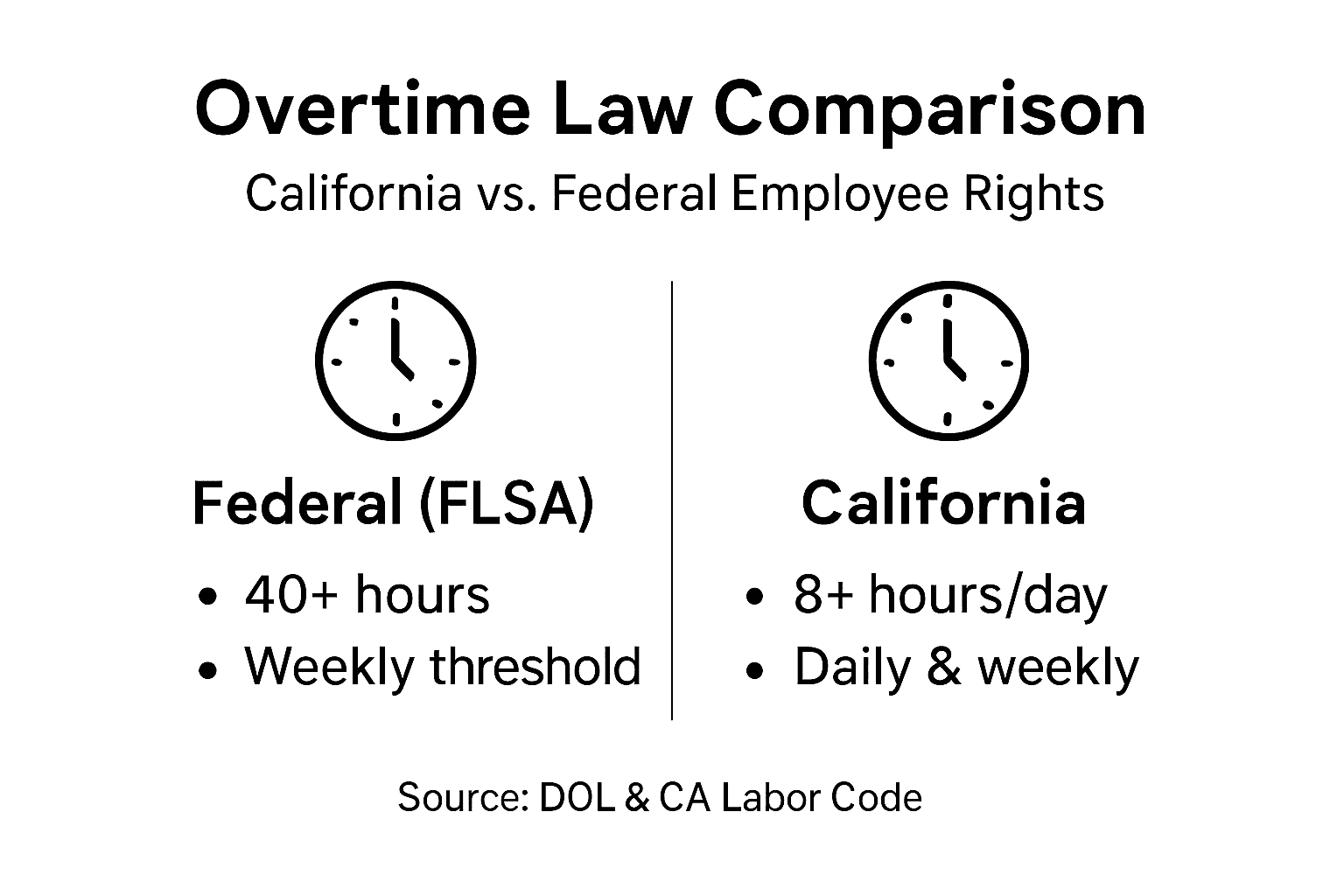
    Overtime laws in California go far beyond federal requirements, providing more comprehensive compensation for workers across various industries. While the federal standard only mandates overtime pay for hours worked beyond 40 in a workweek, California requires overtime compensation for hours worked beyond 8 in a single day.

    The key differences between federal and California overtime regulations are substantial. Under federal FLSA guidelines, employees receive one and a half times their regular pay rate for hours exceeding 40 in a workweek. California, however, introduces additional protections: workers earn overtime for daily hours over 8, with double time for hours worked beyond 12 in a single day. This means California workers can potentially earn significantly more overtime compensation compared to the federal baseline, especially during extended work shifts or consecutive workdays.

    Employers operating in California must carefully navigate these complex regulations. When federal and state laws differ, employers are legally required to follow the standard that provides the greatest benefit to employees. This typically means applying California’s more stringent overtime rules, which offer more robust worker protections. Specific industries and job classifications may have unique exemptions, making it crucial for both employers and employees to understand the nuanced differences between federal and state overtime regulations.

    Pro tip: Always document your work hours meticulously and understand your specific industry’s overtime classifications to ensure you receive proper compensation.

    Infographic comparison overtime laws California vs federal

    Here’s a side-by-side comparison of federal and California overtime rules:

    Aspect Federal (FLSA) Requirement California State Requirement
    Overtime Weekly Trigger Over 40 hours in a workweek Over 40 hours in a workweek
    Overtime Daily Trigger No daily overtime Over 8 hours in a single day
    Double Time Provision Not required Over 12 hours in a day, or 7th day in week
    Exemptions Broader, based on job duties/salary More limited, stricter job duty standards
    Rate for Overtime Hours 1.5× regular hourly rate 1.5× after 8 hrs, 2× after 12 hrs/day

    Eligibility and Exemption from Overtime Pay

    Understanding overtime eligibility is crucial for California workers seeking fair compensation. Overtime exemption rules are complex, with specific criteria determining whether an employee qualifies for additional pay. Most employees are eligible for overtime, but certain job classifications are exempt based on salary level, job duties, and specific industry standards. The primary categories of exempt employees typically include executive, administrative, professional, outside sales, and some computer professionals.

    To qualify for an overtime exemption, employees must meet stringent tests beyond their job title. The key requirements include receiving a predetermined salary above a specific threshold and performing primarily executive, administrative, or professional duties that require independent judgment.

    For instance, a manager must not only have a supervisory title but also spend a majority of their time making significant company decisions and directly managing other employees. Commissioned sales representatives and certain specialized technology workers may also fall under exemption categories, provided they meet specific salary and responsibility criteria.

    California employers must carefully navigate these intricate regulations, as misclassifying employees can result in significant legal and financial penalties. The state often applies more stringent standards than federal guidelines, meaning an employee might be nonexempt under California law even if they appear exempt under federal regulations.

    Factors such as the nature of work, level of independent decision-making, and specific job responsibilities play critical roles in determining overtime eligibility. Workers who believe they have been improperly classified should document their job duties and consult with employment law professionals.

    Pro tip: Review your job description carefully and track your actual daily responsibilities to determine whether you might have been incorrectly classified as exempt from overtime pay.

    How Overtime Is Calculated in California

    California’s overtime calculation rules are significantly more complex and employee-friendly compared to federal standards. California overtime laws establish a comprehensive framework that protects workers by mandating premium pay rates for extended work hours. Unlike the federal standard which only requires overtime after 40 hours in a workweek, California requires overtime compensation for hours worked beyond 8 in a single day and calculates overtime on both daily and weekly work periods.

    Clerk calculating California overtime on timesheet

    The specific overtime calculation methods in California involve multiple rate tiers. Employees receive 1.5 times their regular hourly rate for hours worked beyond 8 in a day or 40 in a week. In more demanding work scenarios, workers are entitled to double their regular rate for hours exceeding 12 in a single day or for work performed on the seventh consecutive day of a workweek. This means an employee working a 10-hour shift would receive their standard rate for the first 8 hours, 1.5 times their rate for the next 2 hours, and double their rate for the final hour.

    Employers must carefully track and calculate these nuanced overtime provisions, considering both daily and weekly thresholds. The calculations require precise record-keeping of actual hours worked, including start and end times for each shift.

    Factors such as meal breaks, rest periods, and total hours in a workweek can significantly impact overtime calculations. Workers should maintain their own detailed time records to verify that employers are correctly applying California’s stringent overtime regulations, which often provide more substantial compensation than federal guidelines.

    Pro tip: Maintain a personal log of your daily work hours, including start and end times, to cross-reference against your paycheck and ensure accurate overtime calculations.

    Common Overtime Violations and Worker Rights

    Overtime violations remain a persistent problem for California workers, with employers frequently attempting to circumvent fair compensation regulations. Labor law enforcement reveals several critical patterns of wage theft that employees should vigilantly watch for. The most common violations include misclassifying employees as exempt to avoid overtime payments, failing to compensate for all hours worked, and deliberately undercalculating overtime rates.

    Employees face numerous specific overtime violation scenarios that compromise their wage rights. These include managers pressuring workers to work off the clock, deliberately manipulating time records, refusing to pay overtime rates for work performed beyond standard hours, and incorrectly classifying workers as independent contractors to sidestep overtime requirements. Some employers strategically create policies that discourage workers from reporting overtime hours or create complex scheduling systems designed to obscure actual worked time.

    California provides robust legal protections for workers facing overtime violations. Employees have the right to file complaints with the Labor Commissioner’s Office, seek wage recovery for unpaid overtime, and pursue legal action against employers who violate overtime regulations.

    The state’s laws are intentionally structured to protect workers, allowing recovery of unpaid wages, penalties, and potential additional compensation for willful violations. Workers should document all work hours meticulously, understand their classification, and be prepared to assert their legal rights when confronted with potential overtime violations.

    Pro tip: Photograph or digitally screenshot your work time records and keep a contemporaneous personal log of all hours worked to provide concrete evidence if you need to challenge overtime violations.

    Seeking Help for Unpaid Overtime Issues

    Workers confronting unpaid overtime face multiple avenues for seeking justice and recovering lost wages. Workers’ rights resources provide comprehensive guidance for employees navigating wage theft complaints. The California Labor Commissioner’s Office offers a structured process for filing wage claims, with multilingual support to ensure accessibility for diverse worker populations. Employees can initiate formal complaints detailing specific instances of unpaid overtime, including documentation of hours worked and compensation records.

    The legal recourse for unpaid overtime involves several strategic steps. Workers can file administrative wage claims directly with the Labor Commissioner’s Office, which investigates wage violations and can order employers to pay owed compensation.

    Alternatively, employees may choose to pursue civil lawsuits, potentially recovering not just unpaid wages but also additional penalties and legal costs. Some workers opt to seek assistance from employment law attorneys who specialize in wage and hour disputes, providing expert guidance through complex legal proceedings.

    Documentation serves as the critical foundation for successful overtime claims. Workers should meticulously preserve time sheets, pay stubs, work schedules, email communications, and any other evidence demonstrating hours worked and compensation discrepancies.

    Legal aid organizations and worker advocacy groups can provide free consultations and guidance, helping employees understand their rights and the most effective strategies for recovering unpaid overtime. The law protects workers from employer retaliation, ensuring that employees can assert their wage rights without fear of professional consequences.

    Pro tip: Create a comprehensive digital and physical file containing all employment documentation, including time records, pay stubs, and correspondence, to strengthen your potential overtime claim.

    The table below summarizes key steps to address unpaid overtime issues:

    Action Step Purpose Recommended Documentation
    Track all work hours Ensure accurate overtime claim Time sheets, logs, clock records
    Preserve payment records Prove underpayment or wage theft Pay stubs, direct deposit statements
    File complaint with Labor Office Start official recovery process Complaint form, supporting evidence
    Seek legal advice Navigate complex disputes Consultation notes, legal letters

    Protect Your Right to Fair Overtime Pay in California

    Navigating the complex landscape of Fair Labor Standards Act overtime rules alongside California’s stricter state regulations can be overwhelming. If you’ve experienced unpaid or miscalculated overtime, been misclassified as exempt, or just want to understand your rights better, you are not alone. The pain of working extra hours without fair compensation is a reality for many California workers, but you do not have to accept it silently.

    At California Labor Law, we provide clear, trusted guidance on your overtime rights under both federal and California laws. Our free legal resources help you track your hours properly, recognize potential violations, and empower you to take confident action.

    Don’t wait until your wage loss grows. Learn how to use overtime pay rules to your advantage and get direct access to legal support tailored specifically for California employees. Protect what you have earned today by calling 1-866-355-9991 to schedule a free overtime pay consultation and start asserting your rights now.

    Frequently Asked Questions

    What is the Fair Labor Standards Act (FLSA) overtime rule?

    The FLSA mandates that eligible employees receive overtime pay of at least one and a half times their regular hourly rate for any hours worked over 40 in a single workweek.

    How does California’s overtime law differ from federal law?

    California law requires overtime pay for hours worked beyond 8 in a single day, in addition to the federal requirement of overtime for hours over 40 in a week, making it more beneficial for workers.

    Who is exempt from overtime pay under California law?

    Exempt employees typically include those in executive, administrative, professional roles, and some outside sales positions. They must meet specific salary thresholds and job duties to qualify for exemption.

    How is overtime calculated in California?

    Overtime in California is calculated at 1.5 times the regular pay rate for hours worked over 8 in a day or 40 in a week, and workers receive double time for hours exceeding 12 in a day or for working the seventh consecutive day.

  • California Rest and Meal Break Laws 2026: Key Rights for Workers

    California Rest and Meal Break Laws 2026: Key Rights for Workers

    California Required Rest and Meal Breaks 2026: Full Guide for Employees

    Long shifts in California hotels and restaurants often leave workers struggling to fit in a real break, especially when management treats breaks as a favor instead of a right.

    Clear protections exist under California law that go beyond federal standards, making it crucial for hospitality employees to understand how rest and meal break rights are legally enforced and compensated.

    This guide gives you the clarity needed to spot illegal practices and document missed breaks so you can recover the wages you deserve.

    Defining Rest and Meal Break Rights

    Your right to breaks during your shift is one of the most misunderstood parts of California labor law, especially in hospitality where time moves fast and managers often treat breaks as optional favors rather than legal requirements. The reality is different. California provides stronger protections than federal law does, and understanding what you’re entitled to matters when you’re working long shifts in hotels, restaurants, or other service roles.

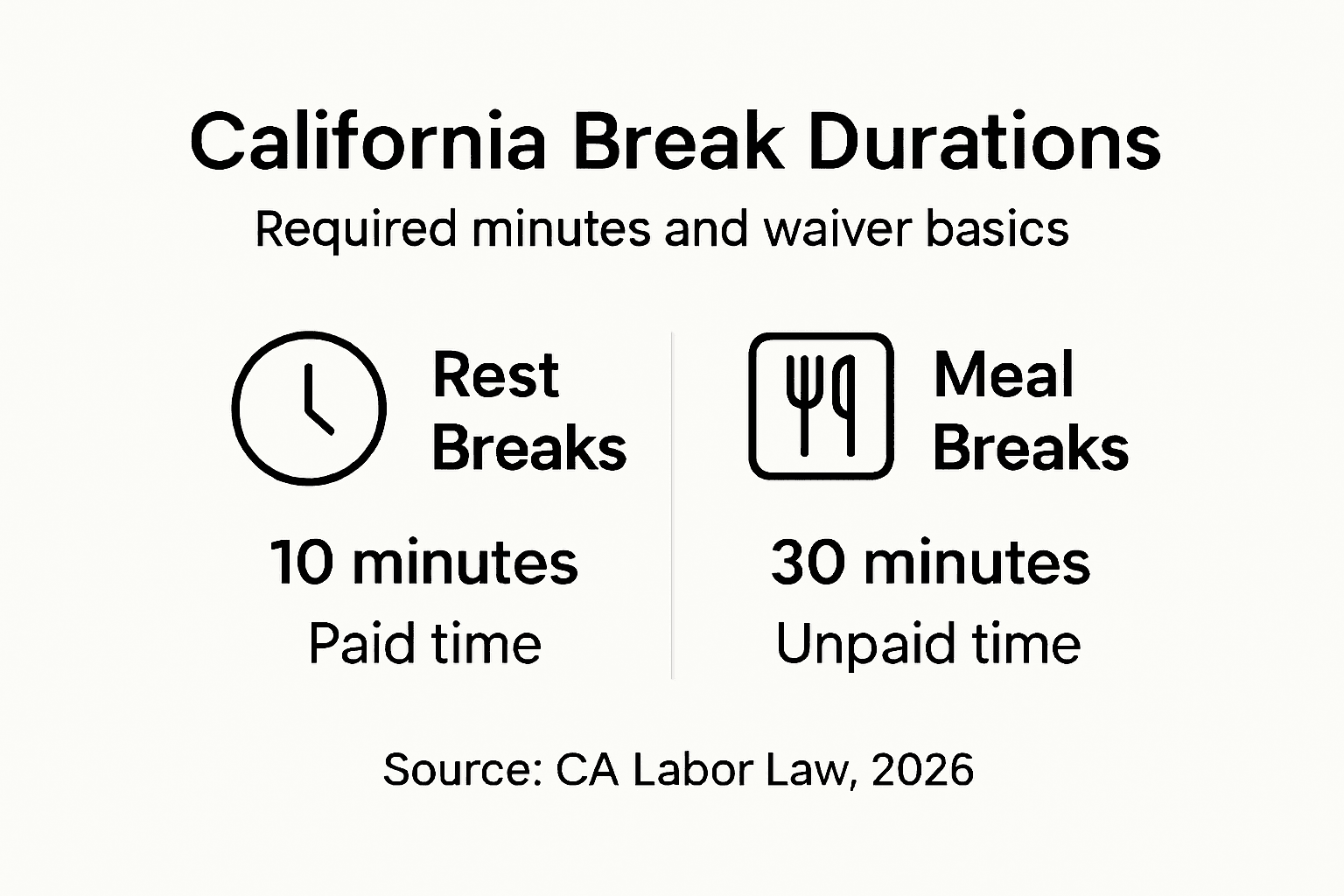
    Let’s start with rest breaks. For every four hours worked (or even a major fraction of four hours), you get a paid 10-minute rest break. This break must be taken as close to the middle of each work period as possible, and your employer has to compensate you for this time.

    Short rest breaks lasting 5 to 20 minutes are compensable work hours, meaning you get paid even though you’re technically not working.

    The key word here is “paid”—you cannot use this time for personal tasks at home. Your employer must provide an actual break where you can step away from your duties.

    Café worker taking a break near kitchen exit

    Meal breaks work differently. You’re entitled to at least a 30-minute unpaid meal break for every five hours of work.

    Unlike rest breaks, you don’t get paid for meal time, but your employer still has a legal obligation to provide the opportunity for you to take it. The break must be duty-free, meaning you cannot be required to work or monitor operations while eating.

    In hospitality, this is crucial—you cannot be told to eat at your desk while answering phones or managing reservations. If the nature of your job makes it impossible to be relieved of duties (rare but possible in certain situations), a written agreement must explicitly address this.

    Here’s what matters most: your employer must make these breaks available to you.

    The law places the responsibility on management to schedule and allow breaks. If breaks are denied or delayed beyond what’s reasonable, your employer owes you one additional hour of wages for each day this violation occurs. This isn’t a small penalty.

    If you work five days a week and never received your meal breaks, that’s five hours of extra pay per week—significant money that often goes unclaimed.

    Pro tip: Keep a simple shift log noting dates when breaks were missed or cut short. This documentation becomes essential if you need to file a wage claim later, as it shows a pattern rather than isolated incidents.

    To clarify the differences between rest and meal breaks under California law, see the table below:

    Aspect Rest Breaks Meal Breaks
    Duration 10 minutes (paid) 30 minutes (unpaid)
    Frequency Every 4 hours worked Every 5 hours worked
    Compensation Included in wages Not included; duty-free
    Location Away from workstation Must be relieved of duties
    Waivers Allowed Not permitted Only by written agreement

    Required Break Durations and Waivers Explained

    The specific minutes you get for breaks matter, and so does understanding when your employer can legally ask you to skip them. In hospitality, managers sometimes blur these lines, suggesting breaks are negotiable or optional when they legally are not. They’re required, period.

    But there are specific situations where waivers exist, and knowing the difference keeps you from accidentally giving up rights you didn’t realize you had.

    Infographic of California rest and meal break timings

    Rest breaks are straightforward: 10-minute paid breaks for every four hours worked or any major fraction of four hours. This means if you work four hours and one minute, you still get that full 10-minute break. The break should occur near the middle of your work period.

    So if you’re working a four-hour shift, your break should ideally come around the two-hour mark, not at the end when it barely helps. With meal breaks, you need at least 30 minutes unpaid for every five hours of work.

    Again, a major fraction counts—work five hours and one minute, and you’re entitled to the full 30-minute meal break. If you work over 10 hours in a single day, you get a second meal break, unless that second break is waived by mutual written consent.

    Now here’s where waivers come in, and this is critical for hospitality workers who often encounter pressure around this. Meal periods may be waived by mutual consent when total work hours are six or less. This means if you’re scheduled for a short six-hour shift, your employer can propose skipping the meal break if you agree in writing.

    But “mutual consent” is the key phrase—your employer cannot simply announce that breaks are waived. You must actively agree, and that agreement should be documented.

    Unfortunately, many hospitality managers treat this as a one-sided decision, telling staff “we’re skipping lunch today” without actual consent. That’s illegal.

    One more scenario affects hospitality workers specifically: on-duty meal periods. If your job requires you to stay at your work location during your meal break—perhaps covering the front desk while eating or monitoring the restaurant floor—that time must be paid.

    You cannot be asked to work through lunch unpaid just because you’re technically eating on site. If an on-duty meal period is arranged, it must be a written mutual agreement, and you must receive compensation for that time. This protects you from situations where managers claim you “chose” to eat at your station while remaining responsible for customers or operations.

    Pro tip: Request written confirmation of any agreed-upon break waivers from your manager or HR department, and keep copies in your personal files separate from your workplace records for safety.

    Employer Obligations and Common Violations

    Your employer doesn’t get to decide whether breaks are optional. California law places specific obligations on management, and when they fail to meet these obligations, it becomes a wage violation. Understanding what your employer must do—and what they cannot do—is the foundation for recognizing when something illegal is happening on your shift.

    Employers have one core obligation: authorize and permit rest periods of at least ten minutes for every four hours worked. This means management must actually schedule breaks, not just vaguely allow them. If you work a four-hour shift and never get time away from your station, that’s a violation. If you work eight hours and get only one 10-minute break instead of two, that’s a violation. The break must happen, and it must be paid.

    Similarly, your employer must provide a 30-minute unpaid meal break for every five hours worked. The requirement isn’t that breaks “be available”—it’s that they must be “authorized and permitted,” meaning actively scheduled and facilitated.

    Common violations in hospitality happen in predictable patterns. Denying breaks, requiring employees to work through breaks, and failing to compensate missed breaks are the most frequent violations.

    A manager might claim you “didn’t have time” for a break, or that you “chose” to skip it. Neither excuse matters legally. Your employer has an affirmative duty to make breaks happen. Some managers create situations where breaks appear impossible—understaffing your section so nobody can cover you, or scheduling breaks during peak customer times.

    These tactics violate the law. You cannot be disciplined, pressured, or made to feel unwelcome for taking legally required breaks. Retaliation of any kind is illegal.

    Another violation occurs when employers require you to remain “on call” during meal breaks. If you’re eating at your desk but still responsible for answering phones or helping customers, that’s an on-duty meal period that must be compensated. You cannot be expected to monitor operations while eating unpaid.

    Understanding what qualifies as wage theft matters here—many hospitality workers don’t realize that uncompensated time spent managing duties while eating counts as stolen wages.

    The financial consequences for employers are significant. For each day breaks are missed, employers owe you one additional hour of wages at your regular rate. If you work six days a week without meal breaks, that’s six hours of extra pay per week. Violations often accumulate quickly, and penalties compound.

    Pro tip: Create a simple calendar or phone note documenting break violations as they occur, including the date, time, and specific circumstance (such as “told to skip lunch to cover front desk”), which strengthens any future wage claim.

    Penalties for Missed or Denied Breaks

    When your employer denies you breaks, they don’t just inconvenience you. They owe you money. This is where California law gets specific and powerful for workers.

    The penalty structure is straightforward, and it adds up fast, especially in hospitality where understaffing and missed breaks happen frequently. Understanding the financial consequences helps you recognize whether unpaid wages are accumulating in your current position.

    Here is the core penalty: employers must pay one additional hour of pay at regular rate for each workday breaks were not provided. This is premium pay, separate from your regular wages.

    If you work a ten-hour shift and your employer fails to give you two required rest breaks and one meal break, that is three hours of premium pay owed to you. If this happens across a five-day work week, that is 15 hours of additional compensation.

    For a hospitality worker earning $16 per hour, that is $240 per week. Over a year, assuming consistent violations, that reaches approximately $12,480 in unpaid wages.

    The critical detail many workers miss: this premium pay is not counted toward overtime calculations. You cannot be forced to work overtime and then have the employer claim that the break premium satisfied overtime requirements. These are separate wage obligations.

    Additionally, failure to timely pay wages including break premium pay can result in additional penalties under California Labor Code. This means if your employer withholds break compensation, you may be owed not just the premium hours but further penalties for late payment.

    The statute of limitations for claiming unpaid break premium is three years. This means if you were denied breaks throughout 2023, 2024, and 2025, you can file a claim seeking compensation for all three years of violations. Your employer cannot avoid liability by claiming violations happened too long ago, unless more than three years have passed.

    However, certain circumstances may extend or shorten this timeline, so documentation of when violations occurred matters significantly.

    What makes this penalty structure powerful is its cumulative nature. Employers cannot simply pay a flat fine and move forward. Each day of violation creates a new wage obligation.

    If your employer systematically denies breaks to an entire shift, they may owe compensation to multiple workers simultaneously, creating substantial financial exposure. This is why some employers attempt to pressure workers into signing waiver documents or avoid scheduling breaks altogether.

    Pro tip: Track the exact date and time of each missed or shortened break for at least three months, noting how long the break should have been, then calculate your owed premium pay by multiplying the number of violation days by one hour times your hourly rate.

    Industry-Specific Exceptions and Special Cases

    Not every California worker gets the same break rules. Certain industries operate under different legal frameworks, and hospitality professionals need to understand whether your specific job falls into an exception category.

    The bad news: some legitimate exceptions exist.

    The good news: even when exceptions apply, you still have protections, and employers often misuse these exceptions to deny breaks they are legally required to provide.

    The motion picture industry operates under its own wage order with distinct meal break requirements. If you work on film or television sets, your break entitlements differ from standard hospitality rules.

    Construction, drilling, logging, and mining industries also have exceptions because the nature of their work makes traditional break scheduling impractical. In these sectors, rest breaks may be staggered or skipped temporarily to maintain continuous operations, but employers must compensate employees for missed breaks.

    This is the critical point: an exception to scheduling breaks does not eliminate your right to compensation.

    If your job requires continuous operation and breaks cannot be taken on schedule, your employer owes you premium pay for each missed break.

    Certain hospitality workers may fall into specialized categories. Employees in 24-hour residential care facilities, for instance, have different break rules because someone must always be present. Performers engaged in strenuous physical activity—think dancers, swimmers, or skaters performing continuously—may have modified break requirements.

    However, these exceptions apply only to specific worker groups defined by California Industrial Welfare Commission Wage Orders, and employers frequently overreach by claiming exceptions that do not actually apply to their workers. A hotel front desk clerk cannot claim the 24-hour residential care exception. A restaurant kitchen worker cannot claim the performer exception.

    On-duty meal periods represent another special case relevant to hospitality. If your job genuinely prevents you from being relieved of duties during lunch—for example, you must monitor a security system or manage an emergency—your employer may require an on-duty meal period. This is legal only if a written agreement exists and the time is paid.

    Many hospitality managers claim this exception when it does not apply. Being busy during lunch is not the same as being unable to be relieved. Understaffing is not a legal reason to deny breaks. Your employer must ensure coverage exists to relieve you from duties.

    Pro tip: If your employer claims your job falls under an industry exception, request written documentation showing the specific exception and how it applies to your position, then verify the claim against California Department of Industrial Relations wage orders.

    Here is a quick reference summarizing major exceptions and special cases in break rules for California workers:

    Industry/Role Break Scheduling Exception Compensation Requirement
    Motion picture/film sets Distinct break rules apply Missed breaks must be paid
    Construction & mining Breaks may be staggered Premium pay for missed breaks
    24-hour residential care staff Shift-specific break rules Compensation still required
    Performers (athletes/dancers) Modified break provisions Defined by wage orders
    Hospitality with on-duty meals Must be in writing, paid No waiver without documentation

    Know Your Break Rights and Protect Your Wages Today

    Understanding California rest and meal break laws is critical for every hospitality worker facing the challenge of denied or shortened breaks.

    If you have ever been pressured to skip breaks, worked through unpaid meal periods, or felt uncertain about your legal rights to rest and meal times, you are not alone.

    Get support tailored to your situation by exploring our comprehensive guides and legal tools at California Labor Law. You can use our calculators to estimate unpaid break premiums and learn how to take action against wage theft.

    Don’t wait for violations to continue — knowing your rights and seeking help now can make all the difference. Call 1-866-355-9991 for a free rest and meal break violation consultation to empower yourself with knowledge and connect with advocates ready to assist you through every step.

    Frequently Asked Questions

    What are my rights regarding rest breaks in California?

    In California, employees are entitled to a paid 10-minute rest break for every four hours worked or a major fraction thereof. Employers must schedule these breaks, and employees must be compensated for this time even if they are not performing work.

    How long is the required meal break for employees in California?

    Employees in California are entitled to at least a 30-minute unpaid meal break for every five hours worked. This break must be duty-free, meaning employees cannot be required to work or monitor operations during this time.

    What happens if my employer denies or delays my breaks?

    If your employer denies or delays your required breaks, they owe you an additional hour of pay for each day that breaks are not provided. This applies whether the breaks are rest or meal breaks.

    Can my employer require me to waive my meal break?

    Meal breaks can only be waived by mutual written consent when total work hours are six or less. Employers cannot simply announce that breaks are waived; an active agreement from the employee is necessary.

  • Illegal Interview Questions – Protecting Your Rights in CA

    Illegal Interview Questions – Protecting Your Rights in CA

    Illegal Interview Questions in California: What Employers Can’t Ask You

    Most tech employees in California are surprised to learn that violating interview privacy laws can result in hefty fines and lawsuits. Understanding your rights matters because even one illegal question about age, family, or citizenship could jeopardize fair hiring.

    This guide empowers you to confidently navigate interviews, spot illegal questions, and respond in ways that protect your career and uphold California’s employment standards.

    Defining Illegal Interview Questions in California

    California labor laws strictly prohibit employers from asking interview questions that could potentially discriminate against job candidates. Discriminatory interview practices are designed to prevent employers from making hiring decisions based on protected personal characteristics that have no bearing on professional capabilities.

    Illegal interview questions in California are fundamentally those targeting a candidate’s membership in a protected class.

    These protected characteristics include:

    • race,
    • color,
    • religion,
    • sex,
    • gender identity,
    • sexual orientation,
    • age,
    • national origin,
    • citizenship status,
    • disability,
    • pregnancy status,
    • and family circumstances.

    Employers are legally required to focus exclusively on job-related qualifications during interviews, ensuring fair and unbiased candidate evaluation.

    Some common examples of illegal interview questions include direct inquiries about a candidate’s age, marital status, birthplace, religious affiliations, sexual orientation, or plans for having children.

    For instance, asking “Are you planning to get pregnant?” or “How old are you?” are inappropriate and potentially discriminatory. Instead, employers should phrase questions to assess job-related skills and professional capabilities.

    Workplace discrimination types can manifest in subtle ways during the interview process, making awareness crucial for both employers and job seekers.

    Candidate reacts to inappropriate interview question

    Pro tip: If you encounter an illegal interview question, remain professional and consider redirecting the conversation to your professional qualifications or consulting with California labor authorities if you feel discriminated against.

    Key Categories of Prohibited Interview Questions

    California law establishes comprehensive protections against discriminatory interview practices by identifying specific categories of questions employers cannot legally ask.

    Prohibited interview categories are designed to prevent potential workplace discrimination and ensure fair hiring practices across the state.

    Infographic of California illegal interview categories

    The primary prohibited categories encompass deeply personal characteristics that have no direct relevance to job performance.

    Employers are legally mandated to focus solely on a candidate’s professional qualifications, skills, and ability to perform essential job functions.

    Specific examples of illegal questions within these categories reveal the nuanced nature of workplace discrimination.

    Asking “Are you planning to have children?” or “What is your age?” are direct violations of California employment law. Similarly, inquiries like “Where were you born?” or “What religious holidays do you observe?” cross legal boundaries.

    Workplace discrimination types demonstrate that seemingly innocent questions can constitute serious legal violations, potentially exposing employers to significant legal risks and penalties.

    Here’s a summary of key protected characteristics under California law and their impact on interview questions:

    Protected Characteristic Example of Discriminatory Question Impact on Hiring Process
    Age “How old are you?” May lead to age discrimination
    Citizenship Status “Are you a U.S. citizen?” Risks exclusion of non-citizens
    Gender Identity “Do you identify as male or female?” Can result in gender bias
    Family Planning/Pregnancy “Are you planning to have kids soon?” May impact perceptions of reliability
    Religion “Which holidays do you observe?” Could lead to religious discrimination
    Disability “Do you have any health issues?” Might exclude candidates with needs

    Pro tip: If an interviewer asks an inappropriate question, professionally redirect the conversation to your professional qualifications and job-related skills.

    California provides robust legal protections specifically designed to safeguard tech employees from workplace discrimination, unfair labor practices, and potential exploitation.

    California worker protections ensure comprehensive coverage for tech professionals across various employment scenarios, from startup environments to established technology corporations.

    The state’s legal framework offers multiple layers of protection for tech employees, addressing critical areas such as wage regulations, workplace safety, anti-discrimination measures, and employment contract fairness.

    Tech workers are entitled to minimum wage protections, overtime compensation, meal and rest break requirements, and protection from retaliatory actions when reporting workplace violations. These protections are particularly crucial in the rapidly evolving technology sector, where employment dynamics can be complex and sometimes challenging.

    Significant upcoming legislative changes are set to further strengthen tech employee rights. New worker protections will expand protections for gig workers, enhance unionization rights, and implement stricter accountability measures for employers.

    These legal advancements demonstrate California’s commitment to creating equitable working conditions, especially in technology-driven industries where traditional employment models are continually transforming.

    Pro tip: Document and save all communication and employment records, as these can be critical evidence if you need to assert your workplace rights.

    How to Respond to Illegal Interview Questions

    When confronted with an illegal interview question, tech employees have multiple strategic options for protecting their rights while maintaining professional composure.

    Handling inappropriate interview queries requires a careful balance of assertiveness and diplomacy, ensuring you do not compromise your job prospects or personal dignity.

    The most effective response strategies typically involve redirecting the conversation to your professional qualifications while subtly indicating the question’s inappropriateness.

    For instance, if an interviewer asks about your family plans, you might respond by emphasizing your commitment to the role and your ability to meet job responsibilities.

    Alternatively, you can directly but politely challenge the question by saying, “I’m not comfortable discussing personal matters. I’m excited to talk about my professional skills and how they align with this position.”

    Candidate interview rights also provide you the option of declining to answer without penalty. Some candidates choose to document inappropriate questions, which can be valuable if formal discrimination complaints become necessary.

    Tech professionals should remember that reputable employers understand and respect legal boundaries, and any organization persistently asking discriminatory questions is likely not an ideal workplace environment.

    Pro tip: Prepare diplomatic, professional redirection scripts in advance to confidently handle unexpected inappropriate interview questions.

    Reporting Violations and Seeking Remedies

    Tech employees in California have multiple avenues for addressing illegal interview practices and workplace discrimination. Filing discrimination charges involves a strategic process of documenting violations and pursuing appropriate legal channels to protect your professional rights and seek potential remedies.

    The primary mechanisms for reporting violations include filing formal complaints with state and federal agencies. The U.S. Equal Employment Opportunity Commission (EEOC) and the California Department of Industrial Relations (DIR) offer comprehensive platforms for workers to submit detailed accounts of discriminatory practices.

    Worker rights enforcement mechanisms protect employees from retaliation, ensuring that individuals can confidently report inappropriate interview questions or workplace misconduct without fear of professional consequences.

    Successful reporting requires meticulous documentation, including:

    • specific details of the illegal questions,
    • interview dates,
    • interviewer names,
    • and any supporting evidence.

    Tech professionals should maintain a chronological record of interactions, save communication emails, and note specific instances of inappropriate questioning.

    These detailed records can significantly strengthen a potential legal claim or complaint, providing concrete evidence of discriminatory practices that violate California’s rigorous employment protection laws.

    Below is a comparison of the main avenues for reporting violations and their distinct features:

    Reporting Avenue Key Features Typical Outcomes
    EEOC (Federal) Broad protections, nationwide Investigation, possible claim
    California Dept. of Industrial Relations State-specific expertise Mediation, state-level penalties
    Internal Company Report Faster resolution, company focused Policy change, HR intervention
    Legal Counsel Personalized legal advice Lawsuit, negotiation, settlement

    Pro tip: Create a dedicated digital folder to securely store all interview-related communications and documentation, ensuring you have a comprehensive record if legal action becomes necessary.

    Stand Strong Against Illegal Interview Questions with Trusted California Labor Law Support

    Facing illegal interview questions can feel overwhelming and unfair. You have the right to be evaluated based solely on your skills and qualifications without being asked about protected personal characteristics like your age, family plans, or citizenship status.

    These intrusive questions are not just uncomfortable—they violate California labor laws designed to protect your workplace rights and ensure fair hiring practices.

    California Labor Law offers comprehensive legal guides, real-time law updates, and clear advice tailored to California employees like you.

    Do not wait until a single question can affect your career, contact us at 1-866-355-9991 today to find out your legal options.

    Frequently Asked Questions

    What are examples of illegal interview questions in California?

    Illegal interview questions in California include inquiries about a candidate’s age, marital status, sexual orientation, nationality, religious beliefs, or family planning such as, “Are you planning to get pregnant?” or “How old are you?”

    What should I do if I am asked an illegal question during an interview?

    If you encounter an illegal interview question, remain professional. You can redirect the conversation to your qualifications or express your discomfort with the question. Document the incident and consider reporting it if you feel it was discriminatory.

    How can I protect my rights as a job candidate in California?

    You can protect your rights by being aware of what constitutes illegal interview questions, knowing your rights under California law, and maintaining documentation of any inappropriate questions during the interview process.

    What are the legal protections for tech employees in California?

    California offers robust legal protections for tech employees, including:

    • protections against workplace discrimination,
    • rights to a minimum wage,
    • overtime compensation,
    • and the ability to report workplace violations without fear of retaliation.
  • Time Rounding in California: What Workers Need to Know

    Time Rounding in California: What Workers Need to Know

    Time Rounding in California

    Many workers in California’s retail and hospitality industries face lost wages from unfair time rounding, with wage theft costing employees millions each year. When paychecks do not reflect every minute actually worked, hardworking staff often struggle to make ends meet. Knowing your legal rights under California labor laws empowers you to challenge these unjust payroll practices and fight for the fair compensation you deserve.

    What Is Time Rounding in California Law?

    Time rounding represents a standard payroll practice where employers adjust employee work times to predetermined increments, typically 5, 10, or 15 minutes. Under California labor regulations, this practice must meet strict fairness standards to protect workers’ compensation rights. Time rounding policies are designed to simplify administrative timekeeping while ensuring employees receive accurate wages.

    The fundamental principle behind time rounding in California centers on mathematical neutrality. Employers cannot systematically disadvantage workers through their rounding practices.

    This means that over time, rounded work hours should balance out, neither consistently benefiting the employer nor shortchanging the employee. For instance, if an employee clocks in at 8:57 AM, a standard 5-minute rounding policy might record their start time as 9:00 AM. Conversely, if they clock out at 5:03 PM, the same policy might record 5:00 PM.

    Legal standards mandate that any rounding method must be neutral and fair. California courts have established that rounding policies cannot result in a net loss of compensation for workers. Employers must implement policies that do not intentionally or accidentally reduce employee pay. This requires careful design of timekeeping systems and ongoing monitoring to ensure mathematical equity across pay periods.

    Pro tip: Workers should meticulously track their actual work hours and compare them against rounded time records to identify potential discrepancies in wage calculations.

    Types of Time Rounding Methods Used

    Employers in California utilize several distinct time rounding approaches to manage employee work hours. The most common methods include rounding to the nearest 5, 10, or 15-minute increments, each with unique implications for wage calculations. These increments represent standard practices designed to streamline payroll processing while attempting to maintain fairness for workers.

    The primary rounding techniques fall into three primary categories. Forward rounding involves always rounding time upward, which typically benefits employees by crediting additional minutes. Backward rounding conversely, always rounds down, potentially reducing compensable time. The most legally defensible method is neutral rounding, which rounds to the nearest predetermined increment based on mathematical proximity – rounding up if an employee’s time is closer to the next increment, and rounding down if closer to the previous increment.

    Specific rounding practices can vary significantly between industries and employers. Some organizations apply federal guidelines that recommend rounding down for times within 1-7 minutes and rounding up for 8-14 minute intervals.

    However, California courts increasingly scrutinize these practices, demanding that any rounding method demonstrate consistent neutrality and cannot systematically disadvantage workers. Larger increments like half-hour rounding are particularly risky and often considered legally problematic.

    Here’s a comparison of common time rounding methods and their potential impacts on employees and employers:

    Rounding Method How It Works Typical Impact on Employees Legal Risk in CA
    Forward Rounding Always rounds up Adds extra paid minutes High
    Backward Rounding Always rounds down Reduces paid minutes Very high
    Neutral Rounding Rounds to nearest increment Balances out over time Low

    Pro tip: Keep detailed personal time records that document your exact clock-in and clock-out times to cross-reference against your employer’s rounded time calculations.

    California labor laws establish rigorous standards for time rounding practices, requiring employers to implement policies that do not systematically disadvantage workers. The fundamental legal principle mandates that any time rounding method must be mathematically neutral, ensuring employees receive fair compensation for their actual work time. Overtime calculation rules play a critical role in determining the overall fairness of these rounding practices.

    HR manager reviewing employee time records

    The key legal requirements for time rounding include demonstrable neutrality and mathematical consistency. Courts evaluate rounding policies by examining whether they consistently balance out over multiple pay periods, meaning the rounding should not consistently benefit the employer or consistently shortchange the employee. Neutral rounding must meet several critical standards: the rounding method cannot result in a net reduction of wages, must apply consistently across all employees, and should closely approximate actual worked time.

    Employers must maintain meticulous records and be prepared to justify their rounding practices if challenged. California courts have established that even seemingly minor discrepancies can constitute wage theft if the rounding method systematically reduces employee compensation.

    This means that employers cannot use rounding as a mechanism to minimize payroll expenses. The burden of proof lies with the employer to demonstrate that their time rounding method is truly fair and does not create a financial disadvantage for workers.

    Pro tip: Carefully document your exact work hours and compare them against your employer’s rounded time records to identify potential wage discrepancies.

    Employee Rights Under California Labor Code

    California workers have robust legal protections that safeguard their right to accurate wage compensation, particularly regarding time tracking and rounding practices. Minimum wage laws establish fundamental protections that require employers to compensate workers fairly for every minute worked. Employees are entitled to precise timekeeping, with legal provisions that prohibit employers from systematically reducing compensation through arbitrary rounding methods.

    The California Labor Code provides specific rights that protect workers from potential wage theft through time rounding. Employees have the right to receive full compensation for all hours worked, including any incremental time that might be eliminated through rounding practices.

    Wage protection means employers cannot use rounding as a mechanism to reduce overall compensation, and workers can challenge time rounding policies that consistently result in lost wages. This includes the right to request detailed time records and challenge any discrepancies in how their work hours are calculated and compensated.

    Employers are legally obligated to maintain transparent and accurate time records that demonstrate the fairness of their rounding practices. Workers have the right to file complaints with the California Labor Commissioner’s Office if they believe their wages have been improperly calculated.

    The burden of proof lies with the employer to show that their time rounding method does not disadvantage employees. This includes maintaining documentation that proves the rounding method is mathematically neutral and does not result in a systematic reduction of compensable work time.

    Pro tip: Maintain a personal log of your exact work hours and compare it against your pay stubs to identify any potential time rounding discrepancies.

    The table below summarizes key employee rights regarding time rounding in California:

    Employee Right Description What To Do If Violated
    Accurate wage compensation Must be paid for all minutes worked Request detailed time records
    Review of time records Can access and check all time entries Compare personal log to employer’s logs
    Challenge discrepancies Can dispute payroll errors with Labor Commissioner File a formal complaint

    Risks of Unfair Time Rounding Practices

    Time rounding practices carry significant legal and financial risks for employers who implement biased or systematically disadvantageous policies. Rounding compliance rules highlight the potential for substantial legal exposure when time tracking methods consistently reduce employee compensation. Even seemingly minor rounding discrepancies can accumulate into significant wage losses over extended periods, creating substantial liability for businesses.

    Employers face multiple potential consequences from unfair time rounding practices. Legal vulnerabilities include class action lawsuits, penalties from the California Labor Commissioner’s Office, and potential wage theft claims.

    Workers can seek retroactive compensation for systematically underpaid hours, which might extend back several years. The financial impact can be devastating, with potential damages far exceeding the original underpaid wages through penalties, legal fees, and mandatory compensation.

    The most critical risk involves direct violations of minimum wage and overtime regulations. Unfair rounding practices that consistently round down employee time can effectively reduce an employee’s hourly rate below legal minimum wage standards. This creates a direct legal violation that exposes employers to significant financial and regulatory penalties. Courts have increasingly scrutinized such practices, particularly when precise digital timekeeping technologies make exact time tracking entirely feasible.

    Pro tip: Photograph or digitally document your time clock entries and maintain a personal log to provide concrete evidence if you suspect unfair rounding practices.

    Protect Your Rights Against Unfair Time Rounding

    If you feel your employer’s time rounding policies are costing you wages unfairly, you are not alone. This article reveals how California law demands mathematically neutral rounding methods that do not shortchange workers. Many employees struggle with hidden wage losses caused by biased rounding practices that can add up over weeks and months. Knowing your rights about accurate wage compensation and the legal standards for fair time rounding is the first step toward reclaiming what you deserve.

    Take control of your workplace fairness today by visiting California Labor Law for clear guides on wage theft and timekeeping rights. Use the tools and resources available to review your pay stubs, calculate owed wages, and understand how to challenge discrepancies effectively.

    Don’t wait for the losses to accumulate—act now to protect yourself against unfair payroll practices with help from California Labor Law. Your fair pay depends on it. Call California employment lawyers at  1-866-355-9991 for a free wage and hour violation review today.

    Frequently Asked Questions

    What is time rounding in California?

    Time rounding in California refers to the practice where employers adjust employee work times to specific increments like 5, 10, or 15 minutes to simplify payroll processes. The practice must be fair and mathematically neutral to ensure employees receive accurate pay.

    How does California law address time rounding practices?

    California law mandates that time rounding methods must be mathematically neutral, meaning they should not consistently disadvantage employees or result in a net loss of pay. Employers must ensure their rounding practices are fair and transparent.

    What are the common types of time rounding methods used by employers?

    Common time rounding methods include forward rounding (always rounding up), backward rounding (always rounding down), and neutral rounding (rounding to the nearest increment). Neutral rounding is the most legally defensible method.

    What should an employee do if they believe their wages are incorrectly calculated due to time rounding?

    Employees should meticulously track their actual work hours and compare them to the rounded time records. If they notice discrepancies, they can request detailed time records from their employer or file a complaint with the California Labor Commissioner’s Office.


  • Employment Harassment Lawyer: Protecting California Workers

    Employment Harassment Lawyer: Protecting California Workers

    Protecting California Workers

    Facing unwelcome comments or unfair treatment at work can leave you feeling isolated and uncertain about your next steps. For retail and hospitality workers across California, knowing your rights under laws like the Civil Rights Act and California’s Fair Employment and Housing Act is essential when harassment threatens your job security or well-being. This article offers clear insights into how employment harassment lawyers help protect you, what legal protections you have, and how to take action if your workplace becomes hostile.

    What Employment Harassment Lawyers Do

    Employment harassment lawyers play a critical role in protecting workers’ rights and addressing workplace misconduct across California. These legal professionals represent employees who have experienced discriminatory or inappropriate treatment in their professional environments. By analyzing workplace harassment claims, they help employees navigate complex legal frameworks and seek justice against unlawful workplace conduct.

    These attorneys focus on cases involving harassment based on protected characteristics such as race, gender, age, disability, religion, and national origin. They investigate potential violations of federal laws like the Civil Rights Act and California’s Fair Employment and Housing Act.

    Their comprehensive approach involves gathering evidence, documenting incidents, interviewing witnesses, and building strong legal strategies to demonstrate how workplace behavior creates a hostile work environment.

    Attorney reviewing complaint with employee

    The primary responsibilities of employment harassment lawyers include filing formal complaints with state and federal agencies, negotiating settlements, and representing clients in administrative hearings or court proceedings. They understand the nuanced legal standards required to prove harassment, which often involves demonstrating that the conduct was severe or pervasive enough to create an intimidating or abusive workplace. Guiding clients through complex legal steps is a crucial part of their professional mission.

    Pro tip: Always document every harassment incident in writing, including dates, times, locations, and specific details of inappropriate behavior to strengthen your potential legal case.

    Types of Workplace Harassment in California

    Workplace harassment in California encompasses a wide range of discriminatory behaviors that impact employee dignity and professional opportunities. Discriminatory abuse in workplace settings can manifest in multiple forms, each targeting specific protected characteristics and creating hostile work environments. Understanding these types is crucial for employees to recognize and address potential legal violations.

    The primary categories of workplace harassment include sexual harassment, which can occur through quid pro quo scenarios or by creating a hostile work environment. Racial harassment involves degrading comments, offensive jokes, or discriminatory treatment based on an individual’s race or ethnic background.

    Religious harassment targets employees for their religious beliefs, practices, or cultural expressions. Age-based harassment affects workers over 40, while disability harassment involves discriminatory actions against employees with physical or mental impairments.

    California’s robust legal protections extend beyond federal standards, covering additional forms of harassment including those based on gender identity, sexual orientation, pregnancy, and childbirth. These protections recognize that harassment can be subtle or overt, ranging from inappropriate comments and offensive imagery to more direct forms of discrimination that negatively impact job performance, promotion opportunities, and workplace comfort. Employers are legally responsible for maintaining a workplace free from intimidation, offensive behavior, and discriminatory practices.

    Pro tip: Keep a detailed, dated log of all harassment incidents, including specific behaviors, witnesses, and potential documentation, which can be critical evidence if you need to file a legal complaint.


    Here’s a quick reference to common types of workplace harassment and key examples in California:

    Type of Harassment Example Behavior Potential Impact on Employees
    Sexual Harassment Unwanted advances, crude jokes Anxiety, career setbacks
    Racial Harassment Derogatory slurs, exclusion Hostile environment, isolation
    Disability Harassment Mocking disabilities, denying access Emotional distress, demotion
    Religious Harassment Insulting beliefs, forced participation Loss of respect, fear at work
    Age Harassment Negative comments about age, exclusion Missed promotions, early retirement

    California maintains some of the most comprehensive legal protections against workplace harassment in the United States. Civil rights enforcement mechanisms provide robust safeguards for employees across diverse work environments, ensuring comprehensive protection against discriminatory behaviors. The state’s legal framework goes beyond federal standards, offering more extensive coverage and stronger remedies for workers experiencing harassment.

    The Fair Employment and Housing Act (FEHA) serves as the cornerstone of harassment protections, prohibiting discriminatory conduct based on numerous protected characteristics. These include race, gender, sexual orientation, age, disability, religion, national origin, and gender identity. Unlike federal laws, California’s statutes apply to employers with five or more employees, creating a wider net of protection for workers.

    Employers are legally mandated to prevent harassment, investigate complaints thoroughly, and take immediate corrective action when violations occur.

    Legal protections extend to both civil and potential criminal consequences for harassment. Workplace harassment penalties can include administrative actions, monetary damages, reinstatement, and in severe cases, criminal charges. The Civil Rights Department plays a crucial role in enforcing these protections, providing workers with multiple avenues for seeking justice. This includes filing complaints, pursuing administrative hearings, or initiating civil lawsuits to address workplace harassment and discrimination.

    The following table summarizes key differences between federal and California workplace harassment laws:

    Legal Aspect Federal Law (Title VII, ADA, ADEA) California Law (FEHA)
    Employer Coverage 15+ employees (most laws) 5+ employees
    Protected Characteristics Race, gender, religion, age, etc. All federal plus sexual orientation, gender identity, pregnancy, more
    Statute of Limitations 180 or 300 days 1 year
    Agency Enforcement EEOC DFEH (now CRD)
    Remedy Scope Damages, reinstatement, injunctive relief Additional civil penalties, broader remedies

    Pro tip: Document every harassment incident in detail, including dates, specific behaviors, potential witnesses, and any communication related to the incident, which can be critical evidence in legal proceedings.

    How to File a Workplace Harassment Claim

    Filing a workplace harassment claim requires careful documentation and strategic action to protect your legal rights. Harassment complaint procedures involve multiple critical steps that employees must navigate precisely to ensure their concerns are properly addressed. The process begins with thorough internal documentation and reporting within your workplace, creating an official record of the inappropriate behavior.

    The initial step involves reporting harassment directly to your company’s human resources department or designated supervisor. Employees should provide a detailed written account of the incidents, including specific dates, times, locations, and descriptions of harassing behaviors. If the internal reporting process fails to resolve the issue, workers can escalate their complaint to external agencies.

    In California, this typically means filing a complaint with the Department of Fair Employment and Housing (DFEH) or the federal Equal Employment Opportunity Commission (EEOC).

    Critical considerations for filing a successful harassment claim include strict adherence to statutory deadlines. California law generally requires employees to file administrative complaints within one year of the last harassment incident. Workers must compile comprehensive evidence, including written communications, witness statements, performance records, and any documentation demonstrating the impact of harassment on their work environment.

    Professional legal representation can significantly enhance the effectiveness of the claim, helping employees navigate complex legal requirements and protect their rights throughout the investigation process.

    Pro tip: Preserve all digital and physical evidence of harassment, including emails, text messages, and contemporaneous notes, and store them securely outside of your workplace to prevent potential tampering.

    Employee Rights and Employer Responsibilities

    Employees in California are protected by robust legal frameworks that clearly define their rights and employers’ obligations regarding workplace conduct. Workplace harassment prevention standards establish comprehensive guidelines that mandate employers create safe, respectful work environments free from discriminatory behaviors. These standards require proactive measures to protect workers and prevent potential harassment scenarios.

    Employer responsibilities include developing and implementing clear anti-harassment policies that outline prohibited conduct, reporting procedures, and potential consequences. Employers must provide regular training for supervisors and employees, create accessible complaint mechanisms, and conduct thorough, impartial investigations when harassment allegations arise. They are legally obligated to take prompt corrective action when inappropriate behavior is reported, which may include disciplinary measures, workplace modifications, or other remedial steps to address the situation.

    Employee rights encompass fundamental protections that ensure workplace dignity and safety. Workers have the right to report harassment without fear of retaliation, request confidential investigations, and expect employers to take their concerns seriously.

    These rights extend to protection from discriminatory actions based on race, gender, age, disability, religion, and other protected characteristics. California law provides additional safeguards that go beyond federal standards, offering more comprehensive protection for employees across various work environments.

    Pro tip: Keep detailed, contemporaneous documentation of any harassment incidents, including dates, specific behaviors, and potential witnesses, which can be crucial evidence if you need to file a formal complaint.

    Choosing the Right Employment Lawyer

    Selecting an employment harassment lawyer requires careful consideration of several critical factors to ensure effective legal representation. Employment attorney expertise plays a crucial role in determining the potential success of your workplace harassment claim. The right lawyer should demonstrate knowledge of California employment laws, a proven track record of handling similar cases, and a deep understanding of the complex legal landscape surrounding workplace discrimination.

    When evaluating potential attorneys, workers should prioritize lawyers with extensive experience in workplace harassment litigation. Key considerations include the attorney’s track record of successful settlements and court verdicts, their familiarity with specific industries, and their ability to navigate both administrative proceedings and potential court challenges.

    Potential clients should seek lawyers who offer comprehensive initial consultations, provide clear communication about potential strategies, and demonstrate a commitment to understanding the unique details of their specific workplace harassment situation.

    Financial considerations are equally important in selecting the right employment lawyer. Many reputable employment harassment attorneys work on contingency fee arrangements, meaning they only get paid if they win the case. This approach allows workers with limited financial resources to pursue justice without upfront legal costs. Additionally, workers should investigate the lawyer’s reputation, read client testimonials, check state bar association records for disciplinary actions, and assess the attorney’s overall approach to handling workplace harassment claims.

    Pro tip: Schedule initial consultations with at least three employment lawyers to compare their approaches, ask specific questions about their experience with similar cases, and assess their communication style and commitment to your specific situation.

    Protect Your Rights with Expert Guidance on Employment Harassment in California

    Facing workplace harassment can feel overwhelming and isolating. This article highlights crucial challenges such as documenting incidents, understanding legal protections under California law, and navigating complex complaint-filing processes. If you have experienced sexual harassment, racial discrimination, or any abusive conduct that threatens your workplace dignity and career, you deserve strong advocacy that knows the laws and your rights.

    At California Labor Law, we provide free resources to help you understand key concepts like the Fair Employment and Housing Act, how to file complaints properly, and what steps to take to protect yourself. You do not have to face retaliation or uncertainty alone.

    Take action now to safeguard your workplace rights. Call California Labor Law at 1-866-355-9991 to speak with a legal representative for a free employment harassment consultation. Do not wait let us help you stand against workplace harassment today.

    Frequently Asked Questions

    What is the role of an employment harassment lawyer?

    Employment harassment lawyers protect workers’ rights by representing employees who have experienced discriminatory or inappropriate treatment in the workplace. They help navigate legal frameworks, gather evidence, and seek justice against unlawful workplace conduct.

    What types of workplace harassment are recognized in California?

    California recognizes various forms of workplace harassment, including sexual harassment, racial harassment, disability harassment, religious harassment, and age harassment, as well as protections against harassment based on gender identity and sexual orientation.

    How can I file a workplace harassment claim?

    To file a workplace harassment claim, you should first document incidents, then report the harassment to your company’s HR department. If the issue isn’t resolved, you may escalate the complaint by filing with the appropriate agency, such as the Department of Fair Employment and Housing (DFEH) or the Equal Employment Opportunity Commission (EEOC).

    What protections do employees have against harassment in California?

    Employees in California have robust legal protections against workplace harassment under the Fair Employment and Housing Act (FEHA), which prohibits discriminatory conduct based on various protected characteristics and mandates employers to take corrective action when harassment occurs.


  • Legal Protections for Whistleblowers in California

    Legal Protections for Whistleblowers in California

    Legal Protection for California Whistleblowers

    Most workers in California healthcare and construction know someone worried about speaking up at work. When over 20 percent of whistleblowers face retaliation, even those who witness unsafe, illegal, or unfair practices hesitate to report them. Understanding your legal rights matters, especially if you could lose your job or suffer harassment for exposing workplace misconduct. This guide shares what whistleblower protections can do for you and how new rules will affect your safety moving forward.

    What it Means to Be a Whistleblower

    A whistleblower is an employee who courageously exposes illegal, unethical, or dangerous practices within an organization that violate public safety standards or harm a considerable number of people. Unlike ordinary complainants, whistleblowers take significant personal and professional risks to reveal misconduct that might otherwise remain hidden from public scrutiny.

    Whistleblowers can report wrongdoing through multiple channels, typically choosing between internal reporting mechanisms within their organization or external reporting to government agencies, regulatory bodies, or media outlets that investigate public misconduct. The key distinction is that their disclosures must involve substantive violations of law, regulations, or established ethical standards, not merely personal workplace grievances.

    Legal protections for whistleblowers are designed to shield individuals from potential retaliation after they report misconduct. These protections cover various scenarios, including exposing financial fraud, safety violations, environmental hazards, discriminatory practices, or governmental misconduct. By providing legal safeguards, these laws aim to encourage employees to speak up without fear of losing their jobs, facing demotion, or experiencing professional marginalization.

    Whistleblowing requires substantial personal courage, as individuals often confront significant organizational pushback and potential career consequences. Successful whistleblowers typically document evidence meticulously, understand their legal rights, and strategically approach their disclosure to maximize potential impact while minimizing personal risk.

    Pro tip: Before initiating a whistleblower complaint, consult with an employment lawyer familiar with whistleblower protections to understand your specific legal rights and the most strategic approach for reporting misconduct.

    California’s Key Whistleblower Protection Laws

    The California Whistleblower Protection Act provides robust legal safeguards for employees who expose improper governmental activities. California’s comprehensive whistleblower protections are specifically designed to shield state employees and other workers from potential retaliation when reporting serious workplace misconduct.

    Under this legislation, reportable activities encompass a broad range of serious violations, including:

    • Illegal actions that breach state or federal law
    • Instances of significant financial waste
    • Gross misconduct within governmental or organizational settings
    • Safety violations that potentially endanger public welfare
    • Fraudulent practices that compromise institutional integrity

    The legal framework provides multiple layers of protection for whistleblowers, ensuring they cannot be legally punished for making good-faith disclosures about organizational wrongdoing. Employees who report such violations are protected from adverse employment actions such as termination, demotion, salary reduction, or professional harassment. This legal shield extends beyond immediate workplace retaliation and includes protections against long-term professional discrimination.

    Woman studying California whistleblower legal papers

    California’s whistleblower laws recognize that employees play a critical role in maintaining institutional accountability. By creating meaningful legal protections, the state encourages transparency and empowers workers to speak up against unethical or illegal practices without fear of professional repercussions.

    Infographic shows whistleblower law protections and duties

    Pro tip: Document every detail of potential misconduct meticulously, including dates, specific incidents, and any witnesses, to strengthen your whistleblower complaint and enhance your legal protection.

    How Reporting and Retaliation Protections Work

    California whistleblower protections provide a comprehensive framework for employees to report misconduct safely and confidentially. Reporting mechanisms are designed to offer multiple channels for disclosure, allowing workers to expose improper activities through designated officials, anonymous hotlines, or direct communication with regulatory bodies.

    The reporting process typically involves several critical steps:

    • Initial documentation of the suspected misconduct
    • Selecting an appropriate reporting channel
    • Providing substantive evidence or specific details about the violation
    • Maintaining confidentiality and personal safety
    • Tracking the progress of the investigation

    Retaliation protections are robust and multifaceted, prohibiting employers from taking adverse actions against whistleblowers. These protections cover a wide range of potential retaliatory behaviors, including termination, demotion, salary reduction, professional isolation, or any form of workplace harassment directly linked to the whistleblower’s disclosure.

    The legal framework ensures that employees who report in good faith are shielded from professional consequences, regardless of the ultimate outcome of the investigation.

    Under California law, whistleblower protections extend beyond the immediate reporting employee. Witnesses, associates, and those who cooperate with investigations are also safeguarded, creating a comprehensive legal shield that encourages transparency and institutional accountability. This approach recognizes that meaningful organizational oversight requires strong, comprehensive protections for those willing to expose misconduct.

    Pro tip: Maintain a detailed, chronological record of all communications and potential retaliatory actions, as this documentation can be crucial evidence if you need to file a legal complaint.

    Employee Rights, Employer Duties, and Penalties

    California whistleblower laws establish a comprehensive framework of rights and responsibilities designed to protect employees who expose organizational misconduct. Employee rights against workplace retaliation are fundamental to maintaining workplace integrity and ensuring workers can report violations without fear of professional consequences.

    Employees are guaranteed several critical protections under California law:

    • The right to report improper governmental or organizational activities
    • Protection from retaliatory actions such as termination or demotion
    • Confidentiality of their whistleblower status
    • Legal recourse if retaliatory actions are taken against them
    • Potential compensation for damages resulting from workplace retaliation

    Employers bear significant legal responsibilities under these protections. They are strictly prohibited from taking any adverse actions against employees who report misconduct in good faith. This includes preventing direct or indirect forms of retaliation, such as professional marginalization, negative performance evaluations, reduced work hours, or creating a hostile work environment.

    Violations of these provisions can result in substantial legal penalties, including mandatory reinstatement, payment of back wages, compensation for emotional distress, and potential punitive damages.

    The penalties for non-compliance are deliberately structured to be financially and professionally consequential for employers. Organizations found in violation can face civil lawsuits, substantial monetary fines, mandatory corrective actions, and potential damage to their professional reputation. These stringent consequences are designed to create a strong deterrent against workplace retaliation and encourage a culture of transparency and ethical conduct.

    Here’s a summary of the main protections and penalties under California whistleblower law:

    Protects Employees Against Employer Duties Penalties for Non-Compliance
    Termination after reporting Prevent retaliatory firing Mandatory reinstatement, back pay
    Salary reduction due to a complaint Maintain neutral compensation Financial fines, damages for distress
    Professional isolation or harassment Ensure a non-hostile environment Civil lawsuits, punitive damages
    Demotion linked to whistleblowing Guard against unfair evaluations Damage to reputation, corrective actions

    Pro tip: Preserve all documentation related to your whistleblower report, including emails, witness statements, and communication records, as these can be crucial evidence in potential legal proceedings.

    New 2026 Whistleblower Notice and Posting Rules

    Starting in 2026, California is implementing comprehensive new requirements for workplace whistleblower notifications that will significantly impact how employers communicate employee rights. New workplace notification regulations mandate that employers take proactive steps to inform workers about their legal protections against workplace misconduct and potential retaliation.

    The new posting rules include several critical requirements:

    • Mandatory display of official whistleblower rights notices
    • Posting within 72 hours of specific workplace events
    • Comprehensive information about reporting mechanisms
    • Explicit details about protections against retaliation
    • Notices must be displayed in prominent, accessible workplace locations
    • Information must be provided in multiple languages, reflecting workforce demographics

    Employers across California will be required to update their workplace communication strategies to ensure full compliance. This includes not just physical postings, but potentially digital notifications for remote or hybrid workforces. The regulations extend beyond traditional workplace settings, covering industries from healthcare and technology to construction and service sectors.

    Organizations must develop systematic approaches to meet these new notification requirements, which are designed to enhance transparency and empower employees to report potential misconduct without fear.

    The 2026 rules represent a significant advancement in worker protection, reflecting California’s commitment to creating safe, ethical work environments. By mandating clear, accessible information about whistleblower rights, the state aims to create a culture of accountability that protects workers and promotes organizational integrity.

    Here’s an overview of the upcoming 2026 notice and posting requirements for California employers:

    Requirement Type Purpose Impact on Employers
    Prompt notice posting Inform workers of rights Update signage protocols
    Multilingual materials Reach a diverse workforce Translate official notices
    Event-based posting Respond after specific incidents Act within 72 hours
    Digital notifications Accommodate remote staff Upgrade communication systems

    Pro tip: Request a comprehensive compliance checklist from your human resources department to ensure your organization meets all new 2026 whistleblower notification requirements.

    Protect Your Rights as a Whistleblower in California

    If you have witnessed illegal or unethical practices at work and worry about retaliation, you are not alone. The challenges of whistleblowing include fear of job loss, demotion, or professional isolation. Understanding your legal protections under California’s whistleblower laws is essential to defending yourself and making a confident report. Whether you face threats to your employment or need help documenting misconduct, knowing your rights can empower you to take action safely.

    At California Labor Law, we provide clear, accessible resources on whistleblower protections and how the law shields employees from retaliation. Call our legal team at 1-866-355-9991 or fill out the form for a free whistleblower consultation to review your legal options.

    Frequently Asked Questions

    What legal protections do whistleblowers have in California?

    Whistleblowers in California are protected from retaliation by law when they report misconduct, such as illegal activities or safety violations. Protections include safeguarding against termination, demotion, pay reduction, and professional harassment.

    How can I report misconduct as a whistleblower?

    You can report misconduct through internal channels at your organization, such as designated officials or hotlines, or by contacting external regulatory bodies. It’s important to document the suspected misconduct and provide detailed evidence.

    What should I do if I face retaliation after reporting as a whistleblower?

    If you experience retaliation, you should document all incidents and communications related to the retaliatory actions. Consult with an employment lawyer who assists litigating whistleblower protections to explore your legal options and potential recourse.

    What types of misconduct can be reported as a whistleblower?

    Whistleblowers can report a range of serious violations, including illegal actions, financial fraud, safety hazards, and discrimination. The misconduct must involve significant violations of law or ethical standards, not personal grievances.

  • Retaliation in California Healthcare: Employee Rights Now

    Retaliation in California Healthcare: Employee Rights Now

    Retaliation Among Medical Provider Employers

    More than one in five healthcare workers have reported experiencing some form of workplace retaliation after speaking up about unsafe conditions or unfair pay. Raising your voice should not put your future at risk, yet many face sudden schedule changes or negative reviews simply for doing what’s right. Understanding your legal protections empowers you to stand up for fairness and safety without fear.

    What Constitutes Retaliation at Work

    Retaliation in healthcare workplaces represents a serious legal violation where employers punish employees for engaging in legally protected activities. Workplace retaliation laws protect healthcare workers who report unsafe conditions, discrimination, wage issues, or participate in workplace investigations.

    Specifically, retaliation occurs when an employer takes adverse actions against an employee because they exercised their legal rights. These adverse actions can include termination, demotion, reduced work hours, negative performance reviews, exclusion from professional opportunities, or creating a hostile work environment. In the healthcare sector, this might manifest as scheduling unfavorable shifts, denying training opportunities, cutting compensation, or strategically isolating an employee after they’ve raised legitimate workplace concerns.

    Doctor at hospital meeting table with memo

    Critical examples of legally protected activities in healthcare settings include reporting patient safety violations, documenting workplace harassment, filing wage complaints, participating in equal employment opportunity investigations, whistleblowing about fraudulent medical practices, or refusing to engage in unethical workplace behaviors. The law recognizes that employees should feel safe speaking up without fear of professional repercussions.

    The legal standard requires demonstrating a clear connection between the protected activity and the subsequent adverse employment action. This means proving that the employer’s negative response was directly motivated by the employee’s legally protected conduct, rather than legitimate performance issues or business needs.

    Pro tip: Document every interaction and communication related to your protected workplace activity to build a strong potential retaliation case if needed.

    Common Types of Retaliation in Healthcare

    Retaliation in healthcare takes multiple forms, ranging from overt actions to subtle professional sabotage. Physician retaliation strategies often involve systematic attempts to undermine an employee’s professional standing and career trajectory.

    Professional retaliation can manifest through several strategic approaches. Direct methods include termination, demotion, or reducing work hours after an employee reports misconduct. More nuanced tactics involve professional isolation, such as excluding staff from critical meetings, training opportunities, or important communication channels.

    In some cases, healthcare employers might manipulate performance evaluations, create impossible work conditions, or strategically assign unfavorable shifts to discourage future reporting of concerns.

    Specific retaliation types in healthcare settings frequently target whistleblowers and advocates. These can include blocking promotions, spreading professional rumors, creating hostile work environments, denying continuing education opportunities, or implementing punitive scheduling practices. Long-term care retaliation tactics may even extend to psychological intimidation designed to prevent future reporting of safety or ethical violations.

    Infographic on California healthcare retaliation types

    Here’s a summary of common employer retaliation tactics and their potential impact on healthcare professionals:

    Retaliation Tactic Typical Impact on Employee Examples in Healthcare
    Professional Isolation Limits access to resources Exclusion from meetings
    Manipulated Evaluations Damaged career reputation Negative performance reviews
    Unfavorable Scheduling Increased workplace stress Night or weekend shifts
    Denied Opportunities Stalled professional growth No training or promotion

    Independent contractors and temporary healthcare workers face unique vulnerabilities, often experiencing more subtle forms of professional retaliation that can significantly impact future employment opportunities. These might include negative recommendation letters, professional blacklisting, or strategic non-renewal of contracts after raising workplace concerns.

    Pro tip: Maintain comprehensive, dated documentation of all workplace interactions and incidents to build a robust defense against potential retaliatory actions.

    California’s 2026 Anti-Retaliation Laws

    California continues to strengthen legal protections for healthcare workers through comprehensive anti-retaliation legislation. The Equal Pay & Anti-Retaliation Act represents a significant advancement in protecting employees from workplace discrimination and punitive actions.

    The 2026 legal framework introduces robust presumptive protections for workers who report workplace misconduct. Under the new statute, if an employer takes adverse employment action within 90 days of an employee’s protected activity, the law presumes retaliation. The burden of proof shifts to the employer to demonstrate a legitimate, non-retaliatory reason for the action, effectively creating a stronger shield against potential workplace victimization.

    Specifically, these laws expand protection for healthcare professionals across multiple dimensions. California health care laws aim to reduce administrative interference and reinforce independent professional judgment. This includes safeguarding physicians and healthcare workers who report safety concerns, ethical violations, or potential patient risks, ensuring they can speak up without fear of professional consequences.

    The legislative changes also address unique vulnerabilities in healthcare settings, recognizing that retaliation can manifest through subtle professional sabotage. Independent contractors, temporary workers, and full-time employees now have enhanced legal recourse against tactics designed to suppress reporting of workplace issues, from blocking promotions to creating hostile work environments.

    Pro tip: Familiarize yourself with the specific protected activities under the 2026 anti-retaliation laws to understand the full extent of your workplace rights.

    Reporting Retaliation and Employer Duties

    Healthcare employees facing workplace retaliation have specific legal pathways to protect their rights and hold employers accountable. Labor Standards Enforcement provides a critical mechanism for investigating and addressing workplace violations that compromise employee protections.

    The reporting process involves multiple strategic steps designed to document and substantiate potential retaliation claims. Employees should first compile comprehensive evidence, including dated communications, performance reviews, witness statements, and a detailed chronology of events demonstrating the retaliatory actions.

    Written documentation should explicitly outline the protected activity that triggered the potential retaliation and the subsequent adverse employment actions taken by the employer.

    Employers in California have explicit legal duties when responding to potential retaliation claims. They must maintain transparent workplace policies, conduct impartial investigations, and provide clear explanations for any employment actions that could be perceived as retaliatory. The burden increasingly falls on employers to demonstrate that adverse actions were based on legitimate, non-discriminatory business reasons rather than punitive motivations against employees exercising their legal rights.

    The reporting mechanism typically involves filing a formal complaint with the California Labor Commissioner’s office, which will initiate an investigation into the alleged retaliation. This process includes potential mediation, detailed fact-finding, and potential enforcement actions that can result in reinstatement, monetary compensation, and penalties against employers who violate anti-retaliation statutes.

    Pro tip: Create a confidential, contemporaneous log of all workplace interactions and potential retaliatory actions, including dates, specific incidents, and any supporting documentation.

    Common Pitfalls and How to Protect Rights

    Healthcare workers frequently encounter complex challenges when navigating potential workplace retaliation, often misunderstanding the nuanced legal landscape. Workplace retaliation challenges require strategic understanding to effectively protect professional rights and prevent potential legal missteps.

    One critical pitfall involves misinterpreting routine management actions as retaliatory conduct. Not every negative employment interaction constitutes illegal retaliation. Legitimate performance management, such as performance improvement plans or constructive feedback, is distinct from retaliatory actions. Employees must carefully distinguish between acceptable management practices and intentional punitive measures designed to discourage legally protected workplace activities.

    The following table contrasts routine management actions with illegal retaliation, helping clarify when legal protections apply:

    Type of Action Description Legal Status
    Performance Improvement Plan Targeted at skill gaps Generally lawful
    Constructive Feedback Aimed at employee development Generally lawful
    Adverse Action for Reporting Punishes protected disclosures Unlawful retaliation
    Professional Sabotage Undermines standing after the complaint Unlawful retaliation

    Successful rights protection demands meticulous documentation and proactive communication. Healthcare workers should maintain comprehensive records of workplace interactions, including emails, performance reviews, and detailed incident reports. Contemporaneous documentation creates a robust evidentiary trail that can substantiate potential retaliation claims, demonstrating the direct connection between protected activities and subsequent adverse employment actions.

    Navigating power dynamics requires strategic awareness and understanding of legal protections. Despite strong California labor laws, enforcement gaps and complex legal processes can create significant challenges for workers seeking justice. Employees should seek support from labor organizations, understand their workplace rights comprehensively, and utilize formal complaint mechanisms promptly to challenge potential retaliatory behaviors.

    Pro tip: Create a secure, confidential digital and physical archive of all workplace communications and interactions to build a comprehensive evidence portfolio.

    Protect Your Rights Against Retaliation in California Healthcare

    Facing retaliation for speaking up about workplace concerns can be overwhelming and risky. This article highlights the challenges healthcare employees encounter, such as termination, demotion, and professional isolation, after reporting safety violations or unethical conduct. Understanding your rights under California’s evolving laws is crucial to safeguarding your career and well-being.

    At California Labor Law, we empower healthcare workers with clear legal guidance and tools designed specifically for California employees dealing with retaliation and other labor issues.

    Take control of your workplace situation today by calling California Labor Law at 1-866-355-9991. Your voice matters, and you deserve to work without fear. Get informed, document carefully, and explore how we can help you stand up for your rights.

    Frequently Asked Questions

    What constitutes retaliation in California healthcare workplaces?

    Retaliation in California healthcare occurs when employers punish employees for legally protected activities, such as reporting unsafe conditions or engaging in workplace investigations. Adverse actions can include termination, demotion, or negative performance reviews.

    How can healthcare employees document potential retaliation?

    Employees should maintain comprehensive, dated documentation of all workplace interactions related to their protected activity. This includes emails, performance reviews, and witness statements that demonstrate a connection between the protected action and any adverse employment actions.

    What should I do if I believe I am experiencing retaliation at work?

    If you suspect retaliation, compile evidence and consider filing a formal complaint with the appropriate labor authority. It’s important to gather documentation of the retaliatory actions and the protected activities that triggered them.

    What are the protections under California’s new anti-retaliation laws?

    California’s 2026 anti-retaliation laws strengthen protections for employees by presuming retaliation if adverse actions occur within 90 days of reporting misconduct. Employers must prove that their actions were based on legitimate reasons, not retaliatory motives.

  • Job Discrimination Lawyers: Protecting California Workers

    Job Discrimination Lawyers: Protecting California Workers

    Most workers in California tech and retail industries face hidden risks at their jobs. Discrimination affects thousands every year, but too many believe myths that leave their rights unprotected. A surprising fact is that California law shields employees against unfair treatment, no matter the size of their company or the subtleness of discrimination. This overview breaks down what really counts as job discrimination and gives clarity on the crucial protections every California worker deserves.

    Defining Job Discrimination and Common Myths

    Job discrimination represents a serious workplace violation that impacts thousands of California workers annually. Workplace discrimination occurs when an employer treats an employee unfairly based on protected characteristics such as race, gender, age, disability, or sexual orientation. These actions can manifest in various workplace scenarios – from hiring and firing decisions to compensation, promotions, and daily work environment interactions.

    Contrary to popular misconceptions, discrimination isn’t always overt or dramatic. Subtle forms of discrimination can be equally damaging, including microaggressions, systematic exclusion, unequal opportunity allocation, or unexplained performance evaluations that disproportionately target specific worker groups. Some common workplace discrimination myths include:

    • Myth: Only intentional, obvious acts count as discrimination
    • Myth: Small companies are exempt from discrimination laws
    • Myth: Workers must prove deliberate malicious intent
    • Myth: Discrimination only happens in certain industries

    The reality is far more complex. California discrimination laws protect workers across all employment sectors, regardless of company size or apparent intent. Employers can be held legally accountable for discriminatory practices even when harm is unintentional or systemic.

    Pro tip: Document every instance of potential workplace discrimination, including dates, witnesses, and specific interactions, as contemporaneous evidence can be crucial in substantiating legal claims.

    Key Types of Discrimination Cases in California

    California employment law recognizes multiple complex forms of workplace discrimination that can significantly impact workers’ rights and professional opportunities. Workplace discrimination types fundamentally fall into several critical categories, each with unique legal implications and potential remedies for affected employees.

    The primary types of discrimination cases in California include:

    • Disparate Treatment: Direct discrimination where employees are explicitly treated differently based on protected characteristics like race, gender, age, disability, or sexual orientation
    • Disparate Impact: Policies or practices that appear neutral but disproportionately harm specific protected groups
    • Harassment: Creating a hostile work environment through repeated offensive conduct targeting protected characteristics
    • Retaliation: Punishing employees who report discrimination or assert their legal workplace rights

    Moreover, California law provides robust protections across various employment contexts. Discrimination claims can emerge from scenarios involving hiring, firing, promotions, compensation, job assignments, and workplace conditions. Employers cannot use protected characteristics as a basis for employment decisions, and violations can result in significant legal consequences.

    Pro tip: Preserve all documentation related to potential discriminatory incidents, including emails, performance reviews, and witness contact information, as these can serve as critical evidence in building a strong legal case.

    How Job Discrimination Lawyers Support Employees

    Job discrimination lawyers play a critical role in protecting California workers by providing comprehensive legal support through complex employment challenges. Workplace discrimination types can be intricate and difficult to navigate, which is why experienced legal professionals become essential advocates for employees facing unfair treatment.

    The primary ways job discrimination lawyers support employees include:

    • Legal Consultation: Providing initial case evaluations and professional assessments of potential discrimination claims
    • Evidence Gathering: Helping clients collect and organize documentation that substantiates discriminatory practices
    • Strategic Advice: Guiding employees through complex reporting and legal complaint processes
    • Negotiation: Representing employees in settlement discussions and mediation proceedings
    • Litigation: Pursuing legal action through administrative agencies or court systems when necessary

    Moreover, discrimination lawyers understand the nuanced protections provided by California employment laws. They can help workers identify subtle forms of discrimination that might otherwise go unrecognized, such as systemic bias in promotion practices, unequal compensation, or persistent workplace harassment. These legal professionals act as critical intermediaries, translating complex legal standards into actionable strategies that protect workers’ fundamental rights.

    Male lawyer reviews employment evidence documents

    Pro tip: Schedule a confidential consultation with an employment lawyer immediately after experiencing potential workplace discrimination, as critical evidence and legal timelines can quickly become compromised.

    Understanding California and Federal Discrimination Laws

    Workplace discrimination laws in California represent a comprehensive legal framework that combines robust federal protections with state-specific safeguards. California employment discrimination laws create a multi-layered system of worker protections that go beyond national standards, ensuring comprehensive coverage for employees across various industries.

    The key legal frameworks protecting workers include:

    • Federal Laws:
      • Title VII of the Civil Rights Act
      • Americans with Disabilities Act (ADA)
      • Age Discrimination in Employment Act (ADEA)
    • California State Laws:
      • Fair Employment and Housing Act (FEHA)
      • California Civil Rights Department regulations

    California’s legal approach distinguishes itself by providing broader protections than federal statutes. The Fair Employment and Housing Act applies to employers with five or more employees and prohibits discrimination based on an extensive range of protected characteristics, including race, gender identity, sexual orientation, disability, age, and more. Workplace harassment prevention is particularly emphasized, with mandatory training requirements and strong retaliation protections for employees who assert their legal rights.

    Infographic comparing state and federal discrimination laws

    Here’s a comparison of how federal and California discrimination laws protect employees:

    Aspect Federal Law Protections California Law Protections
    Minimum Employer Size 15 employees for most statutes 5 employees under FEHA
    Covered Characteristics Race, color, sex, religion, etc. Broader list, including gender ID
    Harassment Training Not specifically required Mandatory for many employers
    Retaliation Protections Protected for complaints Stronger, including whistleblowers

    Pro tip: Keep detailed records of any potential discriminatory interactions, including dates, witnesses, and specific comments, as documentation can be crucial in substantiating legal claims.

    California employees have robust legal protections against workplace discrimination, with multiple avenues for addressing and resolving unfair treatment. Employee discrimination rights provide comprehensive mechanisms for workers to challenge and seek remedies for workplace violations, ensuring that individuals can defend themselves against unjust employment practices.

    Key employee rights and reporting processes include:

    • Right to File Complaints: Employees can submit discrimination claims to:
      • California Civil Rights Department (CRD)
      • Equal Employment Opportunity Commission (EEOC)
    • Potential Legal Remedies:
      • Lost wage compensation
      • Job reinstatement
      • Emotional distress damages
      • Punitive damages
    • Protection Against Retaliation: California law strictly prohibits employers from retaliating against workers who report discrimination

    The legal process typically requires employees to document incidents carefully and follow specific administrative procedures. Workers must usually exhaust administrative remedies before pursuing litigation, which often involves obtaining a right-to-sue letter from state or federal agencies. This structured approach ensures that discrimination claims are thoroughly investigated and provides multiple opportunities for resolution before entering courtroom proceedings.

    The following table summarizes the main types of evidence that can strengthen a workplace discrimination claim:

    Evidence Type Example Importance in Legal Claims
    Written Documentation Emails, memos, performance reviews Establishes a timeline and motive
    Witness Accounts Coworker statements, supervisor Supports claims of unfair treatment
    Contemporaneous Notes Incident logs with dates/details Demonstrates ongoing conduct pattern

    Pro tip: Preserve all communication records, performance evaluations, and witness contact information when experiencing potential workplace discrimination, as comprehensive documentation strengthens legal claims.

    Costs, Fee Structures, and Common Mistakes

    Navigating the financial landscape of job discrimination legal representation requires understanding the various fee structures and potential costs involved. Discrimination lawyer costs typically follow several predictable models that can help employees make informed decisions about pursuing legal action.

    Primary fee structures for discrimination lawyers include:

    • Contingency Fee Arrangement:
      • No upfront legal fees
      • Lawyer receives 33% to 40% of settlement or award
      • Minimal financial risk for the client
    • Hourly Rate Model:
      • Rates range from $300 to $500 per hour
      • Requires consistent client payments
      • More common in complex or uncertain cases
    • Flat Fee Services:
      • Predetermined cost for specific legal tasks
      • Less common in discrimination cases
      • Typically used for straightforward legal consultations

    Employees should be aware of common mistakes that can undermine their discrimination claims. Critical errors include failing to document incidents thoroughly, missing crucial filing deadlines, neglecting administrative remedies, and selecting lawyers without specialized employment discrimination experience. These missteps can significantly reduce the likelihood of a successful legal outcome and potentially forfeit potential compensation.

    Pro tip: Request a detailed fee agreement in writing and clarify all potential costs and payment structures before signing with a discrimination lawyer.

    Protect Your Rights with Expert Job Discrimination Support

    Facing job discrimination in California can be overwhelming and isolating. The article highlights how subtle and systemic unfair treatment affects your career, compensation, and work environment every day. If you have experienced disparate treatment, harassment, or retaliation remember you are not alone and the law protects you. Understanding your rights under California’s strong discrimination laws is the first step to reclaiming your workplace dignity.

    At California Labor Law, we empower you with clear legal guidance based on proven employment statutes and practical advice on documenting incidents that matter. Don’t let confusion or fear keep you from getting justice. Take action now to protect your job and future by calling California Labor Law at 1-866-355-9991 and learn how to start defending your rights today.

    Frequently Asked Questions

    What is job discrimination?

    Job discrimination occurs when an employer treats an employee unfairly based on protected characteristics such as race, gender, age, disability, or sexual orientation. This can happen in hiring, firing, promotions, compensation, and daily workplace interactions.

    How can a job discrimination lawyer help me?

    A job discrimination lawyer can provide legal consultations, help gather evidence, guide you through the complaint process, negotiate settlements, and pursue litigation if necessary. Their expertise is crucial in navigating complex discrimination claims.

    What are the types of workplace discrimination recognized in California?

    California recognizes several types of discrimination including disparate treatment, disparate impact, harassment, and retaliation. Each type has unique legal implications and may require different approaches to resolve the issues.

    What legal protections do employees have against discrimination?

    Employees have the right to file complaints with the California Civil Rights Department or the Equal Employment Opportunity Commission and seek remedies such as lost wages, job reinstatement, and protection against retaliation by their employers.


  • Understanding Maternity Leave Rights in California

    Understanding Maternity Leave Rights in California

    California and Federal Rights on Maternity Leave

    California has some of the strongest maternity leave laws in the country. New parents in California can get up to four months of Pregnancy Disability Leave, plus additional bonding time and paid benefits. Most people expect the real challenge to be missing out on a paycheck during leave. The real surprise is that job protection and anti-discrimination rights are often even more valuable than the payments themselves.

    Defining Maternity Leave Rights in California

    Maternity leave rights in California represent a comprehensive legal framework designed to protect employees during pregnancy, childbirth, and the critical early weeks of parenthood. These rights ensure that workers can welcome a new child without fear of workplace discrimination or job loss. California labor law protections provide some of the most robust maternity leave provisions in the United States.

    California’s maternity leave rights are grounded in both state and federal legislation, primarily the California Family Rights Act (CFRA) and the federal Family and Medical Leave Act (FMLA). These laws establish critical protections for employees, ensuring they can take necessary time off for childbirth and infant care without risking their employment status.

    Key protections under these laws include:

    • Job restoration to the same or equivalent position after leave
    • Continuation of health insurance benefits during the leave period
    • Protection from workplace discrimination related to pregnancy and parental status

    Types of Maternity Leave

    Employees in California have access to multiple leave types, each serving different needs during the pregnancy and postpartum period.

    Infographic comparing 3 types of maternity leave in California According to the California Department of Fair Employment and Housing, these include:

    • Pregnancy Disability Leave (PDL): Provides up to four months of leave for medical conditions directly related to pregnancy or childbirth
    • Bonding Leave: Allows additional time for parents to care for and bond with a new child
    • Paid Family Leave: A wage replacement program that provides partial wage compensation during leave

    Understanding these nuanced protections helps employees navigate their rights and employers comprehend their legal obligations during this significant life transition.

    The following table compares the main types of maternity leave available in California, summarizing their core purpose, duration, and pay eligibility for easy reference.

    Type of Leave Purpose Maximum Duration Pay Eligibility
    Pregnancy Disability Leave (PDL) To cover medical conditions related to pregnancy or childbirth Up to 4 months May qualify for State Disability Insurance
    Bonding Leave To provide additional time for new parents to bond with a child Up to 12 weeks (under CFRA/FMLA) May combine with Paid Family Leave
    Paid Family Leave (PFL) To offer partial wage replacement during leave for family care Up to 8 weeks Partial wage replacement through state program

    The Importance of Maternity Leave for Employees

    Maternity leave represents a crucial intersection of personal well-being, professional development, and legal protection for employees. By providing dedicated time for physical recovery, infant care, and emotional adjustment, maternity leave supports both individual workers and broader societal health goals. California labor law retaliation ensures that employees cannot be penalized for exercising their fundamental reproductive rights.

    Physical and Emotional Health Considerations

    The postpartum period demands significant physical and emotional recovery for new mothers. Research from Stanford Medicine indicates that adequate maternity leave directly correlates with reduced maternal stress, improved infant bonding, and better long-term health outcomes. Physiological recovery from childbirth requires substantial rest and medical attention, which workplace leave policies must accommodate.

    Key health benefits of comprehensive maternity leave include:

    • Reduced risk of postpartum depression
    • Improved breastfeeding duration and success rates
    • Enhanced maternal and infant physical recovery
    • Decreased maternal stress levels

    Professional and Economic Implications

    Contrary to traditional workplace narratives, maternity leave serves as a strategic investment in workforce retention and employee productivity. Organizations that support comprehensive leave policies demonstrate commitment to gender equality and employee well-being. By protecting job security and providing financial stability, these policies help maintain professional continuity for working parents.

    Employees who receive supportive maternity leave are more likely to:

    • Return to their previous position with increased loyalty
    • Maintain professional skill development
    • Experience smoother workplace reintegration
    • Sustain long-term career progression

    Ultimately, maternity leave transcends individual benefits, representing a critical mechanism for creating more inclusive, compassionate, and sustainable workplace environments.

    The legal framework surrounding maternity leave in California represents a complex, multi-layered system of protections designed to safeguard employees during significant life transitions. California workplace retaliation laws further reinforce these protections by ensuring employees cannot be penalized for exercising their fundamental reproductive rights.

    Federal and State Legislative Foundations

    Maternity leave legal protections emerge from two primary legislative sources: the federal Family and Medical Leave Act (FMLA) and California’s more expansive state laws. According to U.S. Department of Labor guidelines, these laws collectively establish comprehensive worker protections that exceed many other states’ standards.

    Key legislative components include:

    • Guaranteed job protection during leave periods
    • Prohibition of workplace discrimination based on pregnancy status
    • Mandatory maintenance of health insurance benefits
    • Provisions for reasonable workplace accommodations

    Eligibility and Application Criteria

    To qualify for maternity leave protections, employees must meet specific criteria established by both federal and state regulations. Employers must employ a minimum number of workers, and employees must have worked a predetermined number of hours to access these benefits.

    Eligibility typically requires:

    • Working for a covered employer (typically 50+ employees)
    • Minimum of 12 months employment
    • Minimum of 1,250 working hours in the preceding 12-month period
    • Documented medical necessity or childbirth-related requirements

    Navigating these legal protections demands careful understanding of both federal and California-specific regulations, ensuring comprehensive support for employees during critical life transitions.

    Here is a summary of the key eligibility requirements employees must meet to qualify for maternity leave protections under both federal and California law.

    Requirement Federal (FMLA) California (CFRA/PDL)
    Employer Size 50+ employees 5+ employees (for CFRA), any size for PDL
    Employment Length 12 months minimum 12 months (for CFRA), none for PDL
    Hours Worked At least 1,250 hours in 12 months At least 1,250 hours (for CFRA), none for PDL
    Reason for Leave Birth or care of a new child Pregnancy, childbirth, or baby bonding

    Key Concepts of Job Protection and Pay During Leave

    Job protection and compensation during maternity leave form the cornerstone of California’s employee rights framework. Understanding these critical protections helps workers navigate their legal entitlements with confidence. Wrongful termination protections play a significant role in ensuring employees cannot be unfairly dismissed during this vulnerable period.

    Job Restoration Guarantees

    The legal framework provides robust job protection mechanisms that safeguard an employee’s professional standing during maternity leave. According to California Department of Industrial Relations, employers must reinstate employees to their original or equivalent position upon return, maintaining comparable salary, benefits, and working conditions.

    Key job protection principles include:

    • Preservation of original job title and responsibilities
    • Maintenance of seniority and career progression status
    • Continuation of health insurance and other standard benefits
    • Protection from workplace discrimination related to leave

    Wage and Benefit Compensation Strategies

    While maternity leave is not always fully paid, California offers multiple compensation pathways to support employees during this transition. The state’s Paid Family Leave (PFL) program provides partial wage replacement, allowing workers to receive a percentage of their regular earnings during authorized leave periods.

    Compensation options typically encompass:

    • State disability insurance payments
    • Employer-provided paid leave policies
    • Accrued personal or sick leave contributions
    • Partial wage replacement through state programs

    These comprehensive protections demonstrate California’s commitment to supporting working parents while maintaining workplace equity and economic stability.

    maternity leave job protection california

    Resources for Employees Facing Maternity Leave Issues

    Navigation of maternity leave challenges requires strategic knowledge and access to specialized support systems. Employees encountering workplace complications need comprehensive resources to protect their rights and professional interests. California workplace retaliation laws provide critical guidance for workers experiencing discrimination or unfair treatment.

    Multiple government agencies offer structured assistance for employees confronting maternity leave complications. According to California Civil Rights Department, workers have several formal mechanisms to address workplace violations and seek resolution.

    Key government support resources include:

    • California Civil Rights Department complaint filing services
    • Equal Employment Opportunity Commission (EEOC) investigation procedures
    • California Labor Commissioner’s Office workplace dispute resolution
    • Free legal consultations through state employee rights centers

    Professional and Advocacy Organization Support

    Beyond governmental channels, numerous professional organizations provide specialized guidance and support for employees navigating maternity leave challenges. These networks offer critical information, legal referrals, and strategic advice for workers experiencing workplace discrimination or benefits disputes.

    Available professional support options encompass:

    • Working mothers support networks
    • Employment law nonprofit organizations
    • Professional women’s legal advocacy groups
    • Online resource centers specializing in workplace rights

    Effective utilization of these resources empowers employees to confidently address maternity leave challenges, ensuring their legal protections and professional dignity remain intact.

    If you are feeling anxious about job security, wage loss, or retaliation after reading about maternity leave rights in California, you are not alone. The article highlights complex laws like the CFRA and FMLA, and it is easy to worry about whether your employer is really following them. You need more than just knowledge. You need fast, credible answers and support if your rights are ignored. California labor law protections can be your safeguard, but putting them into action should not be overwhelming. Call us at 1-866-355-9991 for a free employment law legal consultation today.

    Frequently Asked Questions

    What are my maternity leave rights in California?

    California law provides extensive maternity leave rights, including job restoration after leave, continuation of health insurance benefits, and protection from discrimination based on pregnancy and parental status.

    How long can I take maternity leave in California?

    Employees in California can take up to four months of Pregnancy Disability Leave (PDL) for medical conditions related to pregnancy or childbirth, in addition to bonding leave and Paid Family Leave for caring for a new child.

    Am I entitled to pay during maternity leave?

    While maternity leave isn’t always fully paid, California offers partial wage replacement through the Paid Family Leave program, along with potential other compensation options such as state disability insurance or employer-provided benefits.

    What should I do if my employer denies my maternity leave?

    If your employer denies your maternity leave rights, you can file a complaint with the California Civil Rights Department or seek legal advice from organizations specializing in employment law to protect your rights.