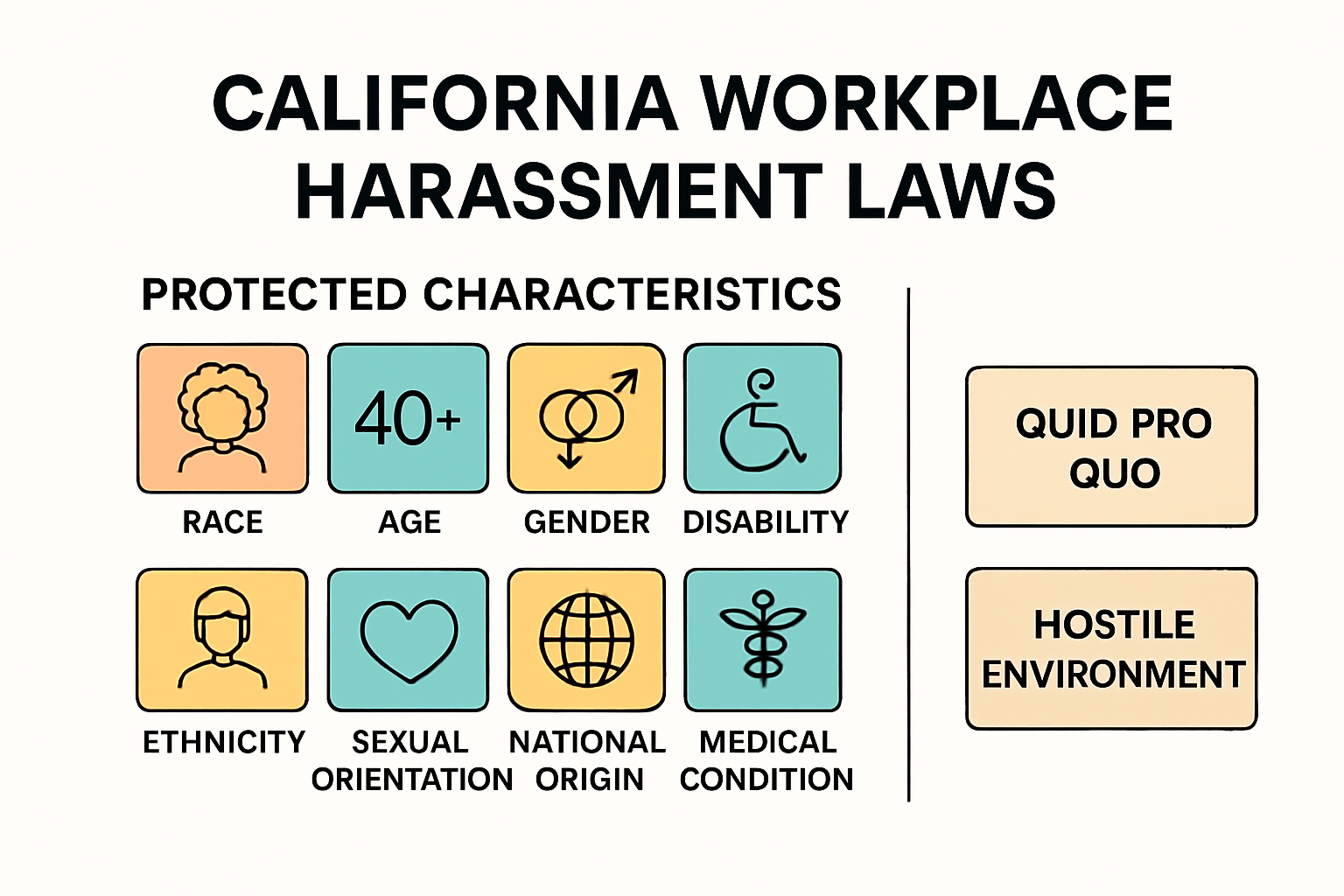
Category: California Labor Law

  • 5 Warning Signs You Need a California Employment Lawyer Now

    5 Warning Signs You Need a California Employment Lawyer Now

    The EEOC received 88,531 new discrimination charges in FY 2024, a 9.2% jump from the year before (EEOC, 2025). That record number tells you something: workplace violations in California aren’t slowing down, and most workers don’t realize they need legal help until it’s almost too late.

    Knowing when to call a California employment lawyer is just as important as knowing who to call. Miss a filing deadline or let evidence go stale and even the strongest case can collapse. This guide walks you through the five clearest warning signs that it’s time to talk to an attorney, the deadlines you can’t afford to miss, and what a free consultation actually looks like.

    Key Takeaways

    • The EEOC recovered a record $700 million for 21,000+ discrimination victims in FY 2024 (EEOC, 2025).
    • California gives you just 3 years to file a FEHA discrimination complaint with the Civil Rights Department.
    • Workers with legal representation receive an average wrongful termination settlement of $48,800 vs. $19,200 without a lawyer (Nolo).
    • Most California employment lawyers work on contingency (30-40%), meaning you pay nothing upfront.

    Listen to this article:

    Why Does an Employment Lawyer Matter for Your Case?

    The EEOC recovered nearly $700 million for over 21,000 workers in FY 2024 alone (EEOC, 2025). Those recoveries didn’t happen by accident. Employment lawyers specialize in workplace disputes, from unpaid wages to wrongful termination, and they know how to work with both state agencies like the California Civil Rights Department and the federal EEOC.

    Here’s something most people don’t realize: in California, you often can’t go straight to court. Many claims require you to first file with a state or federal agency, wait for a right-to-sue letter, and then file your lawsuit within a separate deadline. An employment lawyer manages that entire timeline so you don’t accidentally waive your rights. For a deeper look at what these attorneys handle day to day, see our guide on what an employment attorney does.

    Warning Sign 1: Have You Experienced Discrimination or Harassment at Work?

    Disability discrimination accounted for 43.2% of EEOC litigation suits filed in FY 2024, making it one of the most common bases alongside sex discrimination at 46.8% (EEOC Office of General Counsel Report, 2025). If you’ve been treated differently because of your race, gender, age, disability, religion, sexual orientation, or national origin, that’s not just unfair. It’s illegal under both California’s Fair Employment and Housing Act and federal civil rights law.

    What counts as discrimination in practice? It goes well beyond being called a slur. Watch for these patterns:

    • Denied promotions while less-qualified colleagues advance
    • Different disciplinary standards applied to you vs. coworkers outside your protected class
    • Hostile work environment where offensive conduct is severe or pervasive enough to interfere with your job
    • Retaliation after you complained to HR about discriminatory treatment

    So how do you know whether your situation crosses the legal line? If HR dismissed your complaint, or if the behavior continues after you reported it, that’s exactly when a lawyer’s assessment becomes essential. Most offer free initial consultations specifically to evaluate whether you have an actionable claim.

    EEOC FY 2024 Top Charge Categories horizontal bar chart showing Sex Discrimination 46.8%, Disability ADA 43.2%, Retaliation 38.7%, Harassment 35.1%, Accommodation Denied 33.6%
    EEOC FY 2024 charge categories. Sex discrimination and disability claims led all filings. Source: EEOC Annual Performance Report, 2024.

    Warning Sign 2: Were You Fired and Something Doesn’t Feel Right?

    The average wrongful termination settlement in California is roughly $48,800 with legal representation versus $19,200 without, according to a Martindale-Nolo reader survey (Nolo). California is an at-will employment state, meaning your employer can technically fire you for any lawful reason. But “at-will” doesn’t mean “anything goes.”

    Your termination may be illegal if it happened because:

    • You filed a wage claim or reported safety violations
    • You took protected leave under FMLA or the California Family Rights Act
    • You refused to participate in illegal activity
    • Your employer retaliated against you for a discrimination complaint
    • You were replaced by someone outside your protected class shortly after being terminated

    Discharge or constructive discharge was alleged in 72.1% of all EEOC charges in FY 2024, making it by far the most common issue workers raise (EEOC, 2025). If your firing felt sudden, suspiciously timed, or pretextual, don’t wait to get a legal opinion.

    In our experience, the workers who get the best outcomes are the ones who contact a lawyer within the first two weeks of being fired. Evidence is fresher, witness memories are intact, and you haven’t accidentally signed away rights in a severance agreement.

    Just Got Fired? Here’s Your Immediate Action Checklist

    California employee rights infographic covering termination checklist, illegal firing claims, and evidence log template

    The first 72 hours after being fired are the most important for protecting your legal rights. What you do right now, before you’ve even spoken to a lawyer, can make or break your case. Here’s exactly what to do:

    1. Document the Termination Meeting

    Stay calm and take mental notes. As soon as you leave, write down everything: who was in the room, what reasons they gave, their exact words if possible, and the time and date. Request copies of all personnel documents before you leave the building, including your personnel file, which you’re entitled to under California Labor Code section 1198.5.

    2. Verify Your Final Paycheck

    California law requires employers to pay all wages owed at the time of termination, not on the next regular payday. If you were fired, that final check should be immediate. If you quit with 72 hours notice, it’s due on your last day. Late payment triggers wait time penalties of up to 30 days of additional wages.

    3. Do Not Sign a Severance Agreement Without Legal Review

    This is where many workers lose their claims before they even start. Severance agreements almost always include a release of all legal claims against the employer. You aren’t required to sign on the spot. Take the document home. If you’re over 40, federal law (the Older Workers Benefit Protection Act) gives you 21 days to consider it. Get a lawyer to review it before signing anything.

    4. Build Your Evidence Log

    Start a personal log tracking every relevant incident. Use this simple format:

    Date/Time Incident/Action People Involved Evidence Type
    Example: 01/10, 2:00 PM Manager made discriminatory comment Supervisor, coworker witness Personal journal entry
    Example: 01/15, 9:00 AM Fired after reporting the comment HR representative Termination letter
    Example: 01/15, 5:00 PM Denied final paycheck Payroll department Bank statement, pay stub

    Save all evidence to a personal device or account, not your work computer or email. Forward relevant emails to your personal address before you lose access. Screenshots of text messages, photos of workplace postings, and copies of performance reviews all strengthen your case.

    In our experience, the employees who build a clear evidence log in those first few days give their attorneys the strongest foundation. Memories fade fast. A detailed, timestamped record written the same day it happened carries far more weight than a recollection six months later.

    Warning Sign 3: Is Your Employer Stealing Your Wages?

    California workers file roughly 30,000 wage theft claims each year seeking about $320 million in stolen pay, yet they recover only about $40 million, barely 12% of what they’re owed (CalMatters, 2025). That gap is exactly why legal representation matters for wage theft claims. If your paycheck doesn’t match the hours you worked, your employer may be violating California Labor Code sections 510 and 1194.

    Common wage theft patterns to watch for:

    • Unpaid overtime: California requires 1.5x pay after 8 hours in a day or 40 in a week, and 2x after 12 hours
    • Missed meal and rest breaks: Employers owe you one hour of premium pay for each violation
    • Misclassification: Being labeled an independent contractor or exempt employee when you shouldn’t be
    • Off-the-clock work: Required to answer emails, set up, or clean up without pay
    • Tip theft: Employers or managers taking a share of your tips

    Should you file on your own or hire a lawyer? For simple wage claims under a few thousand dollars, the DLSE complaint process works well enough. But if your employer owes you significant back wages, misclassified you, or the violation affected multiple employees, a lawyer can pursue a much larger recovery, sometimes as a class action. The California Labor Commissioner’s Bureau of Field Enforcement issued over 2,200 citations between January 2022 and November 2025, recovering $49.1 million in stolen wages and damages (CA DIR, 2025). Imagine what a dedicated attorney could recover for your specific case.

    Warning Sign 4: Did Your Employer Retaliate After You Spoke Up?

    Retaliation charges accounted for 38.7% of all EEOC filings in FY 2024, making it one of the top three charge categories for seventeen consecutive years (EEOC, 2025). California law explicitly protects employees who report violations, and Labor Code section 1102.5 is one of the strongest whistleblower statutes in the country.

    Retaliation doesn’t always look like getting fired. It can be subtle:

    • Reduced hours or a sudden shift change
    • Exclusion from meetings or projects
    • A negative performance review that contradicts prior positive feedback
    • Being transferred to a less desirable role or location
    • Increased micromanagement or scrutiny that didn’t exist before

    What makes retaliation cases particularly strong in California is the timing. If something negative happened within weeks or months of your complaint, that close timing creates a strong inference of retaliation that shifts the burden to your employer to prove a legitimate reason.

    Here’s what matters: you don’t have to prove your original complaint was correct to win a retaliation claim. Even if the discrimination you reported turns out not to be legally actionable, your employer still can’t punish you for raising the concern in good faith. That protection alone makes it worth talking to a lawyer if you’ve faced blowback after speaking up.

    Warning Sign 5: Are You Running Out of Time to File?

    California’s filing deadlines are strict, and missing one can permanently kill your claim, no matter how strong the evidence. The clock starts ticking the day the violation happens, not the day you realize it was illegal.

    California Employment Claim Deadlines timeline showing 180 days for Federal EEOC basic, 300 days for CA cross-file, 2 years for Wrongful Termination, 3 years for FEHA Discrimination, 4 years for Written Contract Breach
    California employment claim filing deadlines. The shortest deadline is 180 days for basic federal EEOC claims. Sources: CA Civil Rights Dept, EEOC, CA Labor Code.

    Here are the key deadlines every California worker should know:

    Claim Type Deadline Where to File
    FEHA discrimination/harassment 3 years CA Civil Rights Dept
    Wrongful termination (public policy) 2 years Superior Court
    Whistleblower retaliation 2 years Superior Court
    Federal EEOC claims 300 days (CA cross-file) EEOC
    Written contract breach 4 years Superior Court
    Wage claims 3 years (4 for written contract) DLSE

    Why does this matter right now? Because multiple deadlines may apply to your situation at the same time. A wrongful termination with a discrimination component means tracking both the 2-year tort deadline and the 3-year FEHA deadline, plus potential federal cross-filing within 300 days. An employment lawyer maps all of these out so nothing slips through.

    What Should You Expect During a Free Consultation?

    Most California employment lawyers offer free initial consultations, and the majority work on a contingency fee basis, meaning you pay nothing unless they win your case. Under California Business and Professions Code section 6147, contingency agreements must be in writing and the fee is negotiable (State Bar of California, 2025). Contingency fees typically range from 30% to 40% of your settlement or award.

    What actually happens in that first meeting? It’s more structured than most people expect:

    1. You describe the situation and the lawyer listens for legally actionable facts
    2. They identify which laws apply (FEHA, Labor Code, FLSA, Title VII, etc.)
    3. They assess the strength of your evidence and identify gaps
    4. They explain your options: file an agency complaint, negotiate directly, or litigate
    5. They outline the timeline, including deadlines and likely duration

    Bring everything you have. Emails, text messages, pay stubs, performance reviews, your employment contract, any written warnings, and a timeline of events. The more organized you are, the better the lawyer can evaluate your case in that first meeting.

    Lawyer and Client at Table reviewing a contract

    From what we’ve seen, the consultations that go best are the ones where the employee brings a simple one-page timeline: dates, what happened, who was involved. It helps the lawyer spot patterns immediately and gives you a straight answer faster.

    Once you’ve found a lawyer you’re comfortable with, the next step is making sure they’re the right fit for your specific case. We’ve put together a detailed guide on 7 expert tips for finding the right California employment lawyer that covers specialization, track records, fee structures, and what to look for in client reviews.

    Take Action Now: Protect Your Rights Before Deadlines Pass

    Every day you wait is a day closer to a filing deadline. Document everything right now: save emails to a personal account, photograph relevant documents, and write down dates and details while they’re fresh. Don’t discuss your potential claim with coworkers, and avoid signing anything from your employer, especially a severance agreement, without legal review.

    Here are your next steps:

    1. Write a timeline of the key events with dates and names
    2. Gather documents: pay stubs, emails, texts, reviews, contracts
    3. Check your deadlines using the table above
    4. Schedule a free consultation with a California employment lawyer
    5. Don’t sign anything from your employer until a lawyer reviews it

    The EEOC secured $700 million for workers in FY 2024, proving that legal action works. If any of the five warning signs above sound familiar, the next step is a phone call.

    Get a free employment law consultation by calling 1-866-355-9991 today.

    Frequently Asked Questions About Hiring a California Employment Lawyer

    How much does a California employment lawyer cost?

    Most California employment lawyers work on contingency, charging 30-40% of your settlement only if they win. That means zero upfront cost for you. Hourly rates, when applicable, typically range from $300 to $500+ per hour depending on experience and location (State Bar of California, 2025). Many firms offer free initial consultations to evaluate your case before any commitment.

    What types of cases do California employment lawyers handle?

    Employment lawyers handle discrimination, harassment, wrongful termination, wage theft, overtime disputes, retaliation, whistleblower claims, and contract breaches. In FY 2024, the EEOC processed 88,531 new charges with sex discrimination (46.8%), disability claims (43.2%), and retaliation (38.7%) leading all categories (EEOC, 2025).

    How long do I have to file an employment claim in California?

    It depends on the claim type. FEHA discrimination complaints must be filed within 3 years with the California Civil Rights Department. Wrongful termination claims have a 2-year deadline. Federal EEOC charges must be filed within 300 days in California. Wage claims generally have a 3-year statute of limitations under Labor Code section 338.

    What should I bring to my first consultation with an employment lawyer?

    Bring your employment contract, recent pay stubs, any written communications (emails, texts, HR complaints), performance reviews, termination letter or severance offer, and a written timeline of key events. The State Bar of California recommends asking about the attorney’s fee structure and experience with similar cases during this first meeting.

    Can I sue my employer while still employed?

    Yes, California law protects your right to file complaints and lawsuits while employed. Labor Code section 98.6 and section 1102.5 prohibit employers from retaliating against you for exercising legal rights. However, we’ve found that consulting a lawyer before filing helps you prepare for potential workplace tension and document any retaliatory behavior from the start.

    What’s the difference between a wage claim and a lawsuit?

    A wage claim is filed with the California Division of Labor Standards Enforcement (DLSE) and is handled through an administrative hearing. It’s simpler and doesn’t require a lawyer. A lawsuit is filed in court and typically involves larger amounts or more complex issues like misclassification affecting multiple workers. California workers file about 30,000 wage theft claims per year, but recover only 12.5% of what they seek through the administrative process (CalMatters, 2025), which is one reason many workers choose to hire an attorney for significant claims.

  • Understanding Paid Time Off Laws: What Employees Need to Know

    Understanding Paid Time Off Laws: What Employees Need to Know

    California Paid Time Off Laws

    Paid time off sounds simple enough, and most people assume it works the same everywhere. That could not be further from the truth. The United States is the only major advanced economy without a national paid leave policy, and the rules can shift wildly between states, cities, and even companies. California takes things a step further with mandatory paid sick leave and some of the strongest employee protections in the country. Knowing where you stand can mean the difference between being stuck at your desk and finally getting the break you deserve.

    What are Paid Time Off Laws?

    Paid time off (PTO) laws represent a complex framework governing how employees can take compensated leave from work for various personal and professional reasons. While many workers assume they have automatic rights to paid time off, the reality is far more nuanced. Learn more about employee rights in understanding these critical workplace regulations.

    In the United States, paid time off laws are not uniformly mandated at the federal level. According to research from the Brookings Institution, the country remains unique among advanced economies in lacking a comprehensive national paid leave policy. This means PTO policies can vary dramatically between states, industries, and individual employers.

    Key aspects of paid time off laws typically cover several critical areas:

    • Vacation Time: Employer discretion on accrual and usage
    • Sick Leave: Provisions for personal or family health needs
    • Personal Days: Allowances for individual circumstances
    • Parental Leave: Protections for new parents

    Types of Paid Time Off Protections

    While federal laws do not universally mandate paid leave, some states and local jurisdictions have enacted their own protective regulations. These laws can require employers to provide minimum paid leave standards, especially for full-time employees. Workers should understand their specific local regulations, as entitlements can differ significantly across regions.

    For California employees, state-specific labor laws often provide more robust protections compared to federal standards. This means workers in California might have additional rights and compensation not available in other states. Employers must adhere to these state-level requirements, which can include mandatory sick leave, family care leave, and other worker-friendly provisions.

    Understanding paid time off laws empowers employees to recognize their rights, negotiate effectively with employers, and ensure they receive appropriate compensation and workplace flexibility. While the legal landscape remains complex, staying informed is the first step toward protecting your professional interests.

    The Importance of Paid Time Off in the Workplace

    Paid time off (PTO) serves as a critical component of employee well-being, workplace satisfaction, and overall organizational productivity. Understanding workplace compensation strategies can help employees and employers recognize the broader implications of comprehensive leave policies.

    Employee Mental Health and Productivity

    Contrary to traditional workplace beliefs that constant work drives performance, research demonstrates that strategic time away from work significantly enhances employee productivity and mental well-being. According to a comprehensive study from the American Psychological Association, regular breaks and planned time away from work can dramatically reduce workplace stress and prevent professional burnout.

    Key benefits of paid time off include:

    • Psychological Recovery: Allowing mental restoration and reducing chronic stress
    • Creative Renewal: Providing space for innovative thinking and personal reflection
    • Work-Life Balance: Supporting holistic personal and professional development
    • Reduced Workplace Turnover: Demonstrating organizational commitment to employee wellness

    Organizational Performance and Strategic Advantages

    Beyond individual benefits, paid time off represents a strategic investment for organizations. Companies that implement robust PTO policies often experience higher employee engagement, improved morale, and increased overall productivity. Comprehensive leave policies signal an organization’s commitment to employee well-being, creating a positive workplace culture that attracts and retains top talent.

    For California employees, state labor laws provide additional protections that support meaningful time away from work. These regulations ensure workers can take necessary personal and family-related leave without risking their professional standing or economic stability.

    Ultimately, paid time off is not a luxury but a fundamental component of a healthy, dynamic workplace ecosystem. By recognizing its multifaceted importance, both employees and employers can create more sustainable, supportive, and productive work environments.

    How Paid Time Off Laws Differ in California

    California stands out with some of the most comprehensive and employee-friendly paid time off regulations in the United States. Learn more about worker compensation rules, which play a crucial role in understanding these distinctive protections.

    Mandatory Sick Leave Provisions

    Unlike many states, California has established robust mandatory sick leave laws that provide significant protections for workers. According to research from the California Department of Industrial Relations, the Healthy Workplaces, Healthy Families Act requires employers to provide paid sick leave to employees who work in California for 30 or more days within a year.

    Key features of California’s sick leave regulations include:

    Graph comparing California and federal paid sick leave laws

    • Minimum Accrual: At least 24 hours or 3 days of paid sick leave per year
    • Immediate Eligibility: Sick leave begins accruing from the first day of employment
    • Carryover Rights: Employees can carry over unused sick leave to the next year
    • Broad Use Provisions: Leave can be used for personal or family member health needs

    Unique Leave Protections Beyond Federal Standards

    California goes significantly further than federal regulations in protecting workers’ rights to time off. State laws provide additional protections that cover a wide range of personal and family circumstances. This includes expanded family care leave, pregnancy-related accommodations, and provisions for domestic violence victims seeking time off for legal proceedings or medical treatment.

    Additionally, California mandates more generous provisions for various types of leave compared to federal standards. The state requires employers to provide job-protected leave for specific personal and family situations, ensuring workers do not face professional repercussions when addressing critical personal needs.

    These distinctive protections reflect California’s commitment to creating a supportive and flexible workplace environment that prioritizes employee well-being.

    Below is a comparison table outlining how federal paid time off (PTO) and California PTO laws differ, summarizing their key features and protections for employees.

    Feature/Protection Federal PTO Laws California PTO Laws
    Mandatory Paid Sick Leave Not universally required Required for employees working 30+ days
    Minimum Sick Leave Accrual Not specified At least 24 hours or 3 days per year
    Eligibility Start Depends on employer policy Accrues from first day of employment
    Carryover of Unused Leave Employer discretion Carryover required within limits
    Family Care Leave Limited (FMLA, unpaid) Expanded, with job protection
    Job Protection During Leave Limited for paid leave Stronger protections under state law
    Broader Use Provisions Employer discretion Broad reasons allowed (personal/family)
    By establishing comprehensive paid time off laws, the state demonstrates a progressive approach to worker rights that extends far beyond minimal federal requirements.

    Paid time off laws encompass a complex set of regulations that govern how employees can take compensated leave from work. Understand more about workplace compensation rules to navigate these intricate legal frameworks effectively.

    Types of Paid Leave

    According to research from the U.S. Department of Labor, paid time off encompasses several distinct categories that provide workers with different types of protected leave. Understanding these categories is crucial for employees seeking to maximize their workplace benefits and legal protections.

    Key types of paid leave include:

    • Vacation Time: Discretionary time off for personal rest and recreation
    • Sick Leave: Time allocated for personal or family health-related needs
    • Family and Medical Leave: Extended time for significant personal or family health circumstances
    • Personal Days: Flexible time off for individual needs or emergencies
    • Parental Leave: Time dedicated to childbirth, adoption, or initial child care

    Accrual and Usage Regulations

    Paid time off regulations are not uniform across all workplaces and jurisdictions. Employers have significant discretion in designing their leave policies, though state and federal laws establish minimum standards. Accrual rates can vary based on factors such as:

    • Length of employment
    • Full-time or part-time status
    • Industry-specific regulations
    • Company size and internal policies

    Some organizations implement “use it or lose it” policies, while others allow employees to carry over unused leave or receive monetary compensation for unused time. The specific rules depend on state laws and individual employer guidelines.

    Understanding these key concepts empowers employees to make informed decisions about their workplace leave, ensuring they can effectively manage their professional and personal responsibilities while protecting their legal rights.

    The following table provides definitions of the main types of paid leave discussed in the article, helping clarify their unique purposes and attributes.

    Type of Paid Leave Description
    Vacation Time Discretionary time off for rest, recreation, or personal interests
    Sick Leave Time off to address personal or family health conditions and medical appointments
    Family and Medical Extended leave for significant personal or family health circumstances
    Personal Days Flexible time off for individual emergencies or personal matters
    Parental Leave Leave related to childbirth, adoption, or bonding with a new child

    Real-World Implications of Paid Time Off Laws for Employees

    Paid time off laws extend far beyond simple paperwork, directly impacting employees’ professional and personal lives in profound ways. Explore workplace compensation strategies to understand the deeper implications of these critical regulations.

    Professional Stability and Job Security

    According to research published in the American Journal of Community Psychology, access to paid time off significantly reduces the probability of job separation. Employees with comprehensive leave policies experience greater workplace stability, which translates into tangible benefits for both workers and employers.

    Key professional implications include:

    • Reduced Turnover: Lower likelihood of unexpected job changes
    • Increased Job Satisfaction: Greater sense of workplace support
    • Enhanced Mental Health: Opportunities for necessary breaks and recovery
    • Improved Work Performance: Better work-life balance leading to higher productivity

    Personal and Family Well-being

    Paid time off laws play a crucial role in supporting employees’ personal lives and family responsibilities. These regulations provide critical protection for workers facing significant life events, from health challenges to family care needs. Legal provisions ensure that employees can address personal circumstances without risking their professional standing.

    The implications extend beyond individual workers, creating broader societal benefits such as:

    • Supporting parents in providing childcare
    • Allowing workers to manage their personal health needs
    • Reducing financial stress during challenging life moments
    • Promoting a more humane and flexible work environment

    Ultimately, paid time off laws represent more than just administrative rules. They are fundamental mechanisms that balance professional demands with human needs, recognizing that employees are whole individuals with complex lives beyond their workplace responsibilities.

    paid time off family

    Protect Your Paid Time Off Rights in California

    Are you worried about whether your employer is following the law when it comes to paid time off? The challenges you face—confusing regulations, inconsistent PTO policies, and unclear accrual rules—can leave you feeling uncertain or even powerless. These things can be complicated it can be to understand. Your rights under paid time off laws, especially with California’s strict and unique requirements, can be convoluted. Getting clear answers is the first step to securing what you are owed.

    You do not have to figure this out alone. Visit California Labor Law to access easy-to-use wage calculators, in-depth labor law guides, and the latest updates on paid leave protections. Learn your employee rights so you can confidently deal with issues like missing pay for time off, denied sick leave, or PTO confusion. If you suspect your employer is violating your PTO rights, reach out at 1-866-355-9991 to schedule a free PTO law consultation. Take action now to safeguard your time, your paycheck, and your peace of mind.

    Frequently Asked Questions

    What are Paid Time Off (PTO) laws?

    Paid Time Off (PTO) laws govern the conditions under which employees can take compensated leave from work for various reasons, including vacation, sick leave, personal days, and parental leave. These laws can vary by state and employer.

    How do PTO laws differ between states?

    PTO laws can vary significantly between states, with some states, like California, having more robust provisions than federal regulations. Employers may be required to provide specific types of paid leave, and the minimum standards can differ by location.

    What types of leave are typically included under PTO laws?

    PTO laws typically include various types of leave such as vacation time, sick leave, personal days, family and medical leave, and parental leave. Each category serves different personal and family needs.

    How can employees ensure they understand their PTO rights?

    Employees should familiarize themselves with local PTO laws and their employer’s specific leave policies. Consulting state labor resources or seeking legal advice can help clarify individual rights and entitlements regarding paid leave.

  • How to Calculate Overtime Pay Effectively in California

    How to Calculate Overtime Pay Effectively in California

    Calculating Overtime Pay in California

    Many California workers end up shortchanged simply because they do not know how their overtime pay is really calculated.

    Most people assume it is just about staying late a few nights, but the details are loaded with hidden rules. California law kicks in as soon as you pass 8 hours in a day or 40 in a week and requires overtime pay at 1.5 times your regular rate and double time for some hours. Lots of employees miss out on major compensation by skipping small work tasks or forgetting prep time. The surprising part? Even just a few undocumented minutes can add up to hundreds in lost wages you never knew you earned.

    Step 1: Gather Your Work Hours and Pay Rate

    Calculating overtime pay in California starts with meticulous documentation of your work hours and understanding your precise pay rate. This foundational step is crucial for determining whether you are entitled to additional compensation beyond your standard wages.

    Begin by collecting comprehensive records of all hours worked during the pay period. This means tracking every minute of work time, including regular shifts, additional assignments, and any time spent performing job duties outside your standard schedule. Many workers overlook critical work hours such as pre-shift preparations, post-shift cleanup, or work completed remotely, which can significantly impact overtime calculations.

    For hourly employees, your pay rate is straightforward – it’s the base wage you earn per hour. Salaried workers have a slightly more complex calculation. According to the California Department of Industrial Relations, your regular rate is determined by dividing your total weekly salary by 40 hours. This becomes the baseline for computing overtime rates.

    Important documentation you’ll need includes:

    • Timesheets or digital time tracking records
    • Pay stubs showing your base hourly or salary rate
    • Employment contract specifying your wage structure
    • Any additional compensation like shift differentials or bonuses

    For maximum accuracy, cross-reference multiple sources of work hour documentation. Digital time tracking systems, manual timesheets, supervisor logs, and your personal work records can help ensure no billable hours are missed. California labor laws are precise, and even small discrepancies can impact your overtime compensation.

    Verify that you have captured all compensable work time. This includes travel between job sites, mandatory training sessions, and work performed outside standard shift hours. Learn more about your wage rights with our comprehensive worker’s guide.

    By meticulously gathering and documenting your work hours and pay rate, you create a solid foundation for calculating potential overtime earnings. The next step will involve understanding how California’s specific overtime regulations apply to your unique work situation.

    The following table summarizes the main tasks in the California overtime pay calculation process, including the goal of each step and the key tools or records needed. This overview helps you understand and prepare for each stage of the process.

    Step Main Objective Key Tools/Records Needed
    1. Gather Work Hours & Pay Rate Collect all compensable work hours and confirm base pay Timesheets, pay stubs, and employment contracts
    2. Identify Eligibility Determine if you qualify for overtime pay Job description, HR communications, employment contract
    3. Calculate Rates Compute your regular and overtime pay rates Pay stubs, wage statements, calculator
    4. Compute Overtime Hours Track qualifying overtime and double-time hours Daily work logs, clock-in/out records
    5. Calculate Overtime Pay Apply correct pay multipliers and sum total earnings Calculation worksheet, pay records
    6. Verify & Keep Records Confirm accuracy and preserve supporting documents Personal and employer records backups

    Step 2: Identify Your Overtime Eligibility Criteria

    Identifying your overtime eligibility is a critical step in understanding your potential compensation rights. Not all workers qualify for overtime pay, and California has specific rules that determine who can receive additional compensation for extended work hours.

    The first consideration is your employment classification. Nonexempt employees are eligible for overtime, while exempt employees typically do not receive overtime pay. Nonexempt status generally applies to hourly workers and some salaried employees who earn below a certain threshold. According to the California Department of Industrial Relations, workers classified as nonexempt must receive overtime compensation for hours worked beyond 8 in a day or 40 in a week.

    Some key exemption categories include executive, administrative, and professional employees who meet specific salary and job duty requirements. These typically include management positions, professionals with advanced degrees, and certain creative roles. However, job titles alone do not determine exemption – the actual job responsibilities and compensation structure are crucial factors.

    Important factors to evaluate your overtime eligibility include:

    • Your specific job duties and responsibilities
    • Your method of compensation (hourly vs. salary)
    • Your total compensation level
    • Your industry and specific job classification

    Certain industries have unique overtime rules. For instance, healthcare workers, agricultural employees, and workers in specific technical fields may have alternative overtime calculations. Some employees might be subject to alternative workweek schedules that modify standard overtime rules.

    To definitively determine your eligibility, review your employment contract, consult your human resources department, or seek guidance from a professional. Explore our comprehensive guide to understanding worker classifications for more detailed information about your specific situation.

    Carefully documenting your job responsibilities, reviewing your pay structure, and understanding California’s nuanced overtime regulations will help you accurately assess your eligibility. Remember that misclassification is common, and many workers may be entitled to overtime pay without realizing it. The next step involves calculating your specific overtime rates based on your determined eligibility status.

    Step 3: Calculate Your Regular and Overtime Rates

    Calculating your regular and overtime rates is a precise process that requires careful attention to detail. This step transforms your work hours into potential additional compensation, breaking down the complex mathematics of overtime pay in California.

    Hourly employees have a straightforward calculation. Your regular rate is your standard hourly wage. For overtime, California law mandates payment at one and one-half times your regular rate for hours worked beyond 8 in a day or 40 in a week. Double time applies for hours worked beyond 12 in a single day. According to the California Department of Industrial Relations, these calculations include all compensation, not just base hourly wages.

    For salaried workers, the process is more complex. Calculate your regular hourly rate by dividing your weekly salary by 40 hours. This becomes your baseline for overtime computations. If you work additional hours, you’ll receive one and one-half times this calculated rate for overtime hours.

    Key calculation components include:

    • Base hourly or weekly wage
    • All additional compensation (bonuses, commissions, shift differentials)
    • Total hours worked beyond standard work periods
    • Specific overtime multipliers (1.5x or 2x)

    Workers with variable compensation structures face additional challenges. Commission-based and piece-rate employees must calculate their regular rate by dividing total weekly earnings by total hours worked. This comprehensive approach ensures all forms of compensation are considered when determining overtime rates.

    Special considerations apply for unique work arrangements. Some industries have alternative workweek schedules that modify standard overtime calculations. Certain employees might have different overtime thresholds based on their specific job duties or industry regulations.

    Check out our detailed overtime calculation tool to verify your computations and ensure accuracy. Double-checking your math is crucial – even small errors can result in significant differences in your final compensation.

    Verify your calculations by confirming each component: base rate, total hours worked, applicable overtime multipliers, and any additional compensation. The goal is a precise, comprehensive breakdown of your potential overtime earnings that leaves no room for miscalculation.

    California overtime calculation step-by-step infographic with example figures

    Step 4: Compute Total Overtime Hours Worked

    Computing total overtime hours is a critical step that requires meticulous attention to detail and a comprehensive understanding of California’s unique overtime regulations. This process goes beyond simply counting hours worked, demanding a nuanced approach to tracking and categorizing your work time.

    Daily and weekly overtime thresholds are the cornerstone of accurate calculations. In California, overtime begins after 8 hours in a single workday or 40 hours in a workweek. Any hours worked beyond these points qualify for overtime compensation. This means tracking not just total hours, but specifically identifying which hours exceed the standard work periods.

    According to the California Department of Industrial Relations, overtime calculations involve distinguishing between different hour categories. You’ll need to separate standard hours from overtime hours, paying special attention to hours worked beyond 8 daily and 40 weekly, as well as hours worked on the seventh consecutive day of a workweek.

    Critical documentation for accurate overtime hour computation includes:

    • Detailed daily time logs
    • Precise work schedules
    • Clock-in and clock-out records
    • Supplemental documentation for off-site or remote work
    • Records of any additional compensable work activities

    Potential complications arise with irregular work schedules, split shifts, or multiple job assignments. Workers with variable hours must be especially diligent in documenting every minute worked. This includes time spent on job-related tasks outside traditional work hours, such as preparing equipment, completing paperwork, or responding to work communications.

    Explore our comprehensive guide to understanding complex overtime scenarios to navigate challenging tracking situations. Some employees might have alternative workweek schedules that modify standard overtime calculations, requiring even more precise documentation.

    Verification involves cross-referencing multiple sources: your personal time tracking, employer-provided records, and any supplemental documentation. Discrepancies of even a few minutes can significantly impact your total overtime compensation. Careful, consistent tracking is your most powerful tool in ensuring you receive fair compensation for all hours worked.

    Step 5: Calculate Total Overtime Pay

    Calculating total overtime pay represents the culmination of your previous documentation and computation efforts. This final step transforms your carefully tracked work hours into tangible additional compensation, applying California’s specific overtime regulations with precision.

    Overtime multipliers are the key to accurate calculations. For hours worked beyond 8 in a day or 40 in a week, you’ll receive one and one-half times your regular rate. Hours worked beyond 12 in a single day escalate to double time, providing maximum compensation for extended work periods. According to the California Department of Industrial Relations, these multipliers apply across various compensation structures, ensuring fair payment for nonexempt employees.

    The calculation process requires breaking down your overtime hours into different rate categories. Begin by separating hours worked at standard overtime (1.5x) from those qualifying for double time (2x). This granular approach ensures you capture every dollar of potential compensation. Multiply each hour category by its respective rate, then sum the total to determine your complete overtime earnings.

    Key considerations for comprehensive overtime pay calculation include:

    • Precise tracking of hours in each overtime category
    • Inclusion of all compensable earnings (base wage, commissions, bonuses)
    • Accurate application of 1.5x and 2x multipliers
    • Verification of total hours against work records
    • Consideration of seventh consecutive workday rules

    Workers with complex compensation structures face additional challenges. Commission-based and piece-rate employees must carefully integrate all earnings into their overtime calculations. This might involve converting piece rates or commissions into hourly equivalents to ensure accurate compensation.

    Explore our detailed overtime calculation resources to navigate complex scenarios. Some industries have unique overtime provisions that require specialized understanding.

    Verification is crucial. Cross-reference your calculations with employer records, review each computational step, and ensure all work hours are accounted for. Your meticulous approach protects your right to fair compensation and provides a clear record of your overtime earnings.

    Step 6: Verify Your Calculations and Keep Records

    Verifying your overtime calculations and maintaining comprehensive records is the final critical step in protecting your wage rights. This process transforms your computational work into a legal shield that safeguards your potential claims and ensures transparent wage documentation.

    Accurate record preservation is your strongest defense against potential wage disputes. Create multiple backup copies of all relevant documentation, including time sheets, pay stubs, work schedules, and detailed overtime calculations. Digital and physical copies provide redundancy, ensuring you have proof of your worked hours and computed overtime, even if one set of records becomes unavailable.

    According to the California Department of Industrial Relations, workers should retain records for at least three years. This timeframe allows sufficient opportunity to address any potential wage discrepancies or file claims if necessary. Your documentation should include precise details: exact work hours, shift start and end times, break periods, and a clear breakdown of standard and overtime hours.

    Key components of comprehensive overtime documentation include:

    • Original time cards or digital time tracking records
    • Pay stubs showing hourly rates and overtime calculations
    • Employment contracts specifying wage agreements
    • Contemporaneous personal work logs
    • Communication records about work assignments

    Cross-referencing is crucial for verification. Compare your personal calculations with employer-provided documentation, looking for any discrepancies. Subtle differences in hour tracking or rate application can significantly impact your total overtime compensation. Pay special attention to additional compensation like bonuses or commissions that might influence your regular rate of pay.

    Learn more about protecting your wage documentation rights to understand the nuances of record maintenance. Professional documentation can be instrumental if you need to pursue wage claims or resolve payment disputes.

    Final verification involves a methodical review. Confirm each calculation step, validate total hours against work records, and ensure all overtime categories are correctly applied. Your meticulous approach transforms overtime calculation from a complex process into a clear, defensible record of your earned compensation.

    To ensure you meet California’s standards for overtime pay, use this checklist to verify your documentation and calculations. Completing all criteria below helps protect your wage rights and supports potential claims.

    Verification Item Description Completed?
    Accurate Daily Records Detailed work hours for each day are tracked
    Overtime Hours Identified All daily/weekly overtime hours are noted
    Pay Rates Confirmed Regular and overtime rates calculated correctly
    Overtime Pay Calculated Multipliers (1.5x/2x) are properly applied
    Records Retained All documents kept for at least 3 years
    Cross-checked with Employer Personal and employer records compared
    Additional Compensation Included Bonuses/commissions factored into calculations

    verify overtime calculations

    Protect Your Overtime Pay Rights in California

    Still feeling uncertain about whether your overtime calculations are accurate? Many California workers struggle with confusing laws, mistakes in paychecks, and lack of clear documentation. The steps you learned in this article are designed to help you spot potential wage violations and avoid being shortchanged.

    Now is your chance to get real answers and safeguard every dollar you have earned. Use our free overtime calculation tool for immediate clarity, or explore our comprehensive worker’s guide to uncover your full labor rights. If you need personalized support or suspect wage theft, get a free overtime pay consultation today by calling 1-866-355-9991 to get in touch with our experienced team at California Labor Law. Take control of your pay before time runs out.

    Frequently Asked Questions

    How do I gather my work hours for overtime calculations in California?

    To gather your work hours, track every minute worked during the pay period, including regular hours, pre-shift preparations, and any off-the-clock tasks. Maintain comprehensive records such as timesheets, pay stubs, and employment contracts to ensure accuracy.

    What qualifies as overtime in California?

    In California, overtime pay kicks in after working more than 8 hours in a single day or 40 hours in a workweek for nonexempt employees. Any hours worked over these thresholds will be compensated at a rate of 1.5 times the regular hourly wage, with double time applicable for hours beyond 12 in a single day.

    How do I calculate my overtime pay rate if I am a salaried employee?

    To calculate your overtime pay rate as a salaried employee, divide your total weekly salary by 40 hours to determine your regular hourly rate. For overtime hours, you will receive 1.5 times this calculated rate.

    How long should I keep records of my work hours and pay?

    You should keep your work hour records and pay documentation for at least three years, as recommended by the California Department of Industrial Relations. This duration allows ample time to address any discrepancies in wage claims or to resolve payment disputes.

  • Understanding Overtime Exemptions in California

    Understanding Overtime Exemptions in California

    California’s overtime laws shape how millions of paychecks are calculated, yet most people outside HR departments have no idea what separates an exempt employee from a non-exempt one. It turns out that just having a job title like ‘manager’ or earning a salary does not guarantee overtime exemption. The real decision depends on a mix of salary, actual job duties, and even how much of the workday is spent on specific tasks. Surprised? The truth is that small missteps in these definitions can cost companies thousands in fines and land workers either big payouts or frustrating losses.

    Defining Overtime Exemptions and Employee Categories

    Overtime exemptions in California represent a complex legal landscape where specific employee classifications determine wage and compensation rights. According to the California Department of Industrial Relations, not all workers are entitled to overtime pay, creating nuanced categories that significantly impact employee compensation.

    Understanding Exempt vs Non-Exempt Status

    In California, employee classifications fundamentally divide workers into two primary categories: exempt and non-exempt employees. Non-exempt employees receive overtime compensation when working beyond standard hours, typically 8 hours per day or 40 hours per week. Exempt employees, however, are not entitled to overtime pay regardless of hours worked.

    Key Characteristics of Exempt Employees:

    • Must earn a monthly salary equivalent to at least twice the state minimum wage for full-time employment
    • Perform primarily intellectual, managerial, or creative work with significant independent judgment
    • Hold professional roles requiring advanced educational degrees or specialized training

    Professional Exemption Categories

    California recognizes several professional exemption categories that determine overtime status. These typically include:

    • Executive Exemption: Managers who spend more than 50% of their time supervising two or more employees and have genuine input into hiring and firing decisions
    • Administrative Exemption: Employees performing office or non-manual work directly related to business management or operations
    • Professional Exemption: Workers in learned or creative professions requiring advanced specialized knowledge

    Understanding these nuanced overtime exemption rules require

    Infographic showing executive, administrative, and professional overtime exemption categories

    s careful analysis of job duties, salary levels, and specific legal definitions. Employers must meticulously evaluate each position to ensure proper classification and compliance with California labor regulations.

    The following table outlines the main professional exemption categories recognized by California law, along with their qualifying criteria as discussed in the article:

    Exemption Category Typical Roles Key Criteria for Exemption
    Executive Managers, Directors Supervise 2+ employees, input on hiring/firing, 50%+ time managing
    Administrative Office Managers, Analysts Non-manual office work related to management or business ops
    Professional Doctors, Lawyers, Artists Advanced education or creative skill, specialized knowledge

    The Importance of Understanding Overtime Exemptions

    Understanding overtime exemptions is crucial for both employees and employers in California, as misclassification can lead to significant financial and legal consequences. The complexity of wage laws means that workers must be vigilant about their employment classification and compensation rights.

    Financial Implications of Misclassification

    Misclassifying employees as exempt can result in substantial financial penalties for employers. When workers are incorrectly denied overtime pay, they may be entitled to back wages, interest, and additional compensation. The California Labor Code provides robust protections for workers, allowing them to recover unpaid overtime wages for up to three years retroactively.

    Key Financial Risks for Employers:

    • Potential wage theft claims
    • Mandatory payment of back overtime wages
    • Substantial legal fees and court costs
    • Potential civil penalties and fines
    • Damage to company reputation

    Employees have critical legal protections under California law. The California Department of Industrial Relations provides clear guidelines about overtime exemptions, ensuring workers understand their rights. Employees who are incorrectly classified can file claims to recover unpaid wages, with the state providing robust mechanisms to protect workers from retaliation.

    Some workers might need additional guidance navigating these complex regulations. Understanding when to seek legal support can be crucial in protecting one’s employment rights and ensuring fair compensation.

    The stakes are high for both employers and employees.

    workers rights overtime california

    Accurate classification requires a detailed understanding of job duties, salary levels, and specific legal definitions. Employers must carefully evaluate each position to ensure compliance, while employees must be proactive in understanding their rights and potential overtime compensation.

    Key Factors Determining Overtime Exemptions

    Determining overtime exemptions in California involves a complex evaluation of multiple interconnected factors. Employers and employees must carefully assess specific criteria to establish whether a worker qualifies for exempt status, considering salary, job duties, and professional responsibilities.

    Salary Threshold Requirements

    The salary threshold represents a critical initial test for overtime exemption. In California, exempt employees must earn a monthly salary at least twice the state minimum wage for full-time employment. This means the salary must be sufficiently high to qualify for exemption, ensuring that lower-wage workers receive overtime protections.

    Key Salary Threshold Considerations:

    • Monthly salary must exceed twice the state minimum wage
    • Salary must be consistent and predetermined
    • Paid on a monthly basis, regardless of hours worked
    • Not subject to reduction based on work quality or quantity

    Duties and Responsibility Analysis

    Beyond salary, the specific job duties and level of professional responsibility play a crucial role in determining overtime exemption. California law requires exempt employees to spend more than 50% of their time performing intellectual, managerial, or creative work that involves significant independent judgment.

    Employers must conduct a detailed analysis of an employee’s actual job functions, not just their job title. California overtime rules provide nuanced guidelines for evaluating these complex classifications.

    According to the California Department of Industrial Relations, different professional categories have unique criteria. Executive exemptions require management responsibilities, administrative exemptions involve specialized office work, and professional exemptions demand advanced specialized knowledge or creative skills.

    The intricate nature of these classifications means that employers must carefully document and evaluate each position to ensure proper compliance with California labor regulations.

    Common Misconceptions About Overtime Exemptions

    Overtime exemption laws in California are complex, and numerous misconceptions can lead workers and employers astray. Understanding these myths is crucial for protecting employee rights and ensuring proper workplace compensation.

    Job Title Does Not Equal Exemption

    One of the most prevalent misconceptions is that a job title automatically determines overtime exemption status. Simply having a professional-sounding title like “manager” or “director” does not guarantee exempt status. The California Department of Industrial Relations emphasizes that job duties, salary levels, and specific responsibilities are the true determinants of exemption.

    Critical Misunderstandings About Job Titles:

    • A manager’s title does not automatically mean overtime exemption
    • Job descriptions must involve genuine management responsibilities
    • Salary must meet specific state thresholds
    • Actual job duties matter more than official titles

    Salary Alone Does Not Guarantee Exemption

    Another common myth is that being paid a salary automatically disqualifies an employee from overtime compensation. While salary is a factor, it is not the sole criteria. Workers must meet both salary threshold and duties tests to be considered truly exempt.

    California overtime rules provide nuanced guidelines that go beyond simple salary considerations. According to the California Department of Industrial Relations, exempt employees must spend more than 50% of their time performing intellectual, managerial, or creative work that involves significant independent judgment.

    Independent Contractors Are Not Automatically Exempt

    Many workers mistakenly believe that being classified as an independent contractor means they are exempt from overtime regulations. This is fundamentally incorrect. Independent contractor status does not inherently determine overtime eligibility, and misclassification can result in significant legal consequences for employers.

    Workers facing uncertainty about their classification should carefully review their job responsibilities, compensation structure, and level of workplace autonomy to understand their true employment status and potential overtime rights.

    Below is a summary table highlighting common misconceptions about overtime exemptions versus the realities, helping readers avoid frequent mistakes in classification:

    Misconception Reality
    Job title alone determines exemption Actual duties and salary must meet exemption criteria
    Salary alone means exempt status Must meet both salary threshold and duties test
    Independent contractors are always exempt Contractor status does not automatically determine overtime rights
    All salaried employees are exempt Some salaried employees are still non-exempt under state law

    The Impact of Overtime Exemptions on Workers’ Rights

    Overtime exemptions significantly shape the employment landscape, creating complex dynamics that directly influence worker compensation, workplace autonomy, and economic opportunities. These legal classifications can profoundly impact an employee’s financial security and professional development.

    Economic Consequences of Exemption Status

    Overtime exemptions create substantial economic disparities between workers classified as exempt and non-exempt. Exempt employees often lose their right to additional compensation for extra hours worked, effectively subsidizing their employer’s labor costs through unpaid time.

    Key Economic Implications:

    • Potential reduction in effective hourly wage rates
    • Increased risk of workplace exploitation
    • Limited financial compensation for extended work hours
    • Potential suppression of total earning potential

    Professional Autonomy and Workplace Dynamics

    Contrary to popular belief, overtime exemptions do not always correlate with increased professional status. Many exempt employees experience higher work expectations without corresponding financial recognition. The presumed trade-off of professional responsibility for potential career advancement can often result in uncompensated labor.

    California overtime rules provide critical insights into these complex employment classifications. According to the California Department of Industrial Relations, exemption status fundamentally alters an employee’s legal rights and compensation structure.

    Overtime exemptions create nuanced legal landscapes where workers may have reduced protections. Employees classified as exempt surrender specific legal rights, including guaranteed overtime compensation and certain workplace protections. This classification can potentially expose workers to extended work hours without additional financial compensation.

    Workers must carefully evaluate their employment classification, understanding that exemption status represents a significant legal and financial determination with long-term professional implications.

    Are You Sure You Are Properly Classified Under California Overtime Laws?

    Understanding if you are correctly classified as exempt or non-exempt under California overtime law can be overwhelming. A single mistake by your employer can mean years of unpaid wages and missed compensation. Don’t let myths about occupational titles or salary thresholds keep you from the earnings you deserve. If you suspect you may have been misclassified or have questions about your actual job duties and compensation, immediate action can protect your finances.

    Thousands of employees rely on California Labor Law for trusted answers and resources. Visit our California overtime rules resource to clarify how exemptions really work or contact our team for fast, confidential help.

    Take the first step now to secure your unpaid overtime and preserve your rights. Call 1-866-355-9991 today and empower yourself with a free overtime dispute consultation.

    Frequently Asked Questions

    What are the differences between exempt and non-exempt employees in California?

    Exempt employees are not entitled to overtime pay regardless of the hours they work, while non-exempt employees receive overtime compensation for hours worked beyond 8 hours per day or 40 hours per week. Exempt employees typically earn a salary above a specific threshold and perform specific job duties that meet legal requirements.

    To help clarify the main differences between exempt and non-exempt employees as discussed in the guide, the following comparison table summarizes their key characteristics in California:

    Category Exempt Employees Non-Exempt Employees
    Overtime Eligibility Not entitled to overtime pay Receive overtime pay over 8/day or 40/week
    Salary Requirement Must earn at least twice state minimum wage Can earn any wage level
    Job Duties Managerial, intellectual, or creative work Can perform any type of work
    Independent Judgment Significant independent judgment required Not required
    Legal Protections Certain protections may be limited Robust wage and hour protections
    Common Professions Executives, administrators, professionals Most hourly and some salaried workers

    How is the salary threshold for exempt employees determined in California?

    In California, exempt employees must earn a monthly salary that is at least twice the state minimum wage for full-time employment. This ensures that lower-wage workers still qualify for overtime protections, reflecting the importance of fair compensation.

    What job duties determine whether an employee is exempt or non-exempt?

    To qualify as exempt, employees must spend more than 50% of their time performing work that is intellectual, managerial, or creative and involves significant independent judgment. Specific categories, such as executive or administrative exemptions, require distinct job responsibilities.

    What are the legal protections for employees classified as non-exempt in California?

    Non-exempt employees are protected under California labor laws, which ensure they are entitled to overtime pay and other wage protections. If misclassified, workers can file claims to recover unpaid overtime wages and are protected from retaliation for asserting their rights.

  • What is an Employment Attorney? Understanding Their Role

    What is an Employment Attorney? Understanding Their Role

    What is an Employment Attorney?

    Employment disputes can get messy fast. Every year, over 45,000 workplace discrimination charges are filed in the US. Most think you need to be in a major lawsuit for an employment attorney to matter. Actually, these legal experts often change the whole outcome before a case ever hits the courtroom.

    Defining Employment Attorneys: What Do They Do?

    An employment attorney serves as a specialized legal professional dedicated to navigating the complex landscape of workplace rights, regulations, and disputes. These legal experts focus exclusively on addressing the intricate legal challenges that emerge between employers and employees, providing critical guidance and representation across multiple dimensions of labor law.

    Core Responsibilities of Employment Attorneys

    Employment attorneys handle a broad spectrum of workplace legal issues, representing both employees and employers in various scenarios. Their primary responsibilities include:

    Infographic comparing employee rights and employer obligations

    • Interpreting and applying federal and state labor laws
    • Providing legal counsel on workplace discrimination cases
    • Defending employees against wrongful termination
    • Negotiating employment contracts and severance agreements
    • Advising on workplace harassment and retaliation claims

    These legal professionals play a crucial role in ensuring fair treatment and protecting the rights of workers across different industries. According to the Executive Office for Immigration Review, employment attorneys provide strategic advice on complex labor law cases, developing comprehensive legal strategies that address systemic workplace challenges.

    Types of Cases Employment Attorneys Handle

    Employment attorneys work on diverse legal matters that span multiple areas of workplace interaction. Their expertise covers scenarios like:

    • Wage and hour disputes involving unpaid overtime
    • Sexual harassment and workplace discrimination claims
    • Breach of employment contract violations
    • Workers’ compensation disputes
    • Workplace safety regulation enforcement

    By understanding the nuanced world of employment law, these attorneys serve as critical advocates who bridge the gap between legal frameworks and real-world workplace interactions. They ensure that both employers and employees understand their rig

    To help you understand the types of cases employment attorneys commonly handle, the table below categorizes the different legal matters and provides brief descriptions of each.

    Type of Case Description
    Wage and Hour Disputes Issues involving unpaid overtime, minimum wage violations, or illegal wage deductions.
    Discrimination Claims Allegations of unfair treatment based on race, gender, age, disability, or other protected status.
    Workplace Harassment Cases addressing inappropriate conduct, including sexual harassment and hostile work environments.
    Breach of Contract Legal disputes involving violations of employment or severance contracts.
    Wrongful Termination Defending employees who believe they were fired for unlawful reasons.
    Workers’ Compensation Disputes Representation related to claims for workplace injuries or illnesses.
    Workplace Safety Enforcement Legal action involving the enforcement of safety regulations in the workplace.

    Whether representing an individual employee facing workplace discrimination or advising a company on regulatory compliance, employment attorneys provide essential legal expertise that protects workers’ rights and maintains professional workplace standards.

    The Importance of Employment Attorneys in Protecting Workers’ Rights

    Employment attorneys serve as critical guardians of workplace justice, providing essential legal protection for workers facing complex employment challenges. Their role extends far beyond simple legal representation, functioning as strategic advocates who defend fundamental workplace rights and ensure fair treatment across diverse professional environments.

    Safeguarding Workers Against Systemic Discrimination

    Employment attorneys play a pivotal role in combating workplace discrimination, addressing fundamental violations of employee rights. According to the U.S. Department of Labor, legal professionals are instrumental in enforcing critical protections that prevent unfair treatment based on protected characteristics.

    Their comprehensive approach to defending workers includes:

    • Investigating discriminatory practices
    • Documenting evidence of workplace bias
    • Filing formal complaints with regulatory agencies
    • Negotiating settlements
    • Representing clients in court proceedings

    Employment attorneys utilize sophisticated legal strategies to address complex workplace issues. Exploring comprehensive worker protection resources reveals the multifaceted approaches these legal professionals employ to secure justice for employees.

    These strategies often involve:

    • Analyzing employment contracts
    • Identifying potential legal violations
    • Developing targeted litigation strategies
    • Providing expert guidance on employee rights
    • Challenging systemic workplace inequities

    By offering specialized legal expertise, employment attorneys transform abstract legal principles into concrete protections for workers. They bridge the gap between complex labor regulations and real-world workplace experiences, ensuring that employees have robust mechanisms to address potential rights violations and seek meaningful remedies.

    Ultimately, employment attorneys do more than resolve individual disputes. They contribute to broader systemic changes that promote fairness, accountability, and respect within professional environments, making them essential defenders of workplace dignity and legal rights.

    Understanding Common Employment Law Issues Addressed by Attorneys

    Employment law encompasses a complex web of legal challenges that require specialized knowledge and strategic intervention. Employment attorneys are uniquely positioned to navigate these intricate workplace legal landscapes, addressing a wide range of critical issues that impact workers’ professional lives and fundamental rights.

    Discrimination and Harassment Cases

    One of the most significant areas of employment law involves addressing workplace discrimination and harassment. According to Georgetown Law, employment attorneys focus on cases involving discrimination based on protected characteristics such as:

    • Race and ethnicity
    • Gender and sexual orientation
    • Age
    • Disability status
    • Religious beliefs
    • National origin

    These legal professionals work diligently to ensure that employees are protected from unfair treatment and have meaningful recourse when their rights are violated. They investigate claims, gather evidence, and develop comprehensive legal strategies to combat systemic workplace discrimination.

    Wage and Hour Disputes

    Wage and hour disputes represent another critical area where employment attorneys provide essential legal support. Learn more about recent employment law developments to understand the complexities of these legal challenges. Employment attorneys address issues such as:

    • Unpaid overtime compensation
    • Minimum wage violations
    • Employee misclassification
    • Illegal wage deductions
    • Meal and rest break violations

    Employment attorneys serve as crucial advocates who translate complex legal statutes into actionable protections for workers. They help employees understand their rights, negotiate fair settlements, and pursue legal action when employers fail to comply with established labor regulations.

    Beyond individual case resolution, these legal professionals play a broader role in promoting workplace fairness. By challenging unlawful practices and holding employers accountable, employment attorneys contribute to creating more equitable and respectful professional environments. Their work ensures that legal principles of workplace justice are not just theoretical concepts but practical realities for workers across various industries.

    For a clear overview of common employment law issues addressed by attorneys, the following table summarizes key issue areas and examples of situations employees may face.

    Issue Area Example Situations
    Discrimination Unfair treatment based on race, gender, age, religion, or disability.
    Harassment Sexual harassment, bullying, or creation of a hostile environment.
    Wage and Hour Violations Unpaid overtime, minimum wage issues, meal and rest break disputes.
    Employee Misclassification Incorrectly labeling workers as independent contractors.
    Breach of Employment Contract Employer not honoring contract terms or severance agreements.
    Retaliation Penalization for reporting illegal conduct or asserting rights.

    employment attorney team meeting

    How Employment Attorneys Navigate California Labor Laws

    California labor laws represent one of the most complex and employee-protective legal frameworks in the United States. Employment attorneys specializing in California law must possess an intricate understanding of state-specific regulations that often exceed federal employment protections, requiring sophisticated legal expertise and strategic approach.

    Employment attorneys must navigate a multilayered legal environment that combines federal regulations with robust state-level protections. According to the California Civil Rights Department, attorneys must comprehensively understand laws governing:

    • Employee classification
    • Workplace discrimination protections
    • Minimum wage requirements
    • Overtime compensation rules
    • Family and medical leave regulations
    • Sexual harassment prevention standards

    These legal professionals develop deep expertise in California’s nuanced labor code, which frequently provides more comprehensive worker protections than federal statutes. Their role involves interpreting these complex regulations and translating them into actionable strategies for employees and employers alike.

    Discover expert insights into California employment law that highlight the intricate approach employment attorneys take in addressing workplace legal challenges. Their strategic navigation involves:

    • Conducting comprehensive legal research
    • Analyzing specific workplace scenarios
    • Identifying potential regulatory violations
    • Developing proactive compliance strategies
    • Representing clients in administrative hearings

    Employment attorneys serve as critical interpreters of California’s dynamic labor law landscape. They understand that legal compliance is not a static concept but a continuously evolving framework requiring constant vigilance and adaptive strategies.

    By combining deep legal knowledge with practical insights, these attorneys help organizations and individuals understand their rights and obligations. Their expertise ensures that workplace interactions remain fair, legally compliant, and respectful of both employee protections and employer responsibilities within California’s unique legal environment.

    Real-World Impacts: The Role of Employment Attorneys in Employee Advocacy

    Employment attorneys serve as powerful advocates who transform legal principles into tangible protections for workers, bridging the gap between theoretical rights and practical workplace justice. Their work extends far beyond courtroom representation, creating meaningful change in professional environments where individual employees might otherwise feel powerless.

    Confronting Systemic Workplace Inequities

    Employment attorneys play a critical role in challenging systemic workplace inequities by addressing complex legal challenges that individual workers cannot easily navigate alone. According to the U.S. Department of Justice Civil Rights Division, these legal professionals are instrumental in exposing and challenging discriminatory practices across various industries.

    Their advocacy involves:

    • Identifying patterns of systematic discrimination
    • Gathering comprehensive evidence
    • Representing vulnerable worker populations
    • Pursuing class action lawsuits
    • Negotiating systemic workplace reforms

    By taking on cases that highlight broader institutional problems, employment attorneys create precedents that protect not just individual clients but entire workforce communities.

    Learn more about navigating complex workplace legal challenges to understand the transformative power of legal advocacy. Employment attorneys empower workers by:

    • Providing free initial consultations
    • Explaining complex legal rights
    • Offering strategic legal guidance
    • Representing workers without upfront costs
    • Challenging power imbalances between employers and employees

    These legal professionals recognize that many workers lack the resources or knowledge to challenge workplace violations independently. By offering accessible legal support, they level the playing field and ensure that workers have meaningful mechanisms to defend their professional rights.

    Employment attorneys are more than legal representatives. They are catalysts for workplace cultural change, using legal expertise to challenge unfair practices, promote equitable treatment, and create environments where workers can thrive with dignity and respect.

    Are you facing tough questions about discrimination, wrongful termination, or wage disputes? In our article, you learned just how complex California employment law can be and why expert advocacy is crucial to protect your rights. If you feel overwhelmed by wage theft, harassment, or confusing legal terms, you do not have to face these challenges alone. Our platform, California Labor Law, is built specifically to help California workers like you fight back against unfair treatment.

    Explore our free legal guides and wage calculators made for California employees, and get answers that protect your job and your future. Visit California Labor Law today for immediate access to legal resources and personal advocacy. Do not wait, take action now with a free California workplace rights consultation by calling 1-866-355-9991 to secure the justice and dignity you deserve in your workplace.

    Frequently Asked Questions

    What does an employment attorney do?

    Employment attorneys specialize in workplace rights and legal disputes, providing guidance and representation to both employees and employers on issues like discrimination, wrongful termination, and wage disputes.

    When should I hire an employment attorney?

    You should consider hiring an employment attorney when facing issues such as discrimination, harassment, wrongful termination, or when you need legal advice regarding an employment contract or workplace rights.

    How can employment attorneys help with discrimination cases?

    Employment attorneys assist with discrimination cases by investigating claims, gathering evidence, filing complaints with regulatory agencies, negotiating settlements, and representing clients in court to ensure their rights are protected.

    Common issues employment attorneys handle?

    Common issues include wage and hour disputes, workplace discrimination and harassment claims, breach of employment contracts, and workers’ compensation disputes.

  • Overtime Calculation California: Know Your Wage Rights

    Overtime Calculation California: Know Your Wage Rights

    Overtime Calculation in California

    California’s overtime pay laws offer more worker protection than almost anywhere else in the country. Some employees can earn double pay for hours worked beyond 12 in a day or after 8 hours on the seventh workday in a row. Most people think it’s just about tracking 40 hours each week and calling it a day. The real surprise is California calculates overtime every single day, not just by the week, which means you could be owed much more than you realize.

    Understanding Overtime Laws in California

    California’s overtime laws are among the most comprehensive and worker-friendly in the United States, providing robust protections for employees across various industries. These regulations go far beyond federal standards, ensuring workers receive fair compensation for their additional hours and effort.

    Daily and Weekly Overtime Calculations

    Understanding overtime calculation in California requires knowing the unique daily and weekly overtime rules. Unlike many states that only calculate overtime based on weekly hours, California mandates overtime pay for specific daily work scenarios. Learn more about detailed overtime regulations.

    According to the California Department of Industrial Relations, nonexempt employees are entitled to overtime compensation under two primary scenarios:

    Here’s a summary table outlining the main overtime pay rules in California, helping you quickly compare daily, weekly, and double time overtime scenarios.

    Overtime Scenario When It Applies Pay Rate
    Daily Overtime Hours worked beyond 8 in a single workday 1.5 times regular rate
    Weekly Overtime Hours worked over 40 in a workweek 1.5 times regular rate
    Double Time Hours worked beyond 12 in a day OR 8+ hours on the 7th consecutive day 2 times regular rate
    • Daily Overtime: Employees receive one and one-half times their regular pay rate for hours worked beyond 8 in a single workday.
    • Weekly Overtime: One and one-half times regular pay for hours worked over 40 in a workweek.

    Additionally, California law mandates double time for specific work conditions. Employees earn double their standard rate for:

    • Hours worked beyond 12 in a single workday
    • Hours worked beyond 8 on the seventh consecutive workday

    Complex Overtime Scenarios and Worker Protections

    California’s overtime laws recognize the complexity of modern work environments. The U.S. Department of Labor highlights that California’s regulations provide more extensive protections compared to federal standards. This means workers have additional safeguards against potential wage theft and unfair compensation practices.

    Key considerations for overtime calculations include:

    • Different rules apply for different industries and job classifications
    • Overtime rates can vary based on an employee’s regular hourly rate
    • Some employees might be exempt from overtime regulations based on their job duties and salary level

    Workers facing challenges with overtime calculations or suspected wage violations should understand their rights. Find expert guidance on seeking legal support if you believe your employer is not correctly compensating you for overtime work.

    Navigating overtime laws can be complex, but knowing your rights is the first step in ensuring fair compensation. Always document your work hours, understand your employment classification, and don’t hesitate to seek clarification or legal advice when necessary.

    Step-by-Step Overtime Calculation Process

    Calculating overtime in California requires a systematic approach that goes beyond simple hourly multiplication. Workers and employers must understand the nuanced process of determining accurate overtime compensation based on specific legal guidelines.

    Determining Your Regular Rate of Pay

    The foundation of overtime calculation starts with establishing your correct regular rate of pay. According to the California Department of Industrial Relations, this involves more than just your base hourly wage. Your regular rate includes all compensation received, such as hourly earnings, non-discretionary bonuses, commissions, and piece-rate earnings.

    Calculation steps for regular rate include:

    Below is a step-by-step process table to help you calculate your regular rate of pay for accurate overtime calculations in California.

    Step Action Description
    1 Add all compensation earned during the workweek Include base hourly wage, non-discretionary bonuses, commissions, and piece-rate earnings
    2 Determine total hours worked Sum all hours worked in the workweek
    3 Divide total compensation by total hours worked This gives your regular rate of pay
    4 Use this rate to calculate applicable overtime pay Apply 1.5x or 2x as per overtime rule
    • Add all compensation earned during the workweek
    • Divide total compensation by total hours worked
    • This resulting figure becomes your base rate for overtime calculations

    Explore detailed overtime regulations to understand how different compensation types impact your overtime rate.

    Calculating Overtime Rates and Hours

    California law mandates specific overtime calculation methods. The California Code of Regulations outlines two primary overtime scenarios:

    California daily and weekly overtime infographic

    • Daily Overtime: 1.5 times regular rate for hours worked beyond 8 in a single workday
    • Weekly Overtime: 1.5 times regular rate for hours worked over 40 in a workweek
    • Double Time: 2 times regular rate for hours worked beyond 12 in a day or after 8 hours on the seventh consecutive workday

    Documenting and Verifying Overtime Calculations

    Accurate documentation is crucial in overtime calculations. The California Department of Human Resources recommends maintaining detailed records of:

    • Total hours worked each day
    • Specific hours worked beyond standard 8-hour shifts
    • Precise calculation of overtime rates
    • Documentation of all compensation components

    Workers facing complex overtime scenarios or suspecting miscalculations should consult with an overtime legal expert to ensure proper compensation.

    Remember, overtime calculations can be intricate. Always verify your calculations, keep thorough records, and don’t hesitate to seek professional guidance if you’re unsure about your overtime compensation.

    Common Wage Theft Issues and Solutions

    Wage theft remains a persistent problem for California workers, with numerous tactics employers use to underpay or illegally withhold compensation. Understanding these issues is crucial for protecting your hard-earned money and workplace rights.

    Identifying Wage Theft Tactics

    Employers often engage in sophisticated methods of wage theft that can be challenging to detect. Learn about protecting yourself from employer wage violations to recognize these common problematic practices:

    Here’s a checklist table listing common wage theft tactics in California workplaces, so you can identify and monitor potential violations.

    Wage Theft Tactic Description Have You Experienced This?
    Unpaid Overtime Not paying overtime for hours worked beyond standard shifts
    Misclassification Labeling employees as independent contractors wrongfully
    Meal and Rest Break Violations Denying or limiting mandated meal and rest breaks
    Off-the-Clock Work Requiring work before/after official working hours
    Minimum Wage Violations Paying below the state-required minimum wage
    • Unpaid Overtime: Refusing to compensate employees for hours worked beyond standard shifts
    • Misclassification: Incorrectly labeling employees as independent contractors to avoid paying overtime
    • Meal and Rest Break Violations: Denying mandated breaks or preventing employees from taking full break periods
    • Off-the-Clock Work: Requiring employees to work before clocking in or after clocking out
    • Minimum Wage Violations: Paying less than the legally required minimum wage

    According to the California Department of Industrial Relations, workers have specific legal protections against these unethical practices. Employers who engage in these tactics can face significant penalties and legal consequences.

    Filing Wage Theft Claims

    California provides robust mechanisms for workers to address wage theft. Victims of wage theft have multiple options for seeking justice, including:

    1. Filing a wage claim with the Labor Commissioner’s Office
    2. Pursuing legal action through civil lawsuits
    3. Reporting violations to state labor enforcement agencies

    The California Labor Commissioner’s Office has committed significant resources to combating wage theft, allocating $8.55 million to public prosecutors specifically for enforcing labor laws and protecting worker rights.

    Protecting Yourself from Wage Theft

    Prevention is the best defense against wage theft. Key strategies include:

    • Maintaining detailed records of all hours worked
    • Understanding your employment classification
    • Reviewing pay stubs carefully for discrepancies
    • Knowing your rights under California labor laws
    • Consulting with employment law experts if you suspect violations

    Workers should never feel intimidated about asserting their rights. Wage theft is a serious violation that can result in substantial financial penalties for employers. If you believe you’ve been a victim of wage theft, document everything and seek professional guidance.

    wage theft california

    Remember, California’s labor laws are designed to protect workers. Don’t let employers take advantage of your hard work and dedication. Stay informed, be vigilant, and don’t hesitate to take action if you suspect wage theft is occurring.

    Navigating overtime and wage disputes requires a comprehensive understanding of the legal resources available to California workers. Knowing where to find help and how to protect your rights can make a significant difference in resolving workplace compensation challenges.

    California provides multiple official channels for workers seeking legal assistance and information about their wage rights. The California Department of Industrial Relations offers extensive resources, including detailed guides on overtime laws and mechanisms for filing wage claims.

    Key government resources include:

    • Labor Commissioner’s Office wage claim procedures
    • Online complaint filing systems
    • Free consultations about labor law violations
    • Comprehensive guides explaining worker rights

    The California Labor Code Section 510 provides the legal framework for overtime regulations, serving as a critical reference for understanding your workplace compensation rights.

    When government resources aren’t sufficient, professional legal representation becomes crucial. Discover expert tips for selecting the right employment lawyer to ensure you have effective advocacy for your wage dispute.

    Consider these factors when seeking legal help:

    • Specialization in California labor law
    • Experience with overtime and wage theft cases
    • Track record of successful worker representation
    • Willingness to provide initial consultations
    • Understanding of complex wage calculation scenarios

    Filing Wage Claims and Seeking Justice

    Workers have multiple pathways to address wage violations. Learn about the process of filing wage theft claims to understand your options for seeking compensation.

    Potential legal actions include:

    • Administrative wage claims through state agencies
    • Civil lawsuits for unpaid wages
    • Collective actions representing groups of workers
    • Complaints to the Labor Commissioner’s Office

    Remember that time is often critical in wage dispute cases. Statutes of limitations can restrict your ability to recover unpaid wages, so prompt action is essential. Document all work hours, collect pay stubs, and be prepared to provide detailed information about your employment and compensation history.

    Workers should never feel intimidated about asserting their rights. California’s robust labor laws are designed to protect employees from unfair compensation practices. Whether you’re dealing with overtime calculation errors, misclassification, or outright wage theft, legal resources are available to support you.

    Stay informed, be proactive, and don’t hesitate to seek help when you believe your workplace compensation rights have been violated.

    Struggling With Overtime Pay or Wage Theft in California?

    If you have ever wondered whether your overtime pay was calculated fairly, or felt uneasy seeing unexplained errors on your paycheck, you are not alone. Many workers in California grapple with complicated overtime laws and hidden wage theft tactics. This article breaks down the overtime pay rules, highlights daily and weekly calculations, and exposes common ways employers shortchange employees like you. Knowing your rights is essential, but applying them and recovering lost wages are the real challenges.

    Take control of your paycheck and peace of mind right now. Use free wage calculators and up-to-date guides at California Labor Law to check if your employer owes you money. If you suspect wage theft or overtime miscalculation, get fast answers and personalized support by calling 1-866-355-9991 for a free wage theft consultation. Every day you wait could mean losing hard-earned wages. Do not let unfair pay continue.

    Frequently Asked Questions

    What are the overtime pay laws in California?

    California mandates that nonexempt employees receive 1.5 times their regular pay for hours worked beyond 8 in a single day and over 40 in a workweek. Employees also earn double pay for hours worked beyond 12 in a day or after 8 hours on the seventh consecutive workday.

    How is the regular rate of pay determined for overtime calculations?

    The regular rate of pay includes not only the base hourly wage but also any non-discretionary bonuses, commissions, or piece-rate earnings received during the workweek. This total compensation is then divided by the total hours worked that week.

    What should I do if I suspect my employer is committing wage theft?

    If you suspect wage theft, it’s crucial to document all hours worked and any discrepancies in pay. You can file a complaint with the Labor Commissioner’s Office or consult a legal expert who specializes in labor law for guidance.

    How can I calculate my overtime pay?

    To calculate overtime pay, determine your regular rate of pay, then multiply it by 1.5 for time worked beyond 8 hours in a day or 40 hours in a week, and by 2 for hours worked beyond 12 in a day or after 8 hours on the seventh consecutive workday.

  • Understanding Know Your Rights Posters in California

    Understanding Know Your Rights Posters in California

    Every workplace across California is required by law to display know your rights posters in plain view. These posters might look simple, yet they carry important protections for everyone on the job. Shockingly, California has some of the strongest worker protection laws in the country and these posters are a central part of that system. Most people walk past them without a glance, thinking they are just wall decor. The twist is these posters are actually one of the most powerful tools any worker can use to understand and defend their rights on the spot.

    What Are Know Your Rights Posters and Their Purpose?

    Know your rights posters are official workplace communication tools that serve as critical resources for employees, providing essential information about legal protections, workplace standards, and individual rights within professional environments. These visual displays are mandated by federal and state labor regulations to ensure workers have immediate access to crucial employment information.

    Understanding the Core Purpose

    At their fundamental level, know your rights posters function as legal communication instruments designed to transparently inform employees about their workplace protections. According to the U.S. Equal Employment Opportunity Commission, these posters are not merely decorative items but legally required informational resources that outline critical employee rights and potential recourse mechanisms.

    The primary objectives of these posters include:

    • Educating employees about their legal workplace protections
    • Providing clear information about discrimination and harassment reporting procedures
    • Communicating minimum wage, overtime, and working condition standards
    • Establishing transparent channels for workers to understand their employment rights

    California employers are legally obligated to display these posters in prominent, easily accessible locations where employees can readily view them. These postings typically cover multiple dimensions of worker protections, including:

    • Minimum wage regulations
    • Workplace safety standards
    • Anti-discrimination policies
    • Compensation and overtime rules
    • Workers compensation information

    The strategic placement of these posters ensures that all employees, regardless of their position or tenure, have direct visual access to critical legal information. By mandating these displays, state and federal governments create a transparent environment where workers can quickly reference their fundamental workplace rights without requiring extensive legal research.

    These know your rights posters represent more than bureaucratic requirements. They embody a fundamental commitment to workplace transparency, empowering employees with knowledge about their legal protections and establishing clear expectations between workers and employers. By making legal information immediately visible and accessible, these posters serve as a first line of defense in protecting workers rights and promoting fair employment practices.

    The Importance of Know Your Rights Posters for California Workers

    Know your rights posters represent more than simple workplace decorations. They are powerful tools of empowerment that provide workers with critical legal protections and transparent information about their employment rights. In California, these posters play a vital role in ensuring workplace fairness and protecting employees from potential labor violations.

    Empowering Workers Through Information

    Information is power, and know your rights posters are direct channels of legal knowledge for workers. According to the U.S. Equal Employment Opportunity Commission, these posters serve as essential communication mechanisms that bridge the gap between complex labor laws and everyday workplace experiences.

    The critical advantages of these posters include:

    • Immediate access to comprehensive legal information
    • Clear understanding of workplace discrimination protections
    • Guidance on reporting workplace violations
    • Transparent communication of employee rights

    These posters do more than inform workers. They create accountability frameworks that compel employers to adhere to established labor standards. By mandating public display of workers rights, California ensures that employees have direct visual access to their legal protections.

    The strategic importance of these posters extends beyond simple communication. They serve as preventative tools against potential workplace misconduct, creating an environment where both employers and employees understand their respective legal obligations. Learn more about how California protects workers from wage violations to understand the comprehensive legal landscape.

    Key areas these posters typically address include:

    • Minimum wage requirements
    • Overtime compensation rules
    • Anti-discrimination policies
    • Workplace safety standards
    • Workers compensation information

    Ultimately, know your rights posters are fundamental instruments of workplace democracy. They transform abstract legal concepts into tangible, accessible information, enabling workers to understand, assert, and protect their professional rights. By making legal information visible and comprehensible, these posters serve as critical first lines of defense in maintaining fair and equitable work environments across California.

    Key Labor Laws Highlighted in Know Your Rights Posters

    Know your rights posters are comprehensive legal documents that encapsulate multiple critical labor laws designed to protect workers from potential workplace exploitation. These visual resources synthesize complex legal protections into clear, accessible information that every California worker should understand.

    According to the California Department of Industrial Relations, these posters represent a crucial mechanism for communicating fundamental workplace rights. They distill intricate legal frameworks into straightforward guidance that empowers employees to recognize and defend their professional interests.

    The core legal protections typically highlighted include:

    • Minimum wage standards
    • Overtime compensation regulations
    • Anti-discrimination policies
    • Workplace safety requirements
    • Workers compensation entitlements

    Wage and Hour Protections

    Wage and hour laws form a significant component of these workplace posters. California maintains some of the most robust worker protection standards in the United States, ensuring employees receive fair compensation and reasonable working conditions. Learn more about identifying potential wage violations to understand the comprehensive legal safeguards.

    Key wage and hour protections typically covered include:

    • Guaranteed minimum wage rates
    • Mandatory overtime pay calculations
    • Meal and rest break entitlements
    • Recordkeeping requirements for employers
    • Protections against wage theft

    These posters do more than simply list legal requirements. They serve as critical educational tools that transform abstract legal concepts into tangible, actionable information. By mandating public display of these comprehensive labor law summaries, California ensures that workers have immediate, visual access to their fundamental workplace rights.

    Infographic summarizing California Know Your Rights poster sections

    Ultimately, know your rights posters represent a powerful intersection of legal accountability and worker empowerment. They provide a transparent mechanism for communicating essential labor protections, enabling employees to understand their rights, recognize potential violations, and take appropriate action when workplace standards are not met.

    How Know Your Rights Posters Support Employees in Disputes

    Know your rights posters serve as critical defensive tools for employees navigating complex workplace disputes. These informational resources provide workers with essential knowledge about their legal protections, creating a strategic foundation for addressing potential conflicts and understanding their professional rights.

    Establishing Clear Communication Channels

    According to the U.S. Equal Employment Opportunity Commission, these posters are more than passive information displays. They actively establish communication pathways that empower employees to recognize, document, and challenge potential workplace violations.

    Key dispute support mechanisms include:

    • Providing contact information for reporting violations
    • Outlining specific legal protections
    • Explaining formal complaint procedures
    • Detailing potential recourse options
    • Identifying relevant government agencies

    Workplace disputes often emerge from misunderstandings about legal rights and responsibilities. Know your rights posters function as immediate reference points that help employees understand the precise standards governing their professional interactions. Learn more about protecting yourself from wrongful workplace actions to comprehend the full scope of employee protections.

    Critical elements of dispute resolution supported by these posters include:

    • Identifying specific types of workplace violations
    • Understanding documentation requirements
    • Recognizing protected employment categories
    • Knowing statutes of limitation for claims
    • Understanding potential remedies and compensation

    These posters transform abstract legal concepts into actionable information. They provide workers with a clear roadmap for addressing workplace challenges, reducing power imbalances between employees and employers.

    By mandating public display of comprehensive legal information, California ensures that workers have immediate access to the tools necessary for protecting their professional interests.

    Ultimately, know your rights posters represent more than simple informational displays. They are strategic instruments of workplace empowerment, enabling employees to confidently navigate complex legal landscapes and assert their fundamental rights with clarity and precision.

    Real-World Applications and Impact of Know Your Rights Posters

    Know your rights posters transcend theoretical legal documentation, functioning as practical tools that directly influence workplace dynamics and employee empowerment. These visual communication instruments create tangible impacts that reshape professional environments and protect worker interests across various industries in California.

    Preventing Workplace Misconduct

    According to the California Department of Industrial Relations, these posters serve as proactive deterrents against potential workplace violations. By publicly displaying comprehensive legal protections, employers are reminded of their obligations, while employees gain immediate awareness of their fundamental rights.

    Key preventative impacts include:

    • Reducing instances of unreported discrimination
    • Creating transparent workplace communication
    • Establishing clear behavioral expectations
    • Minimizing potential legal disputes
    • Promoting a culture of mutual respect

    Empowering Vulnerable Worker Populations

    Know your rights posters are particularly crucial for workers in industries with higher vulnerability to exploitation, such as agriculture, hospitality, and service sectors. Learn more about protecting yourself from potential workplace violations to understand the comprehensive legal safeguards available.

    Specific protections for vulnerable workers include:

    • Language accessibility requirements
    • Protection against retaliation
    • Comprehensive anti-discrimination guidelines
    • Mechanisms for reporting workplace misconduct
    • Understanding wage and hour regulations

    These posters represent more than passive informational displays. They are active instruments of social change, bridging knowledge gaps and creating environments where workers can confidently assert their rights. By mandating public display of legal protections, California establishes a systemic approach to workplace fairness that goes beyond individual interactions.

    Ultimately, know your rights posters transform abstract legal concepts into practical, actionable knowledge. They democratize legal information, ensuring that every worker, regardless of their background or position, has immediate access to the tools necessary for protecting their professional dignity and securing fair treatment in the workplace.

    employee rights workplace poster

    Make Your Rights Visible and Protect Your Workplace Future

    If you worry that you do not fully understand what your ‘Know Your Rights’ posters really guarantee you, or you suspect that your employer is not meeting legal requirements, you are not alone. Many California workers face uncertainty about minimum wage, overtime, or retaliation protections listed on these posters. Unclear information creates real anxiety when it comes to defending your rights and seeking fair treatment.

    Take control of your rights today. Visit California Labor Law for clear guides, practical legal tools, and expert support tailored to California labor law. If you are unsure about your pay, workplace safety, or have experienced possible wage theft, our legal help resources are free and accessible. Do not wait for problems to escalate. Get quick answers and take the first step toward securing your rights now with a free workplace rights consultation by calling 1-866-355-9991.

    Frequently Asked Questions

    What are Know Your Rights posters?

    Know Your Rights posters are official workplace communication tools that provide essential information about legal protections, workplace standards, and individual rights that employees have within their professional environments.

    Why are Know Your Rights posters important in California?

    These posters empower workers by providing immediate access to comprehensive legal information, helping them understand their rights and the procedures for reporting workplace violations, thus promoting fair employment practices.

    What employment topics do Know Your Rights posters typically cover?

    They generally cover topics such as minimum wage, overtime compensation, workplace safety standards, anti-discrimination policies, and workers compensation information.

    The following table summarizes the key employment topics typically covered by Know Your Rights posters in California, organizing the protections and standards for easy reference.

    Topic Description
    Minimum Wage Sets the lowest hourly pay employers can legally offer employees
    Overtime Compensation Outlines rules for extra pay when employees work beyond set hours
    Workplace Safety Standards Details requirements for safe and healthy working conditions
    Anti-Discrimination Policies Prohibits workplace discrimination based on protected characteristics
    Workers Compensation Explains entitlements and processes for work-related injuries

    How do Know Your Rights posters help employees in workplace disputes?

    The posters serve as critical resources that outline specific legal rights, reporting procedures, and contact information for relevant agencies, empowering employees to navigate and resolve workplace conflicts effectively.

  • Understanding Workplace Harassment Laws in California

    Understanding Workplace Harassment Laws in California

    California Workplace Harassment Laws

    Workplace harassment laws in California go far beyond HR paperwork and office posters. Nearly 40 percent of workers face violations at some point, yet only 1 in 10 feel empowered to speak up. That number is shocking, but the real surprise is how these laws are rewriting what power looks like between employees and employers. The system now favors action over silence and challenges old workplace norms in ways few expect.

    What Are Workplace Harassment Laws?

    Workplace harassment laws represent a critical legal framework designed to protect employees from discriminatory and harmful behaviors in professional environments. These laws establish clear standards for acceptable workplace conduct and provide legal recourse for workers who experience inappropriate treatment based on protected characteristics.

    Defining Workplace Harassment

    Workplace harassment encompasses a range of unwelcome behaviors targeting an individual’s personal characteristics. According to the U.S. Equal Employment Opportunity Commission, harassment becomes unlawful when it involves offensive conduct based on race, color, religion, sex, national origin, age, disability, or genetic information.

    Key types of workplace harassment include:

    • Verbal Harassment: Offensive comments, derogatory jokes, slurs, or inappropriate remarks
    • Physical Harassment: Unwanted touching, intimidating gestures, or physical threats
    • Visual Harassment: Displaying offensive images, drawings, or gestures
    • Sexual Harassment: Unwanted sexual advances, inappropriate comments, or quid pro quo sexual demands

    Below is a table summarizing the main types of workplace harassment defined in California law and their descriptions. This helps quickly identify and differentiate each category of harassment.

    Type of Harassment Description
    Verbal Harassment Offensive comments, derogatory jokes, slurs, or inappropriate remarks
    Physical Harassment Unwanted touching, intimidating gestures, or physical threats
    Visual Harassment Displaying offensive images, drawings, or gestures
    Sexual Harassment Unwanted sexual advances, inappropriate comments, or quid pro quo sexual demands

    California workplace harassment laws, primarily established through the Fair Employment and Housing Act (FEHA), provide robust protections for employees. These laws mandate that employers:

    • Maintain a workplace free from harassment and discrimination
    • Develop and enforce clear anti-harassment policies
    • Investigate and address harassment complaints promptly and thoroughly
    • Provide training to prevent and recognize workplace harassment

    When harassment occurs, employees have the right to file complaints with state agencies like the California Civil Rights Department, which can lead to investigations, potential legal actions, and financial compensation for victims.

    Understanding these laws empowers workers to recognize, report, and combat inappropriate workplace behaviors, creating safer and more respectful professional environments.

    Why Workplace Harassment Laws Matter for Employees

    Workplace harassment laws serve as a critical shield protecting employees from discriminatory and harmful professional environments. These legal protections are fundamental to maintaining dignity, respect, and equal opportunity in the workplace, ensuring workers can perform their jobs without fear of harassment or retaliation.

    Protecting Personal and Professional Dignity

    Workplace harassment laws matter because they establish clear boundaries for acceptable professional conduct. According to the California Department of Justice, these laws safeguard employees from inappropriate behaviors that can severely impact their mental health, job performance, and career trajectory.

    Key personal protections include:

    • Preventing emotional and psychological trauma
    • Maintaining professional self-esteem and confidence
    • Ensuring a safe and respectful work environment
    • Protecting against career-damaging discriminatory practices

    These laws provide employees with critical mechanisms to address workplace misconduct. They enable workers to challenge inappropriate behaviors without fear of professional repercussions. Importantly, workplace harassment laws prohibit employer retaliation, meaning employees can report violations knowing their job security is protected.

    The legal framework empowers employees by:

    • Establishing clear reporting mechanisms
    • Providing financial compensation for harassment victims
    • Creating accountability for employers
    • Deterring potential future harassment

    Moreover, these laws support workplace rights beyond harassment protections, reinforcing broader employee protections against workplace misconduct. By understanding and utilizing these legal safeguards, employees can actively contribute to creating more inclusive, respectful, and equitable professional environments.

    Key Concepts of Workplace Harassment in California

    Workplace harassment laws in California represent a comprehensive legal framework designed to protect employees from discriminatory and harmful behaviors. Understanding the key concepts helps workers recognize, prevent, and address inappropriate workplace conduct effectively.

    Protected Characteristics and Scope

    California workplace harassment laws cover a wide range of protected characteristics that make harassment illegal. According to the California Government Code, these protected categories include:

    • Race and color
    • Religious creed
    • National origin
    • Ancestry
    • Physical or mental disability
    • Medical condition
    • Genetic information
    • Marital status
    • Sex and gender
    • Sexual orientation
    • Gender identity and expression
    • Age (for individuals over 40)
    • Veteran or military statusCalifornia workplace harassment laws protected categories chart

    Determining Harassment Severity

    Not all inappropriate workplace behaviors constitute legal harassment. California law recognizes two primary standards for evaluating harassment:

    Quid Pro Quo Harassment: This occurs when employment benefits are directly tied to submitting to unwelcome sexual advances or other harassment. For example, a supervisor promising a promotion in exchange for sexual favors.

    Hostile Work Environment: This happens when harassment is severe or pervasive enough to create an intimidating, hostile, or offensive work environment. The behavior must be so extreme that a reasonable person would find the workplace uncomfortable or threatening.

    The following table compares the two main types of unlawful workplace harassment recognized by California law, helping readers distinguish their defining features and examples.

    Type of Harassment Definition Example
    Quid Pro Quo Employment benefits conditioned on submitting to unwelcome advances or harassment Supervisor promises a promotion for sexual favors
    Hostile Work Environment Harassment so severe or pervasive it creates an intimidating, hostile, or offensive workplace Repeated derogatory jokes making the workplace intolerable

    Employees seeking comprehensive information about protecting their workplace rights can explore additional legal resources. The nuanced understanding of these key concepts empowers workers to identify and challenge inappropriate workplace conduct, ensuring a safe and respectful professional environment.

    How Workplace Harassment Laws Protect Employees

    Workplace harassment laws provide a comprehensive shield for employees, establishing critical legal protections that safeguard individual rights and create accountability within professional environments. These laws function as a powerful mechanism to prevent discriminatory practices and ensure fair treatment for all workers.

    According to the U.S. Equal Employment Opportunity Commission, workplace harassment laws protect employees by establishing clear boundaries and legal consequences for inappropriate workplace behaviors. These protections extend beyond simple prohibitions, creating robust mechanisms that empower workers to challenge misconduct.

    Key legal protections include:

    • Preventing employment discrimination based on protected characteristics
    • Establishing clear standards for professional conduct
    • Creating formal mechanisms for reporting harassment
    • Ensuring confidential investigation processes
    • Providing potential financial compensation for victims

    Comprehensive Employee Empowerment

    Workplace harassment laws offer multifaceted protections that go beyond immediate legal remedies. They fundamentally transform workplace dynamics by creating systemic accountability and establishing proactive prevention strategies.

    The protective mechanisms include:

    • Mandatory harassment prevention training for employers
    • Legal prohibitions against retaliatory actions
    • Requirement for employers to investigate harassment claims
    • Development of clear organizational anti-harassment policies

    Employees seeking additional insights into protecting their professional rights can explore comprehensive legal resources. By understanding these protective frameworks, workers can effectively assert their rights and contribute to creating safer, more respectful professional environments.

    Real-World Impact of Workplace Harassment Laws

    Workplace harassment laws transcend theoretical legal frameworks, creating tangible protections that fundamentally transform professional environments and individual employee experiences. These laws represent more than mere regulations they are critical mechanisms for ensuring workplace dignity and preventing systemic discrimination.

    Measuring Practical Effectiveness

    According to research from the National Employment Law Project, the real-world impact of workplace harassment laws is profound. Statistical evidence reveals significant challenges in workplace protections, with nearly 40% of workers experiencing workplace violations and only 10% feeling empowered to report them.

    Key practical outcomes include:

    • Increased workplace accountability
    • Reduced instances of discriminatory behaviors
    • Enhanced employee psychological safety
    • Improved organizational culture
    • Financial deterrence for problematic employers

    Cultural and Organizational Transformation

    Workplace harassment laws drive fundamental cultural shifts within professional settings. By establishing clear legal consequences, these regulations compel organizations to develop more inclusive, respectful environments. Employers must now proactively prevent harassment rather than merely reacting to complaints.

    Transformative impacts encompass:

    • Mandatory harassment prevention training
    • Development of comprehensive anti-harassment policies
    • Creation of confidential reporting mechanisms
    • Institutional commitment to workplace equality

    Employees interested in understanding comprehensive workplace protections can explore additional resources. The ongoing evolution of these laws demonstrates a commitment to creating safer, more equitable professional environments where every worker can thrive without fear of discrimination or harassment.

    employee rights discussion

    Take Control of Your Rights Against Workplace Harassment in California

    Are you facing anxiety, confusion, or uncertainty because of workplace harassment? You have learned from the article that harassment comes in many forms, including discriminatory actions or a hostile work environment. If you are unsure what steps to take or fear retaliation for speaking up, you do not have to face this alone. California law gives you real power to fight back and protect your well-being.

    You deserve to work in a place that is safe and respectful. Our team at California Labor Law is dedicated to helping you understand your exact protections and options. Visit our site for easy-to-follow resources, instant legal guides, and a direct line to legal support. If you are feeling overwhelmed by harassment or want a detailed look at your next steps, find fast help through our employee legal help center today. Take action now to protect yourself and stand up for what is right. If you have been the victim of workplace harassment in California we can help, we want to hear your story. Contact us for a free workplace harassment claim review by calling  1-866-355-9991 for more information.

    Frequently Asked Questions

    What constitutes workplace harassment in California?

    Workplace harassment in California includes unwelcome behaviors aimed at an individual based on protected characteristics such as race, gender, sexual orientation, and disability. It can manifest as verbal, physical, visual, or sexual harassment.

    What legal protections do employees have against workplace harassment?

    Employees in California are protected under the Fair Employment and Housing Act (FEHA), which mandates a harassment-free workplace. Employers must investigate complaints, enforce anti-harassment policies, and provide training to employees.

    How can employees report workplace harassment?

    Employees can report workplace harassment by following their employer’s established complaint procedures, which should include filing a formal complaint. If internal avenues do not yield results, employees may reach out to the California Civil Rights Department or the Equal Employment Opportunity Commission (EEOC) for assistance.

    What is the difference between quid pro quo harassment and hostile work environment harassment?

    Quid pro quo harassment occurs when employment benefits are conditioned on submitting to harassment, usually of a sexual nature. In contrast, a hostile work environment is created when pervasive or severe harassment makes the workplace intimidating or offensive to a reasonable person.

  • What is Wage Theft? Understanding Your Rights and Protections

    What is Wage Theft? Understanding Your Rights and Protections

    Wage theft is reshaping the reality of millions of workers who never see their full paychecks. Imagine this. Billions of dollars are stolen from workers every year through wage theft in the United States alone. Most people assume that paycheck mistakes are just small errors. The real shock is that these are not accidents but deliberate strategies designed to take money right out of workers’ pockets.

    Defining Wage Theft: An Overview of the Concept

    Wage theft represents a serious violation of workers’ rights where employers deliberately withhold rightfully earned compensation from employees. This deceptive practice occurs through multiple methods, ranging from subtle manipulation to outright financial fraud. Understanding what constitutes wage theft is crucial for workers to recognize and protect themselves against these unethical employment practices.

    What Exactly Is Wage Theft?

    Wage theft encompasses various strategies employers use to deny workers their full legal compensation. According to the Department of Industrial Relations, these practices can include:

    • Paying less than minimum wage
    • Failing to pay overtime rates
    • Requiring work during unpaid meal or rest breaks
    • Compelling employees to work off the clock
    • Misclassifying workers as independent contractors
    • Withholding final paychecks

    These actions transform what should be standard employment relationships into exploitative situations where workers are systematically underpaid. Wage theft is not a minor administrative error but a calculated strategy that directly steals income from workers.

    Below is a table summarizing the most common forms of wage theft along with a brief description of each form. This provides a clear reference for identifying how wage theft might occur in different workplaces.

    Form of Wage Theft Description
    Paying less than minimum wage Employer fails to pay legally required minimum hourly rate
    Failing to pay overtime rates Workers do not receive higher pay for overtime hours worked
    Unpaid work during breaks Required work during meal or rest breaks without compensation
    Off-the-clock work Employees are asked to perform tasks outside paid hours
    Employee misclassification Treating employees as independent contractors to avoid legal obligations
    Illegal wage deductions Unauthorized deductions from pay beyond legal or contractual limits
    Withholding final paychecks Delaying or refusing to pay wages owed upon termination

    The Economic Impact of Wage Theft

    Wage theft represents more than an individual worker’s problem it is a widespread economic issue affecting millions of employees annually. Employers who engage in these practices create significant financial harm, reducing workers’ earnings and undermining fair labor standards. Explore our comprehensive guide on combatting employer wage theft to understand your legal protections.

    While some wage theft occurs through intentional manipulation, other instances stem from complex labor regulations or employer ignorance. Regardless of motivation, the result remains the same: workers do not receive their full, legally mandated compensation. Understanding these nuances helps employees recognize potential violations and take appropriate action to secure their rightful earnings.

    The Importance of Understanding Wage Theft for California Workers

    Knowledge is power when it comes to protecting workers’ rights and combating wage theft. California workers face numerous workplace challenges that can undermine their financial security, making comprehensive understanding of wage theft crucial for personal and professional protection.

    Why Worker Education Matters

    Understanding wage theft goes beyond recognizing financial discrepancies it represents a critical defense mechanism for employees. According to research from the University of California Press, workers who are informed about their legal rights are significantly more likely to identify and challenge unfair labor practices.

    The key areas of worker education include:

    • Recognizing different forms of wage theft
    • Understanding legal minimum wage requirements
    • Knowing overtime compensation rules
    • Identifying illegal workplace deductions
    • Documenting work hours and potential violations

    Proactive knowledge empowers workers to prevent financial exploitation and maintain their legal workplace rights. By understanding the nuanced ways employers might manipulate compensation, workers can create a defensive strategy against potential wage theft.

    Economic and Personal Consequences

    Wage theft is not merely a financial inconvenience it represents a systematic erosion of worker dignity and economic stability. When workers are consistently underpaid, they experience compounded financial stress that extends beyond immediate income loss. Learn how to file a wage theft claim if you suspect your employer is violating your rights.

    Moreover, wage theft disproportionately impacts vulnerable worker populations, including immigrants, young workers, and those in low-wage industries. By spreading awareness and understanding, workers can collectively challenge these unethical practices and create systemic change in workplace compensation standards.

    Common Forms of Wage Theft and Their Impact on Employees

    Wage theft manifests through various sophisticated and often subtle methods that can significantly impact workers’ financial well-being. Understanding these different forms helps employees recognize potential violations and protect their hard-earned compensation.

    Payroll Manipulation Tactics

    Employers deploy multiple strategies to underpay workers, each designed to exploit legal gray areas or worker vulnerabilities. According to the Economic Policy Institute, these manipulative practices create substantial economic harm for employees across different industries.

    Common payroll manipulation tactics include:

    • Requiring work during unpaid breaks
    • Misclassifying employees as independent contractors
    • Failing to pay overtime rates
    • Implementing illegal wage deductions
    • Manipulating time tracking systems
    • Withholding final paychecksInfographic of common wage theft types and reporting process

    These tactics are not accidental errors but calculated methods to reduce labor costs at workers’ expense. The financial impact extends beyond immediate wage loss, affecting long-term economic stability and professional opportunities.

    Industry-Specific Wage Theft Patterns

    Wage theft is not uniformly distributed across sectors. Certain industries demonstrate higher rates of compensation violations, particularly those with vulnerable workforce populations. Learn how to protect yourself against employer wage theft and understand your legal recourse.

    High-risk industries for wage theft include agriculture, construction, hospitality, and service sectors. Immigrant workers, young employees, and those in part-time or temporary positions are especially susceptible to these unethical practices. By recognizing these patterns, workers can develop proactive strategies to document hours, understand their rights, and challenge potential compensation violations effectively.

    The following table highlights industries and worker groups that are especially vulnerable to wage theft, helping readers understand where wage theft is most likely to occur based on the article’s analysis.

    High-Risk Industry/Group Common Wage Theft Issues
    Agriculture Below minimum wage, unpaid overtime
    Construction Misclassification, withheld final paychecks
    Hospitality/Restaurants Denied overtime, required off-the-clock work
    Warehousing Unpaid breaks, overtime violations
    Retail Time clock manipulation, unpaid breaks
    Domestic Work Denied pay for full hours, lack of proper documentation
    Immigrant/Young/Temp Workers More susceptible to multiple wage theft tactics

    wage theft industries

    The legal system provides robust mechanisms to protect workers from wage theft, establishing clear guidelines and enforcement strategies that empower employees to defend their financial rights. Understanding these legal protections is crucial for workers seeking to challenge unfair compensation practices.

    According to the U.S. Department of Labor, multiple legal frameworks exist to safeguard employee compensation. The Fair Labor Standards Act (FLSA) serves as the primary federal legislation establishing fundamental worker protections.

    Key legal protections include:

    • Establishing minimum wage requirements
    • Mandating overtime compensation
    • Requiring accurate time and wage recordkeeping
    • Prohibiting retaliatory actions against workers filing complaints
    • Providing mechanisms for wage recovery
    • Imposing penalties on non-compliant employers

    These legal provisions create a comprehensive shield against systematic wage theft, giving workers powerful tools to defend their economic interests. The intricate network of federal and state laws ensures multiple avenues for addressing compensation violations.

    Enforcement and Recovery Mechanisms

    Legal protections extend beyond mere documentation workers have concrete pathways to challenge and recover stolen wages. Discover how to file a wage theft claim and understand your specific rights under California labor law.

    Employees can pursue wage theft claims through administrative complaints, civil lawsuits, and government enforcement actions. These mechanisms not only provide individual compensation but also create systemic accountability, discouraging employers from engaging in exploitative practices. By understanding and utilizing these legal frameworks, workers transform potential vulnerability into a strong defensive position against wage theft.

    Real-World Examples of Wage Theft and Advocacy for Change

    Wage theft is not an abstract concept but a pervasive reality affecting thousands of workers across multiple industries. Real-world examples demonstrate the profound impact of these unethical practices and highlight the critical need for systemic change and worker advocacy.

    Landmark Cases and Industry Patterns

    Numerous high-profile cases have exposed widespread wage theft across different sectors. According to labor rights research, these examples reveal systematic exploitation that extends far beyond isolated incidents.

    Notable wage theft patterns include:

    • Restaurant workers consistently denied overtime pay
    • Construction workers misclassified as independent contractors
    • Warehouse employees required to work through unpaid breaks
    • Retail workers experiencing automatic time clock manipulation
    • Agricultural workers receiving below minimum wage compensation
    • Domestic workers denied full hours and proper documentation

    These examples illustrate how wage theft represents a calculated strategy of economic exploitation, not merely administrative errors. Each case demonstrates the calculated methods employers use to reduce labor costs at workers’ expense.

    Collective Action and Worker Advocacy

    Successful challenges to wage theft require collective organizing and strategic legal action. Learn about filing wage theft claims and your legal options to understand how workers can fight back against unfair compensation practices.

    Worker advocacy groups and labor unions have been instrumental in exposing systemic wage theft, pushing for legislative reforms, and supporting individual workers in recovering stolen wages. By sharing stories, building solidarity, and leveraging legal frameworks, these organizations transform individual struggles into broader movements for workplace justice and economic equity.

    Take Control When Wage Theft Jeopardizes Your Pay

    Reading about wage theft can feel overwhelming, especially when you realize just how easily it can happen, unpaid overtime, misclassification, or missing final paychecks all add up to real losses for California workers. If you have ever wondered if you are getting your full wages, this is a sign to check your situation and take action. Feeling uncertain about your rights or struggling to collect what you are owed is not something you have to face alone.

    You have unique protections under California law, and California Labor Law is here to help you understand and enforce them. Explore our legal help guides and wage calculators to see if you are owed more. Take the first step to protect your income by contacting us now at 1-866-355-9991 to schedule a free wage theft consultation. We are available 24hrs a day for any California Employment law issue.

    Frequently Asked Questions

    What constitutes wage theft?

    Wage theft includes practices like paying less than minimum wage, failing to pay overtime, requiring unpaid work during breaks, and misclassifying employees as independent contractors.

    How can I identify if I am a victim of wage theft?

    You can identify wage theft by reviewing your pay stubs for discrepancies, documenting your work hours accurately, and understanding your rights regarding minimum wage and overtime compensation.

    What are my rights if I suspect wage theft?

    If you suspect wage theft, you have the right to file a claim with the Department of Labor or your state’s labor office, seek compensation for unpaid wages, and be protected against retaliation for reporting violations.

    What steps can I take to protect myself from wage theft?

    To protect yourself from wage theft, document all your hours worked, familiarize yourself with labor laws in your state, and communicate openly with your employer regarding compensation practices.

  • Wrongful Termination California: Know Your Employee Rights

    Wrongful Termination California: Know Your Employee Rights

    California Wrongful Termination Rights

    Wrongful termination happens when an employer fires an employee for an illegal reason, such as discrimination, retaliation, or violating employment laws.

    Losing your job in California can feel sudden and overwhelming, especially when you suspect something just is not right about the way it happened. Over 45 percent of wrongful termination claims filed in California involve allegations of discrimination or retaliation. Most people assume their employer can fire them at will with no questions asked. The reality is California law gives employees some of the strongest job protections in the country and missing the warning signs or key deadlines could mean your rights slip away fast.

    What Counts as Wrongful Termination in California

    Understanding wrongful termination in California requires a nuanced look at the complex legal landscape protecting employee rights. Not every firing is considered illegal, but certain circumstances cross the line into unlawful employment practices that give workers legal recourse.

    Protected Classes and Discriminatory Terminations

    California law provides robust protections against discriminatory firings. According to the California Civil Rights Department, employers cannot terminate employees based on protected characteristics such as race, color, religion, sex, gender identity, sexual orientation, marital status, medical condition, military status, national origin, ancestry, disability, or age (for workers 40 and older).

    For example, if an employer fires a qualified employee solely because of their race or gender, this constitutes wrongful termination. The law ensures that employment decisions must be based on job performance and qualifications, not personal characteristics. Workers who experience such discrimination have the right to file complaints and seek legal remedies.

    Retaliation and Whistleblower Protections

    Another critical aspect of wrongful termination involves retaliation. California law explicitly protects employees who engage in legally protected activities. This means an employer cannot fire you for:

    • Reporting workplace harassment or discrimination
    • Filing a workers compensation claim
    • Reporting safety violations
    • Participating in workplace investigations

    If an employer terminates an employee after they’ve raised legitimate concerns about workplace misconduct, this could be considered retaliatory wrongful termination. Legal experts at the California Employment Lawyers Association emphasize that workers have strong protections against such punitive actions.

    Breach of Employment Contract Scenarios

    Wrongful termination can also occur when an employer violates the terms of an employment contract. This might involve firing an employee before the contract’s specified duration or terminating them without following agreed-upon procedures. In such cases, employees may have grounds for legal action if they can demonstrate that the termination directly contradicts the explicit or implied terms of their employment agreement.

    Here is a summary table highlighting the key differences among the three main types of wrongful termination covered under California law.

    Type of Wrongful Termination What It Involves Example Scenario
    Discriminatory Termination Firing based on protected characteristics like race or gender Letting go of an employee due to their religion
    Retaliatory Termination Dismissing an employee for engaging in protected activities Firing after reporting illegal activity or harassment
    Breach of Employment Contract Violating explicit or implied employment agreement terms Terminating before contract end without cause

    Navigating wrongful termination claims requires understanding these nuanced legal protections. Learn more about your comprehensive rights in wrongful termination cases to ensure you can effectively protect your professional interests and hold employers accountable for illegal employment practices.

    Common Examples and Warning Signs for Employees

    Recognizing potential wrongful termination requires vigilance and understanding of subtle workplace dynamics. Employees must be aware of red flags that might indicate an unlawful firing is imminent or has occurred.

    Suspicious Timing and Patterns of Termination

    Timing can be a critical indicator of potential wrongful termination. The US Equal Employment Opportunity Commission highlights that suspicious termination patterns often emerge when an employee is fired shortly after engaging in protected activities. For instance, if you file a harassment complaint and are terminated within weeks or months, this could signal retaliatory action.

    Warning signs include sudden performance criticisms that never existed before, unexplained negative performance reviews after a history of positive evaluations, or being replaced by someone outside your protected class immediately after reporting workplace misconduct. These patterns suggest the termination might be pretext for discriminatory or retaliatory actions.

    Documentation and Communication Red Flags

    Careful documentation can reveal potential wrongful termination. Employees should pay attention to:

    • Inconsistent or vague termination explanations
    • Lack of clear performance improvement plans
    • Sudden changes in communication tone from management
    • Verbal statements that contradict written documentation

    Research from the National Employment Lawyers Association indicates that employers attempting wrongful termination often create paper trails designed to justify their actions retrospectively. If communication becomes hostile, aggressive, or dramatically shifts after you assert your workplace rights, this could signal potential legal issues.

    Comparative Treatment and Workplace Dynamics

    Comparing your treatment with colleagues can reveal discriminatory practices. If you notice systematic differences in how management treats employees within different protected classes, this might indicate systemic wrongful termination risks. For example, younger employees consistently receiving more favorable treatment or certain demographic groups facing disproportionate disciplinary actions could suggest underlying discriminatory practices.

    Learn more about protecting yourself from workplace discrimination to understand the nuanced strategies for identifying and addressing potential wrongful termination scenarios. Recognizing these warning signs early can help you take proactive steps to protect your professional rights and career trajectory.

    Steps to Take If You Were Wrongfully Terminated

    Confronting wrongful termination demands strategic and methodical action. Understanding the precise steps to protect your legal rights can significantly impact the potential success of your case and future employment prospects.

    Documenting and Preserving Evidence

    Immediate and comprehensive documentation is crucial when challenging a wrongful termination. The California Labor Commissioner’s Office recommends creating a detailed record of all relevant employment interactions. This includes collecting performance reviews, email communications, workplace correspondence, and any documentation that demonstrates discriminatory or retaliatory treatment.

    Ensure you preserve digital and physical evidence. Take screenshots of electronic communications, retain copies of performance evaluations, and maintain a chronological timeline of events leading to your termination. These records can serve as critical evidence when building a legal case or filing a complaint with appropriate state agencies.

    The following table outlines the essential steps employees should take if they believe they’ve been wrongfully terminated in California.

    Step What to Do Why It Matters
    Document Everything Collect performance reviews, emails, communication records Builds a strong case with factual evidence
    Preserve Physical & Digital Evidence Save digital files, screenshots, and paper documents Prevents loss of crucial proof for your claim
    File Administrative Complaint Report to Civil Rights Department or EEOC within deadlines Protects your right to legal remedies
    Seek Legal Consultation Contact employment attorney or legal clinic for review Receive expert guidance tailored to your case
    Track Key Deadlines Be aware of 180-300 day filing window for most agencies Missing deadlines can forfeit your claim

    Formal Complaint and Administrative Procedures

    Navigating the legal landscape requires filing appropriate administrative complaints. Employees have multiple avenues for addressing wrongful termination:

    • File a complaint with the California Civil Rights Department
    • Submit a charge with the Equal Employment Opportunity Commission
    • Request an initial consultation with the Labor Commissioner’s Office

    Research from the National Employment Lawyers Association indicates that timing is critical when filing these complaints. Most administrative agencies have strict deadlines for submitting claims, typically ranging from 180 to 300 days after the termination event. Missing these windows can significantly compromise your ability to seek legal remedies.

    Wrongful termination complaint process and deadlines infographic

    Navigating wrongful termination claims requires specialized legal expertise. An employment attorney can provide comprehensive guidance on evaluating the strength of your case, identifying potential legal strategies, and determining the most appropriate course of action. Find experienced legal support for your wrongful termination case to ensure you understand all potential legal pathways.

    Professional lawyers can help you assess potential damages, including lost wages, emotional distress compensation, and potential reinstatement. They will also guide you through complex legal procedures, negotiate with employers, and represent your interests in administrative hearings or court proceedings.

    Remember that each wrongful termination case is unique. Professional legal consultation can provide personalized insights into your specific situation, helping you make informed decisions about pursuing your employment rights.

    wrongful termination steps

    Navigating workplace legal challenges requires understanding the comprehensive support systems available to California workers facing potential employment rights violations. Employees have multiple avenues for seeking assistance and protecting their professional interests.

    Government Agency Support and Reporting Channels

    The U.S. Equal Employment Opportunity Commission provides critical resources for workers experiencing workplace discrimination or wrongful termination. California workers can file official charges through several key government agencies, each offering unique support mechanisms.

    The California Civil Rights Department plays a pivotal role in investigating workplace discrimination claims. Workers can submit formal complaints detailing potential violations, with investigators thoroughly examining the circumstances surrounding employment disputes. These agencies offer free initial consultations and can help workers understand their legal rights without requiring immediate financial investment.

    California provides robust legal protections for employees who report workplace misconduct. California Labor Code Section 1102.5 specifically prohibits employers from retaliating against employees who disclose information to government or law enforcement agencies. This statute ensures workers can report violations without fear of professional retaliation.

    Key whistleblower protections cover various scenarios, including:

    • Reporting safety violations
    • Disclosing potential legal infractions
    • Documenting workplace discrimination
    • Alerting authorities to potential fraud

    Professional legal support can significantly enhance your ability to navigate complex employment disputes. Learn about finding the right employment lawyer to ensure you have comprehensive representation tailored to your specific situation.

    Many nonprofit organizations and legal aid centers in California offer free or low-cost consultations for workers facing employment challenges. These resources can provide initial guidance, help workers understand their rights, and recommend potential next steps for addressing workplace issues.

    Additionally, professional legal networks can connect workers with attorneys specializing in employment law, ensuring access to expert advice and representation. Many lawyers offer contingency-based representation, meaning they only collect fees if they successfully resolve your case.

    Remember that timely action and thorough documentation are crucial when pursuing legal remedies. Each resource offers unique advantages, and combining multiple support channels can provide the most comprehensive approach to protecting your professional rights.

    Stand Up for Your Employee Rights in California

    Being wrongfully terminated can leave you feeling powerless and uncertain about your future. If reading this article made you recognize unfair treatment, sudden termination after speaking up, or discrimination based on your protected status, remember that you have rights under California law. From retaliation risks to the struggle of documenting your case, these challenges can feel overwhelming, especially when deadlines to assert your claim are running out.

    You do not have to face wrongful termination alone. Explore clear legal guides, real success stories, and immediate legal help at California Labor Law. Whether you need to learn more about wrongful termination and your rights or are ready to connect directly with advocates who understand California employment law, the resources you need are just a click away. Act now to protect your job, your reputation, and your future — your free help starts by calling 1-866-355-9991 for a free wrongful termination consultation.

    Frequently Asked Questions

    What constitutes wrongful termination in California?

    Wrongful termination in California refers to a situation where an employee is fired in violation of state laws or employment agreements. This includes terminations based on discrimination against protected characteristics, retaliation for reporting misconduct, or breach of an employment contract.

    How can I prove that my termination was wrongful?

    To prove wrongful termination, you should gather evidence such as performance reviews, emails, documentation of workplace communications, and any records demonstrating discrimination or retaliation. This evidence supports your case when pursuing legal action.

    What should I do immediately after being wrongfully terminated?

    After wrongful termination, document everything related to your employment and termination. Then, file a complaint with the appropriate government agency, such as the California Civil Rights Department or the EEOC, and consider consulting with an employment attorney for professional guidance.

    What are my rights as an employee in California regarding wrongful termination?

    Employees in California have strong rights against wrongful termination. These include protections against being fired for discrimination, retaliatory actions after reporting workplace issues, and violations of employment contracts. Workers are encouraged to understand their rights and seek legal recourse when necessary.