Category: California Labor Law

  • How to Handle Workplace Bullying: A Step-by-Step Guide

    How to Handle Workplace Bullying: A Step-by-Step Guide

    A Guide for Handling Workplace Bullying

    Workplace bullying is more common than most people realize and can leave long-lasting marks on mental health and careers. Shockingly, up to 30 percent of American employees report being bullied at work according to recent surveys. Many expect signs of bullying to be obvious or loud, but it usually hides in plain sight behind repeated small actions and subtle patterns.

    A Guide for Handling Workplace Bullying

    Step 1: Recognize the Signs of Workplace Bullying

    Workplace bullying is a complex and damaging experience that often begins subtly, making early recognition critical for your professional well-being and legal protection. Understanding what constitutes bullying allows you to take proactive steps and protect yourself from potential emotional and career harm.

    Recognizing workplace bullying requires keen observation and an understanding of behavioral patterns that go beyond normal workplace tension. Workplace bullying involves repeated behaviors that deliberately harm, intimidate, undermine, offend, degrade, or humiliate an employee.

    Some key indicators of workplace bullying include persistent negative actions that create a hostile work environment. These might manifest as consistent unwarranted criticism, where a supervisor or colleague repeatedly undermines your work performance through excessive, unjustified negative feedback. Another red flag is targeted exclusion from meetings, communications, or professional opportunities without legitimate professional reasons.

    Emotional and psychological signs are equally important to recognize. You might experience persistent feelings of anxiety, dread about going to work, or notice a significant decline in your self-confidence directly related to workplace interactions. Physical symptoms can also emerge, such as stress-related headaches, sleep disruptions, or unexplained physical tension that correlates with workplace interactions.

    Documenting these experiences becomes crucial. Keep a detailed record of specific incidents, including:

    • dates,
    • times,
    • locations,
    • individuals involved,
    • and any potential witnesses.

    This documentation can serve as critical evidence if you need to escalate the situation to human resources or pursue legal recourse. Objective, factual documentation is your strongest tool in addressing workplace bullying.

    Remember that workplace bullying is not about isolated incidents but consistent patterns of behavior designed to undermine your professional standing. Trust your instincts. If interactions consistently leave you feeling belittled, disrespected, or emotionally drained, these are strong indicators that you may be experiencing workplace bullying.

    Step 2: Document Incidents and Gather Evidence

    Documenting workplace bullying incidents is a critical step that transforms your experience from an emotional struggle to a structured, actionable process.

    Creating a comprehensive record requires meticulous attention to detail and emotional discipline. Start by establishing a dedicated documentation system that is secure and private. This might involve a password-protected digital document or a locked physical notebook where you can record incidents with precision.

    Each entry should include specific details:

    • the date,
    • time,
    • location,
    • individuals involved,
    • witnesses present,
    • and a verbatim or near-verbatim account of what occurred.

    Your documentation should focus on objective facts rather than emotional interpretations. Describe behaviors, quotes, and actions exactly as they happened.

    For instance, instead of writing “John made me feel terrible,” document the specific actions: “On March 15 at 2:30 PM, during the team meeting, John interrupted me three times and dismissed my project proposal without providing substantive feedback.”

    Evidence gathering extends beyond written accounts. Preserve any communication that demonstrates bullying behavior. This includes:

    • emails,
    • text messages,
    • chat logs,
    • performance reviews that seem unfairly critical,
    • or screenshots of digital interactions.

    If workplace bullying involves digital platforms or email, ensure you save original message threads with full headers and timestamps.

    Consider collecting additional supporting evidence. This might include:

    • performance records showing your consistent work quality,
    • previous positive performance reviews,
    • or documentation of your professional achievements.

    These materials can help establish a contrast between your actual work performance and the bullying narrative.

    Be strategic about confidentiality. Store your documentation in a location completely separate from your workplace, such as a personal cloud storage account, a home computer, or a secure external drive. Avoid using workplace technology to store sensitive documentation, as this could potentially compromise your evidence or provide your employer with access.
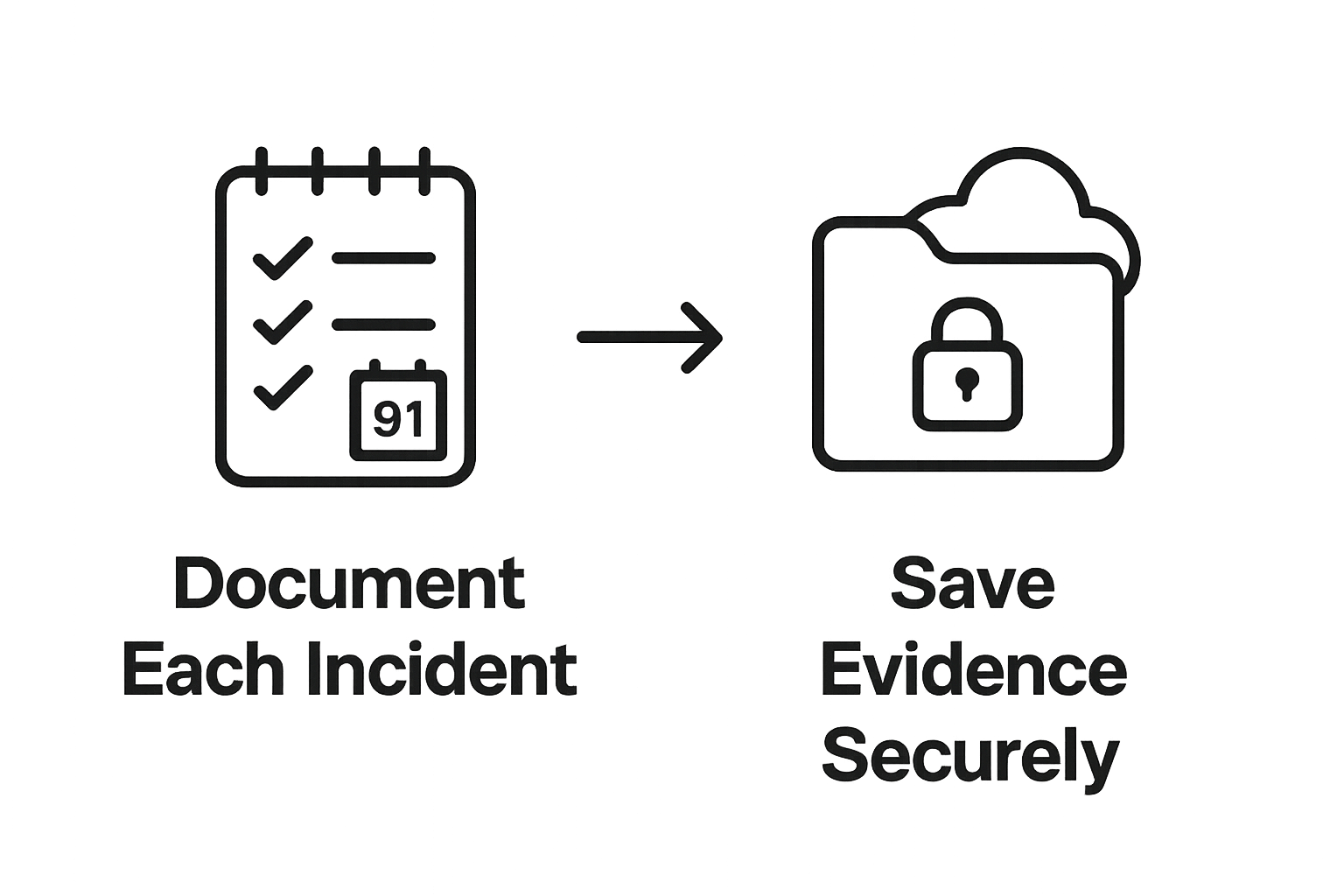
    Infographic showing two steps to document workplace bullying: record incidents, store evidence securely

    Step 3: Seek Support from Coworkers and HR

    Navigating workplace bullying requires strategic support from both your professional network and organizational resources. Building a support system is crucial in addressing and potentially resolving workplace harassment, transforming an isolating experience into a collaborative problem-solving approach.

    Approaching coworkers requires careful consideration and emotional intelligence. Seek out trusted colleagues who have demonstrated professional integrity and observed workplace dynamics. When discussing your experiences, focus on specific incidents and maintain a professional tone. Avoid gossip or emotional venting, instead presenting your situation as a workplace concern that requires constructive intervention.

    When engaging potential allies, be selective and strategic. Look for colleagues who have witnessed the bullying behavior or have a reputation for fairness and professionalism. Confidentiality is paramount during these conversations. Share details sparingly and ask explicitly for discretion. Some coworkers might be willing to serve as witnesses or provide corroborating statements if you decide to escalate the issue.

    Engaging with Human Resources demands a similarly measured approach. Prepare a comprehensive presentation of your documentation, including specific incidents, dates, and any potential witnesses. Schedule a formal meeting and approach the conversation professionally, demonstrating that you seek a resolution rather than revenge. Bring your documented evidence and remain calm and factual.

    During your HR meeting, clearly articulate the impact of the bullying on your professional performance and workplace environment. Explain how the behavior violates company policies and potentially creates a hostile work environment. Request specific actions, such as a formal investigation, mediation, or intervention to address the inappropriate behavior.

    Be prepared for potential challenges. Some HR departments might be hesitant or protective of management. If your initial interaction feels unsatisfactory, document the meeting and follow up with written communication. Request a formal written response to your concerns and maintain a paper trail of all interactions.

    Understand that seeking support is not about creating conflict but about protecting your professional dignity and creating a respectful workplace. Your goal is to address the bullying through proper channels, demonstrating professionalism and commitment to a healthy work environment.

    Step 4: Report the Bullying to Management

    Reporting workplace bullying to management represents a critical turning point in addressing toxic workplace behavior. According to the Department of Labor, employees have a formal right to report harassing conduct through appropriate organizational channels, with confidentiality protections in place.

    Preparation is key when confronting management about workplace bullying. Before scheduling a meeting, compile a comprehensive and objective documentation package. This should include:

    • a clear, chronological summary of incidents,
    • specific examples of bullying behaviors,
    • dates,
    • times,
    • potential witnesses,
    • and the documented impact on your professional performance and workplace environment.

    Choose the most appropriate management representative to approach. Typically, this means starting with your direct supervisor unless they are the source of the bullying. If your immediate supervisor is part of the problem, consider escalating to their supervisor, human resources director, or another designated senior leadership representative who can provide an objective perspective.

    When scheduling the meeting, request a formal, private consultation. Frame your discussion professionally, focusing on how the bullying behavior creates a detrimental workplace environment that impacts productivity and team dynamics. Remain calm, factual, and solution-oriented. Your goal is to demonstrate that you are seeking a constructive resolution, not revenge or confrontation.

    During the meeting, present your documented evidence systematically. Clearly articulate specific incidents, their frequency, and their impact. Explain how these behaviors violate workplace conduct policies and potentially create a hostile work environment. Request specific actions, such as a formal investigation, mediation, or intervention to address the inappropriate behavior.

    Be prepared for various potential responses. Some managers might be supportive and immediately take action, while others might be defensive or dismissive. If the initial response is unsatisfactory, remain professional and request a written explanation of how they intend to address your concerns. Document every interaction, including meeting notes and follow-up communications.

    Protect yourself by maintaining a comprehensive record of all reporting efforts.

    Report the Bullying to Management

    Save copies of emails, meeting minutes, and any correspondence related to your complaint. This documentation can be crucial if you need to escalate the issue to higher management, human resources, or potentially seek external legal advice.

    Step 5: Follow Up and Monitor the Situation

    Following up after reporting workplace bullying is a critical phase that determines the effectiveness of your initial actions. According to the Office of Justice Programs, consistent monitoring of behavioral changes is essential in addressing workplace harassment.

    Proactive follow-up begins immediately after your initial reporting. Schedule a formal check-in with the management or HR representative who handled your initial complaint. During this meeting, request a detailed timeline of their proposed investigation and resolution process. Emphasize your expectation of regular updates and transparent communication about the steps being taken to address the bullying behavior.

    Document every interaction meticulously. Create a dedicated file or digital folder where you record all follow-up communications, including emails, meeting notes, and any official correspondence related to your complaint. Maintain a chronological log of all interactions, noting dates, participants, and key discussion points.

    Pay close attention to potential retaliation. Workplace bullies might attempt subtle forms of professional punishment or continued harassment after your initial complaint. Watch for signs such as unexplained negative performance reviews, sudden exclusion from professional opportunities, or shifts in team dynamics that seem designed to isolate or marginalize you.

    Establish personal coping mechanisms during this potentially stressful period. This might involve seeking support from trusted colleagues, maintaining professional boundaries, and potentially consulting with an employment lawyer to understand your rights and potential next steps. Protect your mental and professional well-being while navigating the resolution process.

    If the initial response from management appears inadequate or the bullying continues, be prepared to escalate your complaint. This could involve reaching out to higher-level management, consulting external workplace harassment resources, or exploring legal options. Your documented evidence will be crucial in demonstrating the persistent nature of the workplace bullying.

    Consider creating a personal support network outside of work. Trusted friends, family members, or a professional counselor can provide emotional support and help you maintain perspective during this challenging time. They can offer objective insights and help you strategize your next moves.

    Exploring legal options becomes a critical step when workplace bullying escalates beyond internal resolution mechanisms. According to the U.S. Equal Employment Opportunity Commission, employees have specific legal protections when workplace harassment involves discriminatory behaviors or creates a hostile work environment.

    Preparation is crucial before pursuing legal action. Your documented evidence from previous steps becomes the foundation of any potential legal strategy. Gather all relevant documentation, including incident reports, communication records, witness statements, and any correspondence with management or HR that demonstrates your attempts to address the workplace bullying through internal channels.

    Understand the different legal avenues available. These might include filing a complaint with the Equal Employment Opportunity Commission, pursuing a civil lawsuit for workplace harassment, or seeking mediation through professional employment dispute resolution services. Each option has specific requirements and potential outcomes, so professional legal guidance is essential in navigating these complex processes.

    Explore Legal Options if Necessary

    If you are struggling with repeated intimidation, unfair criticism, or exclusion at work, you do not have to face it alone. Visit California Labor Law now to explore easy-to-understand legal guides, wage calculators, and to get a free workplace bullying consultation. Call us at 1-866-355-9991 now.

    Frequently Asked Questions

    How can I recognize workplace bullying?

    Workplace bullying often manifests as repeated negative actions that create a hostile environment. Signs include consistent unwarranted criticism, targeted exclusion from meetings, and noticeable emotional distress like anxiety or decline in self-confidence.

    What should I document if I experience workplace bullying?

    Document specific incidents with details such as dates, times, locations, and individuals involved. Include quotes and descriptions of behaviors, as well as any relevant emails or messages that illustrate the bullying.

    How can I approach HR about workplace bullying?

    Schedule a formal meeting with HR and present your documented evidence clearly and factually. Focus on how the bullying impacts your work environment and request specific actions for resolution.

    What legal options do I have if workplace bullying persists?

    If internal resolution fails, consider consulting an employment attorney to explore legal avenues like filing a complaint with the Equal Employment Opportunity Commission or pursuing a civil lawsuit for harassment.


  • Understanding Employee Privacy Laws in California

    Understanding Employee Privacy Laws in California

    California Employee Privacy Laws

    California has some of the toughest employee privacy laws in the country, putting tight rules around what bosses can do with your personal information.

    You might think work is just work and that privacy is out the window once you clock in. But California law gives workers the right to inspect their personnel records and blocks employers from demanding social media passwords or collecting unnecessary health information. What you do off the clock—and online—actually stays your business, not theirs.

    What Are Employee Privacy Laws in California?

    Employee privacy laws in California represent a comprehensive legal framework designed to protect workers’ personal information and safeguard their rights in the workplace. These laws establish critical boundaries between employer access and employee personal data, ensuring workers maintain fundamental privacy protections.

    Defining Employee Privacy Rights

    California employee privacy laws cover multiple dimensions of workplace privacy, focusing on protecting sensitive personal information and preventing unauthorized surveillance or data collection.

    Under these regulations, employees have explicit rights regarding their personal data, including:

    • Protection against unwarranted intrusion into personal communications
    • Limitations on employer monitoring of electronic devices and communications
    • Restrictions on collecting and storing personal health and background information
    • Safeguards against discriminatory use of personal data

    What Are Employee Privacy Laws in California?

    The legal framework for workplace privacy establishes clear guidelines that employers must follow when handling employee information. These protections extend beyond traditional workplace settings, addressing modern digital communication channels and emerging technological challenges.

    California Labor Code provides robust privacy protections that go beyond federal standards. Employees have the right to inspect their personnel records, request copies of employment documents, and challenge inappropriate data collection practices. Our guide on employment rights offers deeper insights into these comprehensive legal protections.

    Employers must obtain explicit consent before collecting certain types of personal information and maintain strict confidentiality standards. Violations can result in significant legal penalties, including potential civil litigation and regulatory sanctions.

    The laws recognize that employees have a fundamental right to privacy, even within professional environments, and establish clear boundaries to prevent potential misuse of personal data.

    Why Employee Privacy Matters: Rights and Protections

    Employee privacy is far more than a legal technicality. It represents a fundamental human right that protects workers from potential exploitation, discrimination, and unwarranted intrusion into their personal lives. In California, these protections are designed to create a balanced and respectful workplace environment that recognizes the dignity and autonomy of workers.

    The Human Impact of Privacy Protections

    Privacy laws go beyond abstract legal concepts. They directly impact an employee’s sense of personal security, professional dignity, and psychological well-being. When employers overstep privacy boundaries, they can create environments of stress, mistrust, and potential psychological harm.

    These laws ensure that workers can:

    • Maintain personal boundaries in professional settings
    • Protect sensitive personal information from unwarranted disclosure
    • Prevent discriminatory practices based on personal data
    • Retain control over their digital and personal communications

    According to California Labor Code Section 980, employees have specific protections against invasive employer practices. This includes preventing employers from demanding access to personal social media accounts or collecting unnecessary personal information. These legal mechanisms serve multiple critical purposes, including:

    • preventing potential discrimination,
    • protecting personal autonomy,
    • and establishing clear boundaries of professional conduct.

    Why Employee Privacy Matters: Rights and Protections

    Key Concepts of Privacy in the Workplace

    Workplace privacy represents a nuanced legal and ethical landscape where employee rights intersect with legitimate business interests. Understanding these key concepts helps workers recognize the boundaries of acceptable workplace monitoring and information collection, ensuring their fundamental rights remain protected.

    Defining Personal Information and Boundaries

    At the core of workplace privacy are critical definitions about what constitutes personal information. In California, personal information extends far beyond traditional demographic data, encompassing electronic communications, social media profiles, personal device usage, and sensitive background details.

    Employees should understand that personal information includes:

    • Electronic communications and digital records
    • Personal health information
    • Background check details
    • Social media and online presence
    • Personal contact information

    According to research from UC Berkeley Labor Center, modern workplace privacy laws emphasize informed consent and proportional monitoring. Employers cannot arbitrarily collect or use personal information without explicit justification. This means:

    • Employers must provide clear notice of monitoring practices
    • Electronic surveillance must serve specific, legitimate business purposes
    • Employees have the right to understand how their information will be used
    • Monitoring cannot be overly intrusive or excessively broad

    The legal framework recognizes that while businesses have operational needs, these cannot supersede fundamental employee privacy rights. Consent must be voluntary, informed, and revocable, creating a dynamic where employees maintain agency over their personal information.

    How Employee Monitoring Works and Its Limits

    Employee monitoring represents a complex technological and legal landscape where employers seek to balance operational needs with individual privacy rights. Understanding the mechanisms and legal constraints of workplace surveillance is crucial for protecting workers from unwarranted intrusion and potential privacy violations.

    Technological Monitoring Mechanisms

    Modern workplace monitoring encompasses a wide range of technological tools and strategies.

    The following table highlights common employee monitoring methods in California workplaces and the corresponding legal limitations that protect employee privacy:

    Monitoring Method Legal Limitations & Requirements
    Computer & Internet Usage Must disclose and have a legitimate business reason
    Email and Communication Monitoring Requires clear notice and cannot be overly intrusive
    Video Surveillance Prohibited in private spaces, must be disclosed
    GPS Tracking (Company Vehicles) Must relate to work use and have business justification
    Network/System Access Logs Disclosure required; scope must be proportionate

    According to California Assembly Bill 2568, employers must navigate strict guidelines when implementing monitoring practices. Critical legal constraints include:

    • Mandatory disclosure of monitoring technologies
    • Clear communication about the scope of surveillance
    • Limitations on intrusive monitoring techniques
    • Prohibition of monitoring in private spaces
    • Requirement for legitimate business purposes

    The legal framework recognizes that while employers have operational interests, these cannot override fundamental employee privacy protections. Monitoring must be transparent, proportional, and directly related to legitimate business objectives, ensuring that workers maintain their dignity and personal autonomy in the workplace.

    How Employee Monitoring Works and Its Limits

    Real-World Applications: Cases and Implications

    Employee privacy laws in California are not merely theoretical constructs but dynamic legal frameworks with significant real-world consequences. By examining landmark cases and legal precedents, workers can better understand how these protections operate and what rights they can effectively exercise in workplace settings.

    Landmark Privacy Violation Cases

    California courts have consistently upheld strong employee privacy protections, establishing critical precedents that demonstrate the state’s commitment to worker dignity. These cases reveal the nuanced ways privacy violations can manifest and the legal consequences organizations face when they overstep boundaries. Key cases have addressed issues such as:

    • Unauthorized employee surveillance
    • Improper collection of personal information
    • Discriminatory use of background check data
    • Inappropriate social media monitoring
    • Violations of electronic communication privacy

    Learn more about protecting your workplace rights to understand how these legal precedents can shield workers from invasive practices.

    According to California Attorney General’s enforcement actions, privacy violations can result in substantial financial penalties and mandatory organizational reforms. Notable implications include:

    • Significant monetary settlements
    • Mandatory comprehensive privacy policy revisions
    • Required employee notification and transparency
    • Potential loss of business licenses
    • Mandatory third-party privacy audits

    These enforcement mechanisms demonstrate that privacy laws are not passive regulations but active tools for protecting employee rights. The legal system provides multiple avenues for workers to challenge inappropriate data collection and workplace surveillance, ensuring that employers remain accountable for maintaining professional boundaries and respecting individual privacy.

    Protect Your Privacy and Empower Your Rights at Work

    Do you feel uncertain about how your personal data is being used in your workplace? As detailed in our guide on California employee privacy laws, many workers face real worries about unauthorized surveillance, improper data collection, and a lack of clear boundaries at work.

    These challenges not only threaten your professional security but can deeply affect your sense of dignity and trust at your job. You deserve clarity, support, and the power to take action when your rights are on the line.

    Protect Your Privacy and Empower Your Rights at Work

    If you have questions, want to know more about your employment rights, or need help after facing wage theft or improper data collection, California Labor Law is here for you. Look at our easy-to-understand legal resources, wage calculators, and get a free employee privacy rights consultation at 1-866-355-9991 for expert guidance on protecting yourself against privacy and labor law violations.

    Frequently Asked Questions

    What are employee privacy rights in California?

    Employee privacy rights in California protect workers’ personal information, limit employer monitoring, and ensure confidentiality of sensitive data. These rights include protection against unwarranted intrusion into personal communications and limitations on collecting personal health and background information.

    How does California law protect employees from surveillance?

    California law requires employers to obtain explicit consent before engaging in employee surveillance. Any monitoring practices must be limited to legitimate business purposes, and employees should be informed of the extent and nature of the monitoring.

    Can employees access their personal records in California?

    Yes, under California Labor Code, employees have the right to inspect their personnel records and request copies of employment documents. They can also challenge any inappropriate data collection practices.

    What should I do if my privacy rights are violated at work in California?

    If your privacy rights are violated, you can report the issue to your employer or human resources department. You may also seek legal advice and consider pursuing a complaint with the California Attorney General or other relevant agencies to enforce your rights.

  • Labor Code Section 226: Complete California Guide

    Labor Code Section 226: Complete California Guide

    A guide to Labor Code Section 226

    Accurate wage documentation is not just a legal detail, it is the foundation of pay transparency and worker trust across the state. Understanding California Labor Code Section 226 can help both workers and employers avoid costly mistakes, reduce confusion, and ensure fair, legal payroll practices every single pay period.

    Defining Labor Code Section 226 Requirements

    California Labor Code Section 226 establishes critical wage statement requirements designed to protect workers and ensure transparent payroll practices. Wage statements are not optional – they are a legal mandate for all employers operating within the state.

    According to Labor Code section 226, employers must provide employees with comprehensive, itemized wage statements every pay period. These statements must include specific details that offer complete financial transparency:

    • Gross wages earned during the pay period
    • Total hours worked
    • Complete deduction information
    • Net wages
    • Precise pay period dates
    • Employee and employer identifying information
    • Applicable hourly rates for different work categories

    The California Department of Industrial Relations reinforces these requirements, emphasizing that wage statements are not merely administrative paperwork but a fundamental worker protection mechanism. These detailed statements enable employees to verify accurate compensation, understand their earnings breakdown, and quickly identify any potential discrepancies.

    Employers who fail to provide complete, accurate wage statements may face significant legal consequences, including potential penalties and civil litigation. Workers have the right to receive these statements and can take legal action if employers do not comply with Section 226’s explicit requirements.

    Defining Labor Code Section 226 Requirements

    Mandatory Payday Statement Elements Explained

    Every California employer must provide detailed wage statements that go far beyond a simple paycheck. Wage transparency isn’t just a suggestion – it’s a legal requirement with precise documentation standards.

    Wage statements must document an employee’s earnings and work details. The mandatory elements include:

    1. Gross wages earned during the pay period
    2. Total hours worked
    3. Specific piece-rate units (if applicable)
    4. Complete deduction breakdown
    5. Net wages received
    6. Exact pay period dates
    7. Employee identification (last four SSN digits)
    8. Employer’s full name and address
    9. Hourly rates with corresponding hours worked

    Workers should carefully review these statements, as they provide critical insights into compensation calculations.

    Wage theft can often be detected early by meticulously examining these mandatory documentation elements.

    Any discrepancies or missing information on wage statements represent potential legal violations. Employers who fail to provide complete, accurate statements may face significant penalties, including potential civil litigation and fines. California law empowers workers to challenge incomplete or inaccurate wage documentation, ensuring robust financial transparency and worker protection.

    Penalties for Violations and Employee Remedies

    California takes wage statement violations extremely seriously, providing robust legal protections for employees who encounter non-compliant employers. Wage statement integrity is more than a paperwork requirement – it’s a fundamental worker protection mechanism.

    According to the California Department of Industrial Relations, employers face significant financial consequences for failing to meet Section 226 requirements. The penalty structure is designed to discourage repeated violations:

    • Initial violation: $250 per employee
    • Subsequent violations: $1,000 per employee
    • Potential statutory damages up to $4,000
    • Recovery of legal costs and attorney’s fees
    • Possible injunctive relief

    Employees have multiple avenues for addressing wage statement violations. Wrongful termination protections can also come into play if an employer retaliates against a worker for challenging incomplete or inaccurate wage documentation.

    The legal framework empowers workers to take action. Employees can file claims with the Labor Commissioner’s Office, pursue civil litigation, or seek administrative remedies. These mechanisms ensure that employers cannot simply ignore their documentation obligations, providing a critical layer of financial transparency and worker protection in California’s employment landscape.

    Employer Obligations and Best Practices

    Compliance with Labor Code Section 226 requires more than just generating wage statements. Payroll documentation demands a proactive and systematic approach that protects both employers and employees.

    According to the California Department of Industrial Relations, employers have specific legal obligations that extend beyond simply issuing paychecks. The key requirements and best practices include:

    • Record retention for minimum three years
    • Conducting regular payroll audits
    • Comprehensive staff training on wage statement compliance
    • Prompt resolution of any identified discrepancies
    • Maintaining accurate and detailed documentation

    When implementing these practices, employers should consider how understanding employment contract basics can further strengthen their compliance strategy. A robust documentation process not only mitigates legal risks but also builds trust with employees.

    Common Compliance Issues and Prevention

    Employers navigating Labor Code Section 226 face a complex landscape of potential pitfalls that can quickly transform minor oversights into significant legal challenges. Wage statement compliance requires meticulous attention and proactive management.

    According to the California Department of Industrial Relations, employers frequently encounter several critical compliance challenges:

    • Incomplete wage statements
    • Inaccurate reporting of hours worked
    • Incorrect wage calculations
    • Untimely distribution of wage statements
    • Failure to include all required documentation elements

    To mitigate these risks, businesses must implement comprehensive prevention strategies. Understanding equal pay rights can provide additional context for ensuring accurate wage documentation and preventing potential compliance issues.

    Common Compliance Issues and Prevention for Wage Statement Violations

    Understand Your Rights and Take Action on Wage Statement Violations

    Navigating the complexities of Labor Code Section 226 can feel overwhelming, especially when incomplete or inaccurate wage statements threaten your rightful earnings. Many workers experience confusion about what details must be included in their pay stubs or face frustration when employers fail to provide transparent wage documentation.

    Empower yourself today by visiting California Labor Law, a dedicated resource for California employees seeking clear answers and legal support. Learn more about your rights, explore detailed legal guides, and connect directly with advocates who can help you challenge wage statement violations effectively.

    Don’t wait until discrepancies cost you lost wages. Start protecting your paycheck now and ensure you receive the full compensation you deserve. Call 1-866-355-9991 to get a free California Labor Code consultation today.

    Frequently Asked Questions

    What are the requirements for wage statements under Labor Code Section 226?

    Employers must provide itemized wage statements every pay period that include:

    • gross wages,
    • total hours worked,
    • deductions,
    • net wages,
    • pay period dates,
    • and employee and employer identifying information.

    What penalties do employers face for failing to comply with Labor Code Section 226?

    Employers can face penalties of $250 for an initial violation and up to $1,000 for subsequent violations per employee, along with potential statutory damages and recovery of legal costs.

    How can employees address violations of wage statement requirements?

    Employees can file claims with the Labor Commissioner’s Office, pursue civil litigation, or seek administrative remedies to challenge incomplete or inaccurate wage documentation.

    What best practices should employers follow to ensure compliance with Labor Code Section 226?

    Employers should retain records for at least three years, conduct regular payroll audits, provide staff training on compliance, promptly resolve discrepancies, and maintain accurate documentation.

  • Holidays and Overtime Pay: Complete California Guide

    Holidays and Overtime Pay: Complete California Guide

    Holidays and Overtime Pay In California

    More than half of California workers misunderstand their rights when it comes to holiday and overtime pay. The state’s unique laws create plenty of confusion about who is paid extra for working holidays and when overtime kicks in. Knowing the real rules matters because your paycheck, work schedule, and job satisfaction are directly at stake.

    This guide breaks down exactly what counts as paid holidays and overtime in California so you can avoid the most common wage mistakes.

    Defining Holidays and Overtime Pay in California

    Navigating holiday pay and overtime regulations in California can feel like walking through a legal maze. According to the California Department of Industrial Relations, the state has unique guidelines that protect workers while giving employers flexibility in holiday compensation.

    Under California law, employers are not legally required to provide paid holidays or close their businesses on holidays. This means your employer can choose whether to offer holiday pay or keep operations running normally. Paid holidays are typically determined by individual employer policies, employment contracts, or collective bargaining agreements.

    When it comes to overtime compensation, California has clear and worker-friendly regulations. California Department of Industrial Relations specifies that non-exempt employees aged 18 or older must receive overtime pay at one and one-half times their regular rate for:

    • Hours worked over eight in a single workday
    • Hours worked over 40 in a workweek
    • The first eight hours worked on the seventh consecutive day of work in a workweek

    Interestingly, California goes a step further and mandates double time for hours worked over 12 in a single workday. This means workers are compensated at twice their standard hourly rate for those extended hours, providing significant financial protection for employees working long shifts.

    Understanding these nuanced regulations is crucial for both employees and employers. While the rules might seem complex, they’re designed to ensure fair compensation and prevent workplace exploitation. If you’re unsure about your specific situation, consulting with a local employment lawyer or the California Labor Commissioner’s Office can provide personalized guidance.

    California Law on Paid Holidays and Overtime

    California’s employment laws provide a nuanced framework for holiday and overtime compensation that prioritizes worker protection while maintaining employer flexibility.

    Here’s a structured comparison of paid holidays and overtime pay rules in California:

    Feature Paid Holidays Overtime Pay
    Legally Required? No
    At employer discretion
    Yes
    Mandated by law
    Determined By Employer policy
    Contracts
    Bargaining agreements
    California Labor Code
    When Applies Specific holidays
    If employer offers
    Over 8 hrs/day
    Over 40 hrs/week
    Over 12 hrs/day (double time)
    Rate of Pay Regular or enhanced
    per policy
    1.5x or 2x regular rate
    Applies to All? Only if employer offers Non-exempt employees only

    The state’s approach to holiday pay is straightforward. Paid holidays are entirely at the discretion of employers, determined by individual workplace policies, employment contracts, or collective bargaining agreements. This means your holiday compensation depends on your specific employment terms, not state-wide regulations.

    These regulations ensure workers are fairly compensated for extended shifts and lengthy work weeks. Employers must carefully track hours and apply the appropriate overtime rates to maintain compliance.

    Navigating holiday and overtime laws can be complex. While the state provides a framework, individual employment agreements can introduce additional nuances. Workers unsure about their specific situation should consult their employment contracts, HR departments, or seek legal advice to fully understand their compensation rights.

    California Law on Paid Holidays and Overtime

    Eligibility Criteria for Holiday and Overtime Pay

    Understanding who qualifies for holiday and overtime pay in California requires navigating a complex landscape of employment regulations.

    Overtime Pay Eligibility is primarily determined by an employee’s classification. Non-exempt employees are the primary recipients of overtime compensation, which includes most hourly workers and some salaried employees who do not meet specific exemption criteria. These workers are entitled to enhanced pay rates when working beyond standard hours:

    • 1.5x regular rate for hours worked over 8 in a day
    • 1.5x regular rate for hours exceeding 40 in a workweek
    • Double time for hours worked beyond 12 in a single day

    Certain professional categories are automatically exempt from overtime requirements. These typically include:

    • Executives with management responsibilities
    • Administrative professionals in high-level roles
    • Licensed professionals like doctors and lawyers
    • Outside sales representatives
    • Some computer technology professionals

    Holiday pay follows a different set of rules. Holiday compensation depends entirely on individual employer policies, employment contracts, or collective bargaining agreements.

    For workers seeking clarity on their specific situation, understanding overtime pay rules becomes crucial. Each employment scenario is unique, and while these guidelines provide a general framework, consulting with HR or a labor law professional can offer personalized insights into your specific eligibility for holiday and overtime compensation.

    How Overtime Is Calculated on Holidays

    Calculating overtime during holidays in California involves understanding some nuanced regulations that might surprise many workers. California Department of Industrial Relations clarifies that holiday work is fundamentally treated the same as work on any other day, with overtime calculations based purely on hours worked, not the date on the calendar.

    The overtime calculation process remains consistent regardless of whether you’re working on a holiday or a regular workday. Employees are entitled to enhanced compensation when their total hours exceed specific thresholds:

    • 1.5x regular pay for hours worked over 8 in a single day
    • 1.5x regular pay for hours exceeding 40 in a workweek
    • Double time for hours worked beyond 12 in a single day

    Workplace scenarios can get complex. For instance, if you work a 10-hour shift on a holiday, you’d receive your standard hourly rate for the first 8 hours, then 1.5x rate for the next 2 hours. Some employers might offer additional holiday pay as a benefit, but this is not legally required.

    For workers looking to understand the intricacies of overtime calculation, tracking your hours meticulously is crucial. Each hour worked potentially impacts your total compensation, so maintaining accurate records protects your wage rights and ensures you’re fairly compensated for every minute of work.

    Understand and Protect Your Rights on Holidays and Overtime in California

    The complexities of holiday pay and overtime law can leave many workers unsure if they are receiving the compensation they deserve. If you have ever wondered whether your employer is correctly applying overtime rules or offering holiday pay according to California labor laws, you are not alone. Issues like misclassification, unpaid overtime, and unclear holiday pay policies create stress and financial uncertainty for countless employees.

    Take control of your wage rights today by visiting California Labor Law, a trusted resource designed to clarify these confusing regulations. Discover clear legal guides, use practical calculators to estimate your owed wages, and get expert advice tailored to California employment law. Don’t wait until unpaid hours turn into a costly mistake.

    Understand and Protect Your Rights on Holidays and Overtime in California

    Learn more about your rights and get immediate support by calling 1-866-355-9991 or fill out our free holidays and overtime pay consultation form. Empower yourself to secure the pay you have rightfully earned starting now.

    Frequently Asked Questions

    What are the laws regarding paid holidays in California?

    Employers in California are not legally required to provide paid holidays. Holiday pay is determined by individual employer policies, employment contracts, or collective bargaining agreements.

    Who is eligible for overtime pay in California?

    Non-exempt employees aged 18 or older are eligible for overtime pay in California. This includes most hourly workers and some salaried staff who do not meet specific exemption criteria.

    How is overtime calculated during holidays in California?

    Overtime is calculated the same way on holidays as on regular days. Employees earn 1.5 times their regular pay for hours worked over eight in a day or over 40 in a week, and double time for hours worked beyond 12 in a day.

    What are common mistakes employers make regarding holiday pay?

    Common mistakes include assuming holiday pay is mandated by law, misclassifying employees as exempt when they are non-exempt, and failing to accurately track overtime hours during holiday periods.

  • 7 Essential Tips for Balancing Work and Family in California

    7 Essential Tips for Balancing Work and Family in California

    Balancing Work and Family Time in California

    Nearly 60 percent of workers say balancing work and family feels harder each year. For families in California, the maze of workplace laws and flexible arrangements can be confusing yet life changing.

    With the right knowledge and tools, you can secure better schedules, protect your well being, and confidently stand up for your rights. This guide cuts through the complexity and helps every family get the support and flexibility they truly deserve.

    Balancing Work and Family Time in California

    1. Know Your Rights to Flexible Work Arrangements

    Flexible work arrangements are not just a perk but a strategic approach to balancing professional responsibilities with personal life in California. Understanding your rights can transform how you manage work and family commitments.

    California employees have increasingly robust options for adapting their work schedules. The California Department of Human Resources provides comprehensive guidelines on flexible work options including telework, alternate workweek schedules, and flextime. These arrangements allow workers to customize their professional environment while meeting organizational needs.

    Key flexible work arrangement options:

    • Telework multiple days per week
    • Compressed workweeks
    • Flexible start and end times
    • Part time or job sharing possibilities

    To successfully implement flexible work arrangements, communicate proactively with your supervisor. Demonstrate how your proposed schedule maintains or enhances productivity. Prepare a detailed plan showing how you will meet performance expectations while enjoying increased workplace flexibility.

    Remember that while these rights exist, they are not absolute. Employers can modify or terminate arrangements based on operational requirements or performance issues. Your ability to consistently deliver high quality work remains the primary consideration.

    2. Use California Leave Laws to Support Family Needs

    Understanding and leveraging California leave laws can be a game changer for working parents and family caregivers. These legal protections offer critical support when balancing professional responsibilities with personal family needs.

    According to the California Department of Industrial Relations, effective January 1, 2024, employers are required to provide at least 40 hours or five days of paid sick leave annually. This leave is not just for your personal health but extends to caring for family members during illness, medical appointments, or preventive care.

    The California Family Rights Act (CFRA) provides additional protection. CalHR guidelines allow eligible employees to take up to 12 weeks of unpaid, job protected leave to care for a seriously ill family member or manage their own health condition.

    Key Strategies for Maximizing Leave Benefits:

    • Document medical needs thoroughly
    • Communicate with your employer in advance
    • Understand your specific eligibility requirements
    • Keep detailed records of leave usage

    To effectively use these protections, proactively communicate with your employer. Provide necessary documentation and demonstrate how your leave will be managed to minimize workplace disruption. Remember that while these laws protect your rights, clear and professional communication is key to a smooth process.

    Do not hesitate to use these legal protections. They exist to support you during challenging family situations, ensuring you can care for your loved ones without risking your professional standing.

    3. Set Clear Boundaries Between Work and Home

    Establishing boundaries between professional and personal life is critical for maintaining mental health and overall productivity. In the era of remote and flexible work, distinguishing between work and home environments has become increasingly challenging.

    The 2025 statewide telework guide emphasizes the importance of creating structured approaches that respect both operational needs and personal work life balance.

    Practical Strategies for Setting Work Boundaries:

    • Create a dedicated workspace at home
    • Establish consistent work hours
    • Use technology to signal availability
    • Communicate your boundaries clearly with colleagues
    • Practice digital disconnection after work hours

    Physical separation is powerful. If possible, designate a specific area in your home exclusively for work. When your workday ends, physically close your laptop or cover your workspace. This visual cue helps signal a mental transition from professional to personal time.

    Technology can be both a connector and a barrier. Use features like automatic email replies after work hours and set do not disturb settings on communication platforms. Your smartphone and work apps should not constantly interrupt family time or personal moments.

    Remember that boundaries are not about being unavailable but about being intentional. By communicating your availability and limits professionally, you demonstrate respect for both your work responsibilities and personal well being.

    Set Clear Boundaries Between Work and Home

    4. Communicate Work-Life Balance Needs with Employers

    Open and strategic communication with your employer about balancing work and family time is not a sign of weakness but a professional approach to maintaining productivity and personal well being. Advocating for your needs can transform your workplace experience.

    CalHR’s policy on flexible work arrangements emphasizes proactive dialogue between employees and supervisors to explore options like telework or alternate schedules. Workplace flexibility is not one size fits all but requires thoughtful negotiation.

    Key Strategies for Effective Communication:

    • Prepare a clear, specific proposal
    • Demonstrate how flexibility benefits your work performance
    • Show understanding of departmental needs
    • Remain professional and solution oriented
    • Offer trial periods for proposed arrangements

    When discussing work-life balance, frame your request as a performance enhancement strategy. Explain how flexible arrangements will help you manage personal responsibilities while maintaining or improving work output. Employers are more likely to support requests that align with organizational goals.

    Documentation matters. Before your meeting, outline specific proposed arrangements. Be prepared to discuss how you will maintain communication, meet deadlines, and ensure team coordination. Showing you have carefully considered potential challenges demonstrates professionalism and commitment.

    Remember that communication is a collaborative process. Listen to your employer’s perspective and be willing to compromise. The goal is finding a mutually beneficial solution that supports both your personal needs and your organization’s objectives.

    5. Prioritize Self-Care to Reduce Stress and Burnout

    Self-care is not a luxury. It is a critical strategy for maintaining professional effectiveness and personal well being, especially in the demanding work environments of California.

    California’s Paid Sick Leave law recognizes the importance of personal health by allowing employees to use accrued sick leave for preventive care. This legal protection underscores a fundamental truth: your health directly impacts your ability to perform and thrive.

    Effective Self-Care Strategies:

    • Schedule regular health check ups
    • Practice mindfulness and stress management techniques
    • Set clear boundaries between work and personal time
    • Engage in physical activities that rejuvenate you
    • Seek professional support when feeling overwhelmed

    The California Family Rights Act provides job protected leave for serious health conditions. This means you can prioritize your mental and physical health without fear of professional repercussions.

    Mindfulness is not about perfection but consistent small actions. Start with brief meditation sessions, short walks, or simple breathing exercises. These micro breaks can significantly reduce stress and improve overall resilience.

    Remember that self-care looks different for everyone. What matters is developing a personalized approach that genuinely supports your physical, mental, and emotional well being. Your health is your most valuable professional asset.

    Navigating workplace challenges requires knowledge, confidence, and strategic access to legal resources. When employers overstep legal boundaries, understanding your rights becomes your most powerful protection.

    Key steps for addressing unlawful demands:

    • Document all interactions and incidents thoroughly
    • Understand your specific legal protections
    • Seek free initial consultations with employment attorneys
    • File formal complaints with appropriate state agencies
    • Preserve all communication records

    Preparation is your strongest defense against workplace misconduct. When confronting unlawful demands, remain professional and factual. Gather evidence systematically. Written documentation carries more weight than verbal claims. Consider recording conversations where legally permitted and always prioritize your safety and professional standing.

    Utilize Legal Resources for Unlawful Employer Demands

    7. Access Support Networks for Both Work and Family

    Support networks are the invisible safety nets that help you navigate the complex intersections of professional responsibilities and personal challenges. Building these networks strategically can transform how you manage work and family demands.

    CalHR’s leave benefits page highlights the critical importance of comprehensive support systems. The state recognizes that employees need robust resources during family crises, offering options like catastrophic leave and bereavement leave that acknowledge the multifaceted nature of modern workplace challenges.

    Strategic network building approaches:

    • Connect with employee resource groups
    • Develop relationships with supportive colleagues
    • Explore workplace mentorship programs
    • Leverage professional and personal support communities
    • Utilize employer provided counseling services

    The California Family Rights Act provides job protected leave for caring for family members with serious health conditions. This legal framework underscores the importance of creating networks that extend beyond immediate workplace interactions.

    Your support network should be multidimensional. Consider professional colleagues who understand your work challenges, family members who offer emotional support, and community resources that provide practical assistance. Each connection adds resilience to your personal and professional ecosystem.

    Remember that accessing support is not a sign of weakness but a strategic approach to maintaining balance. By proactively building and nurturing these networks, you create a robust system that helps you thrive both at work and at home.

    Below is a comprehensive table summarizing the key flexible work options, California leave laws, setting boundaries, communication strategies, self-care, legal resources, and support networks discussed in the article.

    Topic Description Key Considerations
    Flexible Work Arrangements Options include telework, compressed workweeks, flexible hours, and job sharing. Requires employer approval and communication on productivity benefits.
    California Leave Laws Provides paid sick leave and CFRA’s unpaid, job-protected leave. Important to document needs and understand eligibility.
    Setting Work Boundaries Involves creating a dedicated workspace and consistent work hours. Communication and use of technology to signal availability are crucial.
    Communication with Employers Encourages open dialogue about work-life balance. Proposals should align with both employee and departmental needs.
    Prioritizing Self-Care Emphasizes regular health check-ups and mindfulness. Essential for reducing stress and maintaining productivity.
    Legal Resources Guidance from the California Civil Rights Department on employee rights. Document all interactions and seek legal advice if needed.
    Support Networks Utilizes employee resource groups and counseling services. Important for navigating work and family challenges effectively.

    If you are facing challenges like unlawful employer demands or need to clarify your paid leave entitlements, you are not alone.

    Get the peace of mind you deserve by visiting California Labor Law to explore easy-to-understand legal guides and up-to-date resources about your workplace rights. Our platform empowers you to spot violations, calculate owed wages, and connect directly with experienced advocates who fight for workers just like you. Don’t wait until stress impacts your family or job security.

    Take the first step now by learning how to assert your rights and secure a fair work-life balance with support from California Labor Law and detailed information on paid sick leave rights. Your family’s well-being and job stability are worth it. Get in touch with us for a free employee rights consultation by calling 1-866-355-9991 today.

    Frequently Asked Questions

    How can I effectively communicate my need for flexible work arrangements to my employer?

    To effectively communicate your need for flexible work arrangements, prepare a clear proposal outlining how the changes will maintain or enhance your productivity. Set up a meeting with your supervisor to discuss your proposal, ensuring you present it as a strategy for mutual benefit.

    What are my rights regarding paid sick leave in California for family care?

    In California, employees are entitled to at least 40 hours or five days of paid sick leave annually, which can be used to care for a family member. Ensure you document any medical needs and communicate with your employer in advance to maximize your leave benefits.

    How can I set clear boundaries between my work and personal life at home?

    To set clear boundaries, create a dedicated workspace at home and establish consistent work hours. Communicate these boundaries with your colleagues to reinforce your availability and encourage them to respect those limits.

    What steps can I take to prioritize self-care while balancing work and family?

    Prioritizing self-care involves scheduling regular health check-ups and engaging in mindful practices to manage stress. Aim to incorporate small, daily self-care activities, such as a 10-minute meditation or a short walk, to rejuvenate your mental and physical well-being.

    How can I build a support network for managing work and family responsibilities?

    Build a support network by connecting with employee resource groups and seeking mentorship within your workplace. Focus on establishing relationships with colleagues who understand your challenges, so you have a system of support for both your work and family needs.

  • 7 Essential Tips for Starting a New Job in California

    7 Essential Tips for Starting a New Job in California

    Starting a New Job? Here are 7 Essential Tips

    Did you know that California ranks among the top states for employee protections? Starting a new job here means you step into a workplace where your rights are backed by some of the strongest labor laws in the country. From paychecks to fair treatment, knowing what you are entitled to is the best way to avoid common pitfalls. This guide gives you the facts and tools to protect yourself on the job from day one.

    1. Know Your California Employee Rights from Day One

    When you start a new job in California, understanding your employee rights is not just smart. It is your shield against potential workplace injustices. According to the California Labor Commissioner’s Office, workers have robust legal protections that safeguard their wages, working conditions, and personal dignity.

    Your first line of defense is knowing exactly what employers legally must provide. California labor laws mandate clear expectations for workplace treatment, which means employers cannot simply make up rules that violate your fundamental rights. This includes proper wage payment, legally required breaks, accurate pay statements, and protection from retaliation.

    Specifically, your rights include:

    • Receiving minimum wage according to state standards
    • Getting paid overtime for work beyond 8 hours per day or 40 hours per week
    • Taking mandatory rest and meal breaks
    • Receiving accurate and transparent pay statements
    • Being free from workplace discrimination and harassment

    To truly protect yourself, read the know your rights posters displayed in your workplace. These official postings outline critical information about your legal protections and whom to contact if those rights are violated.

    Remember: Knowledge is power. By understanding your rights from day one, you create a foundation of respect and legal awareness that will serve you throughout your professional journey in California.

    Know Your California Employee Rights from Day One

    2. Understand Minimum Wage and Overtime Laws

    Navigating California’s wage landscape requires understanding two critical components: minimum wage and overtime regulations. These laws are not just legal fine print. They are your financial safeguards in the workplace.

    Minimum wage in California is straightforward but powerful. As of January 2025, the state mandates a minimum wage of $16.50 per hour for all employers, regardless of company size. This means every hour you work must be compensated at or above this rate.

    Overtime laws add another layer of worker protection. Nonexempt employees have specific rights to additional compensation. If you work more than 8 hours in a single day or over 40 hours in a week, you are entitled to overtime pay. Specifically:

    • Hours worked over 8 per day are paid at one and one-half times your regular rate
    • Hours worked over 12 in a single day receive double time compensation
    • Overtime applies to hours beyond 40 in a workweek

    To make sense of these California overtime calculations, the overtime calculation guide can help you understand exactly how your additional hours translate into increased earnings.

    Protecting your wage rights starts with knowledge. Track your hours carefully, understand your pay rate, and do not hesitate to ask questions about overtime calculations. Your financial well-being depends on being an informed and proactive employee.

    3. Keep Accurate Records of Work Hours and Breaks

    In California’s workplace, documentation is your most powerful ally. Keeping meticulous records of your work hours and breaks is not just recommended it is a legal necessity. Employers are legally required to maintain precise documentation of employee work time, and you should do the same to protect your rights.

    Accurate record keeping serves multiple crucial purposes. It ensures you are paid correctly for all hours worked, tracks your meal and rest breaks, and provides protection in case of potential wage disputes. Think of your work records as a personal financial shield.

    Your documentation should include:

    • Exact start and end times for each workday
    • Total hours worked per day and week
    • Meal and rest break times
    • Any overtime hours performed
    • Descriptions of work tasks, if relevant

    To make tracking easier, consider using digital tools or apps that help log your hours. While employers must maintain official records, having your own independent log provides an additional layer of protection. If discrepancies arise, your personal documentation can be critical evidence.

    For additional guidance on understanding your break rights, the rest break laws guide offers comprehensive insights into California’s workplace regulations. Remember: your time is valuable, and accurate record keeping ensures you are compensated fairly for every minute worked.

    Keep Accurate Records of Work Hours and Breaks

    4. Ask About Workplace Policies for Fair Treatment

    Knowledge is power. Understanding your workplace policies is not just about following rules it is about protecting your professional rights. The moment you start a new job, you should proactively seek clarity about the company’s policies and your legal protections.

    Every California workplace must have clear policies that ensure fair treatment. This means establishing guidelines that prevent discrimination, harassment, and retaliation. Asking about these policies is not just acceptable it is a critical step in safeguarding your professional well being.

    Key questions to ask during onboarding or early employment include:

    • What are the company’s anti discrimination policies?
    • How does the organization handle workplace harassment complaints?
    • What is the process for reporting potential workplace violations?
    • Are there formal channels for addressing workplace concerns?
    • What protections exist against potential retaliation?

    If you want to understand the deeper nuances of workplace discrimination, the guide on workplace discrimination types provides comprehensive insights. Remember that employers are legally obligated to maintain a safe and fair work environment. By asking informed questions, you demonstrate professionalism while simultaneously protecting your rights.

    5. Be Aware of Protections Against Retaliation

    Retaliation is illegal in California workplaces. Your right to speak up about workplace issues is protected by law, and employers cannot punish you for exercising your legal rights. Understanding these protections is crucial for maintaining a safe and fair work environment.

    Retaliation can take many forms. It might look like reduced hours, sudden negative performance reviews, exclusion from important meetings, or even termination after you have raised legitimate workplace concerns. The law is clear: employers cannot take adverse actions against employees who are standing up for their rights.

    Specific actions protected from retaliation include:

    • Reporting wage violations
    • Discussing pay with coworkers
    • Filing a complaint about workplace harassment
    • Requesting legally mandated breaks or overtime pay
    • Inquiring about workplace safety conditions

    If you believe you are experiencing retaliation, documentation is key. Keep detailed records of interactions, communications, and any potential retaliatory actions. For comprehensive guidance on your legal options, the California employer retaliation guide provides critical insights into protecting your professional rights. Remember: your voice matters, and the law is on your side.

    6. Learn How to Handle Unpaid Wages or Wage Theft

    Wage theft is a serious problem that can silently drain your hard earned income. Understanding how to recognize and combat unpaid wages is critical for protecting your financial rights in the workplace. California provides robust legal mechanisms to help workers recover stolen wages.

    Wage theft can occur in many subtle forms. It might look like unpaid overtime, incorrect pay calculations, denied meal breaks, or withheld final paychecks. Your first line of defense is knowing exactly what constitutes wage theft and documenting everything meticulously.

    Steps to address potential wage theft include:

    • Gather all pay stubs and work records
    • Calculate the total amount of wages you believe are owed
    • Request a written explanation from your employer
    • File a wage claim with the Labor Commissioner’s Office
    • Consider consulting with an employment lawyer

    To fully understand the nuances of wage theft, the guide on wage theft and your rights provides comprehensive insights into recognizing and addressing these violations. Remember that you are not alone. California labor laws are designed to protect workers and ensure fair compensation for your hard work.

    Learn How to Handle Unpaid Wages or Wage Theft

    Navigating workplace challenges can feel overwhelming, but you are never alone. California provides robust legal resources designed to support workers in understanding and protecting their employment rights. Knowing how and where to access these resources can make a significant difference in addressing potential workplace issues.

    The Labor Commissioner’s Office serves as a critical first line of support for employees seeking guidance. They offer comprehensive resources that help workers understand their legal protections and take appropriate action when workplace violations occur.

    Key legal resources to connect with include:

    • California Labor Commissioner’s Office
    • Department of Industrial Relations
    • Local legal aid organizations
    • Employment law attorneys specializing in worker rights
    • Online legal support platforms

    To help you start your journey, the guide on finding the right employment lawyer provides expert insights into selecting professional legal support. Remember that understanding your rights is the first step toward creating a fair and respectful workplace environment. Do not hesitate to seek help when you need it.

    Below is a comprehensive table summarizing the key points and strategies discussed throughout the article about understanding and exercising employee rights in California.

    Topic Description Key Considerations
    Employee Rights Know your rights including minimum wage, overtime pay, and protection from discrimination. Important for safeguarding against workplace injustices.
    Minimum Wage & Overtime Minimum wage set at $16.50/hr; overtime for over 8 hours/day or 40 hours/week. Ensure financial safeguards by understanding your entitlements.
    Record Keeping Keep detailed records of work hours and breaks. Protect against wage disputes with accurate documentation.
    Workplace Policies Clarify workplace policies on discrimination and harassment. Safeguards professional rights and ensures a fair environment.

    Retaliation Protections Illegal to retaliate against reporting rights violations. Know protected actions; documentation is crucial.
    Wage Theft Response Address unpaid wages through documentation and legal channels. File claims or consult attorneys to recover owed wages.
    Legal Resources Access the Labor Commissioner and other resources for support. Know where to seek help to address workplace issues.

    Protect Your Rights From Day One With Expert Support

    Starting a new job in California can bring excitement but also uncertainty about your legal protections. If you want to confidently navigate complex issues like minimum wage, overtime pay, meal and rest breaks, or retaliation protections, gaining clear, trustworthy guidance is essential. Many employees face challenges enforcing their rights without the right tools or support.

    Take control today by turning to California Labor Law, your dedicated resource for understanding workplace rights and defending against wage theft or unfair treatment. Explore detailed guides on wage theft and your rights, learn how to file complaints effectively, and connect with real legal help fast. Don’t let confusion or employer misconduct rob you of what you deserve. Act now with the confidence that expert advocacy is just a click away.

    If you are an employee and have lost your job for approaching any of these topics with your employer, reach out to California Labor Law. We can assist you in holding your employer accountable and protecting your interests. Call us at  1-866-355-9991 or fill out the form for a free no-obligation consultation.

    Frequently Asked Questions

    What are my basic employee rights when starting a new job in California?

    Understanding your employee rights is essential. You are entitled to minimum wage, overtime pay, legally required breaks, and protection from discrimination and harassment. Familiarize yourself with these rights immediately upon starting your job to ensure a respectful work environment.

    How do I calculate my pay for overtime in California?

    To calculate your overtime pay, identify your regular hourly rate and apply the following: for hours worked over 8 per day, multiply by 1.5; for hours over 12 in a day, multiply by 2. Keep a detailed log of your hours worked to ensure you’re accurately compensated, especially if overtime is common in your role.

    What documentation should I keep for my work hours and breaks?

    You should meticulously document your exact start and end times, total hours worked, and any meal and rest breaks taken. Consider using a simple spreadsheet or app to log this information daily, as it protects you in case of wage disputes or discrepancies.

    What should I ask about my workplace policies during onboarding?

    Proactively inquire about anti-discrimination policies, processes for reporting complaints, and protections against retaliation. This will help you understand how issues are handled and empower you to navigate workplace concerns effectively.

    How can I recognize and address potential wage theft?

    Identify wage theft by checking for discrepancies in overtime, unpaid breaks, or incorrect pay calculations. If you suspect wage theft, document your pay stubs and work records, and address it with your employer to seek resolution, or consider taking further action if necessary.

    What legal resources are available if I encounter workplace issues?

    If you face workplace challenges, connect with local legal aid organizations or employment law attorneys who specialize in worker rights. Having legal support is vital, so make a list of contacts to reach out to as soon as you begin your job.

  • How to Request Leave Legally as a California Employee

    How to Request Leave Legally as a California Employee

    Nearly half of California workers have taken some form of leave in the past year, yet many still miss out on important protections and benefits because they do not fully understand their rights. Knowing where you stand with eligibility and documentation helps you manage time away from work without stress or confusion. This guide covers what every California employee needs to know to request leave with confidence and avoid costly mistakes.

    Step 1: Identify Your Leave Eligibility and Legal Rights

    Understanding your leave eligibility is a critical first step in protecting your workplace rights as a California employee. By knowing precisely what types of leave you can legally request, you set the foundation for successfully managing your professional and personal responsibilities.

    According to the California Department of Industrial Relations, the California Family Rights Act (CFRA) provides eligible employees the opportunity to take unpaid leave for significant family and medical reasons. This includes circumstances like caring for a seriously ill family member or addressing your own serious health condition. To determine your eligibility, you need to assess several key factors.

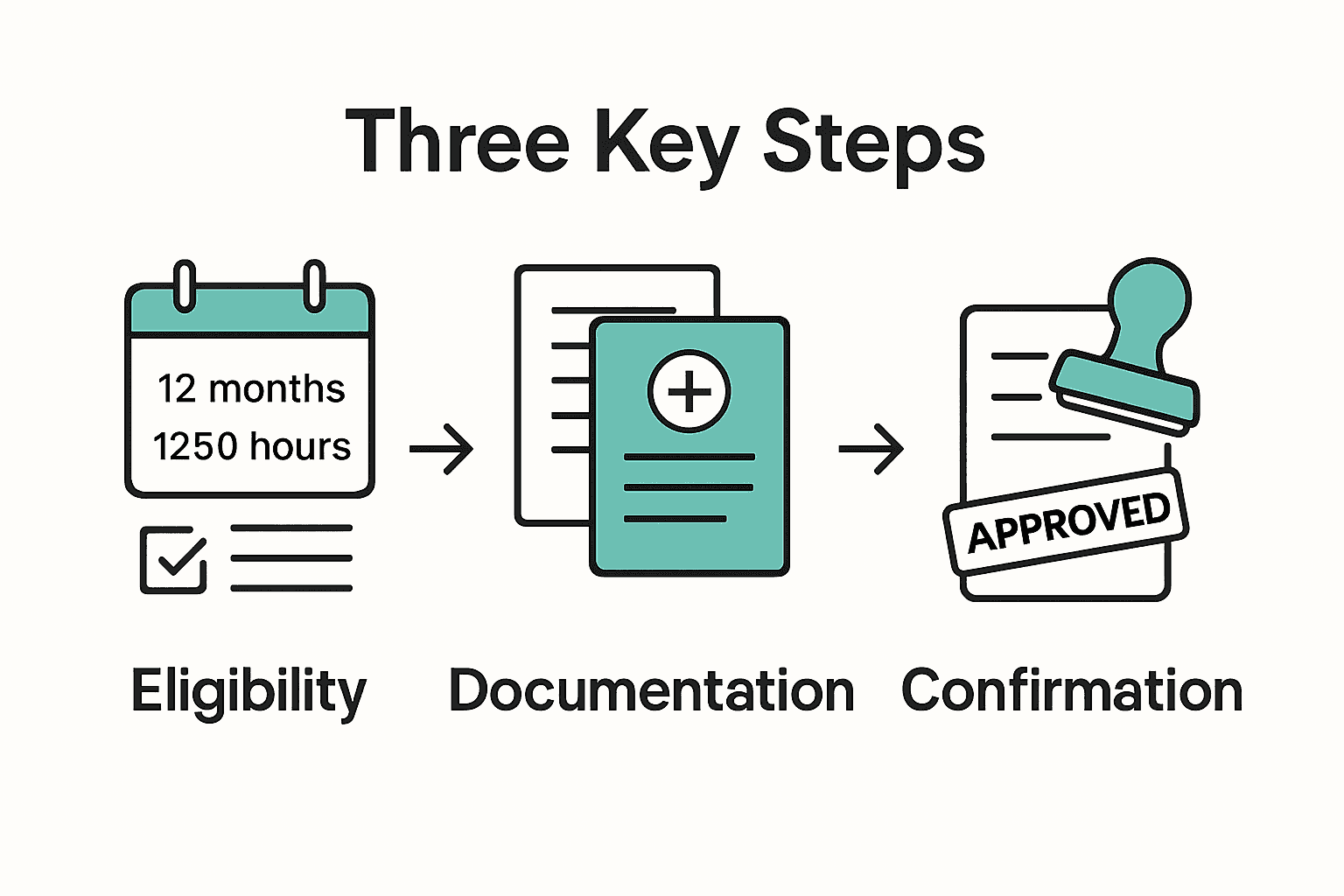
    First, check your employment status and company size. Generally, CFRA applies to companies with 5 or more employees, and you must have worked for your employer for at least 12 months and completed 1250 work hours in the past year. California Paid Sick Leave laws also mandate that most employees earn paid sick time, which provides additional protection for your health and family needs.

    Pro Tip: Always document your leave request and keep copies of all communication with your employer to protect your legal rights.

    Different types of leave have specific requirements. Pregnancy disability leave, medical leave, and family care leave each have unique eligibility criteria. Consulting your HR department or reviewing your employee handbook can provide specific details about your company’s leave policies. The next step is to formally request your leave with proper documentation and understanding of your rights.

    Step 2: Gather Required Documentation and Details

    Successfully requesting leave means being prepared with the right documentation and details. Your goal in this step is to collect and organize all necessary paperwork that will support your leave request and demonstrate your eligibility.

    According to the California Department of Human Resources, you will need to complete specific forms to initiate your leave process. CalHR recommends starting with the ‘Notice of Eligibility and Rights and Responsibilities’ form which serves as your official documentation for leave request. This form requires you to provide comprehensive information about the nature of your leave including:

    • Specific dates of requested leave
    • Reason for leave (medical, family care, personal health)
    • Expected duration of absence
    • Contact information during leave
    • Medical certification or supporting documentation

    Pro Tip: Make copies of all submitted documents and maintain a personal file tracking your leave request communication.

    Medical certification is often a crucial component of your documentation. If your leave is health related, secure a detailed statement from your healthcare provider that explains the medical necessity of your absence. This documentation should clearly outline the expected duration and any work restrictions. Keep all communication professional and timely to ensure a smooth approval process.

    Your next step will involve submitting these carefully prepared documents to your human resources department.

    Step 3: Compose and Submit a Written Leave Request

    Crafting a professional and comprehensive written leave request is crucial to ensuring your time off is approved smoothly and efficiently. Your written request serves as an official communication that documents your need for leave and provides your employer with clear understanding of your circumstances.

    According to San Luis Obispo County Human Resources, employees should submit a detailed written request that outlines the specific reason for leave, anticipated duration, and includes all relevant supporting documentation. When composing your request, be sure to include these essential elements:

    • Your full name and job title
    • Specific start and end dates of requested leave
    • Precise reason for leave (medical, family care, personal)
    • Contact information during your absence
    • Attached medical certification or supporting documents

    Pro Tip: Use a professional tone and be concise yet comprehensive in your written request.

    When submitting your request, follow your company’s specific protocols. Some employers prefer email submissions while others require formal paper documents. California Department of Human Resources recommends using their standardized leave request forms to ensure you provide all necessary information. Keep a copy of your submission for your personal records and follow up with your HR department within a few days to confirm receipt of your request. Your next step will involve tracking the status of your leave request and preparing for potential follow-up questions.

    Compose and Submit a Written Leave Request

    Step 4: Communicate With Your Employer About Next Steps

    After submitting your leave request, proactive communication with your employer becomes critical in ensuring a smooth approval process. This step involves following up professionally and understanding the specific requirements and expectations for your leave.

    Employees should engage in a detailed discussion with their employer about the next steps following a leave request. This conversation should cover important details such as the timeline for approval, any additional documentation needed, and potential follow up requirements. Your goal is to demonstrate transparency and cooperation throughout the process.

    Schedule a meeting or phone call with your HR representative to review your request. During this conversation, be prepared to discuss:

    • Specific dates of your proposed leave
    • Reasons for your leave request
    • Any potential impact on current projects
    • Your availability during leave
    • Contact methods for urgent workplace matters

    Pro Tip: Always maintain a professional and solution oriented approach during these discussions.

    Remember that understanding potential workplace transitions can help you navigate complex employment situations more effectively. Keep detailed records of all communications and be ready to provide any supplemental information your employer might require. Your final step will involve confirming the official approval of your leave request and preparing for your time away from work.

    Step 5: Confirm Leave Approval and Retain Documentation

    Securing formal approval of your leave request is the critical final step in protecting your employment rights and ensuring a smooth absence from work. This stage involves obtaining official confirmation and meticulously preserving all related documentation for your personal records.

    California Department of Human Resources emphasizes that employees should receive a formal notice from their employer confirming the specific details of their approved leave. This document serves as your official authorization and legal protection. When you receive this confirmation, carefully review it to ensure all details are accurate including:

    • Exact start and end dates of your leave
    • Specific conditions or requirements
    • Any expected communication protocols
    • Return to work expectations
    • Contact information for HR representative

    Pro Tip: Create both digital and physical copies of all leave related documentation.

    Digital organization matters as much as physical preservation. Create a dedicated folder on your computer and in your email system to store electronic copies of all leave request materials. Understanding potential workplace transitions can help you navigate potential complications. By maintaining comprehensive records, you protect yourself legally and ensure smooth communication with your employer during and after your leave period.

    Infographic visualizing California employee leave request steps

    Secure Your Right to Leave with Confidence

    Navigating the legal steps for requesting leave as a California employee can feel overwhelming. You want to make sure your leave request is done correctly to protect your job and receive the benefits you deserve. Knowing your eligibility, preparing proper documentation, and communicating clearly are essential but complex tasks. That is why understanding your rights and having reliable guidance is so important.

    Empower yourself by visiting California Labor Law, a trusted resource dedicated to helping employees like you understand workplace rights and legal protections. Here you will find clear guides on leave laws, helpful tools for tracking your claims, and access to legal advocates ready to assist if you face obstacles with your leave.

    Don’t wait until it is too late, take action now by filling out our free leave request consultation form or calling 1-866-355-9991 to ensure your leave request is handled legally and professionally. Start with expert information and support at California Labor Law and get the peace of mind you deserve today.

    Frequently Asked Questions

    What types of leave am I eligible to request as a California employee?

    Understanding your eligibility is essential; you can request leaves such as medical leave, family care leave, or pregnancy disability leave under the California Family Rights Act (CFRA). Verify your employment status, ensuring you have worked for at least 12 months and completed 1,250 work hours within the past year before submitting a request.

    How do I gather the necessary documentation for my leave request?

    To support your leave request, collect relevant documentation such as the ‘Notice of Eligibility and Rights and Responsibilities’ form and any medical certifications if applicable. Assemble all required paperwork in one folder, and make copies for your records to streamline the submission process.

    What should I include in my written leave request to ensure approval?

    Your written leave request should clearly state your full name, job title, specific leave dates, reason for leave, and attach any supporting documents such as medical certifications. Make your request concise yet comprehensive to facilitate a quick response from your employer.

    How do I communicate with my employer after submitting my leave request?

    After submitting your request, schedule a follow-up meeting or phone call with your HR representative to discuss any questions or additional documentation needed. This proactive communication ensures that you remain engaged and aware of the approval timeline and expectations.

    What steps should I take to confirm the approval of my leave?

    Once you receive confirmation of your leave, review the details to ensure accuracy regarding dates and terms. Save all approval documents both digitally and physically to maintain a reliable record of your leave status and protect your rights.

    How can I prepare for my return to work after my leave?

    To prepare for your return, review your employer’s expectations outlined in the approval notice and confirm any necessary communication during your leave. Contact your HR department a few days before your return to clarify any uncertainties regarding your reintegration into the workplace.

  • Understanding Employer Retaliation Laws: Know Your Rights

    Understanding Employer Retaliation Laws: Know Your Rights

    Employer retaliation laws decide whether workers feel safe standing up for their rights or stay silent out of fear. Some might think reporting workplace problems is a rare move, but about 38 percent of California workers have faced violations, with many too afraid to speak up. What most people miss is these laws do more than protect individuals—they are the backbone of honest and fair workplaces for everyone.

    What Are Employer Retaliation Laws and Why Do They Matter?

    Employer retaliation laws are critical legal protections designed to shield workers from punitive actions taken by employers in response to an employee’s legitimate workplace rights activities. These laws ensure that workers can report misconduct, discrimination, or labor violations without fear of professional consequences.

    Understanding the Core Definition

    Employer retaliation occurs when a company takes adverse action against an employee who has engaged in a legally protected activity. According to the U.S. Equal Employment Opportunity Commission, these protected activities can include:

    • Filing a discrimination complaint
    • Participating in workplace investigations
    • Reporting safety violations
    • Requesting reasonable workplace accommodations
    • Asserting wage and hour rights

    Adverse actions might encompass termination, demotion, reduced work hours, pay cuts, harassment, or creating a hostile work environment. The fundamental purpose of these laws is to prevent employers from silencing workers who exercise their legal rights.

    Why Employer Retaliation Laws Are Essential

    Retaliation laws serve multiple critical functions in protecting worker rights. Research from the Congressional Research Service highlights that these protections are crucial for maintaining workplace accountability and ensuring employees can safely challenge unlawful practices. By creating legal mechanisms that discourage punitive employer behaviors, these laws promote transparency, fairness, and ethical conduct in professional environments.

    Moreover, employer retaliation laws empower workers to speak up about critical issues without risking their professional standing or economic stability. For workers seeking more guidance on protecting themselves, our comprehensive guide on workplace rights provides additional insights into navigating complex employment scenarios.

    Ultimately, employer retaliation laws represent a fundamental safeguard in modern labor regulations, ensuring that workers can assert their rights without fear of unjust professional consequences.

    Key Concepts in Employer Retaliation: Definitions and Examples

    Employer retaliation represents a complex legal landscape where workers’ rights intersect with organizational power dynamics. Understanding the nuanced definitions and practical manifestations of retaliation is crucial for protecting oneself in the workplace.

    Defining Protected Activities

    According to Cornell Law School, protected activities are specific actions employees can take without fear of workplace punishment. These activities encompass a broad range of legitimate workplace conduct:

    • Reporting discrimination or harassment
    • Participating in official workplace investigations
    • Whistleblowing about safety or legal violations
    • Filing wage and hour claims
    • Requesting reasonable workplace accommodations

    The legal framework recognizes that employees must feel safe exercising these fundamental rights without experiencing professional consequences. Protection extends beyond formal complaint processes and includes informal discussions about workplace conditions.

    Below is a table summarizing the main types of protected employee activities and the corresponding examples referenced in California employer retaliation law.

    Protected Activity Description/Example
    Reporting discrimination or harassment Notifying management or HR about unfair treatment
    Participating in workplace investigations Providing testimony or evidence in an internal review
    Whistleblowing about safety or legal violations Informing authorities about unsafe work conditions
    Filing wage and hour claims Complaining about unpaid wages or overtime discrepancies
    Requesting reasonable workplace accommodations Asking for medical leave or adjustments for disabilities

    Recognizing Retaliatory Actions

    Retaliatory actions are not always obvious and can manifest in subtle or dramatic ways. Employers might attempt to disguise punitive measures through seemingly legitimate workplace decisions. Common retaliatory actions include:

    • Unexpected performance improvement plans
    • Sudden scheduling changes
    • Exclusion from professional opportunities
    • Unwarranted negative performance evaluations
    • Reduction in work hours or responsibilities

    These actions become legally problematic when they can be directly linked to an employee’s protected activity. For workers concerned about potential wage theft or employment violations, understanding these nuanced forms of retaliation is critical.

    Employer retaliation laws provide robust mechanisms for workers to challenge inappropriate workplace conduct. When an employer engages in retaliatory behavior, potential legal consequences can include financial penalties, mandatory workplace policy changes, and potential civil litigation. The goal is not just individual protection but systemic accountability in professional environments.

    This table highlights common forms of employer retaliation and the associated legal consequences employers can face if found guilty under California law.

    Retaliatory Action Example in the Workplace Legal Consequence for Employer
    Termination Firing after employee reports a violation Reinstatement, back pay, penalties
    Demotion or pay cut Lowering job rank or cutting wages Financial compensation, policy changes
    Negative performance evaluation Undeserved negative review after complaint Court-ordered removal from personnel file
    Exclusion from opportunities Denying promotions or assignments Policy reforms, possible punitive damages
    Reduction of hours or responsibilities Cutting scheduled hours Back pay, reinstatement of original hours
    Hostile work environment Creating an intimidating atmosphere Mandated training and workplace reforms

    The Importance of Employer Retaliation Laws in California

    California stands at the forefront of worker protection, with employer retaliation laws that provide some of the most comprehensive safeguards in the United States. These robust legal mechanisms are designed to shield employees from unfair workplace practices and ensure fundamental rights are consistently upheld.

    California’s Progressive Worker Protection Framework

    According to the California Labor Commissioner’s Office, the state enforces over 45 specific labor laws that prohibit workplace discrimination and retaliation. California’s legal framework goes beyond federal standards, offering workers more extensive protections and clearer paths for addressing workplace misconduct.

    To help readers compare California’s worker retaliation protections with broader standards, use this table outlining distinctive features and enforcement measures.

    Feature or Characteristic California Law Federal Law/General Standard
    Number of enforced retaliation statutes Over 45 specific statutes Fewer, broader statutes
    Types of protected activities Broad, includes informal complaints More limited, formal complaints emphasized
    Penalties for employer violations Stricter, more severe financial and legal penalties Variable, often less stringent
    Recourse mechanisms for workers Multiple: complaints, lawsuits, financial remedies Fewer, sometimes only administrative
    Sector coverage Broad, covers more employment sectors May exclude some worker categories

    Key characteristics of California’s approach include:

    • Broader definitions of protected activities
    • More stringent penalties for employer violations
    • Enhanced legal mechanisms for worker recourse
    • Proactive workplace anti-retaliation policies
    • Comprehensive coverage across diverse employment sectors

    Economic and Social Impact of Retaliation Laws

    Retaliation laws in California serve critical economic and social functions. Research reveals that approximately 38% of workers have experienced workplace violations, yet historically, fear of retaliation prevented many from reporting misconduct.

    By establishing clear legal protections, these laws accomplish multiple objectives:

    • Encourage workplace transparency
    • Reduce systemic workplace abuse
    • Provide economic security for workers
    • Create accountability mechanisms for employers
    • Support employees in challenging unethical practices

    Employer retaliation laws in California are not merely theoretical protections but actively enforced legal standards. Workers can file claims and seek legal remedies when experiencing workplace retaliation. The legal system provides multiple avenues for addressing violations, including administrative complaints, civil lawsuits, and potential financial compensation.

    Ultimately, these laws represent a fundamental commitment to workplace fairness, ensuring that employees can assert their rights without fear of professional or economic reprisal.

    california worker retaliation law

    How Employer Retaliation Laws Protect Employees’ Rights

    Employer retaliation laws serve as a critical shield, protecting workers from punitive actions that could compromise their professional integrity and economic stability. These legal safeguards ensure employees can exercise their fundamental workplace rights without experiencing professional consequences.

    According to the U.S. Equal Employment Opportunity Commission, legal protections extend far beyond simple discrimination claims. Employees are legally protected when participating in a wide range of workplace activities, including:

    • Filing formal discrimination complaints
    • Participating in workplace investigations
    • Reporting safety violations
    • Requesting reasonable workplace accommodations
    • Whistleblowing about unethical or illegal practices

    These protections create a comprehensive framework that empowers workers to speak up without fear of professional repercussions. The legal mechanism ensures that employers cannot take adverse actions against employees who are exercising their fundamental rights.

    Workplace Retaliation

    Mechanisms of Employee Protection

    Retaliation laws operate through multiple strategic mechanisms designed to discourage workplace misconduct. When an employer attempts to punish an employee for a protected activity, the legal system provides robust remedies:

    • Mandatory reinstatement of wrongfully terminated employees
    • Financial compensation for lost wages and damages
    • Potential punitive damages against the employer
    • Court-ordered policy changes within the organization
    • Protection from future discriminatory actions

    For workers seeking detailed guidance on navigating these complex legal protections, our comprehensive wrongful termination guide offers additional insights into understanding and asserting workplace rights.

    Practical Impact of Protective Legislation

    Employer retaliation laws fundamentally transform workplace dynamics by creating accountability. These laws do more than just provide legal recourse they actively discourage systemic workplace abuse by establishing clear consequences for employers who violate employee rights. The legislative framework ensures that workers can challenge unethical practices without risking their professional standing, ultimately promoting more transparent and equitable work environments.

    Real-World Implications of Employer Retaliation: Case Studies

    Employer retaliation is not a theoretical concept but a tangible workplace challenge with significant consequences for workers and organizations. Real-world case studies reveal the complex dynamics of workplace power, legal protections, and employee rights.

    Revealing Patterns of Workplace Misconduct

    According to the U.S. Department of Labor, workplace retaliation takes multiple forms that extend beyond obvious termination. Retaliation can be subtle yet profoundly damaging to an employee’s professional trajectory. Consider the case of Neil, a restaurant cook who was fired after inquiring about overtime pay an example of direct economic retaliation.

    Common retaliation patterns include:

    • Systematic professional isolation
    • Unexplained performance review downgrades
    • Sudden reduction in work hours
    • Assignment to less desirable job responsibilities
    • Creating hostile work environments

    Case studies demonstrate that employer retaliation can result in significant legal and financial consequences. A University of Massachusetts Amherst study analyzed 46,210 sexual harassment charges and discovered that 68% included retaliation allegations, highlighting the pervasive nature of workplace misconduct.

    Typical legal consequences for employers include:

    • Substantial monetary settlements
    • Mandatory workplace policy reforms
    • Court-ordered employee reinstatement
    • Potential punitive damages
    • Reputational damage and public scrutiny

    Broader Societal Impact

    These case studies reveal more than individual workplace disputes they expose systemic challenges in professional environments. Our comprehensive guide on filing retaliation claims provides workers with critical resources for understanding their legal options.

    Ultimately, each retaliation case represents a critical moment of accountability. By challenging retaliatory practices, employees not only protect their individual rights but also contribute to creating more equitable and transparent workplace cultures.

    Take Action Against Employer Retaliation in California

    Have you ever worried that speaking up at work could mean losing your job or facing unfair treatment? This article explores the serious problem of employer retaliation and how it threatens your right to a fair workplace. If you have faced sudden demotions, reduced hours, or termination for asserting your rights, you are not alone. Many California workers struggle with the fear of retaliation after reporting discrimination, unpaid wages, or other workplace violations. Knowing your rights is just the first step, protecting them is where it counts most.

    If you have been retaliated against then give California Labor Law a call at 1-866-355-9991 for a free employer retaliation consultation. We would be happy to point you in the right direction.

    Frequently Asked Questions

    What is employer retaliation?

    Employer retaliation occurs when an employer takes adverse action against an employee for engaging in legally protected activities, such as filing a discrimination complaint or reporting safety violations.

    What actions are considered protected activities under employer retaliation laws?

    Protected activities include filing discrimination complaints, participating in workplace investigations, reporting safety violations, requesting reasonable accommodations, and asserting wage and hour rights.

    How can I recognize if I am experiencing retaliation at work?

    Signs of retaliation may include sudden changes in job responsibilities, unexpected negative performance evaluations, exclusion from opportunities, or any unwarranted disciplinary actions linked to your protected activities.

    What legal protections do I have if I experience retaliation?

    Employees are protected by laws that provide remedies such as reinstatement, financial compensation for lost wages, and possible court-ordered changes in workplace policies when retaliation is proven.

  • Reporting Discrimination at Work: Your Step-by-Step Guide

    Reporting Discrimination at Work: Your Step-by-Step Guide

    Reporting workplace discrimination can feel overwhelming and high-stakes for any employee. Over 50 percent of workers who face discrimination never report it at all. What might surprise you is that most complaints get ignored, not for lack of evidence, but simply because the first step is skipped. Detailed documentation is what actually turns your experience into a defensible case.

    Step 1: Document Incidents of Discrimination

    Reporting discrimination at work begins with creating a comprehensive and detailed record of every incident you experience. Thorough documentation is your most powerful tool in building a credible case and protecting your legal rights. This crucial first step transforms your personal experience from an isolated incident into evidence that can substantiate your claim.

    Start by creating a dedicated journal or digital document specifically for tracking discriminatory events. Your documentation should be precise, objective, and include specific details that paint a clear picture of what occurred. Write down the date, time, location, individuals involved, and a detailed description of the discriminatory action. Include verbatim quotes if possible, as precise language can be critical in demonstrating the nature of the discrimination.

    Capture contextual information that provides depth to your documentation. Note who was present as witnesses, describe the workplace environment, and record how the incident made you feel professionally and emotionally. While emotional impact matters, focus on presenting factual, observable details. Learn more about documenting workplace harassment to ensure you capture all relevant information.

    Use multiple methods to preserve evidence. Screenshots of digital communications, emails, text messages, or work platform interactions can provide additional context. Save copies of performance reviews, communication records, or any documents that might demonstrate a pattern of discriminatory behavior. If possible, save original files and create backup copies to prevent potential tampering or loss.

    Be consistent in your documentation. Update your record promptly after each incident, using clear and professional language. Avoid inflammatory statements or emotional language that could undermine the credibility of your documentation. Your goal is to create a factual, chronological account that can withstand professional and legal scrutiny.

    Below is a checklist table to help you verify you have documented every necessary aspect of each discrimination incident before proceeding to the next steps.

    Documentation Item Description Completed (Yes/No)
    Date and Time Record the specific date and exact time of the incident
    Location Note the exact workplace area or location where it occurred
    Individuals Involved Identify everyone directly involved in the incident
    Witnesses List any witnesses who were present during the incident
    Detailed Description Provide a factual, precise account of what happened
    Verbatim Quotes Include any direct statements or language used, if possible
    Emotional/Professional Impact Briefly note how the incident affected you
    Supporting Evidence Attach digital screenshots, emails, or related documented proof
    Backup Copies Created Ensure copies are securely saved and protected against alteration

    Remember that your documentation serves as the foundation for potential legal action or workplace complaint procedures. Approach this process with strategic precision, treating each entry as a potential piece of evidence that could be reviewed by human resources, management, or legal professionals.

    Document Incidents of Workplace Discrimination

    Step 2: Review Company Policies on Discrimination

    After documenting discriminatory incidents, your next critical step is to thoroughly review your company’s official policies on discrimination. Understanding these policies provides a strategic roadmap for addressing workplace harassment and creates a formal foundation for your potential complaint. Company policy documents are your primary reference point for understanding the official procedures and expectations surrounding discrimination reporting.

    Locate your employee handbook or human resources documentation, typically available through your company’s internal network, HR portal, or by directly requesting a copy from the HR department. Pay close attention to sections specifically addressing workplace discrimination, harassment prevention, reporting mechanisms, and employee protection protocols. Look for explicit definitions of what constitutes discriminatory behavior, the steps for filing a formal complaint, and the protections guaranteed to employees who report such incidents.

    Learn more about workplace discrimination policies to ensure you understand your rights and the formal reporting process. Most comprehensive policies will outline a clear sequence of actions, including confidentiality protections, investigation procedures, and potential consequences for substantiated discriminatory behavior.

    Carefully analyze the specific reporting channels outlined in your company’s documentation. Some organizations require initial reporting to an immediate supervisor, while others mandate direct communication with human resources or a dedicated ethics department. Identify the precise contact person or department responsible for receiving discrimination complaints. Note any specific forms, documentation, or communication methods required when initiating a formal complaint.

    Pay special attention to anti-retaliation clauses within the policy. Legitimate company policies should explicitly protect employees who report discrimination in good faith, preventing potential workplace repercussions for speaking up. Understanding these protections provides additional confidence and legal ground when preparing to report discriminatory incidents.

    Before proceeding, create a summary of key policy points relevant to your specific situation. This preparation demonstrates your professionalism and thorough approach to addressing workplace discrimination. Your goal is to understand the official channels and requirements, positioning yourself to navigate the complaint process with clarity and strategic precision.

    The following table summarizes the main steps in the reporting process, along with their primary objectives and key actions to take.

    Step Main Objective Key Actions
    Document Incidents of Discrimination Build credible, factual evidence Keep detailed, objective records
    Review Company Policies Understand official reporting mechanisms and protections Locate and study policy documentation
    Seek Guidance from HR or Legal Transform evidence into actionable complaints Consult HR and/or employment attorney
    Submit a Formal Complaint Trigger formal investigation and response Complete and submit written complaint
    Follow Up on Complaint Status Ensure accountability and progress Track updates, document all responses
    Know Your Rights and Next Steps Assess options for resolution or escalation Consult legal agencies if needed

    Navigating workplace discrimination requires strategic support, making guidance from human resources or legal professionals a critical step in your journey. Your objective in this stage is to transform your documented experiences into a formal, actionable complaint with professional guidance. Approaching this step requires careful preparation and a clear understanding of your potential support resources.

    Initiate contact with your company’s human resources department, presenting your documented evidence in a calm, professional manner. Prepare a concise summary of incidents, focusing on factual details and referencing specific company policy provisions. HR representatives are trained to handle discrimination complaints, and their initial response can provide valuable insights into how your organization will address the situation. Be prepared for potential scenarios, understanding that HR’s primary responsibility is to the company, which means their investigation may not always align perfectly with your expectations.

    Understand the role of an employment attorney who can provide independent legal perspective on your situation. Legal professionals offer an objective assessment of your case, helping you understand the strength of your potential claims and the most strategic approach to addressing workplace discrimination. They can evaluate whether your experiences constitute legal violations and guide you through potential resolution strategies.

    When consulting with HR or legal advisors, maintain meticulous records of all communications. Document the date, time, individuals spoken with, and key discussion points. Request written confirmation of your complaint and any subsequent steps promised. This documentation creates an additional layer of accountability and provides a paper trail that could be crucial if further legal action becomes necessary.

    Be prepared to provide comprehensive documentation from your earlier evidence gathering. Organize your records chronologically, highlighting patterns of discriminatory behavior rather than isolated incidents. Your goal is to present a clear, coherent narrative that demonstrates the systemic nature of the discrimination you have experienced.

    Remember that seeking guidance is not just about filing a complaint, but about understanding your rights and determining the most effective path forward. Each conversation with HR or a legal advisor should move you closer to a resolution that protects your professional integrity and personal well-being.

    Step 4: Submit a Formal Complaint

    Submitting a formal complaint transforms your documented experiences into an official workplace record, signaling your commitment to addressing discrimination. This critical step requires precision, professionalism, and strategic documentation. Your complaint becomes the formal mechanism through which your organization must investigate and respond to discriminatory behaviors.

    Prepare a comprehensive written complaint that follows your company’s specific procedures. Craft a clear, factual narrative that outlines discriminatory incidents with objective language. Include specific dates, times, locations, involved parties, and direct references to company policies that were violated. Your written complaint should read like a professional legal document, presenting evidence without emotional language or inflammatory statements.

    Learn more about finding the right employment lawyer to understand potential legal strategies if your internal complaint process proves ineffective. While your immediate goal is resolving the issue internally, having legal knowledge can strengthen your approach.

    When submitting your complaint, choose the most appropriate communication channel outlined in your company’s discrimination policy. Some organizations require formal written complaints submitted through specific HR platforms or email addresses. Others might mandate in-person submissions or require standardized complaint forms. Follow these procedural requirements precisely to ensure your complaint receives proper consideration.

    Make multiple copies of your complaint and maintain a detailed record of submission. Request written confirmation of receipt from the appropriate department, including the date and name of the person who accepted your complaint. This documentation creates an official trail and prevents potential claims that your complaint was never received or processed.

    Be prepared for potential follow-up investigations. Your complaint may trigger interviews with you, witnesses, and the individuals accused of discriminatory behavior. Maintain professional composure throughout this process, focusing on presenting factual information and avoiding personal attacks or emotional rhetoric.

    Understand that submitting a formal complaint is a significant step that requires courage and commitment. Your goal is to create meaningful change, protect your professional rights, and establish a workplace environment free from discriminatory practices. By following proper procedures and maintaining thorough documentation, you demonstrate your professionalism and dedication to resolving workplace discrimination.

    Submit a Formal Complaint About Workplace Discrimination

    Step 5: Follow Up on Your Complaint Status

    After submitting a formal discrimination complaint, proactive and consistent follow-up becomes crucial in ensuring your case receives proper attention. Tracking the progress of your complaint is not passive waiting, but an active management of your professional rights. Your strategic engagement demonstrates commitment and prevents your complaint from becoming lost in administrative bureaucracy.

    Establish a systematic approach to following up on your complaint. Create a dedicated communication log documenting every interaction, including dates, names of individuals contacted, methods of communication, and key discussion points. Set a schedule for regular check-ins, typically every 7-10 business days, to inquire about the investigation’s status. During these follow-ups, maintain a professional, calm tone that focuses on understanding the process rather than expressing frustration.

    Learn more about finding the right employment lawyer who can provide guidance if your internal complaint process becomes unresponsive or appears to stall. Legal professionals can offer strategic advice about escalating your complaint or understanding your rights during the investigation period.

    During your follow-up communications, request specific information about the investigation’s timeline, expected next steps, and potential outcomes. Document these conversations in writing, preferably through email, which creates an official record of communications. If verbal conversations occur, send a follow-up email summarizing the key points discussed to ensure a paper trail exists.

    Prepare for potential variations in the complaint resolution process. Some investigations might conclude quickly, while others could take weeks or months. Your documentation and consistent follow-up demonstrate professionalism and signal to your organization that you are serious about addressing the discrimination.

    Be aware of potential retaliation risks during this process. While company policies should protect you from adverse actions, document any changes in workplace treatment that might suggest retaliatory behavior. Your careful record-keeping can serve as additional evidence if the investigation does not resolve your concerns satisfactorily.

    Remember that following up is not just about monitoring progress, but maintaining your professional dignity and commitment to a fair workplace. Your persistent, professional approach communicates that you are serious about addressing discriminatory practices and protecting your rights.

    Step 6: Know Your Rights and Next Steps

    Understanding your legal rights is the cornerstone of effectively addressing workplace discrimination. This final step empowers you with knowledge and strategic options for moving forward, whether your internal complaint process has been successful or requires further action. Your comprehensive approach to documenting, reporting, and now understanding your rights creates a robust defense against discriminatory practices.

    Carefully evaluate the outcomes of your complaint investigation. If your company’s response is unsatisfactory or inadequate, you have multiple legal avenues to pursue. Federal and state laws provide strong protections against workplace discrimination, offering various mechanisms for seeking justice. Learn more about understanding your workplace rights to ensure you are fully informed about potential legal strategies.

    Consider filing a formal complaint with external agencies if internal resolution proves ineffective. The Equal Employment Opportunity Commission (EEOC) and state-level civil rights departments offer robust mechanisms for addressing workplace discrimination. These agencies can conduct independent investigations, mediate disputes, and potentially support legal proceedings if discrimination is substantiated.

    Understand the strict timelines associated with filing external complaints. Discrimination claims typically have specific statute of limitations, which vary depending on the type of discrimination and jurisdictional requirements. Some federal claims must be filed within 180 days of the discriminatory incident, while state-level claims might offer extended timelines. Prompt action preserves your legal options and demonstrates your commitment to addressing workplace injustice.

    Consult with an employment law attorney who specializes in discrimination cases. Legal professionals can provide nuanced guidance about the strength of your case, potential compensation, and the most strategic approach to pursuing your claim. They can help you understand the potential outcomes, including monetary settlements, workplace policy changes, or reinstatement.

    Prepare yourself mentally and professionally for potential outcomes. External complaints can be complex, potentially impacting your current employment relationship. Maintain professionalism, continue documenting all interactions, and focus on achieving a fair resolution. Your goal is not just personal vindication, but contributing to a workplace culture that respects and protects all employees from discriminatory practices.

    Take Control of Workplace Discrimination With Trusted Guidance

    You have read the step-by-step process for documenting and reporting discrimination at work. The fear of retaliation, the confusion around complex policies, and uncertainty about legal rights create real obstacles. If you feel overwhelmed by gathering evidence, navigating company procedures, or understanding your next steps, you are not alone. The right information and support can help you move from uncertainty to action. Visit California Labor Law to get the employment help you need or call us at 1-866-355-9991 to schedule a free workplace discrimination consultation.

    Frequently Asked Questions

    What should I include in my documentation when reporting discrimination at work?

    Thorough documentation should include the date, time, and location of each incident, as well as the individuals involved and a detailed description of what occurred. Make sure to write everything down promptly and objectively, focusing on facts rather than emotions.

    How do I find my company’s policies on discrimination?

    Locate your employee handbook or HR documentation, typically available through your company’s internal network or by requesting a copy from HR. Pay special attention to sections on discrimination reporting procedures and employee protection protocols.

    What steps should I take before submitting a formal complaint?

    Before submitting a formal complaint, review your documented evidence and ensure it is organized chronologically. Prepare a clear and factual narrative that outlines discriminatory incidents and references relevant company policies to strengthen your complaint.

    How can I follow up on the status of my discrimination complaint?

    Establish a communication log to document every interaction regarding your complaint and set a schedule for regular check-ins, typically every 7-10 business days. During these follow-ups, maintain a calm and professional tone while asking for updates on the investigation’s timeline and next steps.

    What should I do if my company’s response to my complaint is unsatisfactory?

    If the response to your complaint is inadequate, consider filing a formal complaint with external agencies that handle workplace discrimination cases. Evaluate your legal options and consult with an employment law attorney to understand potential next steps and strategies moving forward.

    How can I ensure my rights are protected throughout this process?

    Document all interactions and keep a record of any retaliatory behavior you may experience after reporting discrimination. Understanding your rights and maintaining meticulous records empowers you to take further action if necessary and reinforces your standing in the complaint process.

  • Understanding Layoff vs Termination: Key Differences Explained

    Understanding Layoff vs Termination: Key Differences Explained

    Deciding whether a job loss is a layoff or a termination sounds simple but the consequences for your career and wallet couldn’t be more different. Over 71 percent of layoffs in the US are triggered by factors outside the employee’s control, like company restructuring or economic downturn. Many people think both situations feel the same and carry equal baggage but that assumption could cost you money and future job opportunities.

    Defining Layoff and Termination: Core Concepts

    Employment relationships can end through various mechanisms, with layoff and termination representing two distinct pathways that significantly impact workers’ professional trajectories. Understanding the nuanced differences between these employment separation methods is crucial for workers navigating complex workplace environments.

    What is a Layoff?

    A layoff represents a temporary or permanent job separation that occurs due to business factors beyond an individual employee’s performance. According to Bureau of Labor Statistics, layoffs typically result from broader organizational changes such as:

    • Restructuring or downsizing
    • Economic downturns
    • Reduction in business demand
    • Technological transformations
    • Mergers and acquisitions

    Layoffs are generally considered non-punitive actions, meaning they do not reflect negatively on an employee’s individual work quality or conduct. Employees experiencing layoffs often retain potential re-employment opportunities and might receive severance packages or transitional support.

    What is a Layoff?

    Understanding Termination

    Termination differs fundamentally from layoffs by focusing on an individual’s specific job performance, behavior, or conduct violations. As Society for Human Resource Management explains, termination can be categorized into two primary types:

    • Involuntary Termination: Employee dismissed due to poor performance, misconduct, or policy violations
    • Voluntary Termination: Employee chooses to leave the organization voluntarily

    Unlike layoffs, terminations are typically more personalized and can potentially impact future employment prospects. Employers must typically document specific reasons for termination to protect against potential wrongful dismissal claims.

    In the complex landscape of employment separation, understanding these core distinctions helps workers recognize their rights, potential next steps, and strategic career considerations when facing workplace changes.

    To help distinguish between layoffs and terminations, the following table compares their core characteristics, reasons, and impact on employees.

    Aspect Layoff Termination
    Main Cause Business-related factors beyond employee control Individual performance or conduct
    Nature of Action Non-punitive, not personal Usually punitive, personalized
    Potential for Rehire Often possible Rare, depending on circumstances
    Financial Support Unemployment benefits, severance, continued health coverage May limit benefits (especially for misconduct)
    Impact on Reputation Neutral, less stigma Can harm future job prospects
    Documentation Requirement Generally less detailed Requires documentation for justification
    Common Triggers Restructuring, economic downturns, mergers Policy violation, underperformance, misconduct

    Why Layoff vs Termination Matters for Employees

    The distinction between layoff and termination extends far beyond mere semantics, profoundly impacting an employee’s professional trajectory, financial stability, and future career opportunities. Understanding these differences becomes critical when navigating complex employment landscapes and protecting one’s professional interests.

    Layoffs and terminations carry dramatically different financial and legal consequences for employees. According to National Employment Law Project, the key financial distinctions include:

    • Layoffs: Often provide unemployment benefits, potential severance packages, and continued health insurance coverage
    • Terminations: May limit unemployment benefit eligibility, especially in cases of misconduct
    • Voluntary Termination: Generally offers least legal protection and financial support

    These financial nuances can significantly influence an individual’s economic stability during career transitions.

    Employees facing separation must carefully understand their potential entitlements and legal protections based on the specific circumstances of their job loss.

    Professional Reputation and Future Employability

    The manner of job separation directly impacts an individual’s professional reputation and future employment prospects. Society for Human Resource Management highlights that different separation methods create varying perceptions among potential employers:

    • Layoffs are typically viewed neutrally and do not carry significant negative stigma
    • Involuntary terminations can create challenges in future job searches
    • Documented performance issues during termination can potentially impact reference checks and hiring potential

    Professional networking and transparent communication become essential strategies for mitigating potential reputation challenges arising from job separation.

    Why Layoff vs Termination Matters for Employees

    Navigating employment separations requires strategic awareness, understanding of legal rights, and proactive career management. By comprehending the intricate differences between layoffs and terminations, employees can better protect their professional interests and maintain career momentum during challenging workplace transitions.

    The Reasons Behind Layoffs and Terminations

    Workplace separations are complex processes driven by diverse organizational and individual factors. Understanding the underlying motivations behind layoffs and terminations provides critical insights into workplace dynamics and employment relationships.

    Organizational Factors Driving Layoffs

    Layoffs emerge from broader strategic and economic considerations that extend beyond individual employee performance. U.S. Department of Labor indicates that organizations initiate layoffs due to several systematic reasons:

    • Economic constraints causing reduced operational budgets
    • Technological transformations eliminating specific job roles
    • Corporate restructuring and strategic realignments
    • Mergers and acquisitions resulting in position redundancies
    • Seasonal business fluctuations in certain industries

    These organizational decisions reflect complex business strategies rather than individual employee shortcomings. Companies often view layoffs as necessary mechanisms for maintaining financial sustainability and competitive positioning.

    Unlike layoffs, terminations focus specifically on individual employee behavior and professional performance. Employers typically pursue termination when an employee consistently fails to meet established workplace standards. Key reasons for termination include:

    • Repeated violations of company policies
    • Consistent underperformance against defined job expectations
    • Serious misconduct or ethical breaches
    • Violation of professional conduct guidelines
    • Inability to adapt to evolving workplace requirements

    Terminations represent targeted actions addressing specific individual workplace challenges, distinguishing them from broader organizational layoff strategies.

    Ultimately, both layoffs and terminations represent critical mechanisms through which organizations manage workforce composition, maintain operational efficiency, and respond to dynamic business environments. Employees benefit from understanding these nuanced separation processes to better navigate their professional trajectories and anticipate potential workplace changes.

    California offers robust legal protections for employees facing job separation, distinguishing itself with comprehensive worker safeguards that extend beyond federal employment standards. Understanding these legal nuances becomes critical for employees navigating layoffs and terminations.

    Unemployment Benefits and Protections

    The state provides significant legal frameworks to support workers during employment transitions. California Employment Development Department outlines specific protections that differentiate between layoff and termination scenarios:

    • Layoff Protections: Employees typically qualify for unemployment benefits without challenging eligibility requirements
    • Misconduct Terminations: May require additional documentation to prove unemployment benefit eligibility
    • Voluntary Resignation: Generally limits access to unemployment compensation

    These legal distinctions ensure that workers receive appropriate support based on the circumstances of their job separation, with layoffs offering more straightforward pathways to temporary financial assistance.

    Wrongful Termination Considerations

    California law provides strong protections against discriminatory or retaliatory job separations. According to California Department of Fair Employment and Housing, employees cannot be terminated based on:

    • Protected characteristics like race, gender, age, disability
    • Whistleblowing activities
    • Filing workplace discrimination complaints
    • Requesting reasonable workplace accommodations
    • Exercising legal employment rights

    Employees facing potential wrongful termination have legal recourse to challenge unjust separation, with potential remedies including job reinstatement, back wages, and additional compensatory damages.

    Navigating employment separation requires strategic understanding of legal rights.

    The table below outlines the most common legal implications and eligibility for benefits depending on the type of job separation, specifically as they apply in California.

    Type of Separation Unemployment Benefits Eligibility Typical Protections
    Layoff Usually eligible Strong protections, straightforward
    Involuntary Termination Eligible unless for serious misconduct Eligibility may require documentation
    Voluntary Termination Rarely eligible Fewer legal and financial protections
    Misconduct Termination Often ineligible or must prove eligibility Legal recourse limited unless wrongful
    Wrongful Termination Eligible if proven Subject to legal remedy in California

    California’s comprehensive worker protection laws aim to balance employer operational needs with fundamental employee rights, providing a robust framework for fair and transparent workplace practices.

    Wrongful Termination Considerations

    Employment disputes represent complex legal interactions where employees must strategically balance protecting their professional interests with maintaining constructive workplace relationships. Understanding the nuanced approaches to resolving conflicts becomes essential in effectively addressing potential separation challenges.

    Documentation and Evidence Gathering

    Preparing for potential employment disputes requires meticulous documentation and strategic evidence collection. Equal Employment Opportunity Commission recommends employees maintain comprehensive records including:

    • Performance evaluations and work history documentation
    • Written communication with supervisors and HR representatives
    • Dates and details of specific workplace incidents
    • Copies of employment contracts and company policies
    • Witness statements or corroborating evidence

    Detailed documentation serves as critical protection, providing objective evidence to support potential legal claims or workplace dispute resolution processes.

    Professional Resolution Strategies

    Addressing employment disputes requires a strategic and professional approach that prioritizes constructive dialogue and potential reconciliation. Recommended strategies include:

    • Initiating direct communication with supervisors or HR representatives
    • Utilizing internal grievance procedures
    • Seeking mediation or neutral third-party intervention
    • Consulting employment law professionals for guidance
    • Understanding potential legal and professional consequences

    Professional dispute resolution emphasizes maintaining dignity, seeking mutual understanding, and exploring solutions that protect both employee rights and organizational interests.

    Successful navigation of employment disputes requires a balanced approach combining legal awareness, strategic communication, and a clear understanding of individual and organizational rights. By maintaining professionalism and preparedness, employees can effectively address workplace challenges while preserving their long-term career prospects.

    Protect Your Rights When Facing Layoff or Termination in California

    Are you worried about the financial and legal impact of a layoff or termination? If your employment is ending, it is easy to feel overwhelmed by questions about unemployment benefits, wrongful dismissal, and reputational damage. The article above explains how complex these employment separations can be and how important it is to understand your rights, especially in California.

    Take the next step now. Do not let uncertainty stop you from getting the support you deserve. Visit California Labor Law to access free legal guides, wage calculators, and recent law updates. If you suspect wrongful termination or need help understanding your eligibility for benefits, you can connect directly with an advocate right away. Take control of your future, call us at 1-866-355-9991 and get clear answers to your most urgent questions today at California Labor Law.

    Frequently Asked Questions

    What is the difference between a layoff and termination?

    A layoff is a temporary or permanent separation from employment due to external business factors, like economic downturns or restructuring. In contrast, termination is the end of employment based on an individual’s performance or behavior.

    Are employees eligible for unemployment benefits after a layoff?

    Yes, employees who are laid off typically qualify for unemployment benefits without challenging eligibility requirements, providing financial support during their job transition.

    Can a termination affect my future job prospects?

    Yes, involuntary terminations can create challenges in future job searches, as they may carry negative perceptions among potential employers, especially if performance issues are documented.

    What documentation should I maintain if I face a potential termination?

    It’s important to keep records such as performance evaluations, written communication with supervisors, details of workplace incidents, and copies of employment contracts to support any potential legal claims.