Category: California Labor Law

  • Understanding Workplace Discrimination Types and Impacts

    Understanding Workplace Discrimination Types and Impacts

    Recognizing discrimination requires awareness, documentation, and a commitment to maintaining professional environments that respect individual dignity and equal opportunity. Workplace discrimination is more common than most people realize, and it touches nearly every industry. Thousands of complaints are filed with the EEOC every year, resulting in millions paid out in settlements. Most expect discrimination to look obvious or loud. The real shock is how often it happens through quiet policies or subtle cues that many never spot until damage is done.

    Defining Workplace Discrimination Types

    Workplace discrimination represents a complex legal and ethical challenge that undermines professional environments and individual worker rights. Understanding the various workplace discrimination types is crucial for employees and employers alike to recognize, prevent, and address potential violations.

    Discrimination in the workplace occurs when an employee or job applicant receives unfair treatment based on protected characteristics. According to Equal Employment Opportunity Commission, discrimination involves treating someone differently or less favorably because of specific inherent or personal attributes.

    Key Protected Characteristics Include:

    • Race and ethnicity
    • Gender and sexual orientation
    • Age (40 and above)
    • Disability status
    • Religious beliefs
    • National origin

    Common Workplace Discrimination Categories

    Workplace discrimination manifests through multiple complex mechanisms, each targeting specific aspects of employment and professional interactions. The primary discrimination types include:
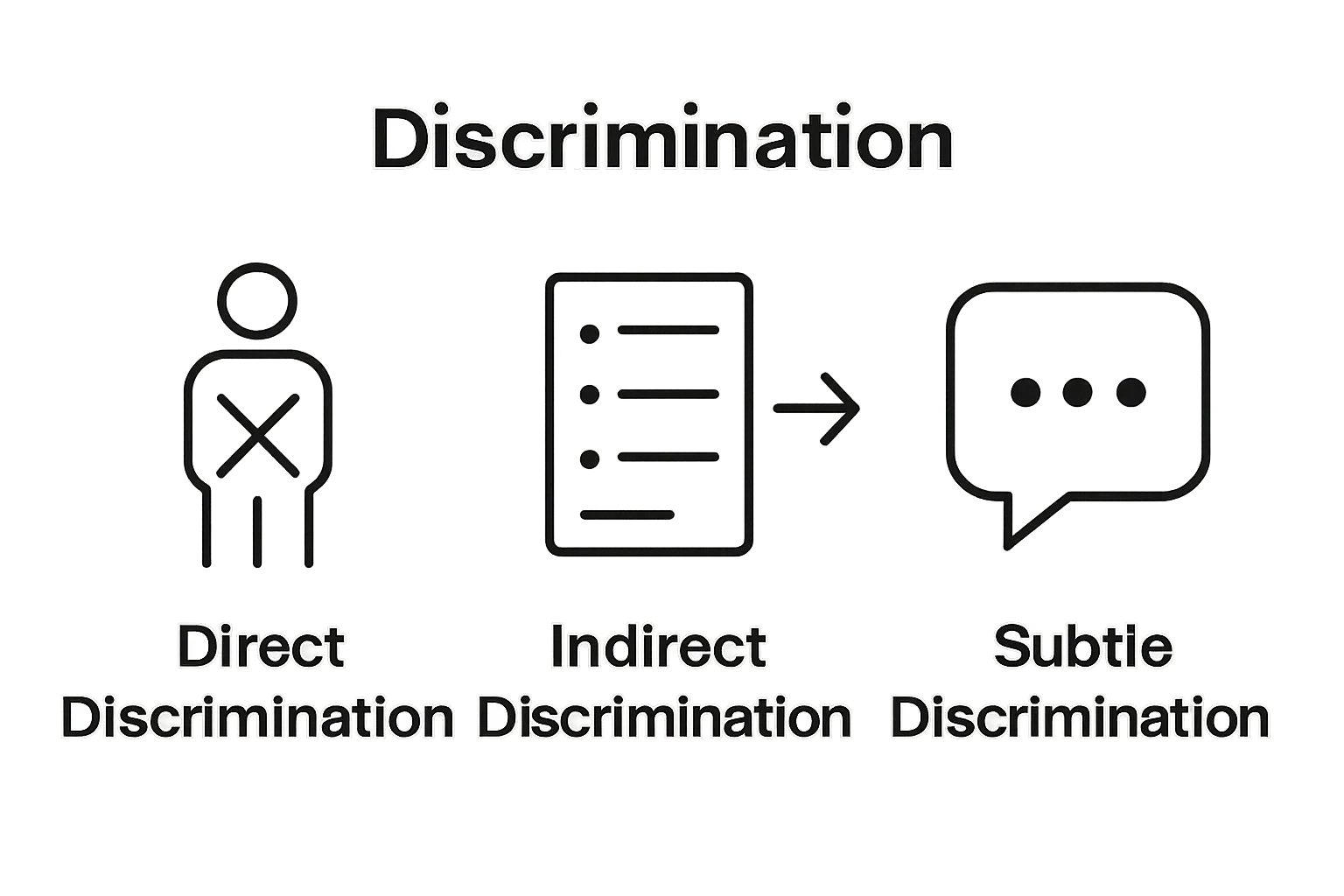
    Comparison of direct, indirect, and subtle workplace discrimination with icons

    Direct Discrimination:

    • Explicit negative actions targeting protected group characteristics
    • Clear preferential treatment excluding certain individuals
    • Direct statements or policies demonstrating bias

    Indirect Discrimination:

    • Seemingly neutral policies disproportionately impacting specific groups
    • Unintentional practices creating systemic barriers
    • Employment requirements unnecessarily excluding particular candidates

    Recognizing Subtle Discrimination Patterns

    Discrimination often operates through nuanced and sophisticated mechanisms beyond obvious mistreatment. American Psychological Association research highlights that discrimination can manifest through microaggressions, implicit biases, and structural workplace practices that create unequal opportunities.

    Understanding these intricate workplace discrimination types empowers employees to identify potential violations and seek appropriate legal recourse.

    To clarify how different types of discrimination operate in the workplace, the following table compares direct and indirect discrimination based on their characteristics and effects.

    Type of Discrimination Description Common Examples Impact on Employees
    Direct Discrimination Explicit unfavorable treatment based on protected characteristics Biased hiring, unequal pay, exclusionary policies Immediate and obvious exclusion
    Indirect Discrimination Neutral actions or policies that disproportionately impact specific groups Attendance policies, physical requirements, dress codes Hidden barriers, reduced opportunities

    Recognizing discrimination requires awareness, documentation, and a commitment to maintaining professional environments that respect individual dignity and equal opportunity.

    The Importance of Recognizing Discrimination

    Recognizing workplace discrimination represents a critical strategy for protecting employee rights, maintaining organizational integrity, and creating inclusive professional environments. Understanding the deeper implications of discrimination goes beyond legal compliance and touches fundamental human dignity and professional respect.

    Psychological and Professional Impact

    Discrimination creates profound psychological consequences for targeted individuals. American Psychological Association research demonstrates that persistent workplace discrimination can lead to significant mental health challenges, including:

    • Increased stress and anxiety
    • Reduced job satisfaction
    • Diminished professional confidence
    • Higher risk of depression
    • Lower workplace productivity

    Psychological Trauma: Repeated discriminatory experiences can create long lasting emotional scars that extend far beyond the immediate workplace context, potentially affecting an individual’s career trajectory and personal well being.

    Beyond individual impact, discrimination carries substantial legal and organizational risks. Companies that fail to recognize and address discriminatory practices expose themselves to significant financial and reputational damage. According to U.S. Equal Employment Opportunity Commission, thousands of discrimination charges are filed annually, resulting in substantial monetary settlements.

    Potential Organizational Risks Include:

    • Expensive legal litigation
    • Substantial financial penalties
    • Damaged organizational reputation
    • Decreased employee morale
    • Potential loss of talented workforce members

    Building Inclusive Work Environments

    Recognizing discrimination is not merely about avoiding legal challenges but actively constructing supportive, respectful professional spaces. Successful organizations understand that diversity and inclusion are strategic advantages that drive innovation, creativity, and overall organizational performance.

    Effective recognition requires ongoing education, transparent communication, and a genuine commitment to understanding different employee experiences. By proactively identifying and addressing discriminatory patterns, organizations can create environments where every individual feels valued, respected, and empowered to contribute their full potential.

    The Importance of Recognizing Discrimination

    California maintains one of the most comprehensive legal frameworks in the United States designed to protect employees from workplace discrimination. These robust protections go beyond federal standards, offering workers extensive safeguards and clear pathways for addressing discriminatory practices.

    State and Federal Protection Mechanisms

    The legal landscape of workplace discrimination in California combines both state and federal regulations to create multilayered protections. California Department of Fair Employment and Housing provides critical guidance on these comprehensive anti-discrimination statutes.

    Key Protective Legislation Includes:

    Distinctive California Anti Discrimination Standards

    Unlike many states, California offers broader and more expansive discrimination protections. The state recognizes a wider range of protected characteristics and provides stronger legal remedies for workers experiencing unfair treatment. California Labor Code establishes stringent requirements that employers must follow to ensure workplace equality.

    Unique California Protections:

    • Protection for additional categories beyond federal law
    • Lower thresholds for proving discrimination
    • More substantial monetary damages
    • Stronger retaliation protections

    Employees facing discrimination have multiple avenues for seeking justice. The legal framework provides clear mechanisms for filing complaints, pursuing administrative remedies, and initiating civil litigation. For workers seeking guidance on navigating these complex processes, our comprehensive guide on employment retaliation offers detailed insights into protecting workplace rights.

    California’s legal approach demonstrates a commitment to creating equitable work environments by establishing strong, proactive protections that empower employees and hold employers accountable for maintaining fair and respectful professional spaces.

    The table below summarizes major legal protections against workplace discrimination in California and how they differ from general federal standards, helping employees and employers understand their coverage.

    Legal Protection Scope Unique to California
    California Fair Employment and Housing Act (FEHA) Broad state protections for many characteristics Yes
    Title VII Civil Rights Act Federal protection for race, color, religion, sex No
    Americans with Disabilities Act Federal protection for disability No
    Age Discrimination in Employment Act Federal protection for age (40+) No
    California Labor Code Standards Stricter requirements and extra categories protected Yes

    Impact of Discrimination on Employees and Work Environment

    Workplace discrimination creates profound negative consequences that extend far beyond individual experiences, fundamentally disrupting organizational dynamics and employee well being. The ripple effects of discriminatory practices can undermine entire workplace cultures and professional ecosystems.

    Psychological and Personal Consequences

    National Institutes of Health research demonstrates that persistent workplace discrimination significantly impacts mental and physical health. Employees experiencing discrimination often encounter extensive psychological challenges that compromise their professional and personal functioning.

    Critical Psychological Effects Include:

    • Chronic stress and anxiety
    • Reduced self esteem
    • Emotional exhaustion
    • Increased risk of depression
    • Potential development of post traumatic stress symptoms

    Impact of Discrimination on Employees and Work Environment

    Organizational Performance Implications

    Discrimination does not merely affect individual workers but substantially compromises organizational effectiveness. Companies experiencing systemic discriminatory practices face significant productivity challenges and potential talent loss. The undermined workplace environment creates barriers to innovation, collaboration, and employee engagement.

    Organizational Performance Disruptions:

    • Decreased team productivity
    • Higher employee turnover rates
    • Reduced overall workplace morale
    • Compromised creative problem solving
    • Potential reputation damage

    Long Term Professional Consequences

    The impact of workplace discrimination extends beyond immediate workplace interactions, potentially derailing career trajectories and professional development. California ADA Violations Guide highlights how discriminatory experiences can create systemic barriers that limit professional advancement and economic opportunities.

    Addressing workplace discrimination requires a holistic approach that recognizes its multifaceted impacts.

    Organizations must develop proactive strategies that not only prevent discriminatory practices but actively cultivate inclusive environments where every employee can thrive professionally and personally.

    Strategies for Addressing Workplace Discrimination

    Addressing workplace discrimination requires a comprehensive, proactive approach that involves individual awareness, organizational commitment, and strategic implementation of inclusive practices. Effective strategies must simultaneously prevent discriminatory behaviors and create supportive professional environments.

    Individual Empowerment and Documentation

    Employees play a critical role in combating workplace discrimination by understanding their rights and maintaining meticulous documentation. Equal Employment Opportunity Commission recommends specific steps for individuals facing potential discriminatory treatment.

    Key Documentation Strategies:

    • Record specific dates and details of discriminatory incidents
    • Collect supporting evidence like emails or witness statements
    • Maintain a chronological log of interactions
    • Preserve communication records
    • Note potential witnesses or corroborating individuals

    Organizational Policy and Training

    Successful discrimination prevention begins with robust organizational policies and continuous educational initiatives. Companies must develop clear, comprehensive guidelines that explicitly define unacceptable behaviors and establish consequences for violations.

    Essential Policy Components:

    • Clear anti discrimination statement
    • Explicit reporting mechanisms
    • Transparent investigation procedures
    • Consistent enforcement protocols
    • Regular policy review and updates

    When internal resolution proves insufficient, employees have multiple legal pathways for addressing workplace discrimination. Employment Lawyers in California offer guidance on navigating complex administrative and judicial processes.

    Addressing workplace discrimination demands a multifaceted approach that balances individual empowerment, organizational accountability, and systemic change. By implementing comprehensive strategies, workplaces can transform potential conflict into opportunities for growth, understanding, and genuine inclusivity.

    Ready to Take Control After Facing Workplace Discrimination?

    If you are feeling the stress and uncertainty that comes with workplace discrimination from subtle microaggressions to clearly unfair treatment you are not alone. Many California employees experience decreased job satisfaction and emotional distress when their rights are violated. Understanding the legal framework and the different types of discrimination is the first step, but knowing how to act is the key to real change.

    You deserve a fair and respectful workplace. Contact California Labor Law for a free consultation or call us at toll free at 1-866-355-9991 for a free workplace discrimination consultation.

    Frequently Asked Questions

    What is workplace discrimination?

    Workplace discrimination occurs when employees or job applicants receive unfair treatment based on protected characteristics, such as race, gender, age, or disability.

    What are the main types of workplace discrimination?

    The main types of workplace discrimination include direct discrimination, which involves explicit negative actions towards certain groups, and indirect discrimination, which refers to neutral policies that disproportionately impact specific groups.

    How can workplace discrimination affect employees?

    Workplace discrimination can lead to significant psychological effects, including increased stress, anxiety, reduced job satisfaction, and lower productivity. It can also impact an individual’s professional trajectory and overall well-being.

    What steps should I take if I experience discrimination at work?

    If you experience discrimination, it’s important to document specific incidents, gather evidence, and report the behavior through your organization’s established channels. You may also seek legal guidance if needed.

  • Understanding Workplace Safety Rights in California

    Understanding Workplace Safety Rights in California

    Workplace safety rights are more than just legal rules. In California, these rights protect over 19 million workers across every industry, covering everything from physical hazards to mental well-being. Most people expect safety rules to be about handling chemicals or avoiding slips and falls. Yet the real surprise is that these protections also shield workers from harassment, discrimination, and even retaliation for speaking up. This wider net changes what it really means to feel safe at work.

    What are Workplace Safety Rights?

    Workplace safety rights represent a fundamental legal protection designed to ensure employees can perform their jobs without risking their physical health, mental well-being, or personal security. In California, these rights are comprehensive and robust, providing workers with critical safeguards against hazardous working conditions.

    Workplace safety rights stem from a combination of federal and state regulations that mandate employers maintain a safe and healthy work environment. According to the Occupational Safety and Health Administration (OSHA), employees are guaranteed specific protections that shield them from potential workplace dangers.

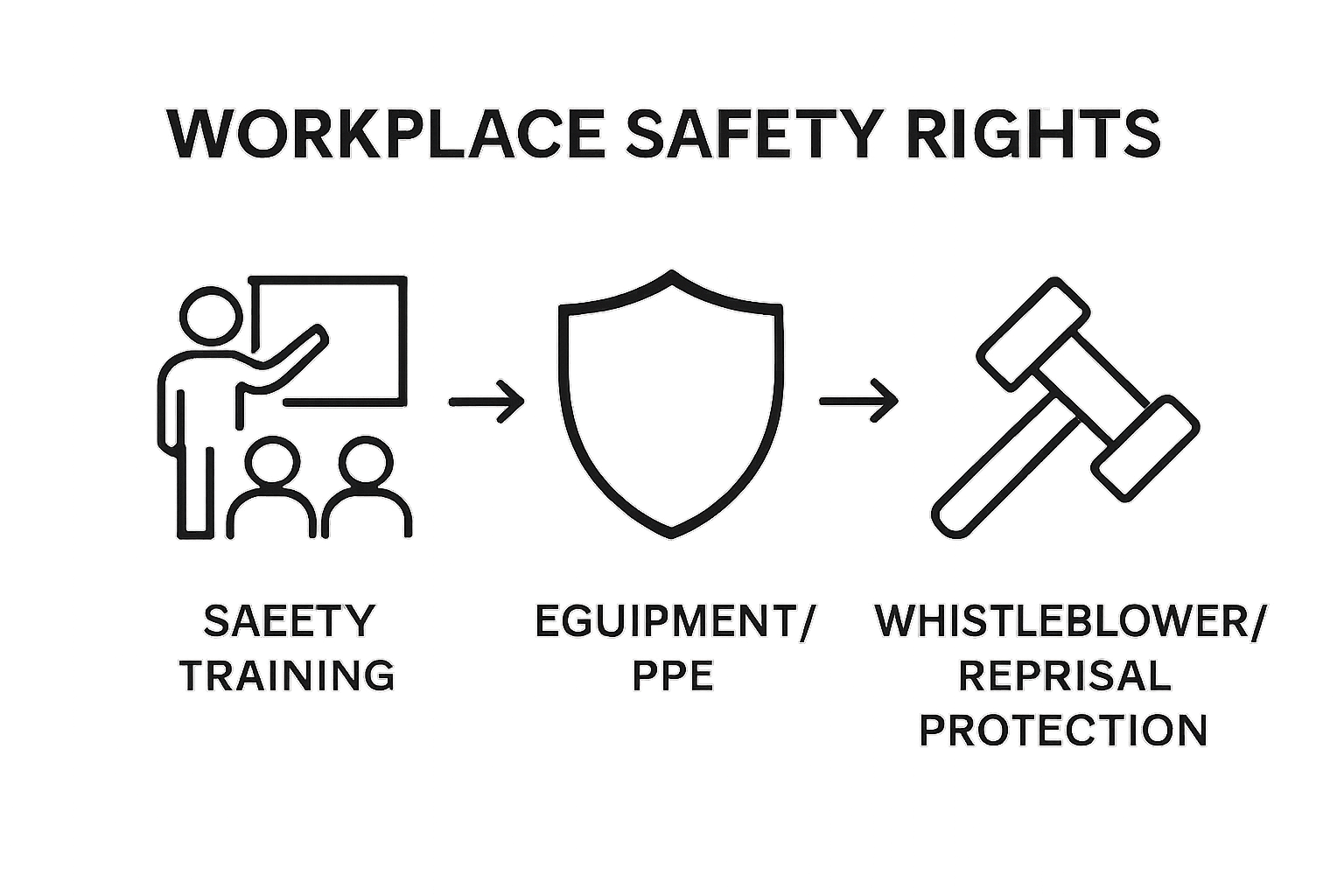
    Key components of workplace safety rights include:

    • The right to receive training about potential workplace hazards
    • Access to necessary safety equipment at no personal cost
    • Protection from retaliation when reporting unsafe working conditions
    • Ability to request workplace inspections without fear of punishment

    Three key components of workplace safety rights illustrated by icons for training, equipment, and protection.

    Understanding Your Fundamental Safety Protections

    Employers in California must proactively identify and mitigate potential workplace risks. This means conducting regular safety assessments, providing appropriate protective gear, maintaining equipment, and creating clear protocols for emergency situations. Workers are not just passive recipients of these protections but active participants in maintaining a safe work environment.

    Moreover, California extends additional protections beyond federal standards. The state recognizes that workplace safety is not just about physical hazards but also encompasses psychological well-being. This includes protection from harassment, discrimination, and creating an environment that respects worker dignity.

    If you want to learn more about your rights in case of workplace violations, check out our comprehensive guide on protecting yourself from potential legal challenges.

    Workplace safety rights are not optional privileges but fundamental legal requirements designed to protect workers across all industries. By understanding these rights, employees can confidently advocate for their own safety and contribute to creating healthier, more secure work environments.

    Why Workplace Safety Rights Matter for Employees

    Workplace safety rights are not merely legal technicalities but critical protections that directly impact an employee’s health, financial security, and professional dignity. These rights serve as a fundamental shield against potential workplace hazards that could compromise worker well-being and professional opportunities.

    Personal and Professional Consequences of Workplace Safety

    According to workplace safety regulations, employers bear direct responsibility for creating environments where workers can perform their duties without risking physical harm or psychological distress. The implications of workplace safety extend far beyond immediate physical protection.

    Key consequences of inadequate workplace safety include:

    • Long-term health complications from exposure to hazardous conditions
    • Potential loss of income due to work-related injuries
    • Psychological trauma and reduced workplace morale
    • Potential permanent disability or career interruption

    Why Workplace Safety Rights Matter for Employees

    Economic and Psychological Impact of Safety Rights

    Workplace safety rights represent more than protective measures they are economic safeguards that prevent workers from bearing unnecessary financial risks. When employees are protected, they can focus on job performance without constant anxiety about potential workplace dangers. This psychological security translates into improved productivity, reduced stress, and a more positive work environment.

    Moreover, these rights create accountability mechanisms that compel employers to maintain high safety standards. By establishing clear expectations and consequences for workplace safety violations, employees gain significant leverage in protecting their professional interests.

    Explore our comprehensive guide on protecting yourself from workplace violations to understand the full spectrum of employee protections.

    Ultimately, workplace safety rights are a critical social contract between employers and employees. They acknowledge that workers are not expendable resources but valuable human beings deserving respect, protection, and the opportunity to earn a living without compromising their fundamental health and well-being.

    This table outlines common consequences and impacts related to workplace safety, distinguishing personal/professional outcomes from economic and psychological effects for clearer understanding.

    Type of Impact Description
    Health Complications Long-term health issues from hazardous conditions
    Financial Loss Loss of income or medical expenses due to work-related injuries
    Psychological Distress Trauma, stress, and reduced workplace morale
    Professional Disruption Career interruption or permanent disability
    Increased Productivity Better focus and job performance when safety rights are protected
    Reduced Stress Psychological security from knowing protections exist
    Enhanced Accountability Clear employer obligations incent higher standards and prevent exploitation

    Key Concepts in Workplace Safety Laws

    Workplace safety laws constitute a complex framework of regulations designed to protect employees from potential hazards, ensuring comprehensive protection across diverse work environments. These laws establish critical standards that define employer responsibilities and worker protections.

    According to California workplace safety regulations, employers must implement systematic approaches to identifying, preventing, and addressing workplace risks. These legal frameworks are not static but evolve continuously to address emerging workplace challenges and technological advancements.

    Key legal standards encompass multiple critical dimensions:

    • Mandatory safety training and education programs
    • Comprehensive hazard identification and mitigation protocols
    • Regular workplace safety assessments
    • Clear reporting mechanisms for potential safety violations

    Employer Responsibilities and Worker Rights

    Workplace safety laws delineate precise obligations for employers while simultaneously establishing robust protections for workers. Employers are legally required to create environments that minimize potential risks, which extends beyond mere physical safety to include psychological well-being and protection from potential harassment or discriminatory practices.

    These laws recognize that workplace safety is multifaceted, addressing not just immediate physical dangers but also long-term health implications. For instance, regulations cover everything from proper equipment maintenance to ensuring adequate ventilation, noise protection, and ergonomic workplace design.

    Learn more about protecting yourself from potential workplace violations and understanding the full scope of your legal rights.

    Ultimately, workplace safety laws represent a critical social mechanism that balances employer operational needs with fundamental worker protections. By establishing clear standards and accountability measures, these regulations create a framework that promotes mutual respect, professional dignity, and collective well-being across diverse work environments.

    The following table summarizes key employer responsibilities and corresponding worker rights under California workplace safety laws, helping readers quickly identify each party’s obligations and protections.

    Employer Responsibilities Worker Rights
    Provide regular safety training and education Receive training about workplace hazards
    Supply necessary safety equipment at no personal cost Access safety equipment without cost
    Conduct regular workplace safety assessments Work in an environment free of physical and psychological hazards
    Maintain equipment and implement preventive protocols Request inspections of the workplace without fear of punishment
    Establish clear reporting mechanisms for safety concerns Report unsafe conditions confidentially without retaliation
    Address psychological well-being and protect from harassment Be protected from harassment, discrimination, and retaliation
    Mitigate hazards proactively and update standards as needed Participate actively in workplace safety advocacy

    Key Concepts in Workplace Safety Laws

    How Workplace Safety Rights Benefit Workers

    Workplace safety rights extend far beyond legal compliance, offering workers comprehensive protections that safeguard their physical, mental, and professional well-being. These rights create a protective ecosystem that empowers employees and promotes a culture of respect and dignity in professional environments.

    Financial and Health Protection Mechanisms

    According to occupational health research, workplace safety rights provide critical financial buffers that prevent workers from bearing the economic burden of workplace injuries or health complications. These protections ensure that employees are not financially devastated by incidents occurring during their professional duties.

    Key financial and health benefits include:

    • Protection against medical expenses resulting from workplace injuries
    • Guaranteed compensation for work-related health complications
    • Legal recourse for unsafe working conditions
    • Preservation of employment status during recovery periods

    Psychological and Professional Empowerment

    Workplace safety rights transcend physical protection by creating psychological security. When workers know their rights are legally protected, they experience reduced stress, increased job satisfaction, and greater confidence in challenging potentially dangerous workplace practices. This sense of security directly correlates with improved professional performance and workplace engagement.

    Moreover, these rights establish clear accountability mechanisms that prevent employers from exploiting worker vulnerabilities. By mandating transparent safety standards, workers gain the power to challenge unsafe practices without fear of retaliation.

    Discover comprehensive strategies for protecting your workplace rights and understanding the full scope of legal protections available to you.

    Ultimately, workplace safety rights represent a fundamental social contract that recognizes workers as valuable human beings deserving respect, protection, and the opportunity to earn a living in a safe, supportive environment.

    These rights are not just legal technicalities but powerful tools for creating more equitable, humane professional landscapes.

    Navigating workplace safety rights in California requires a strategic understanding of state-specific regulations, legal protections, and proactive approaches to addressing potential workplace hazards. Workers must be equipped with knowledge and confidence to effectively assert their safety rights within professional environments.

    According to California labor regulations, employees have multiple confidential channels to report workplace safety violations without fear of retaliation. These reporting mechanisms are designed to empower workers and hold employers accountable for maintaining safe working conditions.

    Key reporting strategies include:

    • Filing confidential complaints with Cal/OSHA
    • Documenting specific safety concerns with detailed written records
    • Requesting anonymous workplace inspections
    • Communicating safety issues through designated workplace safety representatives

    Strategic Approaches to Workplace Safety Advocacy

    Effective navigation of workplace safety rights demands a proactive and informed approach. Employees must understand that their safety is a legal right, not a privilege. This means being prepared to document potential violations, understand the specific protections afforded by California labor laws, and know the appropriate steps to challenge unsafe working conditions.

    Additionally, workers should familiarize themselves with their industry-specific safety standards, as different sectors may have unique regulatory requirements. Continuous education and awareness are crucial in maintaining a safe work environment.

    Learn more about protecting yourself from potential workplace retaliation and understanding your comprehensive legal rights.

    Successfully navigating workplace safety rights requires a combination of knowledge, documentation, and strategic communication. By understanding the intricate legal landscape, workers can transform safety regulations from theoretical protections into practical, enforceable standards that genuinely safeguard their professional and personal well-being.

    Protect Your Safety Rights—Get Immediate Help from California Labor Experts

    Do you feel uncertain about your workplace safety or wonder if your employer is truly following California’s strict safety laws? Many workers find themselves worried about on-the-job hazards or unsure where to turn when their workplace rights are at risk. Your right to a safe environment—including proper safety training, access to equipment, and freedom from retaliation, is not optional. It is a legal promise under state law.

    If you recognize any sign your safety may be compromised, do not wait until the situation gets worse. Visit California Labor Law right now to find out what immediate steps you can take. Our free guides and legal tools empower you to protect yourself from potential workplace retaliation and answer your questions quickly. Call us at 1-866-355-9991 for a free workplace safety rights consultation.

    Frequently Asked Questions

    What are my rights regarding workplace safety in California?

    In California, employees have the right to a safe and healthy work environment, which includes the right to receive training about hazards, access to safety equipment at no cost, and protection from retaliation for reporting unsafe conditions.

    How can I report unsafe working conditions?

    Employees can report unsafe working conditions by filing confidential complaints with Cal/OSHA, documenting specific safety concerns, requesting anonymous inspections, or communicating issues through designated safety representatives at their workplace.

    What should I do if I face retaliation for reporting safety violations?

    If you experience retaliation for reporting unsafe conditions, it’s important to document all incidents and consult with a legal expert or labor rights advocate. You can also report the retaliation to Cal/OSHA.

    What are the employer’s responsibilities for workplace safety?

    Employers are required to conduct regular safety assessments, provide necessary safety training and equipment, maintain safe equipment, and create protocols for emergencies. They must ensure that the work environment is free from hazards that could affect workers’ health and well-being.

  • Understanding the Family and Medical Leave Act

    Understanding the Family and Medical Leave Act

    Most people think missing work for a new baby or a health crisis means your job could be at risk, but the truth is, over 60 million Americans are covered by the Family and Medical Leave Act every year. So while it may sound like just more paperwork, these protections actually guarantee you can take up to 12 weeks off and still keep your job and health insurance. Most folks do not realize how much power the FMLA gives you when life throws a curveball.

    What is the Family and Medical Leave Act?

    The Family and Medical Leave Act (FMLA) represents a critical federal labor law designed to protect workers during significant life and health circumstances. Enacted in 1993, this legislation provides eligible employees with essential job protections and unpaid leave options when confronting substantial personal or family medical challenges.

    Understanding the Core Purpose

    At its foundation, the FMLA recognizes that workers should not be forced to choose between maintaining their employment and addressing critical personal or family health needs. The law ensures that eligible employees can take a reasonable time away from work without risking their job security or health insurance coverage. According to the U.S. Department of Labor, the act applies to companies with 50 or more employees and provides specific protections for workers facing various life circumstances.

    Qualifying Conditions for Leave

    The FMLA covers several important life events and health situations where employees might need extended time away from work. These qualifying conditions include:

    • Birth and care of a newborn child
    • Adoption or foster care placement of a child
    • Care for an immediate family member with a serious health condition
    • Personal serious health condition that prevents work performance

    Typically, eligible employees can take up to 12 workweeks of unpaid leave within a 12-month period while maintaining their group health insurance and job protection. This means when employees return from FMLA leave, they must be restored to their original job or an equivalent position with comparable pay, benefits, and working conditions.

    Eligibility Requirements

    Not all employees automatically qualify for FMLA protections. To be eligible, workers must meet specific criteria

    Infographic comparing FMLA worker eligibility and employer coverage requirements.:

    • Work for a covered employer (typically companies with 50+ employees)
    • Have worked for the employer for at least 12 months
    • Completed a minimum of 1,250 hours of service in the 12 months before leave
    • Work at a location where the employer has at least 50 employees within a 75-mile radius

    Understanding these parameters helps workers recognize their rights and potential access to job-protected leave during critical personal and family moments.

    Here is a table summarizing the eligibility requirements for the Family and Medical Leave Act to help clarify who qualifies for protection.

    Requirement Explanation
    Covered Employer Must work for a company with 50 or more employees
    Length of Employment Must have worked for the employer for at least 12 months
    Hours Worked Must have completed at least 1,250 hours of service in past 12 months
    Employee Location Must work at a location where employer has 50+ employees within 75 miles

    FMLA eligibility caregiving

    Why is the Family and Medical Leave Act Important?

    The Family and Medical Leave Act serves as a critical safeguard for workers navigating complex personal and medical challenges. By providing essential job protections and leave opportunities, this legislation addresses fundamental human needs that intersect with professional responsibilities.

    Protecting Worker Economic Security

    Research from the National Bureau of Economic Research demonstrates that the FMLA plays a crucial role in preventing economic hardship for workers confronting significant life events. Without such protections, employees would face devastating choices between maintaining their livelihood and addressing critical personal or family health needs. The act ensures that workers can take necessary time away from work without risking permanent job loss or complete financial instability.

    Supporting Family and Health Dynamics

    The FMLA recognizes that employees are not merely workers but individuals with complex personal responsibilities. By providing job-protected leave, the legislation acknowledges that personal health and family care are fundamental human requirements that should not compromise professional standing. This approach supports several critical aspects of worker well-being:

    • Enables parents to bond with newborn or newly adopted children
    • Allows employees to provide critical care for seriously ill family members
    • Supports workers managing their own serious health conditions
    • Reduces workplace stress related to potential job loss during personal crises

    Promoting Workplace Equity and Mental Health

    Beyond immediate legal protections, the FMLA represents a broader commitment to workplace equity and employee mental health. By mandating job protection during challenging life moments, the act helps create a more humane and compassionate work environment. Employees can focus on recovery, family care, and personal wellness without the additional stress of potential employment termination.

    The legislation fundamentally recognizes that workers are complete human beings with needs that extend beyond their professional roles. By providing structured, predictable leave options, the FMLA helps balance professional expectations with essential personal and family requirements, ultimately creating a more supportive and sustainable workplace ecosystem.

    How the Family and Medical Leave Act Works

    The Family and Medical Leave Act operates through a comprehensive framework designed to balance employee needs with employer responsibilities. This intricate system provides structured protections that enable workers to address critical personal and family health situations while maintaining their professional standing.

    Leave Request and Notification Process

    According to the U.S. Department of Labor, the FMLA implementation begins with a formal notification process. Employees must provide 30-day advance notice for foreseeable events like planned medical treatments or childbirth. For unexpected medical emergencies, workers must notify their employer as soon as practicable. Employers are then required to respond by providing detailed information about the employee’s FMLA eligibility and specific leave requirements.

    Job Protection and Benefits Maintenance

    The core mechanism of the FMLA ensures that eligible employees can take up to 12 workweeks of unpaid leave within a 12-month period without risking their job or health insurance coverage. During this leave, employers must maintain the employee’s group health insurance under the same terms and conditions as if the worker had not taken leave. When employees return, they are legally entitled to:

    • Restoration to their original job
    • An equivalent position with similar pay and benefits
    • Preservation of accumulated seniority and employment benefits
    • Protection from potential retaliation for taking FMLA leave

    Verification and Compliance Procedures

    To prevent potential misuse, the FMLA includes rigorous verification mechanisms. Employers can request medical certification from healthcare providers to validate the need for leave. This documentation must confirm the serious health condition, expected duration, and potential treatment requirements. Important documentation includes:

    • Detailed medical certifications
    • Periodic status reports
    • Professional medical opinions verifying the need for leave

    These procedural safeguards ensure that the FMLA remains a balanced mechanism protecting both employee rights and employer interests. By establishing clear guidelines and transparent processes, the legislation creates a structured approach to managing complex personal and medical circumstances within the professional environment.

    Key Concepts of the Family and Medical Leave Act

    The Family and Medical Leave Act encompasses several fundamental principles designed to protect workers while providing flexible leave options during critical life circumstances. Understanding these core concepts helps employees and employers navigate the complexities of workplace leave regulations.

    Defining Serious Health Conditions

    According to the U.S. Department of Labor, the FMLA defines serious health conditions as illnesses, injuries, impairments, or physical or mental conditions that involve either inpatient care or continuing treatment by a healthcare provider. This broad definition ensures comprehensive coverage for various medical situations that significantly impact an individual’s ability to work.

    Serious health conditions can include:

    • Chronic conditions requiring periodic medical treatments
    • Permanent or long-term conditions with potential complications
    • Conditions requiring multiple medical interventions
    • Conditions that temporarily prevent an employee from performing job functions

    Protected Leave Categories

    The FMLA establishes specific categories of protected leave that enable employees to address critical personal and family needs without jeopardizing their employment. These protected categories encompass a range of significant life events and health challenges:

    • Birth and care of a newborn child
    • Adoption or foster care placement of a child
    • Care for an immediate family member with a serious health condition
    • Personal serious health condition preventing work performance
    • Military family leave for specific military-related circumstances

    Employer and Employee Responsibilities

    Successful implementation of the FMLA requires clear understanding and cooperation between employers and employees. Key responsibilities include:

    • Employers must maintain employee health benefits during leave
    • Employees must provide appropriate medical certification
    • Employers must restore employees to equivalent positions after leave
    • Employees must follow company procedures for leave requests

    These foundational concepts demonstrate the FMLA’s commitment to balancing workplace productivity with essential human needs.

    The following table provides an overview of the main types of situations and leave categories protected under the Family and Medical Leave Act.

    Protected Leave Category Description
    Birth and Care of Newborn Child Leave for the birth and care of a newborn child
    Adoption or Foster Care Placement Leave for adopting or placing a child in foster care
    Care for Immediate Family Member Leave to care for a spouse, child, or parent with a serious health condition
    Employee’s Own Serious Health Condition Leave due to employee’s own serious health condition that prevents work
    Military Family Leave Leave for certain military-related family circumstances

    By establishing clear guidelines and protections, the legislation creates a framework that recognizes employees as complete individuals with complex personal and professional responsibilities.

    Are You Facing an FMLA Challenge in California?

    If understanding your rights under the Family and Medical Leave Act feels overwhelming or you worry about job protection during a health crisis, you are not alone. Many California employees wonder if they qualify for leave or what happens if an employer violates their FMLA rights. Unclear eligibility rules, documentation requirements, and fear of retaliation can stop you from taking the leave you need.

    Take control of your situation today by visiting California Labor Law for clear guidance tailored to California workers. Our free resources include insights on FMLA qualifiers, examples of protected leave, and direct access to legal advocates. If you are uncertain about whether your employer is following the law or if you are worried about retaliation or wrongful termination, find the answers you need and stand up for your rights by calling us today 1-866-355-9991 for a free FMLA consultation.

    Frequently Asked Questions

    What is the Family and Medical Leave Act (FMLA)?

    The Family and Medical Leave Act (FMLA) is a federal law enacted in 1993 that provides eligible employees with unpaid leave and job protection for certain family and medical reasons without risking their employment.

    Who is eligible for FMLA leave?

    To be eligible for FMLA leave, an employee must work for a covered employer, have worked for at least 12 months, completed a minimum of 1,250 hours of service in the last 12 months, and work at a location where the employer has at least 50 employees within a 75-mile radius.

    What types of situations qualify for FMLA leave?

    FMLA leave can be taken for several qualifying situations, including the birth and care of a newborn, adoption or foster care placement, caring for an immediate family member with a serious health condition, or the employee’s own serious health condition that prevents them from working.

    How does the job protection work under FMLA?

    Under the FMLA, eligible employees are entitled to return to their original job or an equivalent job with similar pay and benefits after taking up to 12 workweeks of unpaid leave within a 12-month period, ensuring job protection and maintaining health insurance coverage during the leave.

  • Understanding Final Paycheck Laws in California

    Understanding Final Paycheck Laws in California

    California Final Paycheck Laws: Know Your Rights!

    Final paycheck laws decide how and when workers get paid after leaving a job, and every employee depends on that last paycheck to keep life on track. Shockingly, California requires employers to pay all earned wages immediately if a worker is fired, or within 72 hours if they quit without notice. Most people expect just a regular check, but the law even covers unused vacation time and demands penalties from any boss who drags their feet. The toughest rules often offer the biggest surprises.

    What Are Final Paycheck Laws?

    Final paycheck laws represent crucial legal protections designed to ensure workers receive all earned compensation promptly and completely upon separation from employment. These regulations establish clear guidelines about when and how employees must be paid their final wages, protecting workers from potential wage theft or delayed payment.

    Understanding the Basic Framework

    Final paycheck laws define the specific timing and requirements for employers when processing an employee’s last payment. In California, these laws are particularly robust, providing strong protections for workers across various employment scenarios. California Labor Code mandates precise rules about final wage payments, creating a structured approach to ensure employee compensation.

    Key components of final paycheck laws typically include:

    • Immediate payment requirements for terminated employees
    • Specific timelines for wage disbursement
    • Inclusion of all earned wages, including unused vacation time
    • Penalties for employers who fail to comply

    Employers have specific legal responsibilities when processing final paychecks. According to California Department of Industrial Relations, the state requires employers to provide complete payment immediately upon termination or within 72 hours if an employee resigns without providing sufficient notice.

    These laws aim to prevent wage theft and ensure workers receive fair compensation.

    The legal framework surrounding final paycheck laws serves multiple critical purposes. It protects workers from potential financial exploitation, establishes clear expectations for both employers and employees, and provides a standardized mechanism for resolving wage-related disputes. By mandating prompt and complete payment, these laws help maintain fairness in employment relationships and provide workers with financial security during job transitions.

    Why Final Paycheck Laws Matter for Employees

    Final paycheck laws serve as a critical financial safeguard for workers, ensuring they receive their full compensation during potentially vulnerable employment transition periods. These laws recognize the fundamental right of employees to be paid promptly and completely for their labor, regardless of the circumstances of their job separation.

    Financial Protection and Immediate Compensation

    Employees depend on their wages for essential living expenses, making timely payment crucial during job transitions. According to U.S. Department of Labor, workers often face significant financial challenges when employers delay final wage payments. Final paycheck laws address this vulnerability by establishing clear legal requirements for immediate or expedited compensation.

    Key financial protections include:

    • Immediate access to earned wages upon termination
    • Protection against potential wage withholding
    • Legal recourse for employees facing payment delays
    • Mandatory inclusion of all compensation, including unused vacation time

    These laws provide employees with powerful legal mechanisms to defend their economic interests. Final paycheck regulations transform wage payment from a discretionary employer action into a legally enforceable obligation. By mandating specific timelines and comprehensive payment requirements, these laws prevent potential wage theft and ensure workers receive fair compensation.

    The broader significance of final paycheck laws extends beyond immediate financial relief. They establish a legal framework that fundamentally respects worker dignity, recognizing employees as valuable contributors whose labor deserves prompt and complete recognition.

    This table outlines the key components and protections provided by California’s final paycheck laws, allowing readers to quickly compare main features and their explanations.

    Feature Explanation
    Immediate final wage payment Employers must pay all wages promptly based on scenario
    Inclusion of unused vacation time Final paycheck must cover unused accrued vacation
    Penalties for non-compliance Employers face legal penalties for late/missing payment
    Legal recourse for employees Workers can file complaints or take legal action
    Comprehensive compensation requirements All earnings, including overtime, must be included
    These protections are especially critical during potentially stressful employment transitions, providing workers with financial stability and peace of mind when navigating career changes.

    How Final Paycheck Laws Protect Your Rights

    Final paycheck laws represent a critical legal shield that safeguards employees from potential financial exploitation during employment transitions. These regulations create a robust framework of protection, ensuring workers receive fair compensation and preventing employers from engaging in unethical wage practices.

    The legal mechanisms embedded in final paycheck laws provide employees with multiple layers of defense against wage-related misconduct. California Labor Code establishes stringent requirements that employers must follow when processing an employee’s final wages, creating a structured approach to compensation protection.

    Key rights protected by these laws include:

    • Full payment of all earned wages
    • Timely compensation upon job separation
    • Protection against arbitrary wage withholding
    • Legal recourse for potential wage theft

    Enforcement and Accountability Mechanisms

    Employees are not merely passive recipients of legal protection but active participants in enforcing their rights. Final paycheck laws empower workers to challenge unfair wage practices through formal complaint mechanisms and potential legal action. According to California Department of Industrial Relations, these laws include specific penalties for employers who fail to comply with wage payment regulations.

    The significance of these protections extends beyond immediate financial compensation. They establish a fundamental principle of workplace fairness, ensuring that employees can confidently navigate employment transitions without fear of economic exploitation. By creating clear, enforceable standards for wage payment, final paycheck laws transform employment relationships, promoting transparency and mutual respect between workers and employers.

    paycheck employee rights California

    Key Concepts of California’s Final Paycheck Laws

    California’s final paycheck laws represent a comprehensive legal framework designed to protect workers’ financial rights during employment transitions. These regulations establish clear, precise guidelines about wage payment, creating a robust system that ensures employees receive fair and timely compensation under various employment separation scenarios.

    Timing and Payment Requirements

    California Department of Industrial Relations outlines specific timing requirements for final wage payments that vary depending on the circumstances of employment termination. The laws distinguish between different scenarios of job separation, creating nuanced guidelines for when and how employees must receive their final compensation.

    Key timing requirements include:

    The following table summarizes the timing requirements for final paychecks in California based on different job separation scenarios, helping to clarify how quickly payment must be made.

    Separation Scenario Timing Requirement Special Note
    Terminated by Employer Immediate payment required
    Resignation without Notice Payment required within 72 hours
    Resignation with 72 Hours Notice Payment required at time of quitting Advance notice must be at least 72 hours
    All Scenarios All earned wages and unused vacation included

    Infographic comparing California final paycheck timelines for termination, resignation with notice, and resignation without notice

    • Immediate payment for employees terminated by the employer
    • Payment within 72 hours for employees who resign without 72 hours notice
    • Full payment at the time of quitting for employees providing 72 hours advance notice
    • Inclusion of all earned wages, including unused vacation time

    Comprehensive Wage Calculation

    Final paycheck laws in California go beyond simple hourly or salary calculations. They mandate comprehensive wage calculations that encompass all forms of compensation. This includes not just standard wages, but also overtime, unused vacation time, and any other earned compensation. By treating vacation time as a form of earned wage, these laws ensure that employees receive full financial recognition for their labor.

    The breadth of these laws reflects a fundamental commitment to worker protection. They transform final wage payment from a discretionary employer action into a legally enforceable obligation, providing employees with a strong legal mechanism to secure their full economic rights during employment transitions.

    Get the Final Paycheck You Deserve in California

    If you are worried about not receiving your hard-earned wages after leaving a job, you are not alone. Too many workers in California struggle with delayed payments, missing vacation pay, or even outright wage theft. The article you just read highlights how final paycheck laws are meant to protect employees and ensure every dollar is paid promptly. When your employer ignores these laws, it can cause real financial distress and uncertainty about your rights.

    You do not have to face this stressful situation alone. Visit California Labor Law to access free legal guides, wage calculators, and up-to-date resources designed to help you claim what you are owed. If you believe your employer violated California final paycheck laws, get direct help now. Call 1-866-355-9991 to schedule a free final paycheck rights consultation so you can regain control over your finances and protect your rights as a California worker.

    Frequently Asked Questions

    What are final paycheck laws?

    Final paycheck laws are legal regulations that ensure employees receive all earned compensation, including wages and unused vacation time, promptly and completely upon separation from employment.

    How quickly must an employer pay a final paycheck in California?

    In California, employers must provide immediate payment upon termination. If an employee resigns without notice, the employer must pay within 72 hours. For those who give 72 hours notice before quitting, full payment is required at the time of resignation.

    What happens if my employer doesn’t provide my final paycheck on time?

    If an employer fails to comply with final paycheck laws, they may face legal penalties. Employees have legal recourse to challenge payment delays or withholding of wages.

    What should be included in my final paycheck?

    Your final paycheck should include all earned wages, which encompasses regular pay, overtime, and any accrued but unused vacation time, ensuring you receive full compensation for your labor.

  • Understanding Workplace Microaggressions and Their Impact

    Understanding Workplace Microaggressions and Their Impact

    Microaggressions at Work and Their Impact

    Everyday conversations at work can carry invisible weight. Studies show that over 60% of marginalized employees report experiencing microaggressions in their careers, often hidden under casual remarks or subtle actions. Most people assume workplace discrimination is always obvious, but some of the most harmful interactions are hard to spot and can slip by unnoticed for years.

    Defining Workplace Microaggressions: Key Concepts

    Workplace microaggressions represent subtle, often unintentional forms of discrimination that create complex psychological and professional challenges for marginalized employees. Unlike overt discriminatory behaviors, these interactions are nuanced, frequently masked as casual comments or seemingly innocuous interactions that carry significant emotional and professional impact.

    Understanding the Core Definition

    Microaggressions are brief, commonplace communications that unconsciously express prejudiced attitudes toward historically marginalized groups. According to research from the National Institutes of Health, these interactions communicate hostile, derogatory, or negative messages based on an individual’s identity, including race, gender, sexual orientation, disability status, or age.

    Key characteristics of workplace microaggressions include:

    Below is a comparative table summarizing the core types of workplace microaggressions described in this section, highlighting their definitions and typical manifestations.

    Type of Microaggression Definition Typical Manifestations
    Microassault Direct and intentional discriminatory actions or verbal attacks Use of derogatory language, exclusionary practices
    Microinsult Indirect, often unintentional comments that communicate rudeness or insensitivity Backhanded compliments, undermining competence based on identity
    Microinvalidation Dismissive interactions negating lived experiences of marginalized employees Making individuals feel unseen, unheard, or invalidated
    • Subtle and often unintentional communication
    • Rooted in systemic biases and unconscious stereotypes
    • Potentially experienced as invalidating or diminishing
    • Cumulative impact on professional well-being

    Types of Workplace Microaggressions

    Professional environments typically experience three primary manifestations of microaggressions:

    Microassaults: Direct and intentional discriminatory actions or verbal attacks that are explicitly harmful. These represent the most overt form of microaggression, often involving deliberate use of derogatory language or exclusionary practices.

    Microinsults: Indirect, often unintentional comments that communicate rudeness, insensitivity, or demean an individual’s identity. These might involve backhanded compliments or statements that undermine professional competence based on demographic characteristics.

    Microinvalidations: Interactions that dismiss, exclude, or negate the lived experiences and perspectives of marginalized employees. These subtle communications can make individuals feel unseen, unheard, or professionally invalidated.

    Infographic showing three types of workplace microaggressions: microassaults, microinsults, microinvalidations

    Workplace microaggressions are not simply isolated incidents but represent a systemic pattern of interactions that can significantly erode professional confidence, create hostile work environments, and impede career advancement for marginalized employees.

    The Importance of Recognizing Microaggressions

    Recognizing workplace microaggressions is a critical step toward creating inclusive, respectful professional environments that support the psychological and professional well-being of all employees. These subtle interactions have profound implications for organizational culture, individual performance, and systemic equity.

    Psychological and Professional Impact

    Microaggressions are not merely isolated incidents but represent cumulative experiences that significantly affect employee mental health, job satisfaction, and career trajectory. According to research from MIT Sloan School of Management, understanding and addressing these interactions can lead to stronger workplace relationships and improved organizational productivity.

    The psychological consequences of persistent microaggressions include:

    This table provides an overview of the psychological and professional impacts resulting from persistent workplace microaggressions, facilitating quick reference and comparison for readers.

    Impact Category Description
    Increased Stress & Anxiety Elevated psychological stress leading to tension and worry
    Diminished Belonging Reduced sense of professional inclusion and acceptance
    Lowered Self-Confidence Erosion of confidence in abilities and decreased motivation
    Mental Health Challenges Heightened risk of depression, burnout, or other mental health difficulties
    Impeded Career Trajectory Barriers to advancement, engagement, and participation in workplace opportunities
    • Increased stress and anxiety
    • Diminished sense of professional belonging
    • Reduced self-confidence and motivation
    • Potential long-term mental health challenges

    Organizational Implications

    Workplace Culture Transformation: Recognizing microaggressions is more than a compliance requirement. It represents a fundamental shift toward creating environments where diversity is genuinely valued and respected. By acknowledging these subtle forms of discrimination, organizations signal their commitment to inclusive practices.

    Performance and Retention: Employees experiencing frequent microaggressions are more likely to feel disengaged, which directly impacts productivity and increases turnover rates. Proactive recognition and intervention can help retain talented professionals from diverse backgrounds and create a more dynamic, innovative workplace.

    Building Awareness and Accountability

    Effective recognition of microaggressions requires a multifaceted approach that involves education, empathy, and systemic change. This means developing organizational mechanisms that:

    • Provide comprehensive training on unconscious bias
    • Establish clear reporting and resolution protocols
    • Create safe spaces for dialogue and understanding
    • Implement accountability measures for inappropriate behaviors

    Ultimately, recognizing microaggressions is about fostering a workplace culture that values human dignity, respects individual experiences, and creates opportunities for genuine connection and professional growth across all demographic groups.

    How Microaggressions Manifest in the Workplace

    Workplace microaggressions emerge through complex, multifaceted interactions that systematically undermine and marginalize employees based on their identity, creating subtle yet profound barriers to professional advancement and psychological safety.

    Communication and Interaction Patterns

    Microaggressions frequently manifest through seemingly innocuous communication strategies that communicate unconscious biases and systemic prejudices. According to research from the American Psychological Association, these interactions often occur through verbal, nonverbal, and environmental communication channels.

    Common communication patterns include:

    • Unexpected tone shifts when addressing certain employees
    • Questioning professional credentials or competence
    • Making assumptions about cultural backgrounds
    • Demonstrating differential treatment across demographic groups

    Contextual Manifestations

    Professional Interactions: Microaggressions frequently emerge during performance evaluations, team meetings, and collaborative projects. These might involve:

    • Tone Policing: Criticizing communication styles of marginalized employees
    • Credential Questioning: Repeatedly requesting additional verification of qualifications
    • Invisible Labor: Systematically overlooking contributions from certain employees

    Social Dynamics: Workplace microaggressions extend beyond direct professional interactions, permeating informal social environments like:

    • Office social events
    • Informal networking opportunities
    • Team-building activities

    Structural and Systemic Expressions

    Microaggressions are not merely individual interactions but reflect broader systemic inequities. They can be embedded in organizational structures through:

    • Hiring and promotion practices
    • Performance evaluation frameworks
    • Leadership representation
    • Mentorship and professional development opportunities

    Understanding these manifestations requires recognizing microaggressions as complex, interconnected phenomena that perpetuate systemic inequities through seemingly neutral professional interactions. By identifying these patterns, organizations can develop more inclusive, equitable workplace environments that genuinely support all employees.

    The Impact of Microaggressions on Employee Well-Being

    Microaggressions represent a significant psychological burden that erodes professional confidence, personal resilience, and overall mental health for marginalized employees. These subtle yet persistent interactions create complex emotional landscapes that extend far beyond momentary discomfort.

    Psychological Stress Mechanisms

    The cumulative effect of workplace microaggressions triggers profound psychological stress responses. According to research from the American Psychological Association, repeated exposure generates complex neurobiological and emotional reactions that fundamentally alter an employee’s workplace experience.

    Primary psychological stress manifestations include:

    • Chronic anxiety and heightened vigilance
    • Reduced self-confidence and professional identity
    • Emotional exhaustion and burnout
    • Increased vulnerability to imposter syndrome

    Mental Health Implications

    Emotional Resilience Erosion: Persistent microaggressions systematically undermine an individual’s emotional defenses. Employees experiencing frequent discriminatory interactions often develop:

    • Hypervigilance: Constant psychological preparation for potential negative interactions
    • Identity Threat: Persistent questioning of professional legitimacy
    • Emotional Taxation: Continuous emotional energy spent managing workplace dynamics

    Long-Term Professional Consequences

    Beyond immediate psychological impacts, microaggressions generate significant long-term professional consequences. These interactions can:

    • Limit career advancement opportunities
    • Reduce workplace engagement and productivity
    • Increase likelihood of job turnover
    • Create barriers to professional networking

    Ultimately, workplace microaggressions function as sophisticated psychological stressors that gradually diminish employee well-being, transforming professional environments from spaces of potential growth into landscapes of persistent psychological challenge.workplace microaggressions empathy

    Addressing Workplace Microaggressions Effectively

    Addressing workplace microaggressions requires a comprehensive, multifaceted approach that involves individual awareness, organizational commitment, and systematic cultural transformation. Effective strategies demand proactive engagement, empathy, and a genuine commitment to creating inclusive professional environments.

    Individual Response Strategies

    Individuals experiencing or witnessing microaggressions can employ targeted strategies to address these interactions constructively. According to research from academic health professionals, effective individual responses involve thoughtful communication and strategic intervention.

    Key individual response techniques include:

    • Naming the microaggression directly and specifically
    • Requesting clarification about problematic statements
    • Documenting instances of discriminatory interactions
    • Seeking support from trusted colleagues or HR representatives

    Organizational Intervention Approaches

    Systemic Training and Education: Organizations must develop comprehensive programs that:

    • Provide unconscious bias training
    • Create clear reporting mechanisms
    • Establish accountability protocols
    • Foster cultural competence across leadership

    Leadership Accountability: Effective microaggression management requires active leadership engagement through:

    • Transparent Policy Development: Creating clear guidelines about acceptable workplace behavior
    • Consistent Consequence Implementation: Ensuring meaningful repercussions for discriminatory actions
    • Proactive Diversity Initiatives: Developing programs that genuinely promote inclusion

    Cultivating Institutional Transformation

    Addressing microaggressions extends beyond isolated interventions. Successful approaches require:

    • Continuous organizational learning
    • Embedding equity principles into core institutional practices
    • Creating safe feedback mechanisms
    • Developing metrics to track progress and cultural change

    Ultimately, addressing workplace microaggressions demands a holistic approach that recognizes these interactions as complex systemic challenges requiring sustained, genuine commitment to cultural transformation.

    Turn Awareness Into Action: Protect Your Rights in the Workplace

    Understanding workplace microaggressions is the first step, but knowing what to do when you face discrimination or invalidation is essential for your well-being and career. The stress, lack of belonging, and professional setbacks caused by repeated microaggressions can leave you feeling powerless or unsure where to turn. But you do have rights under California law, including protections against both subtle and overt workplace discrimination.

    If you are dealing with microaggressions, wage theft, or any unfair treatment, now is the time to take control. Visit California Labor Law for practical guides on your employment rights, up-to-date legal resources, and simple tools to help you evaluate if your rights have been violated. Empower yourself with legal support today, call 1-866-355-9991 for a free workplace microaggression consultation.

    Frequently Asked Questions

    What are workplace microaggressions?

    Workplace microaggressions are subtle, often unintentional forms of discrimination that convey negative messages toward marginalized groups, impacting their psychological well-being and professional experiences.

    What types of microaggressions are commonly found in professional environments?

    There are three primary types of microaggressions: micro-assaults (direct and intentional acts), microinsults (indirect, often unintentional insensitive comments), and microinvalidations (dismissive interactions that negate someone’s experiences or identity).

    How do microaggressions affect employee well-being?

    Microaggressions can lead to increased stress, anxiety, diminished self-confidence, and emotional exhaustion. Over time, these interactions can create a hostile work environment and impede career advancements.

    What strategies can individuals and organizations use to address microaggressions?

    Individuals can directly name the microaggression or seek support from HR. Organizations should implement training on unconscious bias, set up clear reporting mechanisms, and hold leadership accountable to foster an inclusive culture.

  • How to Document Workplace Harassment in 2025

    How to Document Workplace Harassment in 2025

    Workplace harassment is more common than most people realize and it is not always obvious. Verbal abuse, discriminatory remarks, and unwelcome advances account for countless EEOC complaints every year. You might assume harassment has to be loud or physical, but sometimes it hides behind subtle comments or repeated slights. The real risk is not just how it starts but how quietly it can escalate if you do not catch the warning signs early.

    Step 1: Identify and Recognize Harassment Behaviors

    Recognizing workplace harassment is the critical first step in protecting yourself and creating a safe professional environment. Understanding what constitutes harassment allows you to document and address inappropriate behaviors before they escalate. Workplace harassment can manifest in numerous subtle and overt forms, making it essential to develop a comprehensive awareness of problematic interactions.

    Understanding Harassment Types

    Workplace harassment extends far beyond physical misconduct. Verbal abuse, discriminatory comments, unwelcome sexual advances, and patterns of intimidation are all legally recognized forms of harassment. According to the U.S. Equal Employment Opportunity Commission, harassment includes offensive jokes, slurs, epithets, physical threats, and actions that interfere with an employee’s work performance.

    Some harassment behaviors might seem less obvious but are equally damaging. These can include persistent negative comments about protected characteristics such as race, gender, age, religion, disability, or sexual orientation. A hostile work environment emerges when these behaviors become repeated, systematic, and create an atmosphere of discomfort or fear.

    Documenting Initial Observations

    When you suspect harassment, start by carefully documenting specific incidents. Write down detailed descriptions including dates, times, locations, potential witnesses, and verbatim quotes if possible. Note the context of interactions and any patterns you observe. Your documentation should be objective, focusing on factual descriptions rather than emotional interpretations.

    Trust your instincts if something feels inappropriate. Not all harassment is aggressive or dramatic some can be insidiously subtle. Pay attention to interactions that make you feel uncomfortable, diminished, or threatened. Your personal sense of professional boundaries is a valid starting point for recognizing potential harassment.

    Key indicators that an interaction might constitute harassment include:

    • Repeated comments or actions that target your personal characteristics
    • Behaviors that create an intimidating or hostile work environment
    • Interactions that interfere with your ability to perform job responsibilities
    • Unwelcome sexual advances or inappropriate physical contact
    • Discriminatory treatment based on protected characteristics

    Remember that documentation is your primary tool for establishing a clear record. Use a dedicated notebook or digital document to track incidents, ensuring you have a comprehensive and chronological account of problematic behaviors. This approach provides crucial evidence should you need to escalate concerns to human resources or pursue legal action.

    Step 2: Collect Evidence of Incidents

    Collecting robust evidence is the cornerstone of effectively documenting workplace harassment. This critical step transforms your personal observations into a credible, actionable record that can support potential legal or organizational interventions. Strong evidence provides context, establishes patterns, and validates your experiences beyond mere personal perception.

    Creating a Comprehensive Documentation Strategy

    Your evidence collection should be systematic, detailed, and carefully preserved. Digital and physical documentation methods are equally important. Start by creating a dedicated file or journal specifically for recording harassment incidents. This might be a password-protected digital document or a secure physical notebook that remains confidential and inaccessible to potential harassers.

    Capture every relevant detail with precision. Record the exact date, time, location, and specific circumstances of each incident. Include verbatim quotes when possible, noting the exact language used. Describe the context thoroughly write down who was present, what happened immediately before and after the incident, and how it made you feel professionally and emotionally. Objective, factual descriptions are crucial.

    Leveraging Multiple Evidence Sources

    Evidence collection extends beyond personal notes. According to United Educators, comprehensive documentation involves gathering multiple forms of proof. Screenshots of inappropriate emails or messages, text message records, voicemail recordings, and witness contact information can substantially strengthen your case.

    If your workplace uses communication platforms like Slack, Microsoft Teams, or email, preserve digital communications that demonstrate harassment. Take screenshots that include timestamps and full conversation context. Forward potentially problematic emails to a personal email account for safekeeping, ensuring you have a secure backup.

    Key evidence collection strategies include:

    • Saving all digital communications related to harassment
    • Documenting dates, times, and specific details of each incident
    • Identifying and obtaining contact information for potential witnesses
    • Preserving physical evidence like offensive notes or inappropriate workplace materials
    • Creating a chronological timeline of harassment events

    Remember to store your evidence securely. Use encrypted digital storage, password-protected files, or a secure cloud service. Consider creating backup copies in multiple locations to prevent accidental loss. Treat your documentation like confidential legal evidence, because ultimately, it may become precisely that.

    Verify your evidence collection by reviewing your documentation periodically. Ensure entries are clear, objective, and comprehensive. A well-documented record provides the foundation for addressing workplace harassment effectively and protecting your professional rights.

    Step 3: Maintain a Detailed Record of Events

    Maintaining a meticulous and organized record of harassment incidents is your most powerful tool for establishing a credible narrative and protecting your professional rights. This step transforms your scattered observations into a comprehensive, legally relevant document that can withstand scrutiny and support potential future actions.

    Developing a Systematic Documentation Approach

    Consistency and precision are paramount when maintaining your harassment record. Create a standardized template or digital document where you can systematically log each incident. This document should include critical details such as exact dates, times, locations, specific behaviors, potential witnesses, and your immediate emotional and professional responses. The goal is to create an objective, chronological account that demonstrates a pattern of inappropriate behavior.

    Consider using a digital platform that offers enhanced security and privacy. Password-protected document applications, encrypted cloud storage, or secure note-taking apps provide multiple layers of protection for your sensitive information. Avoid storing these records on work-related devices or networks, as this could compromise your documentation’s confidentiality.

    Ensuring Comprehensive and Confidential Record Keeping

    According to the U.S. Access Board’s Anti-Harassment Policy, maintaining confidentiality is crucial when documenting workplace harassment. Your records should be treated as sensitive, legal-grade documentation. This means implementing strict privacy measures and being strategic about who has access to your documentation.

    Each entry in your record should follow a consistent format. Include a detailed narrative of the incident, direct quotes if applicable, names of individuals involved, potential witnesses, and the specific impact on your professional environment. Stick to factual descriptions and avoid emotional language that might undermine the credibility of your account.

    Key elements to include in each incident report:

    • Precise date and time of the harassment incident
    • Exact location where the incident occurred
    • Names and roles of individuals involved
    • Verbatim quotes or descriptions of inappropriate behavior
    • Names of any witnesses present
    • Your immediate response and subsequent actions
    • Potential impact on your work performance or professional environment

    Regularly review and update your documentation. Set a specific time each week to review your records, ensuring all details remain fresh and accurate. Cross-reference your entries to identify potential patterns or escalating behaviors.

    Below is a quick-reference checklist to ensure your workplace harassment documentation is thorough, consistent, and legally sound.

    Documentation Step What to Include Verification Tip
    Incident Details Date, time, location of each incident Record immediately after incident to ensure accuracy
    Involved Parties Names and roles of all individuals present Double-check for spelling and roles
    Behavior Description Objective description, direct quotes Avoid emotional language; focus on facts
    Evidence Collected Emails, texts, screenshots, physical materials Back up digital evidence in secure locations
    Witnesses Full names and contact details Confirm willingness of witnesses to be contacted
    Response Actions Steps taken after the incident Note dates of reports, meetings, and follow-ups
    Professional Impact How your work or environment was affected Give concrete examples if possible

    detailed record workplace harassment

    This systematic approach transforms your documentation from a simple log into a powerful narrative that can substantiate claims of persistent workplace harassment.

    Remember, your documentation is more than just a record it is a strategic tool for protecting your professional integrity and rights. Treat it with the same level of importance and confidentiality you would give any critical legal document.

    Step 4: Report the Harassment Following Company Procedures

    Reporting workplace harassment through official company channels is a crucial step in addressing inappropriate behavior and protecting your professional rights. This process requires strategic preparation, clear communication, and a thorough understanding of your organization’s specific reporting mechanisms.

    Understanding Internal Reporting Protocols

    Before initiating a formal report, carefully review your company’s employee handbook or harassment policy. Every organization has unique procedures for handling workplace harassment, and following these protocols precisely demonstrates your professionalism and commitment to resolving the issue through appropriate channels. Look for specific details about who receives harassment complaints human resources, a designated manager, or an independent compliance officer.

    Prepare your documentation meticulously before scheduling a meeting. Organize your collected evidence chronologically, ensuring you can present a clear, factual narrative of the harassment incidents. Your goal is to provide a comprehensive account that leaves no room for ambiguity or misinterpretation.

    According to the U.S. Equal Employment Opportunity Commission, employees should first exhaust internal reporting mechanisms before pursuing external legal action. Schedule a confidential meeting with your human resources representative or the designated harassment complaint receiver. Request a private, uninterrupted session where you can discuss your experiences professionally and comprehensively.

    During your report, remain calm, objective, and focused on the factual details. Present your documented evidence systematically, avoiding emotional language or speculative statements. Request written confirmation of your complaint and the steps the organization will take to investigate. This documentation serves as critical evidence of your proactive approach to addressing workplace harassment.

    Simple three-step workflow to document and report workplace harassment

    Critical considerations when reporting harassment:

    • Provide specific, dated examples of harassment incidents
    • Bring your comprehensive documentation to the meeting
    • Request a written acknowledgment of your complaint
    • Ask about the expected investigation timeline
    • Understand the confidentiality measures that will protect you

    After submitting your report, maintain a professional demeanor and continue documenting any subsequent interactions or potential retaliatory behaviors. Keep copies of all communication related to your harassment complaint, including emails, meeting notes, and response letters. These documents can become crucial if you need to escalate the matter to external authorities.

    Remember that reporting harassment is not just about addressing a specific incident it is about creating a safer, more respectful workplace for yourself and your colleagues. Your courage in speaking up can lead to meaningful organizational change and protect others from similar experiences.

    Seeking legal advice represents a critical step in addressing workplace harassment when internal resolution attempts have failed or when the severity of the harassment demands professional intervention. This step transforms your documented experiences into a potential legal strategy, protecting your professional rights and personal well-being.

    Legal consultation is not about immediate litigation but about understanding your rights and potential courses of action. Recognize the signs that indicate professional legal guidance might be necessary. These include persistent harassment after internal reporting, potential retaliation from your employer, a hostile work environment that continues unaddressed, or incidents that involve severe discrimination or threat to your professional standing.

    Prepare comprehensive documentation before your initial legal consultation. Organize your evidence chronologically, including all documented incidents, internal communication records, and any responses from your employer. The more detailed and systematic your documentation, the more effectively an attorney can assess your situation.

    According to USAGov, individuals experiencing workplace harassment have multiple legal resources available. Begin by researching employment attorneys who specialize in workplace harassment and discrimination cases. Many offer initial consultations at reduced rates or even free of charge, allowing you to understand your legal options without significant financial risk.

    During your initial consultation, be prepared to provide a clear, factual narrative of your experiences. Attorneys will want to understand the sequence of events, your attempts at internal resolution, and the specific impact of harassment on your professional life. Bring copies of all relevant documentation, including emails, witness statements, and your detailed incident records.

    Critical considerations when seeking legal advice:

    • Research attorneys specializing in employment harassment law
    • Prepare a comprehensive folder of all documentation
    • Be ready to discuss the full timeline of harassment incidents
    • Understand potential legal strategies and outcomes
    • Ask about consultation fees and potential representation costs

    Remember that seeking legal advice does not automatically mean filing a lawsuit. A skilled employment attorney can help you understand your rights, evaluate the strength of your case, and recommend the most appropriate strategy. This might involve negotiating with your employer, filing a complaint with the Equal Employment Opportunity Commission, or pursuing more formal legal action.

    Ultimately, legal consultation empowers you with knowledge and options. It transforms your experience from a personal struggle into a structured approach for addressing workplace harassment, potentially creating meaningful change not just for yourself, but for others who might face similar challenges in the future.

    Protect Your Rights: Take the Next Step After Documenting Workplace Harassment

    You have carefully learned how to identify, document, and report workplace harassment. Yet the emotional strain and uncertainty do not end once the paperwork is filed. Many California workers worry that their records might not be enough or fear retaliation for simply standing up for themselves. You deserve more than just written notes and hope.

    This table summarizes the main steps for documenting and responding to workplace harassment, with the primary objective and key outcomes for each stage.

    Step Main Objective Key Outcome
    1. Recognize Harassment Identify and understand harassment behaviors Clear understanding of what constitutes harassment
    2. Collect Evidence Gather and secure documentation Robust and varied evidence for your case
    3. Record Events Maintain systematic and objective records Chronological, detailed incident log
    4. Report Harassment Notify appropriate company authorities Official complaint filed and acknowledged
    5. Seek Legal Advice Explore external remedies if unresolved Informed decision on next legal steps

    You need real answers and support from advocates who truly understand California employment law. If your records have started to tell a troubling story or if you are struggling to know what comes next, there is help available to guide you forward.

    Do not let confusion or fear stop you from protecting your career and well-being. At California Labor Law, you can connect immediately with dedicated professionals ready to review your documentation and help you assert your legal rights. Whether you need more guidance on what counts as evidence or you are ready to discuss possible legal action, our free resources and confidential communications put you in control. Get in touch with us for a free workplace harassment consultation right now and take the first, empowering step towards a safer workplace. You worked hard to build your documentation; let us help turn it into real protection. Call our top-rated lawyers at 1-866-355-9991 now!

    Frequently Asked Questions

    What are the different types of workplace harassment to document?

    Workplace harassment can include verbal abuse, discriminatory comments, unwelcome sexual advances, intimidation, offensive jokes, slurs, and actions that interfere with an employee’s work performance. Recognizing these behaviors is essential for effective documentation.

    How should I document incidents of workplace harassment?

    Start by taking detailed notes of each incident, including the date, time, location, specific behaviors, and potential witnesses. Use objective language to describe interactions and capture verbatim quotes when possible.

    What evidence should I collect to support my harassment claims?

    Collect various forms of evidence, including emails, text messages, voicemails, and witness contact information. Screenshots of digital communications and any physical evidence like notes or materials are also valuable in substantiating your claims.

    When should I seek legal advice regarding workplace harassment?

    Collect various forms of evidence, including emails, text messages, voicemails, and witness contact information. Screenshots of digital communications and any physical evidence like notes or materials are also valuable in substantiating your claims.

  • Understanding Equal Pay Rights: A Clear Explanation

    Understanding Equal Pay Rights: A Clear Explanation

    Equal pay rights are shaking up how companies treat their workers. More than 42 percent of women in the United States say they personally experienced workplace wage discrimination. It may sound like just another policy issue but the surprising truth is these rights are not only about money—they shape real lives, families, and futures in ways most people never imagine.

    What are Equal Pay Rights and Their Importance?

    Equal pay rights represent a fundamental principle of workplace fairness that ensures employees receive compensation based on their job responsibilities, skills, and performance rather than discriminatory factors like gender, race, or age. These legal protections are critical mechanisms designed to prevent systemic wage discrimination and promote economic equity.

    Understanding the Core Principles of Equal Pay

    At its foundation, equal pay rights mandate that employees performing substantially similar work receive comparable compensation, regardless of personal characteristics. Investigating employer wage practices reveals how critical these protections are in preventing systemic workplace discrimination.

    The legal framework for equal pay rights encompasses several key dimensions:

    • Compensation must be determined by objective job-related factors
    • Skill, effort, and responsibility levels should drive wage determinations
    • Employers cannot justify pay disparities based on gender or protected characteristics

    Why Equal Pay Rights Matter

    According to the U.S. Equal Employment Opportunity Commission, equal pay rights serve multiple critical societal functions. They are not merely legal mandates but fundamental instruments of economic justice that:

    • Reduce systemic economic inequalities
    • Promote workplace fairness and merit-based compensation
    • Provide legal recourse for workers experiencing wage discrimination

    Beyond individual fairness, equal pay rights contribute to broader economic stability. When workers are compensated fairly, they can better support their families, invest in personal development, and contribute more effectively to economic productivity. The ripple effects of wage equity extend far beyond individual paychecks, influencing community economic health and social mobility.

    Employees who recognize and understand their equal pay rights are better equipped to challenge discriminatory practices and seek fair compensation. Knowledge becomes a powerful tool in dismantling longstanding wage disparities and creating more transparent, equitable workplaces.

    The legal framework for equal pay rights represents a comprehensive system of federal and state laws designed to protect workers from discriminatory compensation practices. These legal protections form a robust mechanism that ensures workplace fairness and economic justice across various employment sectors.

    Key Federal Legislation Protecting Pay Equity

    Multiple critical federal laws establish the foundation for equal pay rights. Learn about workplace discrimination claims to understand how these legal protections work in practice. The primary legislative mechanisms include:

    • The Equal Pay Act of 1963, which prohibits wage discrimination based on gender
    • Title VII of the Civil Rights Act of 1964, preventing compensation discrimination
    • The Lilly Ledbetter Fair Pay Act of 2009, expanding workers’ ability to challenge pay disparities

    According to the Legal Information Institute at Cornell Law School, these laws establish critical standards for workplace compensation. They mandate that employers cannot pay different wages to employees performing substantially similar work, except when differences can be justified by factors such as seniority, merit, quantity or quality of production, or a factor other than gender.

    Simple comparison chart of wage gap statistics for equal pay rights

    The enforcement of equal pay rights involves multiple government agencies, with the Equal Employment Opportunity Commission (EEOC) playing a pivotal role. Workers who experience wage discrimination can file complaints, seek back pay, and potentially receive damages for unfair compensation practices.

    Employers found in violation of equal pay laws may face significant legal consequences, including:

    • Mandatory payment of back wages
    • Potential compensatory and punitive damages
    • Required changes to compensation structures
    • Potential federal contract disqualification

    Understanding these legal protections empowers workers to recognize and challenge unfair compensation practices, ultimately promoting greater workplace equity and economic justice.

    Below is a table summarizing the major federal laws that support equal pay rights and the protections they offer employees in the United States.

    Law Year Purpose Key Protections
    Equal Pay Act 1963 Prohibits wage discrimination based on gender Requires equal pay for substantially similar work
    Title VII, Civil Rights Act 1964 Prevents compensation discrimination for protected characteristics Bans discrimination based on race, gender, etc.
    Lilly Ledbetter Fair Pay Act 2009 Expands period for wage discrimination claims Extends time to challenge unequal pay

    Common Myths and Misconceptions About Equal Pay

    Equal pay discussions are often clouded by persistent myths and misunderstandings that obscure the real challenges workers face in achieving wage equity. These misconceptions not only perpetuate unfair compensation practices but also discourage workers from understanding and asserting their rights.

    Debunking Workplace Pay Equity Myths

    Learn about wage theft prevention strategies can help workers better understand the complexities of compensation discrimination. Several prevalent myths continue to distort public understanding of equal pay:

    • The myth that pay disparities are a thing of the past
    • Beliefs that women choose lower-paying careers
    • Assumptions that negotiation skills alone determine compensation

    According to Rice University research, these myths significantly misrepresent the complex realities of workplace compensation. For instance, the notion that women simply choose less lucrative professions is fundamentally flawed. Women now hold more college and graduate degrees than men, yet continue to experience systematic wage discrimination across various professional sectors.

    Understanding the Real Barriers to Pay Equity

    Contrary to popular belief, pay inequity is not a result of individual choices but a systemic issue rooted in deeper structural biases. The persistent wage gap cannot be explained by education, experience, or negotiation skills alone. Women who negotiate salaries often face more significant pushback compared to their male counterparts, revealing subtle but powerful workplace discrimination mechanisms.

    The most damaging myths about equal pay include:

    • Pay differences are always merit-based
    • Discrimination is rare in modern workplaces
    • Individual effort completely determines compensation

    By recognizing and challenging these misconceptions, workers can more effectively advocate for fair compensation and hold employers accountable for discriminatory practices. Understanding the nuanced reality of pay equity is the first step toward meaningful workplace change.

    This table organizes some of the most common myths about equal pay discussed in the article along with the corresponding realities that debunk them.

    Common Myth Reality Explained
    Pay disparities are a thing of the past Wage discrimination continues to affect many workers across sectors
    Women choose lower-paying careers Women now earn more degrees, yet experience systematic wage discrimination
    Negotiation skills alone determine compensation Workplace bias and systemic barriers impact negotiation outcomes and pay
    Pay differences are always merit-based Not all wage gaps can be explained by performance or objective job factors
    Discrimination is rare in modern workplaces Subtle and overt forms of wage discrimination still persist

    How Wage Discrimination Affects Employees

    Wage discrimination is a profound issue that extends far beyond monetary losses, creating long-lasting psychological, professional, and economic impacts on affected workers. These discriminatory practices systematically undermine individual potential and perpetuate broader societal inequalities.

    Economic and Personal Consequences

    Understanding workplace compensation challenges reveals the multifaceted nature of wage discrimination. The financial repercussions of unequal pay are substantial and cumulative, potentially resulting in significant lifetime earning disparities.

    Employees experiencing wage discrimination encounter several critical challenges:

    • Reduced lifetime earning potential
    • Diminished retirement savings and long-term financial stability
    • Increased psychological stress and workplace disengagement
    • Compromised professional growth opportunities

    According to the U.S. Equal Employment Opportunity Commission, wage discrimination creates systemic barriers that prevent workers from achieving their full economic potential. These disparities are not merely temporary setbacks but profound structural challenges that impact entire career trajectories.

    Psychological and Professional Impact

    Beyond financial implications, wage discrimination inflicts significant psychological damage. Workers who recognize they are being systematically underpaid experience:

    • Decreased job satisfaction
    • Reduced workplace motivation
    • Higher levels of professional burnout
    • Diminished sense of organizational commitment

    The persistent experience of being undervalued can lead to long-term professional disengagement, creating a cycle of reduced opportunities and continued economic marginalization.

    workplace fairness discussion Employees may become less likely to pursue leadership roles or invest in professional development when they perceive the workplace as fundamentally unfair.

    Recognizing and addressing wage discrimination is not just a legal obligation but a critical step in creating inclusive, equitable work environments that empower all employees to reach their full potential.

    Resources for Understanding and Exercising Equal Pay Rights

    Navigating equal pay rights requires access to reliable information, supportive resources, and clear guidance. Employees seeking to understand and assert their compensation rights have multiple avenues for obtaining critical support and legal assistance.

    Government and Official Resources

    Learn about workplace discrimination protections can help workers understand their comprehensive legal rights. Several authoritative resources provide comprehensive guidance on equal pay rights:

    • The U.S. Equal Employment Opportunity Commission (EEOC) website
    • Department of Labor online resources
    • State labor department websites
    • Legal aid organizations specializing in employment discrimination

    According to the U.S. Equal Employment Opportunity Commission, workers have multiple channels for addressing potential wage discrimination. The EEOC provides detailed guides, complaint filing procedures, and interpretative resources that help employees understand their legal protections.

    Employees confronting potential wage discrimination can leverage various support mechanisms:

    • Free initial legal consultations with employment attorneys
    • Workers’ rights hotlines
    • Online complaint submission platforms
    • Professional advocacy groups focused on pay equity

    These resources offer critical support by providing confidential advice, helping workers document potential discrimination, and guiding them through complex legal processes. Understanding how to effectively use these resources can significantly improve an employee’s ability to challenge unfair compensation practices and protect their rights.

    Ready to Challenge Pay Discrimination? Protect Your Rights Now

    If you are worried about unfair wages or confused by complicated pay rules, you are not alone. Many California employees wonder if wage gaps or subtle discrimination are costing them money. The article “Understanding Equal Pay Rights: A Clear Explanation” breaks down how pay discrimination impacts your income and future security. You do not have to put up with unfair treatment. There are easy ways to take action and protect what you have earned.

    Explore free guides, helpful wage calculators, and find the support you need at California Labor Law. Start by learning how to fight employer wage theft, understand workplace compensation challenges, and get direct help from our top-rated employment law advocates. Do not wait. Your rights and your pay deserve immediate protection. Take your next step by calling 1-866-355-9991 and empower yourself today.

    Frequently Asked Questions

    What are equal pay rights?

    Equal pay rights are legal protections that ensure employees receive the same compensation for performing substantially similar work, regardless of personal characteristics like gender, race, or age.

    Why are equal pay rights important?

    Equal pay rights matter because they promote workplace fairness, reduce systemic economic inequalities, and provide legal recourse for workers facing wage discrimination, contributing to broader economic stability and justice.

    What laws support equal pay rights in the United States?

    Key federal laws supporting equal pay rights include the Equal Pay Act of 1963, Title VII of the Civil Rights Act of 1964, and the Lilly Ledbetter Fair Pay Act of 2009, which collectively prohibit wage discrimination based on gender and other protected characteristics.

    How can employees challenge wage discrimination?

    Employees can challenge wage discrimination by filing complaints with the Equal Employment Opportunity Commission (EEOC) or their state labor department, seeking legal advice, and utilizing available resources to understand their rights and protections.

  • Understanding California Paid Sick Leave: Your Rights

    Understanding California Paid Sick Leave: Your Rights

    Everything You Need to Know About California Sick Leave

    California paid sick leave affects millions every year. The law requires that employees earn at least one hour of paid sick leave for every 30 hours worked. You might think this is just one more rule employers have to follow, but it actually protects workers and changes how workplaces handle illness and family emergencies.

    What is California Paid Sick Leave?

    California paid sick leave represents a critical worker protection law ensuring employees can take time off when they are ill or need to care for a family member without losing wages. The Healthy Workplace Healthy Family Act established comprehensive guidelines mandating that employers provide paid sick time to workers across the state.

    Under California law, employees who work at least 30 days within a year are eligible for paid sick leave. The legislation guarantees workers can accrue paid time off based on hours worked, with a minimum standard of one hour of sick leave for every 30 hours worked. This means most full time employees will accumulate approximately 5 days or 40 hours of paid sick leave annually.

    Key Provisions and Coverage

    California paid sick leave covers multiple scenarios where an employee might need time away from work, including:

    • Personal medical treatment or illness
    • Preventative medical care
    • Caring for a sick family member
    • Addressing medical needs of a child, parent, spouse, domestic partner, or designated person

    Employers have two primary methods for providing sick leave: accrual method or front loading. In the accrual method, employees earn sick time incrementally throughout the year. Front loading involves employers providing the entire sick leave amount at the beginning of the year.

    The law reinforces workers’ rights by preventing employers from retaliating against employees who utilize their legally protected sick leave. This means workers cannot be punished, demoted, or terminated for taking time off under these provisions.

    To clarify how California paid sick leave can be provided and its main differences, the following table compares the accrual and front loading methods discussed in the article.

    Method How Sick Leave is Provided Accrual Rate Carry Over Required Annual Usage Limit
    Accrual Earned over time as employee works 1 hour per 30 hours worked Yes 40 hours or 5 days
    Front Loading Entire amount provided at start of the year N/A (given in full up front) No (but recommended) 40 hours or 5 days

    Important Considerations

    While the law provides robust protections, employees should understand their specific workplace policies. Some employers might have more generous sick leave provisions beyond the state minimum requirements. Workers are encouraged to review their employment contracts and discuss sick leave policies with their human resources departments to fully understand their individual benefits.

    Why is California Paid Sick Leave Important?

    California paid sick leave represents more than a legal requirement it is a critical public health and worker protection mechanism that safeguards both individual employees and broader community wellness. By enabling workers to take time off without financial penalty, the law addresses fundamental issues of health, economic stability, and workplace dignity.

    Public Health Protection

    Paid sick leave plays a pivotal role in preventing disease transmission and supporting community health. When employees can stay home while ill, they reduce the risk of spreading infectious diseases in workplaces, schools, and public spaces. Research from California Public Health Department highlights that working while sick costs the national economy $273 billion annually in lost productivity, underscoring the economic importance of allowing workers to recover properly.

    Worker Economic Security

    The legislation provides critical economic protections for workers by ensuring they do not face financial hardship when addressing personal or family health needs. Key economic benefits include:

    • Preventing wage loss during medical treatment
    • Supporting family care responsibilities
    • Reducing financial stress associated with health challenges
    • Maintaining consistent income during short term health interventions

    Moreover, paid sick leave demonstrates a commitment to worker dignity, recognizing that employees should not be forced to choose between their health and their livelihood. The law reinforces workplace rights by creating a safety net that protects workers from potential economic vulnerability.

    Workplace Culture and Productivity

    Beyond immediate health considerations, paid sick leave contributes to a more positive and sustainable workplace culture. Employers who support employee health through comprehensive sick leave policies typically experience:

    • Increased employee morale
    • Reduced overall workplace illness transmission
    • Higher employee retention rates
    • Enhanced organizational reputation

    By prioritizing worker wellness, California demonstrates a progressive approach to labor rights that balances individual health needs with broader economic considerations.

    The paid sick leave law represents a sophisticated policy intervention that protects workers while simultaneously promoting public health and economic resilience.family sick leave California

    How Does California Paid Sick Leave Work?

    The California Paid Sick Leave law operates through precise mechanisms designed to protect workers and ensure fair implementation across diverse workplace environments. Understanding its operational framework helps employees effectively utilize their legally guaranteed benefits.

    Accrual and Eligibility Requirements

    To qualify for paid sick leave, employees must meet specific criteria established by California labor regulations. Workers become eligible after working for the same employer for at least 30 days within a year, with the critical milestone being the 90th day of employment. California overtime rules similarly emphasize consistent employment protections.

    Employers have two primary methods of implementing paid sick leave:

    • Accrual Method: Employees earn one hour of sick leave for every 30 hours worked
    • Front Loading Method: Employers provide the entire sick leave allocation upfront at the start of the year

    Sick Leave Usage and Protections

    Employees can utilize paid sick leave for multiple scenarios, including:

    • Personal medical treatment or illness
    • Preventative healthcare appointments
    • Caring for ill family members
    • Addressing medical needs of a spouse, child, parent, or registered domestic partner

    The law mandates that employers cannot retaliate against workers who exercise their paid sick leave rights. This means employees cannot be demoted, terminated, or disciplined for appropriately using their legally protected time off.

    Tracking and Documentation

    California law requires employers to maintain detailed records of sick leave accrual and usage. Employers must track and document sick leave hours on employee pay stubs or in separate written documentation. Workers have the right to request and review their accumulated sick leave balance, ensuring transparency and accountability in the implementation of this critical worker protection mechanism.

    By establishing clear guidelines and robust worker protections, California’s paid sick leave law provides a comprehensive framework that prioritizes employee health and workplace fairness.

    The following table summarizes the key eligibility and usage rules outlined in the California Paid Sick Leave law to help employees understand their rights at a glance.

    Requirement Explanation
    Eligibility Threshold 30 days with same employer within a year
    Waiting Period 90 days of employment before use
    Employee Types Covered Full-time, part-time, temporary
    Accrual Rate 1 hour per 30 hours worked
    Maximum Annual Usage 40 hours or 5 days
    Carry Over Yes, unused hours must carry over
    Employer Retaliation Prohibited Cannot be demoted, terminated, or disciplined for using sick leave

    Key Concepts of California Paid Sick Leave

    Understanding the foundational principles of California’s Paid Sick Leave law requires a comprehensive examination of its core components. These key concepts establish a robust framework that protects workers and ensures fair implementation across diverse workplace environments.

    Fundamental Eligibility Parameters

    The paid sick leave law establishes clear criteria for worker participation. Employees become eligible after working for the same employer for at least 30 days within a year, with a critical 90-day employment period before accessing benefits. Understanding California wait time penalties provides additional context about worker protection mechanisms.

    Key eligibility requirements include:

    • Employment with the same employer for minimum 30 days
    • Completion of a 90-day employment period
    • Applicable to full-time, part-time, and temporary workers
    • Covers employees working in California, regardless of company headquarters location

    Accrual and Usage Guidelines

    California’s paid sick leave law provides two primary mechanisms for implementing sick leave benefits:

    Infographic comparing accrual and front loading for California paid sick leave

    • Accrual Method: Employees earn one hour of sick leave for every 30 hours worked
    • Front Loading Method: Employers provide entire sick leave allocation upfront

    Employers can limit annual usage to 40 hours or five days, but must allow employees to carry over unused hours. The law ensures workers can use sick leave for personal medical needs, family care, preventive healthcare, and addressing domestic violence or sexual assault situations.

    Workplace Protection and Transparency

    The legislation includes robust protections against workplace retaliation. Employers cannot demote, terminate, or discipline employees for utilizing their legally protected sick leave. Employers must:

    • Maintain detailed sick leave accrual records
    • Document sick leave hours on pay stubs
    • Allow employees to review accumulated sick leave balances
    • Display workplace posters explaining sick leave rights

    By establishing these comprehensive guidelines, California’s paid sick leave law creates a framework that prioritizes worker health, financial stability, and workplace dignity.

    Understanding Your Rights Under California Labor Law

    California labor law provides comprehensive worker protections designed to safeguard employees from unfair workplace practices and ensure dignified working conditions. These legal frameworks establish fundamental rights that protect workers across various employment scenarios and industries.

    Core Worker Protection Principles

    California’s labor regulations are structured to provide robust employee protections that go beyond federal standards. Workers are guaranteed fundamental rights including fair compensation, safe working environments, and protection against discrimination. California Employment Law resources offer detailed guidance on navigating workplace legal complexities.

    Key worker protection principles include:

    • Right to minimum wage and overtime compensation
    • Protection against workplace discrimination
    • Access to meal and rest breaks
    • Guaranteed paid sick leave
    • Safe and harassment-free work environment
    • Protection against wrongful termination

    Employees have multiple legal mechanisms to address workplace violations. Workers can file complaints with state labor authorities, pursue administrative claims, or initiate civil lawsuits when their rights are compromised. Critical legal protections cover various workplace scenarios:

    • Wage theft recovery
    • Discrimination claim processing
    • Workplace safety violations
    • Retaliation protection
    • Unpaid overtime compensation

    Enforcement and Accountability

    The California labor law system includes robust enforcement mechanisms to hold employers accountable. State agencies like the Labor Commissioner’s Office investigate workplace violations and can:

    • Issue citations for labor law infractions
    • Recover unpaid wages
    • Impose financial penalties on non-compliant employers
    • Provide mediation and resolution services

    By establishing clear legal standards and strong enforcement protocols, California labor law creates a comprehensive framework that prioritizes worker dignity, fair compensation, and workplace justice.

    Take Control of Your California Paid Sick Leave Rights Today

    Do you feel uncertain about your employer’s sick leave policy or worry that your rights might be overlooked? Many workers in California face confusion when trying to understand their eligibility, accrual methods, and protection against retaliation. Not knowing where to turn can add even more stress if you are already coping with health or family issues. You deserve clarity and security when it comes to benefits like paid sick leave and other California labor law rights.

    If you suspect your paid sick leave is being mishandled or you need help with wage calculations, do not wait to take action. Visit California Labor Law for easy-to-use legal guides, up-to-date information, and calculators. Empower yourself now by calling 1-866-355-9991 to ensure you get the protection and pay you deserve. Speak with an advocate, discover your options, and defend your rights before it is too late.

    Frequently Asked Questions

    What is California Paid Sick Leave?

    California Paid Sick Leave is a law that requires employers to provide paid sick time to employees, ensuring they can take time off when they are ill or need to care for a family member without losing wages.

    How is paid sick leave accrued in California?

    Employees in California accrue paid sick leave at a rate of one hour for every 30 hours worked. This means a full-time employee typically accumulates about five days or 40 hours of paid sick leave annually.

    Can employers limit the usage of paid sick leave?

    Yes, employers can limit the annual usage of paid sick leave to a maximum of 40 hours or five days. However, they must allow employees to carry over any unused sick leave to the following year.

    What protections do employees have when using paid sick leave?

    Employees are protected by law from retaliation when using their sick leave. Employers cannot demote, terminate, or discipline employees for taking time off under the California Paid Sick Leave provisions.

  • Understanding Employment Contract Basics for California Workers

    Understanding Employment Contract Basics for California Workers

    Most people think an employment contract is just paperwork to sign before starting a new job. But in California, a contract often spells out more than your schedule or salary. The real surprise is that a well-written employment agreement can protect your rights, guarantee fair pay, and shield you from unfair treatment—sometimes even in court.

    What is an Employment Contract and Its Purpose?

    An employment contract represents a legally binding agreement between an employer and an employee that establishes the fundamental terms of their professional relationship. When you start a new job in California, this critical document defines the expectations, responsibilities, and rights for both parties.

    Understanding the Basic Structure

    Employment contracts outline several key elements that create a clear framework for the working relationship. These typically include:

    • Job title and description of primary responsibilities
    • Compensation details including salary, wages, or hourly rate
    • Work schedule and expected hours
    • Duration of employment (permanent, contract, temporary)
    • Performance expectations and evaluation processes

    According to the California Department of Industrial Relations, employment contracts can be written or oral, but written contracts provide the most comprehensive protection and clarity for both employers and employees.

    Employment contracts serve multiple crucial functions beyond simply documenting job details. They provide legal protection by establishing clear boundaries and expectations that prevent misunderstandings. In California, these contracts help define the scope of work, compensation terms, and potential conditions for termination.

    The contract also specifies important workplace elements such as confidentiality requirements, potential non-compete clauses, and intellectual property ownership. By clearly articulating these terms upfront, both parties can understand their obligations and potential consequences of contract breach.

    While not every employment relationship requires a formal written contract, having a comprehensive agreement significantly reduces potential conflicts and provides a solid legal foundation for the professional relationship. Workers should carefully review all contract terms and seek clarification on any unclear provisions before signing.

    Why Employment Contracts Matter for Employees

    Employment contracts are more than just paperwork. They represent a critical legal instrument that protects employee rights, establishes clear workplace expectations, and provides a framework for resolving potential disputes. Understanding the significance of these contracts can empower workers to make informed decisions about their professional relationships.

    Protecting Employee Rights and Interests

    Employment contracts serve as a fundamental safeguard for workers, establishing clear boundaries and expectations. Key protections typically include:

    • Guaranteed compensation and wage structures
    • Defined working hours and overtime compensation
    • Conditions for termination and potential severance
    • Protection against arbitrary workplace treatment
    • Clarity on job responsibilities and performance expectations

    According to the California Department of Industrial Relations, these contracts provide workers with a legal mechanism to ensure fair treatment and understand their professional obligations.

    Financial and Professional Security

    Beyond basic protections, employment contracts offer significant financial and professional advantages. They establish transparent compensation frameworks that prevent potential wage disputes and provide clarity on salary expectations, bonuses, and potential pay increases.

    Moreover, these contracts help workers understand their legal rights when facing potential workplace challenges. By clearly defining the terms of employment, workers can more effectively defend themselves against potential unfair practices or unexpected job changes.

    While no contract can guarantee perfect workplace harmony, a well-constructed employment agreement provides both employees and employers with a clear roadmap for their professional relationship. This mutual understanding reduces potential conflicts and creates a more stable, predictable work environment for everyone involved.

    Key Components of Employment Contracts Explained

    Employment contracts are complex legal documents that outline the intricate relationship between employers and employees. Understanding their core components is crucial for workers to protect their rights and ensure fair treatment in the workplace.

    Essential Contractual Elements

    Every comprehensive employment contract contains several fundamental sections that define the professional relationship. Critical elements typically include:

    • Job title and specific job responsibilities
    • Compensation structure including base salary and potential bonuses
    • Work schedule and expected hours of employment
    • Duration of employment (permanent, contract, or temporary)
    • Performance evaluation criteria and processes

    According to the California Labor Commissioner’s Office, these elements provide a clear framework for understanding workplace expectations and legal obligations.

    The following table summarizes the key components commonly found in California employment contracts to provide a quick reference for employees reviewing their agreements.

    Component Description
    Job Title & Responsibilities Defines your position and main job duties
    Compensation Structure Details salary, hourly wage, and possible bonuses
    Work Schedule & Hours Sets standard work days, hours, and overtime expectations
    Duration of Employment Specifies if employment is permanent, temporary, or contract
    Performance Evaluations Outlines how your work will be reviewed and measured
    Termination Conditions States reasons and process for ending employment

    Compensation and Benefits Details

    A significant portion of employment contracts focuses on financial arrangements. Key compensation considerations include:

    • Base salary or hourly wage rate
    • Overtime compensation rules
    • Performance-based bonus structures
    • Healthcare and retirement benefits
    • Paid time off and vacation policies

    Workers should understand their legal protections when reviewing compensation terms. Carefully examining these details helps prevent potential disputes and ensures fair treatment.

    Beyond financial terms, employment contracts also address critical workplace dynamics such as confidentiality requirements, potential non-compete clauses, and intellectual property ownership. Each section plays a vital role in establishing clear expectations and protecting both employer and employee interests. Thoroughly understanding these components empowers workers to make informed decisions about their professional opportunities and rights.

    Employment contracts can present complex legal challenges that require careful navigation and understanding. Workers must be aware of potential pitfalls and legal nuances that could significantly impact their professional rights and opportunities.

    Identifying Potential Contract Risks

    Employment contracts often contain provisions that might restrict employee rights or create unexpected obligations. Key risks workers should watch for include:

    • Non-compete clauses that limit future job opportunities
    • Overly broad confidentiality agreements
    • Unclear termination conditions
    • Ambiguous performance evaluation standards
    • Potential wage and hour violations

    According to the California Attorney General’s Office, certain contract provisions like non-compete agreements are typically unenforceable in California, providing critical protection for workers.

    California law provides robust protections for employees facing contract disputes. Important legal safeguards include:

    • Protection against discriminatory contract terms
    • Right to challenge unfair or illegal contract provisions
    • Guaranteed minimum wage and overtime protections
    • Legal recourse for wrongful termination
    • Protections against retaliation for asserting employee rights

    Workers can learn more about their legal options when confronting potential contract violations. Understanding these protections is crucial for maintaining workplace fairness and defending individual rights.

    This table compares some of the most common contract risks California workers should watch for with the corresponding legal protections available under state law.

    Common Contract Risk California Legal Protection
    Non-compete clauses Typically unenforceable; state law supports job mobility
    Overly broad confidentiality Subject to reasonable limits under California law
    Unclear termination conditions Employees protected against wrongful or retaliatory discharge
    Ambiguous performance standards Employees can challenge unfair or subjective assessments
    Wage and hour violations Guaranteed minimum wage and overtime; legal recourse available

    Navigating employment contract challenges requires a proactive approach. Employees should carefully review contract terms, seek clarification on unclear provisions, and not hesitate to consult legal professionals when encountering potentially problematic language. Knowledge and vigilance are the most powerful tools in protecting one’s professional interests and ensuring fair treatment in the workplace.

    How Employment Contracts Protect Your Rights as an Employee

    Employment contracts serve as crucial legal shields that safeguard employee rights and establish clear boundaries in the workplace. These documents are not merely administrative paperwork but powerful tools that define and defend workers’ professional interests and legal protections.

    Preventing Workplace Discrimination

    Employment contracts play a critical role in protecting employees from discriminatory practices. Key protections against workplace discrimination include:

    • Prohibiting hiring decisions based on protected characteristics
    • Ensuring equal opportunities for advancement
    • Preventing unequal treatment in compensation and benefits
    • Establishing clear performance evaluation standards
    • Creating mechanisms for reporting discriminatory behavior

    According to the California Civil Rights Department, state laws strictly prohibit employment discrimination, and contracts must align with these fundamental legal protections.

    Comprehensive employment contracts establish explicit protections that shield workers from potential exploitation. Important legal safeguards encompass:

    • Guaranteed minimum wage and overtime compensation
    • Clear termination conditions
    • Protection against retaliatory actions
    • Transparent performance expectations
    • Mechanisms for dispute resolution

    Workers can learn more about protecting themselves from wage violations and understand the legal frameworks that defend their workplace rights.

    Employment contracts are living documents that continuously evolve to reflect changing workplace dynamics and legal standards. They represent more than just a formal agreement between employer and employee. These contracts are powerful instruments that provide workers with a structured approach to understanding their rights, establishing professional boundaries, and ensuring fair treatment in an increasingly complex employment landscape.

    employee rights California contract

    Ready to Protect Your Rights in Your Employment Contract?

    If you are feeling uncertain about the terms in your employment contract or worry about confusing clauses like non-compete agreements, vague compensation, or unfair termination rules, you are not alone. Many California workers struggle to understand if their agreements truly protect their legal rights or leave them at risk for wage theft or wrongful termination. The article above explains why it is critical to know what your contract says, and how these documents can either empower you or leave you vulnerable in the workplace.

    Do not wait until a contract dispute threatens your job security or paycheck. Visit California Labor Law for free guides and practical tools to check your contract, estimate your owed wages, and get fast answers about your rights. If you think your rights have been violated or you want a trained professional to review your situation, reach out to California Labor Law and get a free California employment contract consultation by calling 1-866-355-9991. Take the first step to understanding and defending your employment rights today.

    Frequently Asked Questions

    What is the purpose of an employment contract in California?

    An employment contract serves as a legally binding agreement that outlines the terms of the relationship between an employer and an employee, including job responsibilities, compensation, and rights.

    What are the key components typically included in an employment contract?

    Key components often include job title, job responsibilities, compensation details, work schedule, duration of employment, and performance expectations.

    How can employment contracts protect employee rights in the workplace?

    Employment contracts establish clear boundaries, prevent workplace discrimination, ensure fair compensation, and provide mechanisms for dispute resolution and protection against unfair treatment.

    Are non-compete clauses enforceable in California employment contracts?

    Generally, non-compete clauses are unenforceable in California, which offers protection for employees regarding their future job opportunities and professional freedom.

  • Understanding Prevailing Wage California: Essential Insights

    Understanding Prevailing Wage California: Essential Insights

    Essential Insights into Prevailing Wage

    California’s prevailing wage law shapes every public construction project, making sure workers are not shortchanged. A lot of people assume it is just about setting a minimum hourly rate, but there is more to it. In fact, these rates are set using complex local surveys and collective bargaining data, sometimes resulting in over 40 different pay rates for a single county. That is only the surface. The biggest surprise most miss is that prevailing wage covers far more than base salary. It can include benefits, pensions, and other financial protections you might never expect.

    What is Prevailing Wage in California?

    Prevailing wage in California represents a critical labor protection mechanism ensuring workers on public works projects receive fair compensation. This legal requirement mandates that workers performing construction, maintenance, or other specified tasks on government funded projects are paid standardized hourly rates reflecting local labor market standards.

    Understanding the Fundamental Concept

    At its core, prevailing wage is a guaranteed minimum pay rate established by the state for workers engaged in public infrastructure and construction projects. Learn more about wage regulations that protect workers across different industries. The California Department of Industrial Relations determines these rates based on comprehensive wage surveys and collective bargaining agreements, ensuring workers receive compensation reflecting the standard pay in their specific craft and geographic region.

    Key characteristics of prevailing wage include:

    • Applies specifically to public works projects funded by government entities
    • Rates vary by craft, classification, and local labor market conditions
    • Calculated based on wage data from collective bargaining agreements
    • Mandatory for contractors and subcontractors working on public projects

    According to research from the California Department of Industrial Relations, prevailing wage laws aim to protect workers from potential wage exploitation and maintain competitive labor standards. These regulations ensure that public projects do not undercut local wage standards or create unfair competition by paying substandard wages.

    Public works projects covered under prevailing wage requirements typically include:

    • Infrastructure construction
    • School and government building renovations
    • Public transportation infrastructure
    • Municipal utility projects
    • State and local government construction initiatives

    Contractors must comply with these wage standards, which means meticulously tracking and documenting worker compensation to demonstrate adherence to established prevailing wage rates for each specific job classification.

    The following table summarizes the main features and enforcement mechanisms of prevailing wage laws in California, providing a clear overview for workers and contractors.

    Feature or Requirement Description
    Applies To Public works projects funded by government entities
    Wage Determination Method Based on local labor market surveys and collective bargaining agreements
    Rate Variation Varies by craft, classification, and geographic location
    Included Compensation Base hourly wage, benefits, pension contributions, and supplemental protections
    Compliance Requirement Contractors and subcontractors must track and document compensation for each job classification
    Enforcement Mechanisms Certified payroll submission, inspections, penalties for non-compliance, worker reporting options
    Update Frequency Rates are updated regularly to reflect changes in labor market conditions

    Why Prevailing Wage Matters for Workers

    Prevailing wage represents more than just a legal requirement – it is a critical mechanism for protecting worker economic interests, ensuring fair compensation, and maintaining professional standards across public sector construction and infrastructure projects.

    Economic Protection and Fair Compensation

    Prevailing wage laws directly impact worker financial stability by guaranteeing standardized compensation rates that reflect genuine market value for specialized skills. These regulations prevent employers from exploiting labor markets by underpaying workers engaged in critical public infrastructure projects. Learn how to combat potential wage theft and understand your rights as a worker.

    Key economic benefits for workers include:

    • Guaranteed minimum compensation reflecting local labor market standards
    • Protection against wage depression and unfair competitive practices
    • Consistent income levels across similar job classifications
    • Enhanced economic predictability for skilled trade workers

    Professional Standards and Career Development

    According to research from the Economic Policy Institute, prevailing wage regulations support broader professional development by creating structured compensation frameworks that recognize worker expertise. These standards incentivize skill development, promote career advancement, and establish clear pathways for workers in construction and infrastructure sectors.

    Important professional advantages include:

    • Encouragement of apprenticeship and training programs
    • Recognition of specialized trade skills
    • Competitive compensation that attracts skilled professionals
    • Reduced workforce turnover in critical infrastructure industries

    By establishing transparent wage standards, prevailing wage laws create an environment where workers can build sustainable careers, contribute meaningfully to public projects, and receive fair compensation reflective of their skills and labor market value.

    This table outlines the key economic and professional benefits of prevailing wage laws for workers in California, helping readers quickly grasp why these regulations matter.

    Type of Benefit How Prevailing Wage Laws Provide It
    Economic Protection Standardized compensation rates reflecting local labor market standards
    Income Stability Ensures consistent income levels across similar job classifications
    Wage Depression Defense Protects against employers undercutting wages and unfair competition
    Career Development Encourages apprenticeship and training programs; supports clear advancement pathways
    Skills Recognition Provides compensation that acknowledges specialized trade skills
    Reduced Turnover Creates a stable workforce by attracting and retaining skilled professionals

    How Prevailing Wage Laws Work in California

    Prevailing wage laws in California function through a complex regulatory framework designed to ensure fair compensation and maintain high labor standards across public infrastructure projects. These laws create a systematic approach to determining, implementing, and enforcing wage requirements that protect workers and maintain competitive labor markets.

    Wage Rate Determination Process

    The California Department of Industrial Relations (DIR) plays a central role in establishing prevailing wage rates. Check your potential wage claims by understanding how these rates are calculated. These rates are meticulously determined through comprehensive wage surveys that analyze collective bargaining agreements, local labor market conditions, and specific job classifications.

    Key elements of wage rate determination include:

    • Detailed analysis of wages paid in specific geographic regions
    • Comprehensive review of collective bargaining agreements
    • Consideration of different craft and job classifications
    • Regular updates to reflect current labor market conditions

    Compliance and Enforcement Mechanisms

    According to research from the California Department of Industrial Relations, the enforcement of prevailing wage laws involves multiple layers of oversight and accountability. Contractors working on public works projects must submit certified payroll records, demonstrating compliance with established wage standards.

    Critical enforcement components include:

    • Mandatory submission of certified payroll documentation
    • Random and targeted workplace inspections
    • Potential financial penalties for non-compliance
    • Legal mechanisms for workers to report wage violations

    The intricate system ensures that public works projects maintain high labor standards, protect worker rights, and prevent wage exploitation across California’s diverse construction and infrastructure sectors.

    Key Concepts of Prevailing Wage and Its Application

    Prevailing wage regulations represent a sophisticated legal framework designed to protect worker compensation and maintain equitable labor standards across public sector projects. These laws establish comprehensive guidelines that ensure workers receive fair, market-driven wages reflective of their skills and local economic conditions.

    Defining Prevailing Wage Fundamentals

    At its core, prevailing wage is more than a simple hourly rate – it is a nuanced compensation mechanism that considers multiple economic factors. Understand your wage protection options and explore how these standards safeguard worker interests. The prevailing wage encompasses not just base hourly rates, but also includes supplemental compensation like health benefits, pension contributions, and other critical economic protections.

    Central components of prevailing wage determination include:

    Visual breakdown of prevailing wage components: base wage, benefits, regional adjustments

    • Base hourly wage rates specific to job classifications
    • Comprehensive assessment of local labor market conditions
    • Inclusion of supplemental economic benefits
    • Consideration of collective bargaining agreement standards

    Calculation and Implementation Mechanisms

    According to research from the California Department of Industrial Relations, prevailing wage calculations involve a sophisticated methodology that goes beyond simple wage tracking. The process requires detailed analysis of wages paid across specific geographic regions, job classifications, and industry sectors.

    Key implementation strategies encompass:

    • Comprehensive wage surveys across multiple job categories
    • Regular updates to reflect current economic conditions
    • Detailed documentation of wage rates and supporting economic data
    • Transparent reporting mechanisms for contractors and workers

    These intricate processes ensure that prevailing wage laws remain dynamic, responsive to economic changes, and consistently protective of worker compensation rights across California’s diverse public works landscape.

    Facing Prevailing Wage Confusion or Wage Theft? Get Help Today

    Navigating the rules and protections around prevailing wage in California can be overwhelming. Many workers worry they are not receiving the fair compensation guaranteed for public works projects, and struggle to find clear answers about their rights. If you suspect you may be missing out on wages, facing unfair employer practices, or need to confirm if your job is covered by prevailing wage laws, clarity is vital. That is why California Labor Law is here for you. From understanding complex wage regulations to fighting wage theft and securing unpaid wages, our tools and guides are designed to protect your interests.

    Do not wait if you believe your rights are at risk or have questions about prevailing wage. Start with our free resources or connect directly with advocates who understand California labor law inside and out. Visit California Labor Law now, or read more about wage theft protections and minimum wage claims. Take action today by calling 1-866-355-9991 for a free wage and hour consultation to take the first steps toward securing the fair treatment and pay you deserve.

    Frequently Asked Questions

    What is the prevailing wage in California?

    Prevailing wage is a minimum pay rate established by the state for workers on public works projects funded by government entities, ensuring they are compensated fairly based on local labor market standards.

    Who determines the prevailing wage rates in California?

    The California Department of Industrial Relations (DIR) determines prevailing wage rates through comprehensive wage surveys and analysis of collective bargaining agreements specific to various crafts and job classifications.

    What types of projects are covered under prevailing wage laws?

    Prevailing wage laws apply to public works projects such as infrastructure construction, school renovations, public transportation infrastructure, and municipal utility projects funded by state or local governments.

    How are prevailing wage rates calculated in California?

    Prevailing wage rates are calculated based on detailed wage surveys that assess local labor market conditions and collective bargaining agreements, factoring in different job classifications and geographic regions.